wayground logo

Free Printable Worksheets

Font size

S
M
L
XL
Worksheets

CH 1 - 3 Test Review

Total questions: 84

Worksheet time: 2hrs 34mins

Name
Class
Date
1.
The base unit of metric length.
a)
Meter
b)
Liter 
c)
Kilogram
d)
milligram
2.
The appropriate abbreviation of centimeter is..
a)
cm
b)
Cm
c)
cM
d)
CM
3.
The abbreviation for gram is...
a)
G
b)
gg
c)
g
d)
gr
4.
The amount of matter in an object is the
a)
mass
b)
volume
c)
length
d)
density
5.
What does this measure?
a)
mass
b)
volume
c)
distance
d)
weight
6.
Which of these would best be measured using a ruler?
a)
The distance between your school and house
b)
The length of a paper clip
c)
The height of a tree
d)
How far a dog can run
7.

Converting from km to m, you what?

a)

Multiply by 1000

b)

Multiply by 10

c)

Divide by 1000

8.
The SI unit for measuring volume is the __?__.
a)
meter (m)
b)
liter (L)
c)
cubic meter (m3)
d)
gram (g)
9.
What SI unit is used to measure time?
a)
seconds
b)
amperes
c)
Kelvin
d)
mole
10.

SI stands for ___.

a)

Sports Illustrated

b)

Scientific Notation

c)

International System (of measurements)

d)

Instructional System (of measurements)

11.
How many people have two or less books in their desk?
a)
4
b)
5
c)
6
d)
7
12.

Which of the following would be considered a physical change?

a)

Cutting paper

b)

pH test

c)

Burning marshmellow

d)

Roasting a Turkey

13.

Which of the following would be considered a physical property?

a)

Colour

b)

Flammability

c)

pH

d)

Reactivity

14.
Which of the following is a Physical Property 
a)
Toxicity
b)
Flammability
c)
Malleability
d)
Reactivity
15.
Which of the following would be considered a homogeneous mixture
a)
Sweet Tea
b)
Vegetable soup
c)
24 Karat Gold
d)
Distilled water
16.
A block of metal has a mass of 14.0 Kg and a volume of 2.0 Liters what is the density?
a)
14.0 kg/L 
b)
7.0 Kg/L
c)
2.0 Kg/L 
d)
0.5 Kg/l
17.
No Definite Shape and No Definite Volume
a)
Gas
b)
Liquid
c)
Solid
18.
When the temperature of matter decreases the particles ...
a)
speed up and move farther apart
b)
speed up and move closer together
c)
slow down and move farther apart
d)
slow down and move closer together
19.
A gas
a)
has a definite shape but no definite volume
b)
has a definite volume but no definite shape
c)
has fast-moving particles
20.
During a phase change, the temperature
a)
increases
b)
decreases
c)
fluctuates
d)
stays the same
21.
Water freezing into ice is an example of a...
a)
Physical Change
b)
Chemical Change
22.
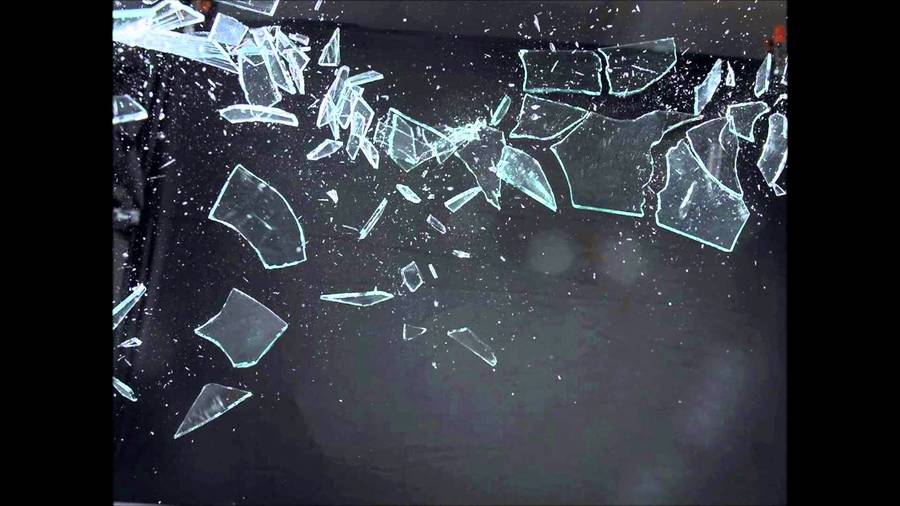
Chemical or Physical?  Glass breaking into tiny shards
a)
Chemical Change
b)
Physical Change
23.
Physical or Chemical Change?  Cutting an orange into wedges.
a)
Physical Change
b)
Chemical Change
24.
Physical or Chemical Change?  Logs burning in a campfire.
a)
Physical Change
b)
Chemical Change
25.
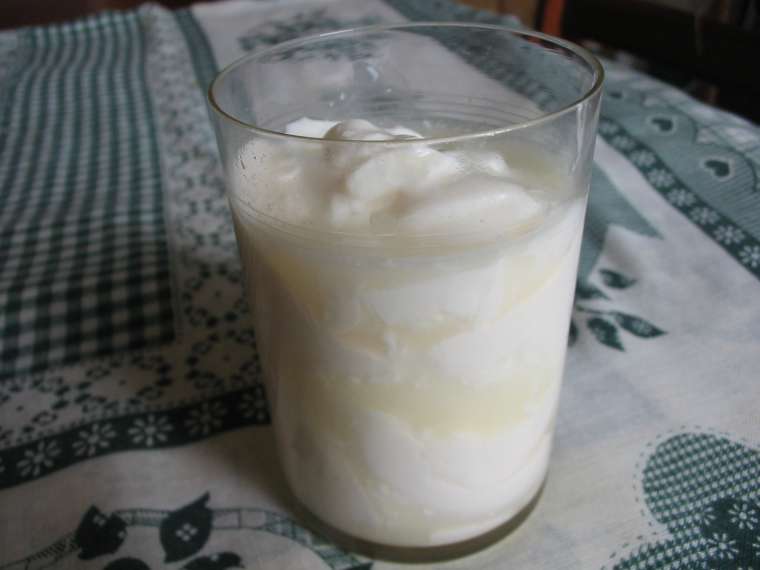
Is milk going sour a physical or chemical change?
a)
Physical 
b)
Chemical
26.
Is Gatorade powder dissolving in water physical or chemical change?
a)
Physical 
b)
Chemical
27.
The second energy level can hold up to how many electrons?
a)
2
b)
8
c)
10
d)
12
28.
What is the atomic mass of "F"
a)
9
b)
18
c)
17
d)
19
29.
How do you find out the number of protons in an atom?
a)
atomic number
b)
atomic mass
c)
charge
d)
atomic mass - atomic number
30.
All matter is made of _________. 
a)
energy 
b)
atoms 
c)
electrons 
d)
compounds 
31.
A substance that is made up for one type of atom is called an:
a)
atom
b)
element
c)
compound
d)
mixture
32.
Which item on this element square is the chemical symbol?
a)
Copper
b)
29
c)
Cu
d)
63.546
33.
Which item on this element square represents the atomic number?
a)
13
b)
Al
c)
Aluminum
d)
26.981538
34.
Which is an electron?
a)
A
b)
B
c)
C
35.
The particles that are found in the nucleus of an atom are
a)
neutrons and electrons
b)
electrons only
c)
protons and neutrons
d)
protons and electrons
36.
Which subatomic particle has a negative charge?
a)
Proton
b)
Neutron
c)
Electron
d)
Quark
37.
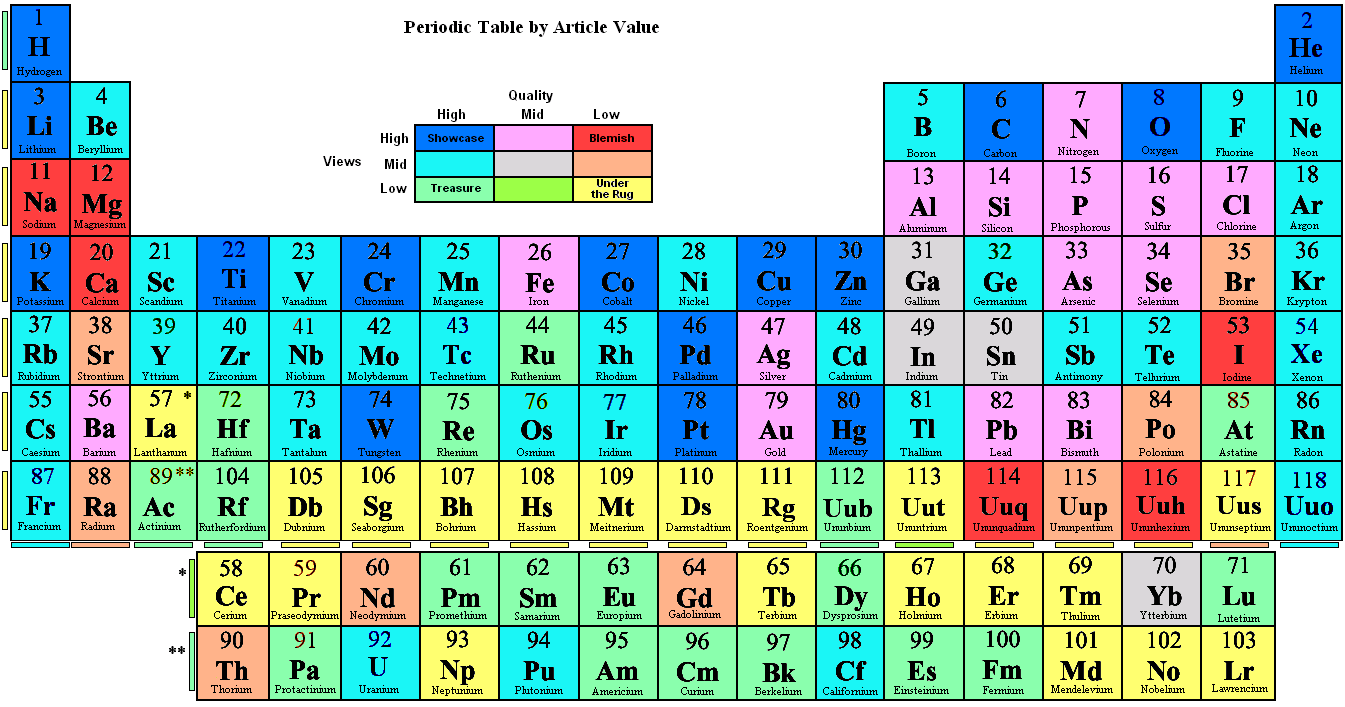
A horizontal row in the periodic table is called....
a)
Group
b)
Family
c)
Column
d)
Period
38.
What's a valence electron?
a)
electrons in the second energy level
b)
electrons in the outermost energy level
c)
the atomic number
d)
electrons in the first level
39.
Rows on the period table are called _____ while columns are called _____.
a)
groups, families
b)
groups, periods
c)
periods, groups
d)
families, groups
40.
The subatomic particle with a neutral charge is:
a)
protons
b)
electrons
c)
neutrons
d)
cloud
41.
Sodium (Na) is found in period 
a)
3
b)
2
c)
4
d)
1
42.
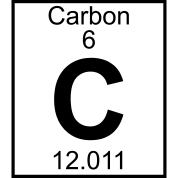
What does the 6 represent?
a)
atomic mass
b)
atomic number
c)
element name
d)
chemical symbol 
43.
How many moles are present in 32.3 grams of carbon dioxide (CO2)?
a)
44.01 moles
b)
1421.52 moles
c)
32.3 moles
d)
0.73 moles
44.
How many grams are in 11.9 moles of chromium?
a)
50 g
b)
619 g
c)
0.23 g
d)
4.4 g
45.
What is the molar mass of NaOH?
a)
40 g/mol
b)
38.989 g/mol
c)
23.998 g/mol
d)
57.004 g/mol
46.

How many moles of Mg are in 19.82 g Mg?

a)

1.226mol Mg

b)

481.7mol Mg

c)

1.000mol Mg

d)

0.8156 mol Mg

47.
How many Hydrogen are in 4H2O?
a)
6
b)
8
c)
2
d)
4
48.
How many Oxygen are in H2O?
a)
1
b)
2
c)
0
d)
4
49.
How many Magnesium are in 10MgCl2?
a)
10
b)
5
c)
20
50.
How many O's are in Al₂(SO₄)₃
a)
4
b)
12
c)
7
d)
24
51.
Number of H in 3(NH₄)₂CrO₄
a)
4
b)
2
c)
8
d)
24
52.
How many elements are in C6H12O6?
a)
1
b)
2
c)
3
d)
4
53.
How many Sodium (Na) are in 6NaCl?
a)
1
b)
12
c)
6
54.
A subscript is the small number below a(n) ________ that tells the number of _______ of that element.
a)
element symbol; atoms
b)
atom; element symbol
c)
subscript; protons
d)
compound; elements
55.

How many different elements are present in H2COCH2

a)

5

b)

4

c)

3

d)

2

56.

The ______ are numbers found on the lower right-hand side of an element symbol.

a)

Coefficient

b)

Exponent

c)

Multiplier

d)

Subscript

57.

Coefficients in chemical formulas...

a)

Multiply just the first atom

b)

Add to the subscripts at the end of the molecule

c)

Multiply elements without subscripts

d)

Multiply EVERYTHING!

58.

4CF2Cl2

a)

C = 4, F = 4, Cl = 2

b)

C = 1, F = 8, Cl = 8

c)

C = 4, F = 8, Cl = 8

d)

C = 1, F = 4, Cl = 8

59.

C3H5(NO3)3

a)

C = 3, H = 5, N = 3, O = 9

b)

C = 3, H = 5, N = 1, O = 9

c)

C = 9, H = 15, N = 3, O = 9

d)

C = 9, H = 15, N = 1, O = 3

60.

A ______ is a number written in front of a chemical formula.

a)

Coefficient

b)

Subscript

c)

Exponent

d)

Coordinator

61.

400 grams =____kilograms

a)

0.4kg

b)

4kg

c)

40kg

d)

40,000kg

62.
1 m = ___ cm
a)
1
b)
10
c)
100
d)
1000
63.
1 km = ___ m
a)
1
b)
10
c)
100
d)
1000
64.
71 km = ___ m
a)
71
b)
710
c)
7,100
d)
71,000
65.
___ m = 400 cm
a)
4
b)
40
c)
400
d)
4000
66.
1 kg = ___ g
a)
1
b)
10
c)
100
d)
1000
67.
7 decimeters equals how many millimeters?
a)
.007
b)
70
c)
7
d)
700
68.
How many significant figures does the following number have: 0.002040
a)
6
b)
4
c)
3
d)
2
69.
How many significant figures does the following number have: 0.998005
a)
9
b)
10
c)
6
d)
5
70.
How many significant figures does the following number have: 100.00210
a)
7
b)
5
c)
10
d)
8
71.
Round 0.010229 to four sig figs
a)
1022
b)
1023
c)
0.01023
d)
0.01022
72.
Round 1047.78 to three sig figs
a)
104
b)
105
c)
1050
d)
1050.00
73.
How many significant figures does the following number have: 0.002040
a)
6
b)
4
c)
3
d)
2
74.
How many Significant Figures in the number below?
0.456
a)
3
b)
4
c)
2
d)
1
75.
a)

A

b)

B

c)

C

d)

D

76.
a)

A

b)

B

c)

C

d)

D

77.
a)

A

b)

B

c)

C

d)

D

78.

Convert this number to standard notation: 7.1 x 10⁴

(a)  

79.

Convert this number into scientific notation: 0.068

a)

6.9 x 10⁶

b)

6.8 x 10⁻⁹

c)

6.8 x 10⁻²

d)

None of the above

80.

When using scientific notation, a positive exponent means ...

a)

the standard number is greater than one

b)

the standard number is less than one

c)

the negative sign doesn't have a meaning

d)

None of the above

81.

Convert this number to standard notation: 1.4 x 10⁻²

(a)  

82.

Convert this number into scientific notation: 950,000

a)

9.5 x 10⁵

b)

9.5 x 10⁻⁹

c)

9.5 x 10²

d)

None of the above

83.
Write 6,700 in scientific notation.
a)
6.7 x 10³
b)
6.7 x10⁻³
c)
67 x 102
d)
67 x 10-2
84.
The rule of scientific notation is to write all exponents with a base of ____.
a)
50
b)
5
c)
100
d)
10