
 Worksheets
No Count: Cell Transport, Photo and Cell Resp. Mini-Test Review
Total questions: 76
Worksheet time: 1hrs 25mins
Movement of molecules from an area of high concentration to an area of low concentration is
diffusion
passive transport
osmosis
all of the above
If a red blood cell is put in distilled water, what will most likely happen to the cell?
Nothing will happen
It will shrivel.
It will burst and then shrivel up
It will swell and burst
What does semi-permeable mean?
Some molecules can move through the membrane
Nothing can move through the membrane
All molecules can pass through the membrane.
What is equilibrium?
When concentrations cannot be balanced between two substances
When concentrations are balanced between two substances
Making the energy in the top half of your body equal the the energy in the bottom half
Concentrations do not exist

Which diagram best shows the end result of diffusion?
F
G
H
J
Which type of transport requires an input of energy?
Passive Transport
Osmosis
Simple Diffusion
Active Transport

Movement of molecules through the cell membrane from high to low concentration
passive transport
active transport
Active transport moves substances against a concentration gradient
true
false

Which form of active transport is being shown?
Pinocytosis
Endocytosis
Exocytosis
Osmosis
Which is NOT a form of active transport?
Endocytosis
Osmosis
Exocytosis
Sodium potassium pump
What is the difference between active and passive transport?
Active does not need energy and passive uses ATP (energy)
Active uses ATP (energy) and passive does not need energy
Active stores transport proteins and passive releases
Active uses hormones and passive does not
When cells form a vesicle to release materials, which form of transport is occurring?
Endocytosis
Exocytosis
Facilitated Diffusion
Osmosis

Human immune cells can engulf bacteria to destroy them. This is an example of
endocytosis
osmosis
exocytosis
acidosis
Materials that can move across a membrane with passive transport include
water, oxygen, and carbon dioxide
starch and other polysaccharides
DNA and RNA
large proteins
When the concentration of solute molecules outside the cell is equal to the concentration inside the cell, the solution is
hypertonic
hypotonic
isotonic
ionic
What happens to a cell placed in a HYPOTONIC solution?
It shrinks
It swells
Nothing Happens
What happens to a cell placed in a HYPERTONIC solution
It shrinks
It swells
Nothing happens
What is diffusion?
when molecules move
when molecules move from a high concentration to a low.
no movement
molecules move everywhere
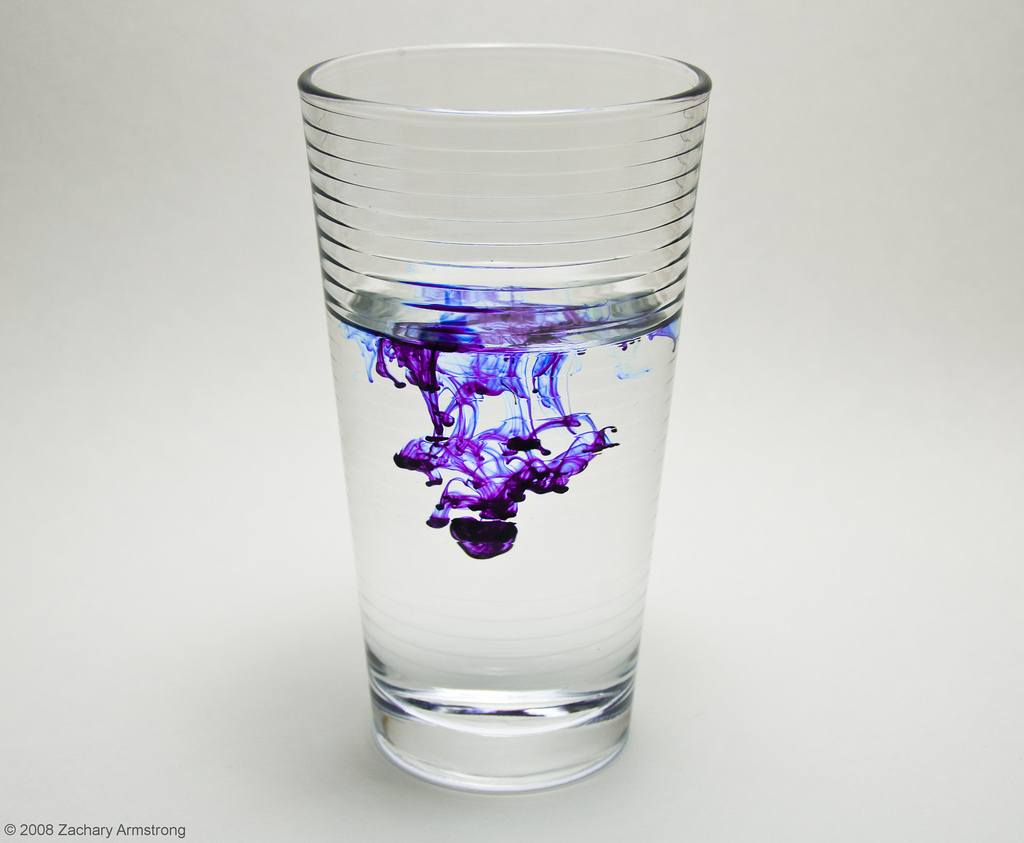
Where is there a low concentration of dye?
at the bottom of cup
in the color
at the top of cup
no concenteraion gradient
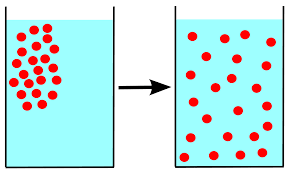
The picture below is an example of _________________.
osmosis
isotonic
diffusion
active transport
Osmosis is the movement of _____ across a membrane.
food
energy
oxygen
water
During osmosis
water moves from high to low concentration
large or oddly shaped molecules move across a cell membrane
water moves when energy is used
proteins are built
The diffusion of water through a semi-permeable membrane is called?
Osmosis
Cell wall
Diffusion
Respiration

Where is there a high concentration of water?
in the flower
cannot be determined by picture.
in the vase
in the leaves

Where is there a low concentration of perfume?
in the bottle
on the hand
in the room
in the top

What is the definition of Selective Permeability?
The movement of materials across the cell membrane that requires NO ENERGY from the cell.
The movement of materials through (or across) the cell membrane
The ability of the cell membrane to allow some things to pass through while preventing other things from passing through.
The movement of molecules from an area of high concentration to a area of low concentration
A person would never have pure water put into their veins in a hospital because their cells would...
Shrink/Dehydrate
Expand
A person should never drink salty water because their cells would
shrink
expand
Which type of biological macromolecule is the main component of the plasma membrane?
carbohydrate
lipid
protein
nucleic acid
What is NOT TRUE about the cell membrane?
It controls what enters and leaves the cell
Semipermeable
Phospholipid bilayer
Contains digestive enzymes

Define plasma membrane
lipid that helps minimize effects of temperature
only on the outer surface of the plasma membrane and are attached to proteins or lipids; form distinctive cellular markers
flexible boundary of a cell that separates a cell from its surroundings
may extend partway into the plasma membrane, cross the membrane entirely, or be loosely attached to its inside or outside face

Which of the following is responsible for getting large or charged (polar) molecules across the cell membrane?
E
B
C
D
when some molecules can cross the membrane while others cannot.
In a lipid bilayer, ___________ fatty acid tails face each other within the bilayer and form a region that excludes water.
A. Hypotonic
B. Hypertonic
C. Hydrophilic
D. Hydrophobic

What is the relationship between the plant and the duck?
"A" represents oxygen produced by the duck and "B" represents carbon dioxide produced by the plant
"A" represents carbon dioxide produced by the plant and "B" represents oxygen produced by the duck
"A" represents oxygen produced by the plant and "B" represents carbon dioxide produced by the plant
"A" represents the sunlight received by the plant and "B" represents the oxygen produced by the duck
What is produced in the leaves of the plant?
oxygen and water
carbon dioxide only
glucose and oxygen
oxygen only

Which describes the transfer in this image?
Carbon Dioxide from the air becomes glucose in the plant. The deer ingest the glucose and it becomes carbon.
Carbon Dioxide from the air becomes water in the plant. The deer ingest the water and it becomes oxygen.
Oxygen from the air becomes carbon dioxide in the plant. The deer ingest the carbon dioxide and it becomes carbon.
Water from the air becomes Oxygen in the plant. The deer ingest the Water and it becomes Oxygen.

What is a reactant in the photosynthesis equation?
glucose
C6H12O6
6O2
6CO2
Which statement describes the process of photosynthesis?
Carbon dioxide and glucose combine to produce water and oxygen
Carbon dioxide and water combine to produce glucose and oxygen
Oxygen and glucose combine to produce carbon dioxide and water
Oxygen and Water combine to produce carbon dioxide and glucose
Cell respiration occurs in order to make
water
glucose
energy (ATP)
oxygen
Why does cell respiration and photosynthesis rely on each other?
They are the same process
Cell respiration must occur first, then photosynthesis
They are opposites, meaning the products of one process is needed by the other process
Identify all of the products of cellular respiration:
Glucose and Oxygen
Carbon Dioxide and Water
Carbon Dioxide, Water, and ATP
Oxygen, Water, and Glucose
Evaluate which statement is accurate:
Oxygen is a product of photosynthesis, carbon dioxide is a product of cellular respiration
Carbon dioxide is a product of photosynthesis, oxygen is a product of cellular respiration
Glucose is a product of cellular respiration, ATP is a product of photosynthesis
Oxygen is a reactant of photosynthesis, carbon dioxide is a product
Identify the organism (s) that depend on photosynthesis for survival
Plants, algae, and phytoplankton
Mammals
Amphibians and reptiles
Almost every living organism, in some manner, depends on photosynthesis
Identify the gas that is a reactant in photosynthesis:
Nitrogen
Oxygen
Carbon Dioxide
Chlorophyll
Which one is a reactant for cell respiration?
Carbon Dioxide
ATP
Glucose
Water
Which of the following waste product is produced when sugar is broken down in an animal cell
chlorophyll
Carbon Dioxide
Oxygen
Sunlight
During Photosynthesis in plants, what is the source of the carbon in the sugar molecule (C6H12O6)
Carbon in the soil
Carbon in water
Carbon Monoxide in the are
Carbon Dioxide in the Air
Organisms that can NOT make their own food?
producers
consumers
algae
plants
Which of the following is a product of cell respiration
oxygen
glucose
water
all the above
Plants use energy from the sun to convert
sugars to oxygen and water
oxygen and waters to sugars
carbon dioxide and water to sugars
sugars to water and carbon dioxide
Cell respiration occurs so that the cells can make __________________________.
Energy
Food
Oxygen
Water
ATP is an example of....
Water
Energy
Oxygen
Gas
What gas is released as a waste product from cell respiration?
Oxygen
Carbon dioxide
Water
Hydrogen
What THREE things are made during cell respiration?
Water
Food (glucose)
Carbon dioxide
Oxygen
ATP Energy
Which equation for Cell Respiration is correct?
oxygen + water --> energy + oxygen
water + carbon dioxide --> food + oxygen
oxygen + food --> energy + carbon dioxide + water
ALL LIVING THINGS DO CELL RESPIRATION
True
False
Glycolysis results in the net gain of:
2 ATP
4 ATP
4 NADH
2 Acetyl CoA
What are the products of aerobic respiration?
Glucose and oxygen
Carbon dioxide and water
Lactic acid
Carbon monoxide
Which main gas is exhaled from the body?
Carbon Dioxide
Oxygen
The first step in getting energy in the cell by breaking down glucose is known as
the Krebs cycle
electron transport
fermentation
glycolysis
What does it mean for something to be anaerobic?
It requires CO2
It does not require CO2
It requires oxygen
It does not require oxygen
What is the correct equation for cellular respiration?
6O2 + C6H12O6 -> 6CO2 + 6H2O + Energy
6O2 + C6H12O6 + Energy -> 6CO2 + 6H2O
6CO2 + 6H2O -> 6O2 + C6H12O6 + Energy
6CO2 + 6H2O + Energy -> 6O2 + C6H12O6
Where does glycolysis take place in cells?
Cytoplasm
Mitochondrion
Endoplasmic Reticulum
Ribosomes

A
B
C
D
Fermentation involves
aerobic respiration
anaerobic respiration
Which choice correctly shows the gases that enter and exit plants during photosynthesis?
Enter: Oxygen
Exit: Carbon dioxide
Enter: Water vapor
Exit: Glucose
Enter: Carbon dioxide
Exit: Oxygen
Enter: Light
Exit: Water vapor
Which type of respiration is most efficient?
Aerobic
Anaerobic
Which of the following is the correct equation for PHOTOSYNTHESIS?
CO2 + light + H2O --> O2 + Sugar
CO2 + sugar + H2O --> O2 + light
O2 + light + H2O --> CO2 + Sugar
CO2 + O2 + H2O --> Light+ Sugar

