
 Worksheets
Ecology Test Review
Total questions: 78
Worksheet time: 1hrs 4mins
According to most scientists, what is the ultimate cause of most mass extinctions?
overhunting
evolution of new species to replace old ones
major change in environment or climate
asteroid impact
True or False: Human beings are wiping out species much faster than nature creates them, causing what scientists call a "6th extinction"
true
false
Biodiversity, aka biological diversity, usually refers to
the same species in a general location
the number of different species in a given area
the number of animal species in a given area
the number of plant species in a given area

Abiotic is non-living

Great Biodiversity = Great Sustainability
True
False
Biodiversity is best described as...
the amount of different species of organisms (plants and animals) living in the same area.
when only a few species inhabit an area.
when only one organism (plants and animals) is found living in one area.

Why is "A" less biodiverse than "B"?
Image "A" is more biodiverse.
Image "A" has many corn plants and this makes it have high "rich" biodiversity.
Image "A" has a lot more plants than image "B"
Even though "A" has a lot of corn plants they are all the same species and makes this a low "poor" biodiverse area.

What are endemic species?
Species found only in one location on the planet
Species in danger of extinction
Species that are extinct
Species that are not native to the place they now live
An area is defined as an ecological hot spot if it meets two requirements. One is that it has at least 1500 endemic plants - plants found nowehere else in the world. What is the other requirement?
It has an average temperature higher than the surrounding area
Less than 30% of the original vegetation remains.
A panel of scientists decides it is a high priority to save
It is an area where many species have gone extinct
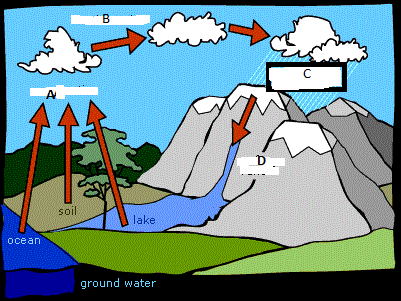
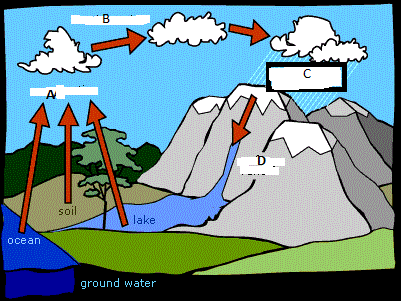


Which of the following is NOT a heterotroph?
Producer
Decomposer
Carnivore
Omnivore


Where does the energy start for all living things & in this food chain?
Plant
Sun
Deer
Wolf

What is this picture describing?
It is describing natural selection.
It is describing direct competition between flamingos and ducks.
It is describing abiotic factors of the tundra.
It is describing the niche of each bird.


A feeding relationship where one organism hunts and one is hunted, such as a Lynx hunting a snowshoe hare, is known as:
Commensalism
Decomposistion
Mutualism
Predator-Prey
A species form that supports an entire ecosystem.
Keystone Species
Herbivores
Umbrella Species
Predators

What is a keystone species?
A species that helps to hold an ecosystem together
A species that lives in or around rocks
Keys and stones have nothing to do with ecology
A keystone isn't a living thing, it's just a stone
Why are bees considered a keystone species?
The honey they make supports the bear population
They pollinate flowers that produce fruit which supports the ecosystem
They sting when threatened
They live in hives
If 50 crabs were captured and marked and then released and then a few days later 25 were caught and of those 5 were marked. What would the estimate of the population be?
500
250
75
200
What is the H in HIPPCo stand for?
habitat loss
habitat restoration
habitat decline
harvesting
The I in HIPPCO stands for
Infrastructure
Invasive Species
innovation
Information Technology
An increase in which part of HIPPCO results in an increase in the rest?
pollution
climate change
human population growth
invasive species
Deforestation is an example of
the H
the P
the C
the O
What do you think happens to the number of species in an area when the habitat size declines?
increases
decreases
remains the same
Untreated sewage entering the ocean is an example of which part of HIPPCO
the H
the I
the P
the O
Burning fossil fuels and trapping more greenhouse gases in the atmosphere cause which part of HIPPCO
the P
the C
the O
the I
Fishing tuna at a rate of more than they can replace themselves is known as?
Habitat destruction
unsustainable
trophic cascade
overharvesting
The greater a habitat's biodiversity, the greater will be that habitat's
resilience over varying conditions
sources of energy
rate of endangered species
lack of different types of organisms
Biodiversity contributes to habitat sustainability because
Changing conditions that harm one species leave other species to survive and perhaps even thrive.
The greater the number of species, the more competition there is for food between predators, which sustains their populations
The more plants and animals in a habitat, the greater the links in food webs allowing for more stable system
It will be more prone to disturbances
Which of the following is NOT a way in which humans are destroying habitats?
Clearing out prairies to grow a single crop
Gathering rain water to use to water crops
Building a shopping mall with a large parking lo
Cutting trees for toilet paper
Which of the following is NOT a cause for the current decline in the biodiversity of our ecosystem?
overexploitation of resources
increasing human populations
pollution of water sources
regenerating forests
A possible way to prevent species from becoming endangered is?
increased use of fossil fuels
more habitat converted to farms
designating more areas as wildlife preserves
increased urban expansion
In the forest spotted owl make their home in the cavities of dead trees. The same habitat is home to rodents that owls feed on. Logging by humans have caused the population of owls to decline. What statement BEST explains the relationship between humans and the spotted owl.
Humans have taken away resources needed by owls, so there are fewer owls
humans have taken away resources needed by owls, so there are fewer owls
Humans moved the owls to the zoo, so there are less owls in the woods.
Humans eliminated predators of the owls, so the owls increased.
What does ecological footprint measure?
How quantity of natural resources humans need compared to the earth's capacity to provide those resources
The size of cities across the world
The amount of fossil fuels that are burned for energy
The shoe size of the average human
How is ecological footprint measured?
In terms hectares of land required by each person in a selected area for food, water, transport, housing and waste management
In terms of number of years it would take before resources ran out
In terms of the average life expectancy of a nation
In terms of shoe size, e.g. women's 9

Which one of the following are Greenhouse Gases
Carbon dioxide
Oxygen
Hydrogen
Helium
Which is NOT a way to decrease your ecological footprint?
Eating less meat and processed foods
Walking or biking to school
Turning off electricity and water when you're not using it.
Using cars for short journeys
What kinds of resources make up your ecological footprint?
waste production
water and energy use
food and shelter
clothing and transportation
All of the above

