wayground logo

Free Printable Worksheets

Font size

S
M
L
XL
Worksheets

ESS SEM 1 REVIEW: ROCKS

Total questions: 76

Worksheet time: 1hrs 15mins

Name
Class
Date
1.
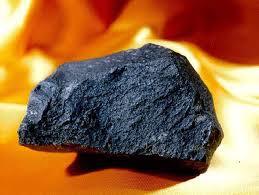
This rock was formed when magma cooled very slowly inside the Earth. What specific type of rock is it?
a)
Intrusive Igneous Rock
b)
Extrusive Igneous Rock
c)
Foliated Metamorphic Rock
d)
Clastic Sedimentary Rock
2.
This rock formed when lava cooled very quickly on Earth's surface. What specific type of rock is it?
a)
Extrusive Igneous Rock
b)
Intrusive Igneous Rock
c)
Non-Foliated Metamorphic Rock
d)
Biochemical Sedimentary Rock
3.
When you watch a volcano erupt molten rock, you are seeing _____
a)
Lava
b)
Magma
c)
Mineral Crystals
d)
Igneous Rocks
4.
When you are describing the sizes of the mineral grains in a rock, you are detailing the rock's _____
a)
Texture
b)
Composition
c)
Sedimentation
d)
Igneous-ness
5.
What are the 3 major types of rocks?
a)
Igneous, Metamorphic, Sedimentary
b)
Metamorphic, Igneous, Cementation
c)
Brown, Red, Gray
d)
Streak, Hardness, Breakage
6.
Two ways to describe types of igneous rocks are _____
a)
Extrusive and Intrusive
b)
Foliated and Non-Foliated
c)
Clastic and Biochemical
d)
Black and Gray
7.
What process is used to form sedimentary rocks?
a)
Lava cools and hardens to form a rock.
b)
Weathering, Erosion, Deposition, Compaction, Cementation
c)
Extreme heat and pressure from inside the Earth turn rocks into new rocks.
d)
Magma trapped under the Earth's surface cools and solidifies.
8.
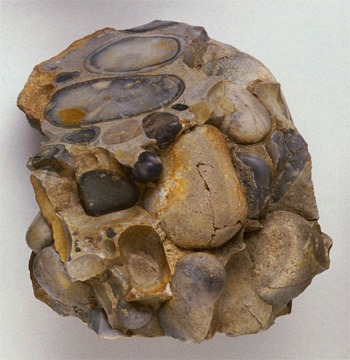
This rock was formed by smaller pieces of rock that settled at the bottom of a lake millions of years ago. What type of rock is this?
a)
Sedimentary
b)
Igneous
c)
Metamorphic
9.
This rock was found near the mouth of a volcano. What type of rock is this?
a)
Sedimentary
b)
Igneous
c)
Metamorphic
10.
When sediments are pressed together tightly, this is called ____________.
a)
Compaction
b)
Cementation
c)
Weathering
d)
Erosion
11.
The process in which sediment are fused or glued together.
a)
compaction
b)
deposition
c)
organic rock
d)
cementation
12.
The process when rocks break into smaller pieces due to exposure to natural elements is called
a)
erosion
b)
weathering
c)
sediments
d)
deposition
13.
The movement of weathered material (sediment) is called?
a)
weathering
b)
erosion
c)
deposition
d)
cementation
14.
Sedimentary rock that is made of fragments of rocks cemented together by a mineral are called...
a)
chemical
b)
organic
c)
clastic
15.
Sedimentary rock that is formed from water evaporating and minerals being left behind.
a)
clastic
b)
organic
c)
chemical
16.
Sedimentary rock made from fossils are called...
a)
organic
b)
chemical
c)
stratified
17.
This rock was formed when molten rock cooled into a solid. What type of rock is it?
a)
Igneous Rock
b)
Metamorphic Rock
c)
Sedimentary Rock
18.
Which type of rock is formed from INTENSE heat and pressure?
a)
igneous
b)
sedimentary
c)
metamorphic
19.
Is the following metamorphic rock foliated or non-foliated?
a)
Foliated
b)
Non-foliated
c)
Neither
20.

In the simple rock-cycle diagram, which processes along path X would change the schist (stage C) directly into a pile of sediments (stage A)?

a)

uplift, weathering, and erosion of the schist

b)

cementing of sediment grains followed by compaction

c)

melting of the schist followed by cooling

d)

heat and/or pressure applied to the schist

21.

Metamorphic rocks that formed from these forces are represented by which lettered box in the flowchart?

a)

A

b)

E

c)

B

d)

F

22.

metamorphic rocks result from the

a)

erosion of rocks

b)

recrystallization of rocks

c)

cooling and solidification of molten magma

d)

compression and cementation of soil particles

23.

Large crystals in an igneous rock most likely form as a result of the..

a)

mineral composition of the magma

b)

cooling rate of the magma

c)

fossil content of the rock

d)

color of the rock

24.
Each rock type can follow only one pathway of the rock cycle.
a)
True
b)
False
25.

What are the two types of rocks used for construction?

a)

Limestone and Granite

b)

Rock

c)

Cycle

d)

Marble

26.

Weathering happens when?

a)

Water, wind, ice, and heat break down.

b)

Water hits the rocks.

c)

Ice freezes the rock?

d)

What is that?

27.

Weathering happens when?

a)

Water, wind, ice, and heat break down.

b)

Water hits the rocks.

c)

Ice freezes the rock?

d)

What is that?

28.
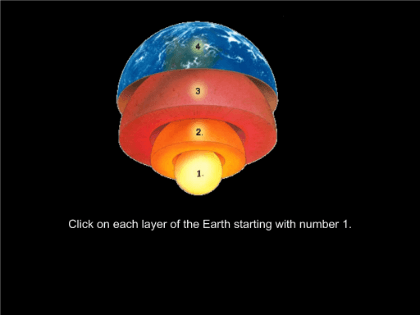
Which layer is the OUTER CORE?
a)
1
b)
2
c)
3
d)
4
29.
Which layer is the MANTLE?
a)
1
b)
2
c)
3
d)
4
30.
Which layer is the CRUST?
a)
1
b)
2
c)
3
d)
4
31.
Which layer is the THICKEST layer?
a)
Core
b)
Mantle
c)
Crust
32.
Which layer is the INNER CORE?
a)
1
b)
2
c)
3
d)
4
33.
The core is made up of which 2 metals?
a)
Iron and Nickel
b)
Iron and Bronze
c)
Nickel and Steel
d)
Iron and Steel
34.
Which layer is the HOTTEST layer?
a)
Core
b)
Mantle
c)
Crust
35.
What are the two types of crust
a)
continental and oceanic
b)
ocean and upper
c)
lower and upper
d)
pizza and subway
36.
Which crust is thicker
a)
ocean
b)
continental
c)
bread
d)
pizza
37.
The lithosphere combines what two layers?
a)
Athenosphere & Crust
b)
Crust & Upper Mantel
c)
Mantel & Athenosphere
38.
What happens to temperature as we move from the crust to the inner core?
a)
Decreases
b)
Increases
39.
Which layer of the earth has the lowest temperature?
a)
Crust
b)
Mantle
c)
Outer Core
d)
Inner Core
40.
Why is the inner core solid?
a)
its unknown
b)
what it's made of
c)
the pressure
d)
it is colder than the outer core
41.
Which layer(s) of the Earth make up the asthenosphere?
a)
Part of the mantle
b)
Crust, mantle, Core
c)
Crust and upper mantle
d)
Only the crust
42.
The process by which water, wind, ice, and changes in temperature break down rock into fragments called sediments.
a)
Deposition
b)
Erosion
c)
Weathering
d)
Igneous Rock
43.
The process by which metamorphic rocks are formed...
a)
heat and pressure
b)
compaction and cementation
c)
melting and cooling
44.
The process by which igneous rocks are formed...
a)
heat and pressure
b)
melting and cooling
c)
compaction and cementation
45.
A metamorphic rock can become ______.
a)
igneous
b)
metamorphic
c)
sedimentary
d)
all of these
46.
An igneous rock can become ______.
a)
metamorphic
b)
sedimentary
c)
igneous
d)
all of these
47.
What two processes make sediment?
a)
Weathering
b)
Erosion
c)
Weathering & Erosion
48.
The process by which sediment is moved from one place to another.   Can be caused by water, wind, ice, and gravity.
a)
Rock Cycle
b)
Uplift
c)
Deposition
d)
Erosion
49.
This rock was formed by lots of fossils that settled on top of each other over time. What type of rock is this?
a)
Sedimentary
b)
Igneous
c)
Metamorphic
50.
This rock cooled on the outside of a volcano and contained air bubbles when it was forming. What type of rock is this?
a)
Sedimentary
b)
Igneous
c)
Metamorphic
51.
This rock was another type of rock that was heated and compressed over time. What type of rock is this?
a)
Sedimentary
b)
Igneous
c)
Metamorphic
52.
This rock started as molten magma. What type of rock is this?
a)
Sedimentary
b)
Igneous
c)
Metamorphic
53.
This rock is made from tiny pieces of other rocks that settled to the bottom of a valley millions of years ago. What type of rock is this?
a)
Sedimentary
b)
Igneous
c)
Metamorphic
54.
The continuous recycling of new rock from old rock material.
a)
Rock 'n Roll
b)
erosion
c)
Rock Cycle
d)
cement
55.
Cooling & crystalization produce
a)
igneous rocks
b)
metamorphic rocks
c)
sedimentary rocks
56.

weathering

a)

at great depths, intense heat and pressure squeeze sedimentary rock

b)

grains of sediment are compacted and cemented together

c)

water, wind, ice, and heat break down rock

d)

rocks inside the Earth move up to the surface

57.

plutons

a)

largest intrusive igneous rocks

b)

large, irregular-shaped rock

c)

forms from magma and erupts onto Earth's surface

d)

magma pushes into surrounding rock below Earth's surface and cools into course-grained crystals

58.

batholiths

a)

largest intrusive igneous rocks

b)

large, irregular-shaped rock

c)

forms from magma and erupts onto Earth's surface

d)

magma pushes into surrounding rock below Earth's surface and cools into course-grained crystals

59.

chemical sedimentary rock

a)

coral reefs, coal

b)

forms from solutions of dissolved minerals and water

c)

mineral grains are arranged in bands

d)

made of fragments of rock cemented together by a mineral

60.

foliated

a)

coral reefs, coal

b)

forms from solutions of dissolved minerals and water

c)

mineral grains are arranged in bands

d)

made of fragments of rock cemented together by a mineral

61.

organic sedimentary rock

a)

coral reefs, coal

b)

forms from solutions of dissolved minerals and water

c)

mineral grains are arranged in bands

d)

made of fragments of rock cemented together by a mineral

62.
What type of rock is A?
a)
sedimentary
b)
igneous
c)
metamorphic
63.
What type of rock is B?
a)
sedimentary
b)
igneous
c)
metamorphic
64.
What type of rock is C?
a)
sedimentary
b)
igneous
c)
metamorphic
65.
Fossils are found in 
a)
Metamorphic rocks
b)
Igneous rocks
c)
Sedimentary rocks
66.
What geologic process can change granite (igneous rock) into gneiss (metamorphic rock)?
a)
Compacting and cementing
b)
Cooling
c)
Heat and pressure
d)
Melting
67.
What type of rock is granite?
a)
Igneous rock
b)
Sedimentary rock
c)
Metamorphic rock
d)
Al of the above
68.
All of the following are possible processes in the rock cycle EXCEPT _____.
a)
volcanic activity
b)
erosion
c)
melting
d)
condensation
69.
Which group of rocks is most likely to contain fossils?
a)
igneous rocks
b)
intrusive rocks
c)
metamorphic rocks
d)
sedimentary rocks
70.
Rocks are classified into three main groups based on _____.
a)
where the rocks are found
b)
how the rocks are formed
c)
specific gravity and texture
d)
the color and shape of the rocks
71.
Choose the number where the following description best fits:  Hot lava cools.
a)
1
b)
3
c)
4
d)
5
72.
Choose the number where the following description best fits:  Great pressure and heat.
a)
1
b)
2
c)
3
d)
4
73.
Choose the number where the following description best fits:  Great heat from the center of the Earth causes melting.
a)
1
b)
3
c)
4
d)
5
74.
Not all rocks are made from minerals.
a)
True
b)
False
75.
In our crayon lab, the crayon represented 
a)
Erosion
b)
Weathering
c)
A rock
d)
Just a crayon
76.
In our crayon lab, we were able to demonstrate the rock cycle by creating sediments and putting them back together in different ways to represent different rocks.  When we melted and cooled the crayon we modeled
a)
How sedimentary rocks form
b)
How metamorphic rocks form
c)
How igneous rocks form
d)
How to melt a crayon