wayground logo

Free Printable Worksheets

Font size

S
M
L
XL
Worksheets

Unit 4 Review

Total questions: 75

Worksheet time: 1hrs 6mins

Name
Class
Date
1.

In humans, the haploid number of chromosomes is ____.

a)

23

b)

46

c)

69

d)

92

2.

Which of the following is the best definition for MEIOSIS?

a)

the process of two haploid cells uniting

b)

the counting of chromosomes within a diploid cell

c)

a two-step process that reduces the number of chromosomes in half such that there is only one copy of all the chromosomes

d)

the equational division of a cell into two identical copies

3.

True or False? Before cells undergo meiosis they pass through interphase first.

a)

true

b)

false

4.

In which stage of MEIOSIS does crossing over occur? (The exchange of genetic material between chromosomes in a tetrad.)

a)

Anaphase I

b)

Metaphase I

c)

Prophase I

d)

Telophase I

5.

In Anaphase I, the _________ are separated by the pulling of the spindle fibers to opposite poles of the cell.

a)

homologous pairs of chromosomes

b)

sister chromatids

c)

centromeres

d)

centrosomes

6.

Check all of the following that DO occur during Telophase I and cytokinesis.

a)

The separated homologous chromosomes are at opposite poles of the cell.

b)

The cell divides in two.

c)

The chromosomes do not uncoil, since they are getting ready for Meiosis II.

d)

Sister chromatids are pulled away from each other.

7.

In Metaphase II, _________ line up on equatorial plane.

a)

homologous pairs of chromosomes

b)

single chromosomes (made up of 2 sister chromatids)

c)

tetrads

d)

centrosomes

8.

In Anaphase II, the _________ separate.

a)

Homologues

b)

Sister Chromatids

c)

Tetrads

d)

Centrioles

9.

How many cells are formed at the end of Meiosis II?

a)

2

b)

3

c)

4

d)

8

10.

True or False. In Meiosis II, there are TWO cells that go through each phase at the same time.

a)

true

b)

false

11.

Which of the following does NOT happen during Telophase II?

a)

the nuclei reform

b)

each cell begins to split evenly in two

c)

the chromosomes duplicate

d)

the nuclei contain a haploid number of chromosomes

12.

Which of the following are CORRECT observations about the differences between MITOSIS and MEIOSIS? (Check all that apply.)

a)

Mitosis produces cells that identical to the parent cell.

b)

Meiosis produces cells that have half the number of chromosomes as the parent cell.

c)

All cells go through INTERPHASE as part of the cell cycle, whether it goes to mitosis or meiosis next.

d)

In both types of cell division, the chromosomes are only duplicated once.

e)

Only in Mitosis, do you see chromosomes pair up to form a tetrad.

13.

The products of MEIOSIS have _______ number of chromosomes.

a)

haploid

b)

diploid

14.
Identify the stage of mitosis. 
a)
interphase
b)
prophase
c)
anaphase
d)
cytokinesis
15.
Identify the stage of mitosis.
a)
interphase
b)
prophase
c)
metaphase
d)
anaphase
16.
Identify the stage.
a)
interphase
b)
metaphase
c)
anaphase
d)
telophase
17.
a)
Cytokinesis
b)
Anaphase
c)
Telophase
d)
Prophase
18.
a)
Anaphase
b)
Cytonkinesis
c)
Interphase
d)
Prophase
19.
a)
Cytokinesis
b)
Interphase
c)
Anaphase
d)
Metaphase
20.
Before cells can divide, what must be copied?
a)
mitochondria
b)
cytoplasm
c)
DNA
d)
Cell Wall
21.
Which phase comes NEXT?
a)
prophase
b)
metaphase
c)
anaphase
d)
telophase
22.
Name the phase:
a)
Prophase
b)
Metaphase
c)
Anaphase
d)
Telophase
23.
Which is Metaphase?
a)
A
b)
E
c)
C
d)
F
24.
Which of the following is NOT occuring during interphase?
a)
Cell growth
b)
DNA being copied
c)
DNA condensing
d)
Two new cells are made
25.
What phase of mitosis is pictured?
a)
Metaphase
b)
Telophase
c)
Prophase
d)
Anaphase
26.
In which phase does the cell spend most of it's life?
a)
Interphase
b)
Nuclear Division
c)
Telophase
d)
Mitosis
27.
What phase of mitosis is occuring in the picture?
a)
Prophase
b)
Metaphase
c)
Cytokinesis
d)
Telophase
28.
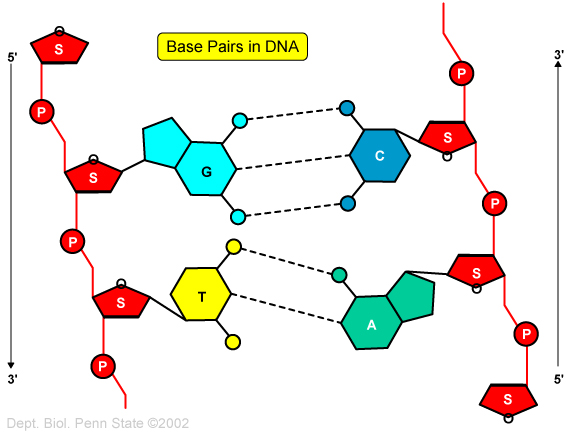
Which 2 molecules form the sides (backbone) of the DNA ladder?
a)
deoxyribose sugar and adenine
b)
deoxyribose sugar and a hydrogen bond
c)
deoxyribose sugar and the nucleus
d)
deoxyribose sugar and phosphate
29.
Nitrogenous bases are joined by which type of bond?
a)
polar bonds
b)
ionic bonds
c)
covalent bonds
d)
hydrogen bonds
30.
The enzyme that unzips the DNA to prepare for replication
a)
helicase
b)
replicase
c)
polymerase
d)
synthase
31.
DNA replication results in two DNA molecules,
a)
each one with two original strands
b)
each one with two new strands
c)
each one with one new strand and one original strand
d)
one with two new strands and the other with two original strands
32.
What is the correct complimentary strand for the following DNA?ATCGAG
a)
TACGAG
b)
ATCGAG
c)
TAGCTG
d)
TAGCTC
33.
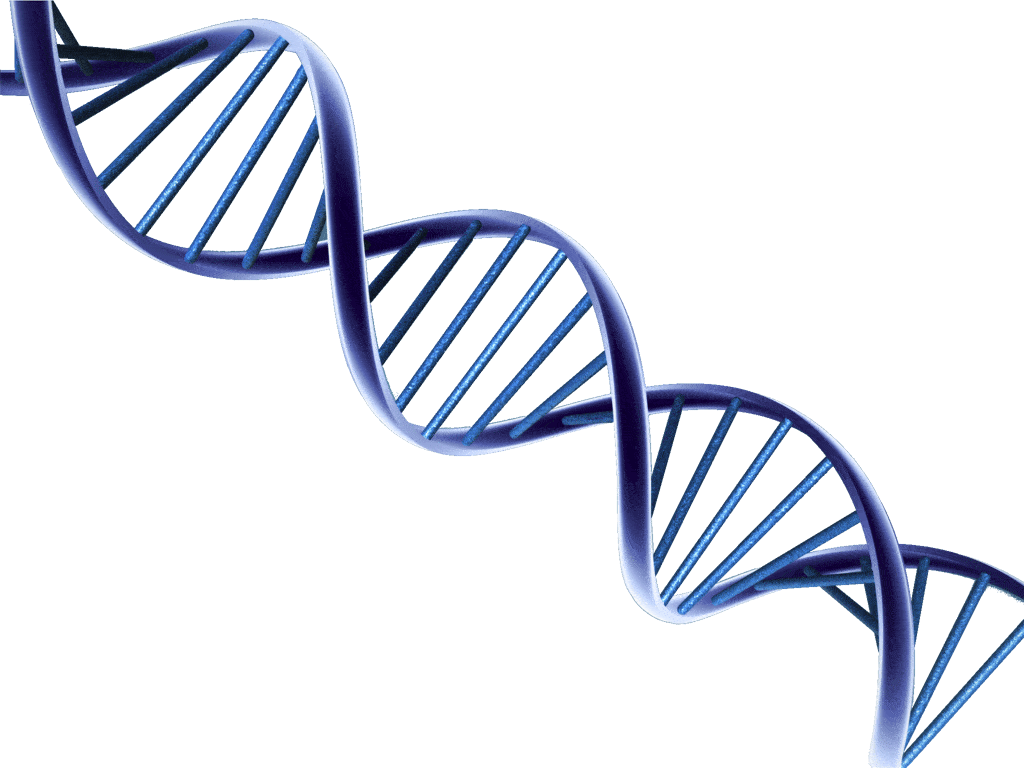
The drawing shows the structure of what molecule?
a)
A DNA molecule
b)
A lipid molecule
c)
A carbohydrate molecule
d)
A protein molecule
34.
In what phase of the cell cycle does DNA replication take place?
a)
G1
b)
S
c)
G2
d)
M
35.
What is responsible for holding the two strands of the DNA double helix together?
a)
hydrogen bonds
b)
alleles
c)
London dispersion forces
d)
deoxyribose sugars
36.
Which enzyme is responsible for adding nucleotides ("The Builder")?
a)
Topoisomerase
b)
DNA Polymerase
c)
Ligase
d)
Primase
37.
Why is it crucial that living things are able to replicate their DNA?
a)
Each cell must have its own DNA
b)
Less copies of DNA are needed when a new cell is created
c)
A cell needs multiple copies of DNA
d)
Only muscle cells need DNA 
38.
The DNA is found in the nucleus of what type of organisms?
a)
Bacteria
b)
Eukaryotes
c)
Prokaryotes
d)
Viruses
39.

The two strands of DNA are

a)

Parallel

b)

Antiparallel

c)

Perpendicular

d)

At Right Angles

40.

DNA is built in this direction

a)

5' to 3' (new nucleotides added to the 3' end)

b)

3' to 5' (new nucleotides added to the 5' end)

c)

3' to 5' (new nucleotides added to the 3' end)

d)

5' to 3' (new nucleotides added to the 5' end)

41.

DNA Replication occurs during which phase of the cell cycle?

a)

G 1 phase

b)

S phase

c)

G 2 phase

d)

Mitotic phase

42.

Okazaki fragments are found on the _______________ strand

a)

Leading

b)

Lagging

43.

Which enzyme is responsible for checking DNA for errors, and fixing it?

a)

DNA Polymerase

b)

Primase

c)

Helicase

d)

RNA Polymerase

44.
Based on the diagram, the enzyme (represented in gray) is most likely...
a)

DNA polymerase

b)

Ligase

c)

Primase

d)

Helicase

45.
Based on the diagram, how many origins of replication are represented?
a)
1
b)
2
c)
3
d)
4
46.
Which enzyme is responsible for adding nucleotides?
a)

Helicase

b)

DNA Polymerase

c)

Ligase

d)

Primase

47.

DNA polymerase is able to build the new DNA ______ along the leading strand.

a)

continuously

b)

only in short fragments

c)

very slowly

d)

prokaryotically

48.

Which enzyme fixes the Okazaki fragments?

a)

Helicase

b)

Polymerase

c)

Ligase

d)

Primerase

49.
DNA replication results in two DNA molecules,
a)
each one with two original strands
b)
each one with two new strands
c)
each one with one new strand and one original strand
d)
one with two new strands and the other with two original strands
50.
The enzyme that unzips the DNA to prepare for replication
a)
helicase
b)
replicase
c)
polymerase
d)
synthase
51.
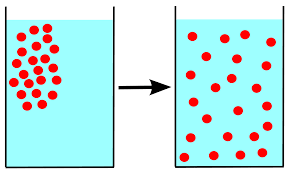
What is diffusion?
a)
when molecules move 
b)
when molecules move from a high concentration to a low.
c)
no movement 
d)
molecules move everywhere
52.
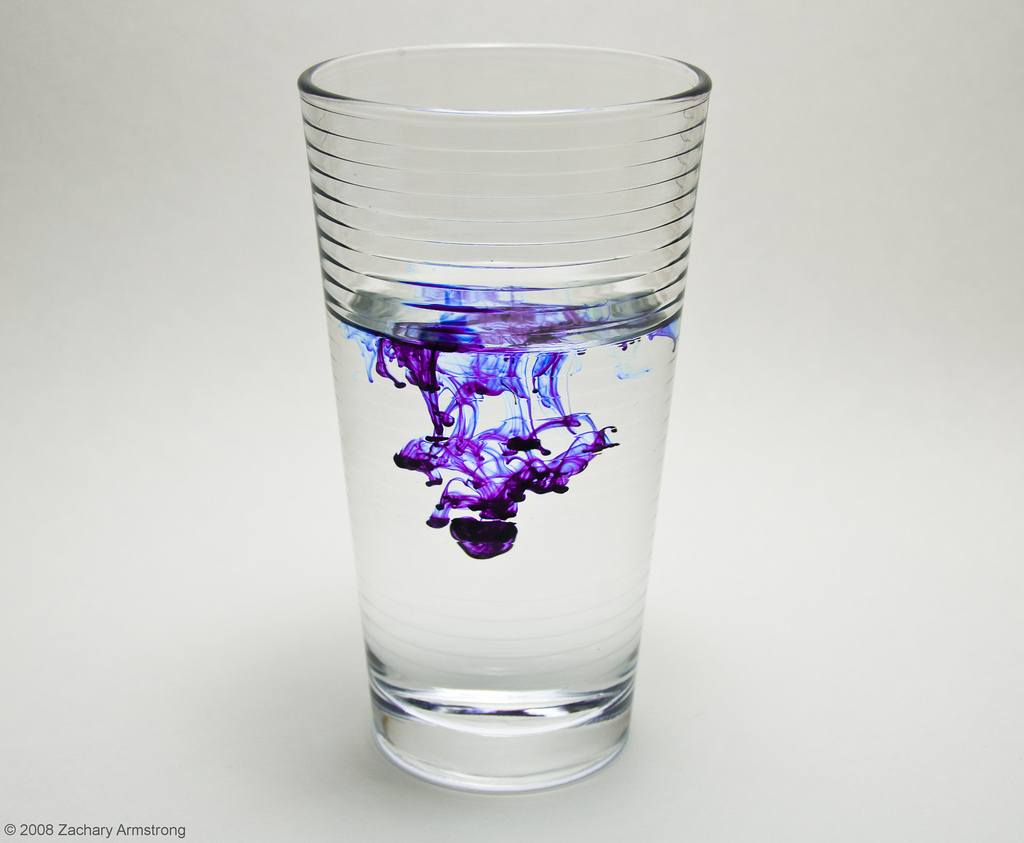
Where is there a low concentration of dye?
a)
at the bottom of cup
b)
in the color
c)
at the top of cup 
d)
no concenteraion gradient
53.
The picture below is an example of _________________.
a)
osmosis
b)
isotonic
c)
diffusion
d)
active transport
54.
Osmosis is the movement of _____ across a membrane.
a)
food
b)
energy
c)
oxygen
d)
water
55.
During osmosis
a)
water moves from high to low concentration
b)
large or oddly shaped molecules move across a cell membrane
c)
water moves when energy is used
d)
proteins are built
56.
When both inside and outside of a cell have the same amount of water it is said that the cell has reached a state of
a)
Osmosis
b)
Diffusion
c)
Equilibrium
57.
A person would never have pure water put into their veins in a hospital because their cells would...
a)
Shrink/Dehydrate
b)
Expand
58.
A person should never drink salty water because their cells would
a)
shrink
b)
expand
59.
 An animal cell placed in a hypertonic (salty) solution will
a)
Stay the same
b)
Shrink- get smaller
c)
Swell- get bigger
60.

What is DIFFUSION?

a)
b)
c)
d)
61.
The picture is an example of...
a)
active tranport
b)
passive transport
c)
diffusion
d)
osmosis
62.
Sometimes, energy is required for ____ molecules to go in or out of the cell because they cannot fit into the membrane.
a)
big
b)
small
c)
crunchy
d)
water
63.
The movement of molecules against a concentration gradient
a)
simple diffusion
b)
facilitated diffusion
c)
active transport
d)
osmosis
64.
What a cell needs to transport particles by active transport?
a)
Sun
b)
Wind
c)
Energy
d)
Channels
65.
What is the definition of  Selective Permeability?
a)
The movement of materials across the cell membrane that requires NO ENERGY from the cell.
b)
The movement of materials through (or across) the cell membrane
c)
The ability of the cell membrane to allow some things to pass through while preventing other things from passing through.
d)
The movement of molecules from an area of high concentration to a area of low concentration 
66.
Where is there a high concentration of water?
a)
in the flower
b)
cannot be determined by picture.
c)
in the vase
d)
in the leaves
67.
The diffusion of water through a semi-permeable membrane is called?
a)
Osmosis
b)
Cell wall
c)
Diffusion
d)
Respiration
68.
Permeable means
a)
things can pass through
b)
the concentration levels are different
c)
it is permanent
d)
things are stuck
69.
In the given scenario what will happen?  An egg is placed in pure water for 48 hours.
a)
The egg will gain water and swell.
b)
Water will move in and out of the cell equally, and the cell with neither shrink nor swell.
c)
The egg will lose water and shrink.
70.
Ideally, your cells should be in a(n) _______ solution
a)
Hypertonic
b)
Hypotonic
c)
Isotonic
d)
Cola
71.
_______ regulates what enters and leaves a cell.  
a)
Cell Membrane
b)
Nucleus
c)
Mitochondria
d)
Cytoplasm
72.
The cell below is in a _________ solution.
a)
Hypotonic
b)
Hypertonic
c)
Isotonic
73.
Which cell is placed into a hypotonic environment? 
a)
A
b)
B
c)
C
d)
D
74.
Which way will the water molecules move during osmosis?
a)
Out of the cell, so the cell shrinks.
b)
Out of the cell, so the cell swells.
c)
Into the cell, so the cell shrinks.
d)
Into the cell, so the cell swells.
75.
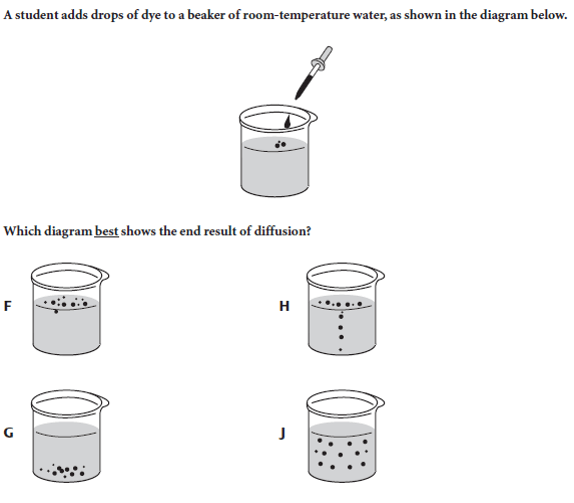
Which diagram best shows the end result of diffusion?
a)
F
b)
G
c)
H
d)
J