Wayground logo

Free Printable Worksheets

Font size

S
M
L
XL
Worksheets

BODY SYSTEMS 2 -

Total questions: 73

Worksheet time: 42mins

Name
Class
Date
1.
What does the cerebrum control?
a)
controls thoughts and voluntary actions
b)
controls vital and involuntary actions 
c)
controls balance
d)
controls the uvula
2.
The nervous system is composed of the ___, ___, and ___.
a)
heart, brain, kidneys
b)
lungs, liver, stomach
c)
brain, spinal cord, nerves
d)
eyes, pancreas, veins
3.
Which part of the brain controls vital functions such as breathing and heart rate?
a)
Diencephalon
b)
Frontal Lobe
c)
Brain Stem
d)
Cerebellum
4.
Which systems work together when nutrients are dropped off for the cells in the brain?
a)
Circulatory, Excretory, Respiratory
b)
Circulatory, Digestive, Nervous
c)
Circulatory, Respiratory, Nervous
d)
Circulatory, Skeletal, Nervous
5.
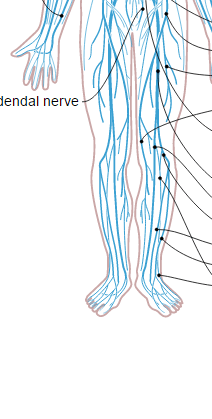
This is a picture of the 
a)
peripheral nervous sysyem
b)
central nervous system
c)
respiratory system
d)
circulatory system
6.
This is a picture of the 
a)
peripheral nervous sysyem
b)
central nervous system
c)
respiratory system
d)
circulatory system
7.
Which of the following describes the relationship between sensory neurons and motor neurons?
a)
Motor neurons bring a stimulus input to the brain and sensory neurons carry a movement output. 
b)
Sensory neurons tell motor neurons what to do.
c)
Sensory neurons bring a stimulius input to the spinal cord or brain and the brain or spinal cord sends a motor neuron  response.
d)
Sensory neurons do more than motor neurons
8.
Brain cells are called
a)
hemoglobin
b)
neurons
c)
brainpoppers
d)
alveoli
9.

The brain controls the body's functions.

a)

True

b)

False

10.

The CENTRAL nervous system is made up of which two organs?

a)

Brain and Spinal Cord

b)

Spinal Cord and Peripheral Nerves

c)

Peripheral Nerves and Heart

d)

Heart and Lungs

11.

Select the VOLUNTARY action.

a)
b)
c)
d)
12.

Select the INVOLUNTARY action.

a)
b)
c)
d)
13.

____________ ---> ____________ ---> _______________

a)

Response, Stimulus, Interpret

b)

Interpret, Stimulus, Response

c)

Stimulus, Interpret, Response

d)

Response, Interpret, Stimulus

14.
What is the function of the nervous system.
a)
provide nutrients for the body.
b)
send and recieve messages
c)
circulate oxygen to sells
d)
remove carbon dioxide from blood
15.

Which organ releases digestive enzymes into the small intestine?

a)

pancreas

b)

small intestine

c)

esophagus

d)

salivary glands

16.

What organ is responsible for the majority of the absoption that occurs in the digestive system?

a)

large intestine

b)

small intestine

c)

stomach

d)

oral cavity

17.

The involuntary propulsion of foodstuff is accomplished by circular muscle fibers that squeeze along the alimentary canal. That way food is moved involuntarity. What is the name of this process?

a)

swallowing

b)

peristalsis

c)

defecation

d)

absorption

18.

The small intestine is the longest of the digestive organs. What benefit to body is it that this organ is so long?

a)

It allows the organ to secrete bile which in turn breaks down food

b)

It allows more time for the food to be in the organ which allows more absoption to take place.

c)

It provides more surface area for mucus which helps digested food move more smoothly.

19.

Which of the following structures is NOT part of the digestive system?

a)

esophagus

b)

larynx

c)

stomach

d)

pharynx

20.

The teeth and tongue of the oral cavity break foodstuff down physically. This is an example of

a)

mechanical digestion

b)

chemical digestion

c)

absorption

d)

peristalsis

21.
What is not a function of the digestive system?
a)
Create new foods
b)
Absorb water
c)
Process waste
22.
What is an example of chemical breakdown?
a)
Chewing
b)
Saliva
c)
Peristalsis
23.
What begins the process of mechanical breakdown?
a)
the mouth
b)
the esophagus
c)
the pancreas
24.
What begins the process of chemical breakdown?
a)
Liver
b)
Salivary glands
c)
Colon
25.
What pushes food from the mouth to the stomach?
a)
Stomach
b)
Gall bladder
c)
Esophagus
26.
What churns food and breaks it down further using strong acids?
a)
Stomach
b)
Salivary glands
c)
Liver
27.
What produces chemicals that break down fats, starches and proteins?
a)
Pulmonary artery
b)
Pancreas
c)
Pituitary gland 
28.
What stores bile?
a)
Colon
b)
Gall Bladder
c)
Small Intestine
29.
What produces the bile used to break down fats?
a)
Liver
b)
Large Intestine
c)
Mouth
30.
What is the urethra?
a)
The tube that allows urine to pass out of the body
b)
Collects urine from the kidneys
c)
Carries urine to the urinary bladder
31.
What is the function of the bladder?
a)
Push out excess waste
b)
Create and absorb excess waste to be regulated
c)
Collect urine from the kidneys before disposal by urination
32.
What is the function of the Ureter?
a)
Carries urine from the kidney to the urinary bladder.
b)
Tiny finger-like projections in the Small Intestine
c)
Absorbs water and minerals and holds waste
33.
What absorbs water and minerals and holds waste?
a)
Large Intestine (Colon)
b)
Small Intestine
c)
Gall Bladder
34.
Which organ system includes the esophagus, pancreas, and large intestine?
a)
digestive
b)
excretory
c)
integumentary
d)
lymphatic
35.
If you have diabetes, you most likely have a problem with this hormone.
a)
ADH
b)
Glucagon
c)
Insulin
d)
PTH
36.

Produces the hormone insulin and glucagon, which controls the level of glucose in the blood.

a)

Thyroid Gland

b)

Pancreas

c)

Thymus Gland

d)

Pituitary Gland

37.

These release testosterone, which controls changes in a male's body and regulates sperm production.

a)

Ovaries

b)

Target Cells

c)

Parathyroids

d)

Testes

38.
Are chemicals that travel in the blood and cause changes in different parts of the body
a)
Hormones
b)
Glands
c)
Parathyroid 
d)
Adrenal Gland 
39.
What is gland #3?
a)
Adrenal Gland
b)
Pancreas
c)
Ovaries
d)
Testes
40.

What type of product is secreted by endocrine glands?

a)

Sweat

b)

Hormones

c)

Saliva

d)

Tears

41.
Endocrine glands produce __________ which maintain the body in homeostasis
a)
oils
b)
neurotransmitters 
c)
tears
d)
hormones
42.
The gland labeled 4 in the diagram is?
a)
the thymus gland
b)
the thyroid gland
c)
the parathyroid glands
d)
the adrenal glands
43.
A goiter is an enlargement of what gland?
a)
Pituitary
b)
Adrenal
c)
Mammary
d)
Thyroid
44.
What is an Hormone?
a)
Substance produced in one part of an organism that affects another part of the organism
b)
Cells that has an receptor for a particular hormone
c)
Cells that pick up on a particular hormones through receptor
d)
Steroids that cause the abnormal actions in hormones
45.
What is the main function of the excretory system?
a)
to collect and remove wastes from the body
b)
to strengthen skeletal muscles
c)
to protect the nervous system
d)
to bring oxygen to body cells
46.
Which organ of the excretory system stores urine until the body is ready to eliminate it?
a)
ureters
b)
urethra
c)
urinary bladder
d)
urea
47.
Which excretory organ eliminates water and some chemical wastes in perspiration?
a)
lungs
b)
skin
c)
liver
d)
kidneys
48.
What term do scientists use to describe the chemical process in which oxygen and glucose react to release energy inside body cells?
a)
respiration
b)
exhaling
c)
breathing
d)
inhaling
49.
The process of removal of the body’s wastes is called
a)
gas exchange.
b)
respiration.
c)
excretion.
d)
filtration.
50.
Using the picture, what is the structure of A?
a)
ureter
b)
kidney
c)
urinary bladder
d)
urethra
51.
Using the picture, what is the function of structure A?
a)
Carries urine away from the kidneys
b)
Stores urine
c)
Eliminates urea, excess water, and some other materials
d)
Carries urine away from body and eliminates it
52.
Using the picture, what is the function of structure B?
a)
Carries urine away from the kidneys
b)
Stores urine
c)
Eliminates urea, excess water, and some other materials
d)
Carries urine away from body and eliminates it
53.
These organs are responsible for what?
a)
storing urine
b)
storing water
c)
filtering blood
d)
they don't have a particular job 
54.
What is #2?
a)
Kidney
b)
Ureters
c)
Bladder
d)
Urethra
55.
What is #3?
a)
Kidney
b)
Ureters
c)
Bladder
d)
Urethra
56.
What is #4?
a)
Kidney
b)
Ureter
c)
Bladder
d)
Urethra
57.
What is #1?
a)
Kidney
b)
Ureters
c)
Bladder
d)
Urethra
58.

Which situation best describes the act of maintaining homeostasis?

a)

An organism sweating when their body temperature begins to rise

b)

A plant on a window sill growing towards sunlight

c)

A bear hibernating in the winter months

d)

All of the above

59.

Identify the stimulus....."Birds flock to shelter when it starts to hail outside

a)

Birds flock to shelter

b)

It starts to hail outside

60.

Identify the stimulus..."A loud noise causes you to cover your ears"

a)

A loud noise

b)

You cover your ears

61.

Identify the stimulus..."A person shivers because it is cold outside"

a)

Cold temperature

b)

A person shivers

62.

Identify the response..."An organism is hungry so it eats some food"

a)

Feeling hungry

b)

Eating food

63.

Identify the response..."A plant's stem fighting against the force of gravity by growing upwards"

a)

A plant stem

b)

A plant stem fighting gravity

c)

Gravity

64.

What type of stimulus?

The smell of pizza

a)

Internal

b)

External

65.
What type of stimulus?
Loud fire alarm
a)
Internal
b)
External
66.
What type of stimulus?
Increasing pH levels in blood
a)
Internal
b)
External
67.
What type of stimulus?
Decreasing body temperature
a)
Internal
b)
External
68.
What type of stimulus?
Lights suddenly turn off
a)
Internal
b)
External
69.
What type of stimulus?
Increasing blood sugar levels
a)
Internal
b)
External
70.
Jackson is around his friend who is constantly sick. Jackson begins coughing and sneezing the next day at school. What is the possible stimulus and response?
a)
Internal stimulus is coughing, the response is getting sick
b)
External stimulus is coughing, the response is getting sick
c)
Internal stimulus is germs/bacteria, the response is coughing
d)
External stimulus is germs/bacteria, the response is coughing
71.
As the season turns from winter to spring, what is the most likely response that a bear's body has to the changing season?
a)
The bear stores more body fat to maintain the necessary body heat and more nutrition because there may be less prey.
b)
The bear produces less fur and begins shedding to allow its body temperature to adjust the warming climates
c)
The bear's fur becomes darker so it is easier to hide from its prey
d)
The bear begins to store food and find shelter for hibernation
72.
A cheetah's water levels are becoming too high, and its thirst is quenched. In response to this, the cheetah's body will send internal signals...
a)
Of hunger, since the cheetah needs food
b)
Of thirst, since all living things need water
c)
To sweat, so the organism can shed some of the water
d)
Of quenched thirst, so the organism will stop drinking water
73.
There is high temperature outside. What type of response can a person's body have to regulate body temperature?
a)
Wearing a jacket
b)
Sweating
c)
Taking an ice bath
d)
Wearing a visor