wayground logo

Free Printable Worksheets

Font size

S
M
L
XL
Worksheets

Biology Unit 5 review DNA RNA

Total questions: 81

Worksheet time: 2hrs 54mins
Name
Class
Date
1.
Which of the following best describes a DNA molecule?
a)
double helix
b)
contains ribose
c)
made of amino acids
d)
contains Uracil
2.
Why is DNA important?
a)
it is very small and very complicated
b)
it's in everything
c)
it serves as the blueprint for traits of all living things
d)
because we eat it every day for energy
3.
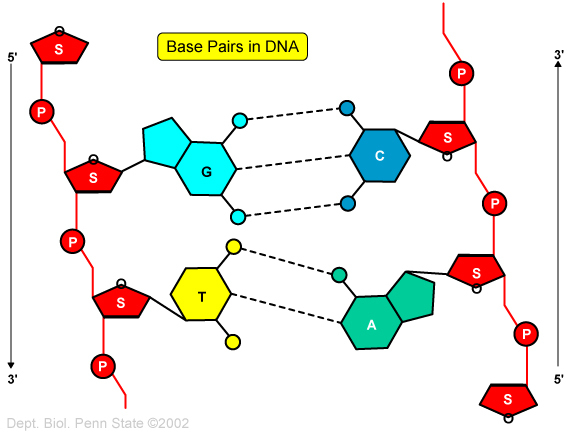
Which 2 molecules form the sides (backbone) of the DNA ladder?
a)
deoxyribose sugar and adenine
b)
deoxyribose sugar and a hydrogen bond
c)
deoxyribose sugar and the nucleus
d)
deoxyribose sugar and phosphate
4.
Nitrogenous bases are joined by which type of bond?
a)
polar bonds
b)
ionic bonds
c)
covalent bonds
d)
hydrogen bonds
5.
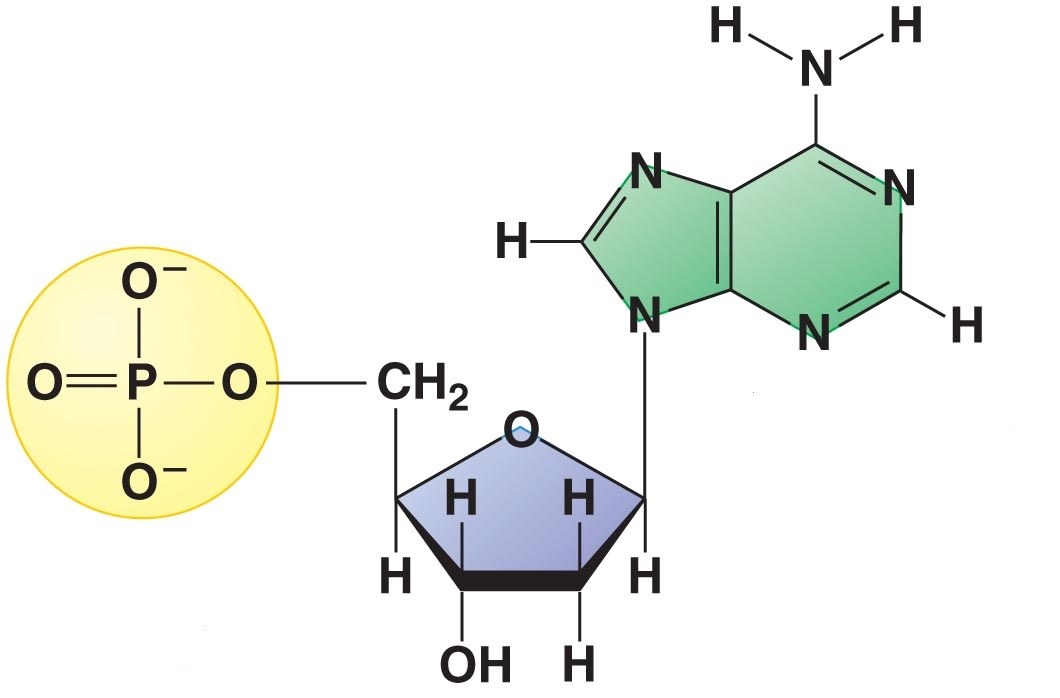
What are the three components of a nucleotide?
a)
sugar, hydrogen, nitrogen base
b)
sugar, oxygen, nitrogen base
c)
sugar, phosphate, nitrogen base
d)
sugar, phosphate, protein
6.
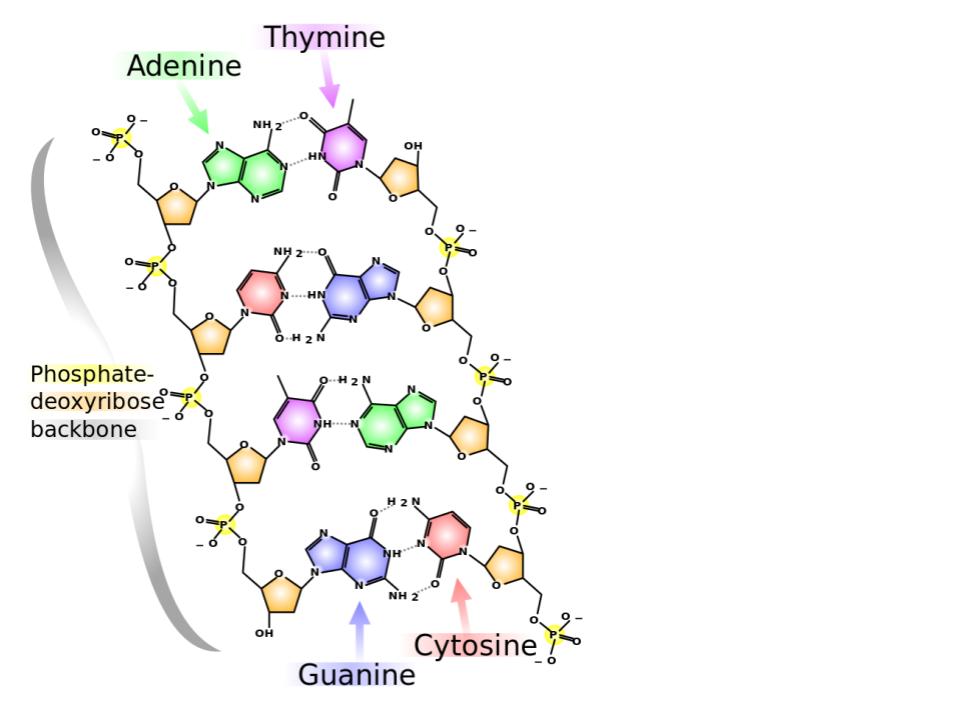
Cytosine always pairs with
a)
Adenine
b)
Thymine
c)
Uracil
d)
Guanine
7.
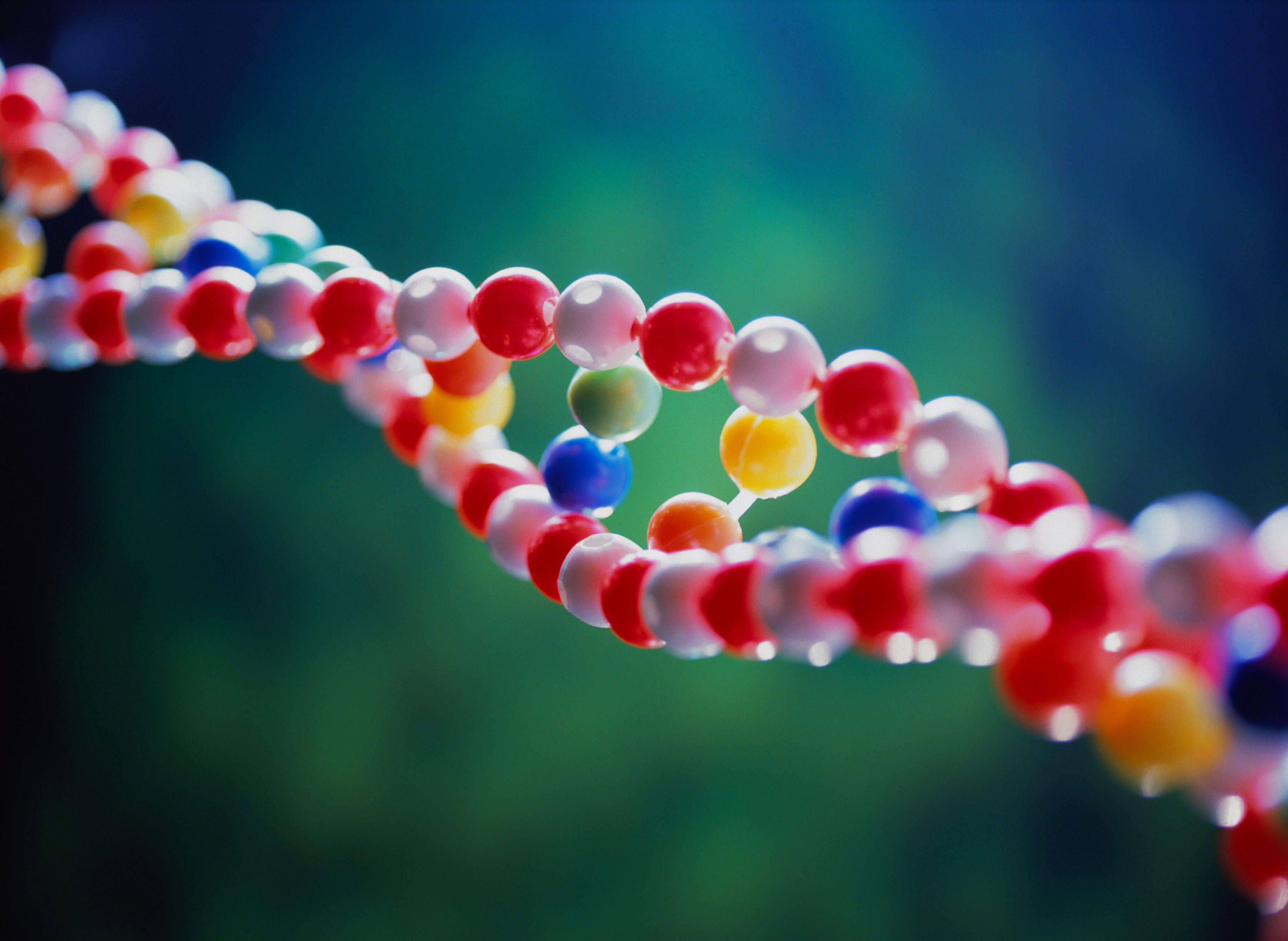
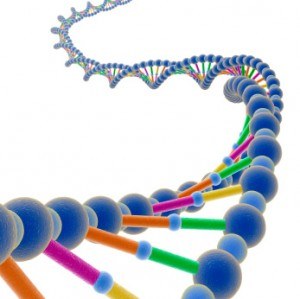
Name this structure
a)
double helix
b)
nucelotide
c)
twisted ladder
d)
hydrogen bond
8.
Which organelle is DNA usually found in?
a)
cell membrane
b)
vacuole
c)
ribosome
d)
nucleus
9.
Guanine bonds with ______________.
a)
Adenine
b)
Guanine
c)
Cytosine
d)
Thymine
10.
The two strands of DNA are held together by:
a)
Hydrogen Bonds
b)
Phosphodiester Bonds
c)
Glycolsyl Bonds
d)
Glycosidic Linkages
11.
What is the complement to the DNA strand below:
5'-ATGCCAT-3'
a)
5'-TACGGTA-3'
b)
3'-TACGGTA-5'
c)
3'-ATGGCAT-5'
d)
5'-ATGGCAT-3'
12.
Which of the following is not a nitrogen base found in DNA?
a)
Thymine
b)
Uracil 
c)
Guanine
d)
Adenine
13.
What is the significance of the sequence (order) of the Nitrogen Bases in DNA?
a)
The order of the Nitrogen Bases determines the number of chromosomes present in an organism.
b)
The order of the Nitrogen Bases determines the traits that an organism will possess (have).
c)
The order of the Nitrogen Bases determines the gender of an organism.
d)
The order of the Nitrogen Bases determines whether an organism is abiotic biotic.
14.
Which sequence of DNA bases would pair with this partial strand
ATG TGA CAG
a)
ATG TGA CAG
b)
TAC ACT GTC
c)
GTA AGT GAC
d)
CAT TCA CTG
15.
The sugar in DNA is ?
a)
sucrose
b)
glucose
c)
deoxyribose
d)
fructose
16.
Which sequence of DNA bases would pair with this partial strand
CAT TCA CTG
a)
ATG TGA CAG
b)
TAC ACT GTC
c)
GTA AGT GAC
d)
CAT TCA CTG
17.

DNA is copied during

a)

During cell division

b)

All the time

c)

During protein production

18.

If a DNA molecule has 30% Guanine bases, how many Cytosine bases will it have?

a)

30%

b)

25%

c)

20%

d)

10%

19.

The first step in DNA replication is

a)

to unwind and unzip the two strands

b)

to break the backbone in half so the sequence can be copies

c)

to attach new nucleotides

d)

to proof read the sequence

20.
What is the difference between the sugars found in DNA and RNA?
a)
RNA contains glucose
b)
RNA contains sucrose
c)
RNA contains deoxyribose
d)
RNA contains Ribose
21.
What is the difference between DNA and RNA in terms of bases?
a)
RNA contains uracil in place of thymine
b)
RNA contains uracil in place of adenine
c)
RNA contains uracil in place of guanine
d)
RNA contains uracil in place of  cytosine
22.
RNA has how many strands?
a)
one
b)
two
23.

The nitrogen base pairs for RNA are

a)

A-T C-G

b)

A-U C-G

c)

A-C T-G

d)

T -U G-C

24.

The sugar in the backbone of ribonucleic acid is

a)

deoxyribose

b)

ribose

c)

dextrose

d)

sucrose

25.

RNA carries a copy of the DNA blueprint (instructions) from the nucleus to the ___

a)

nucleus

b)

cell membrane

c)

vacuole

d)

ribosome

26.
Which type of RNA is made in the nucleus?
a)
mRNA
b)
rRNA
c)
tRNA
27.
The function of ______ is to combine with proteins to form ribosomes.
a)
rRNA
b)
tRNA
c)
mRNA
d)
DNA
28.

The fragments on the lagging strand that are made up of repeating segments of DNA and RNA Primers

a)

okazaki fragments

b)

Primase

c)

Polymerase

d)

unused DNA

29.

DNA replication results in

a)

2 completely new DNA molecules

b)

2 DNA molecules that each contain a strand of the original

c)

1 new DNA molecule and 1 old

d)

1 new molecule of DNA

30.

Enzyme that connects the DNA to the backbone (glues)

a)

Ligase

b)

Polymerase

c)

Helicase

d)

Primase

31.

Enzyme that breaks hydrogen bonds (unzips)

a)

Ligase

b)

Polymerase

c)

Primase

d)

Helicase

32.
Which enzyme is responsible for adding nucleotides ("The Builder")?
a)
Topoisomerase
b)
DNA Polymerase
c)
Ligase
d)
Primase
33.
In what phase of the cell cycle does DNA replication take place?
a)
G1
b)
S
c)
G2
d)
M
34.
Watson and Crick were the first to suggest that DNA is _____
a)
a short molecule
b)
the shape of a double helix
c)
a protein molecule
d)
the genetic material
35.
Replicate the following strand of DNA: 
AATCATGGA
a)
AATCATGGA
b)
TTAGTACCT
c)
UUAGUACCU
d)
GGATAUCUA
36.
What is A?
a)
Leading strand
b)
Lagging strand
c)
Okazaki Fragments
d)
DNA plymerase
37.

Which process is used to make mRNA from the DNA in the nucleus?

a)

transcription

b)

translation

c)

replication

38.

Where does transcription take place in EUKARYOTIC cells?

a)

nucleus

b)

cytoplasm

c)

ribosome

39.
Which RNA bases would pair with TACGAA in transcription
a)
AUGCUU
b)
ATGCTT
c)
GCATCC
d)
GCAUCC
40.
How many amino acids are coded for by this sequence of nucleotides:
ATG GGA ACT CCA
a)
4
b)
2
c)
6
d)
12
41.

Transcribe the following DNA sequence into RNA:


AAT TAG GGC TCG

a)

AAT TAG GGC TCG

b)

TTA ATC CCG AGC

c)

UUA AUC CCG AGC

d)

TTU UTC CCG UGC

42.
Amino acids are the building blocks of... 
a)
DNA
b)
RNA
c)
Atoms
d)
Proteins
43.

How many nucleotides equal make up a codon?

a)

1

b)

2

c)

3

d)

4

44.

TRANSCRIBE this DNA sequence into RNA: ATG CGC TCT

a)

AUG CAA UGA

b)

ATG CAA TGA

c)

UAC GCG AGA

d)

TAC GTT ACT

45.

Where does RNA polymerase know where to start copying down instructions in the DNA molecule?

a)

By looking for Promotors in the code to signal to start copying

b)

By looking for Stop Codes in the code to signal to start copying

c)

It doesn't matter where it starts, it will find it.

d)

mRNA signals to the RNA polymerase where to start

46.

What is the correct amino acid sequence for the mRNA code AUGCCAGUAUGA?

a)

Met-Pro-Val-Stop

b)

Met-Ala-Arg-Stop

c)

Tyr-Gly-His- Leu

d)

Tyr-Gly-Arg-His

47.

Where in the cell does translation take place?

a)

Nucleus

b)

Ribosome

c)

Cell Membrane

d)

Mitochondria

48.

What is the correct sequence for protein synthesis?

a)

rRNA --> DNA --> Protein---->mRNA

b)

Protein --> rRNA --> DNA---->tRNA

c)

DNA ----> mRNA ---->tRNA----> Protein

d)

DNA --> Protein --> tRNA-->mRNA

49.

The anti-codon of tRNA

a)

contains a sequence the same as DNA

b)

contains a sequence complementary to the mRNA codon

c)

contains the base thymine

d)

does not exist

50.

MET is know as the __________ codon.

a)

stop

b)

main

c)

start

d)

most common

51.

Select the RNA sequence or sequences for Glutamine.

a)

CGU

b)

CAG

c)

CUA

d)

CAA

52.

Find the amino acid that this segment of RNA codes for: GAC

a)

Arginine

b)

Asparagine

c)

Aspartic Acid

d)

Alanine

53.

Find the amino acid that this segment of DNA codes for: GAC

a)

Leucine

b)

Serine

c)

Aspartic Acid

d)

Histine

54.

In RNA, C pairs with G , and A pairs with

a)

U

b)

A

c)

C

d)

T

55.

In DNA, C pairs with G , and A pairs with

a)

U

b)

A

c)

C

d)

T

56.

CGAUCGAUCAAG

a)

This is a segment of DNA.

b)

This is a segment of RNA.

c)

It is impossible to tell if this is DNA or RNA.

57.

Select the DNA sequence or sequences for Tyrosine.

a)

ATC

b)

ATA

c)

ACC

d)

ATG

58.

Find the amino acid that this segment of RNA codes for: UUG

a)

Glycine

b)

Asparagine

c)

Lysine

d)

Leucine

59.

Find the amino acid that this segment of DNA codes for: CGT

a)

Alanine

b)

Stop

c)

Valine

d)

Leucine

60.

Select the RNA sequence or sequences for STOP.

a)

UCC

b)

UAA

c)

UGA

d)

UAG

61.

Select the DNA sequence or sequences for Lysine.

a)

TTC

b)

AAC

c)

TTT

d)

TAT

62.
Which of the following polypeptides is coded for by the mRNA sequence 5' AUGGUUAAA 3'?
a)
Val, Lys, Phe, Gly
b)
Met, Asp, Phe
c)
Met, Val, Lys
d)
Ile, Gln, Leu, Ser
63.
Which RNA bases would pair with TACGAA in transcription? 
a)
AUGCUU 
b)
ATGCTT
c)
GCATCC
d)
GCAUCC
64.
What process is occurring in this photo?
a)
Transcription
b)
DNA unwinding
c)
Translation
d)
Transfer RNA is creating bases
65.
The process of transferring the codons to the amino acids ends with what codon?
a)
Stop
b)
Terminal
c)
End
d)
Cancel 
66.
When transferring tRNA to amino acids, the process cannot begin until it reaches a...
a)
Beginning codon
b)
Start codon 
c)
Initiator codon
d)
Anticodon
67.

What is the central dogma of biology?

a)

DNA -> RNA -> Cells

b)

DNA -> Protein -> RNA

c)

DNA -> RNA -> Protein

d)

Protein -> DNA -> RNA

68.

Transcription happens in ______ and translation happens is ________.

a)

Ribosome, Cytoplasm

b)

Nucleus, Mitochondria

c)

Ribosome, Mitochondria

d)

Nucleus, Ribosome

69.

AUA CGG ACG UAC

If a deletion occurs at the first "G" above, how does that affect the amino acids being made?

a)

Every amino acid is changed.

b)

Every amino acid before the deletion stays the same but the ones after the deletion will change.

c)

There will be no change in the amino acids.

70.

Built models to determine that DNA was a double helix shape with base pairs A-T and G-C in rungs between the sugar/phosphate backbone of DNA.

a)

Watson & Crick

b)

Franklin

c)

Wilkins

d)

Pauling

e)

Chargaff

71.

Provided clear x-ray crystallography images of DNA

a)

Watson & Crick

b)

Franklin

c)

Wilkins

d)

Pauling

e)

Chargaff

72.

Discovered that there was the same amount of A and T in a cell, and C and G in a cell.

a)

Watson & Crick

b)

Franklin

c)

Wilkins

d)

Pauling

e)

Chargaff

73.

What is a section of DNA that codes for a specific protein called?

a)

RNA

b)

replication

c)

gene

d)

protein

74.
Griffith discovered that
a)
DNA is different than RNA.
b)
adenine = thymine.
c)
bacteria can transfer DNA.
d)
DNA is the genetic molecule.
75.
Which scientists used viruses and radioactive isotopes to definitively prove that DNA, and not protein, was the molecule of heredity?
a)
Griffith and Avery
b)
Chargaff and Franklin
c)
Watson and Crick
d)
Hershey and Chase
76.
By using radioactive isotopes, Hershey and Chase were able to conclude that _____ is the carrier of genetic information.
a)
DNA
b)
Protein
c)
Carbohydrate
d)
Lipid
77.

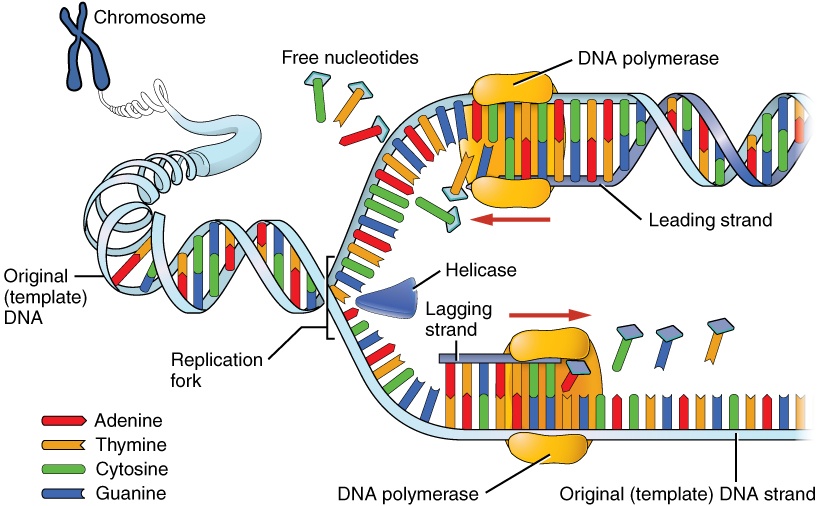
The picture below shows the steps of DNA replication beginning with step one and ending with step three.


​Because you are reusing the old, or parent, DNA strand DNA replication is said to be

a)

Semi- Conservative

b)

Semi-discontinuous

c)

Continuous

d)

Fully-Conserveative

78.

According to the Base pair rule, if a DNA molecule contains 1500 adenines how many thymine's will it contain?

a)

1500

b)

500

c)

0

d)

1000

79.

According to the Base pair rule, if a DNA molecule contains 2 cytosine's how many guanines will it contain?

a)

1500

b)

2

c)

0

d)

1000

80.
What is the complement to the DNA strand below:
5'-ATGCCAT-3'
a)
5'-TACGGTA-3'
b)
3'-TACGGTA-5'
c)
3'-ATGGCAT-5'
d)
5'-ATGGCAT-3'
81.
Assume that you have straight hair and your sibling has curly hair. What accounts for this difference?
a)
You have DNA and your sibling does not.
b)
The your sequence of nitrogen bases is different than your sibling.
c)
Your sibling has a weave. 
d)
Your sibling has a genetic mutation.