
 Worksheets
Geology Pt 2 Review
Total questions: 47
Worksheet time: 47mins
What geological feature forms as a result of Continental-Oceanic Convergent boundary?
Oceanic Trench
Ridge
Rift
What geological feature forms from the result of continental-continental convergent boundary?
What geological feature forms from the result of oceanic-oceanic convergent boundary?
Volcanic Islands
Rift
Ridge
What geological feature forms as the result of continental-continental divergent boundaries?
Ridges
What geological feature forms as a result of oceanic-oceanic divergent boundaries?
Rifts
Volcanic Arc
Ridge Valley
Volcanic Islands
What are the two types of crust?
(a)
What causes the plates to move?
(a)
Where does convection currents occur in the earth?
(a)
is the layer of the Earth that is liquid.
Why does oceanic crust subduct under continental crust?
Because continental crust is denser than oceanic crust
Because continental crust is colder than oceanic crust
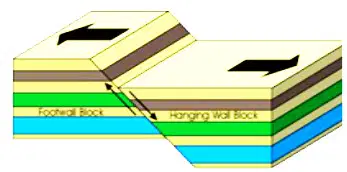
Which fault is the picture?
Normal Fault
Reverse Fault
Strike-Slip Fault
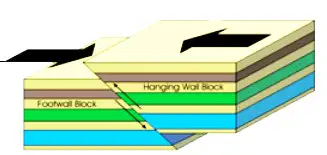
Which fault is this picture?
Normal Fault
Reverse Fault
Strike-Slip Fault
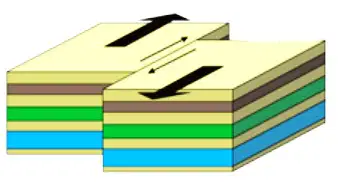
Which fault is this picture?
Normal Fault
Reverse Fault
Strike-Slip Fault
Which of the following would e the LEAST destructive to the land?
5.6 Magnitude
4.3 Magnitude
3.0 Magnitude
7.1 Magnitude
Where are most volcanoes located?
Divergent Boundary
Transform Boundary
Convergent Boundary
Hot Spots

Suppose a seismograph at an earthquake monitoring station is 5,000 km away from the epicenter of an earthquake. How long did it take the P-wave to make it to the seismograph?
15 minutes
9 minutes 20 seconds
2 minutes 40 seconds
8 minutes 20 seconds
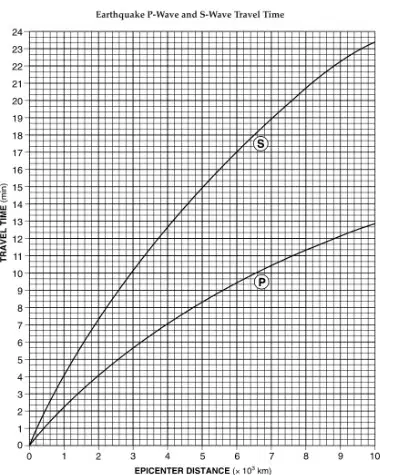
Suppose a seismograph at an earthquake monitoring station is 5,600 km away from the epicenter of an earthquake. How long did it take the S-wave to make it to the seismograph?
16 minutes
9 minutes
10 minutes
4 minutes
How many seismographs are needed to determine the location of an earthquake?
2
3
4
5
A P-Wave...
Push and Pulls
Side to side
Up and down
S-Waves....
Push and Pull
Side to Side
Up and Down
Surface Waves....
Push and Pull
Side to Side
Up and Down
Most destructive wave is a
P-Wave
S-Wave
Surface Wave
Choose what applies for:
Cinder Cones
Explosive Eruption
Gentle Eruption
Alternating between explosive and gentle eruptions
Convergent Boundary
Divergent Boundary
Choose what applies for:
Shield Cones
Explosive Eruptions
Gentle Eruptions
Alternating between explosive and gentle eruptions
Convergent Boundary
Divergent Boundary
Choose what applies for:
Composite Cones
Explosive Eruptions
Gentle Eruptions
Alternating between explosive and gentle eruptions
Convergent Boundary
Divergent Boundary
Choose what applies for:
Cinder Cones
Large Mountain
Small Mountain
Gently sloped sides
Steep sides
Choose what applies for:
Shield Cones
Large Mountain
Small Mountain
Gently Sloped Sides
Steep Sides
Choose what applies for:
Composite Cones
Large Mountain
Small Mountain
Gently sloped sides
Steep Sides
What is a volcanic mudflow?
(a)
Choose what applies:
Subduction Boundary Eruptions
Explosive eruptions
Occur at Divergent Boundary
Thick Felsic Lava
Thin Mafic Lava
Occur at convergent boundary
Choose what applies:
Rift Boundary Eruptions
Thick Felsic Lava
Think Mafic Lava
Convergent Boundary
Divergent Boundary
Gentle Eruptions
What is a vibration of the Earth produced by a rapid release of energy?
Earthquake
Volcano
Tectonic plate
Mountain
What is an opening in the earth’s crust through which magma/lava, ash and gasses escape?
Earthquake
Volcano
Tectonic Plate
Mountain
Made up of tiny, dust-like fragments of jagged rocks, minerals, and volcanic gasses?
Lahar Flows
Atmospheric Ash
Pyroclastic Flows
Earthquake
Avalanches containing lava, ash, volcanic gasses and volcanic bombs.
Lahar Flows
Atmospheric Ash
Pyroclastic Flows
Earthquakes

What is A?
Main Vent
Crater
Steam
Lava

What is B?
Volcano Bombs
Main Vent
Ash Cloud
Lava

What is C?
Ash
Main Vent
Steam
Lava

What is E?
Main Vent
Cone
Crater
Secondary Vent

What is F?
Crater
Lava
Ash
Volcanic Bombs

What is G?
Ash Cloud
Volcanic Bombs
Steam
Lava

What is H?
Magma Flow
Lava Flow
Ash
Crater

What is I?
Crater
Side Vent
Cone
Volcanic Bombs

What is J? (The one under G)
Steam
Crater
Layers of harden rock and ash
Side Vent

What is K?
Layers of hardened rock and ash
Crater
Side vent
Lava

What is L?
Main Vent
Side Vent
Lava
Magma Chamber
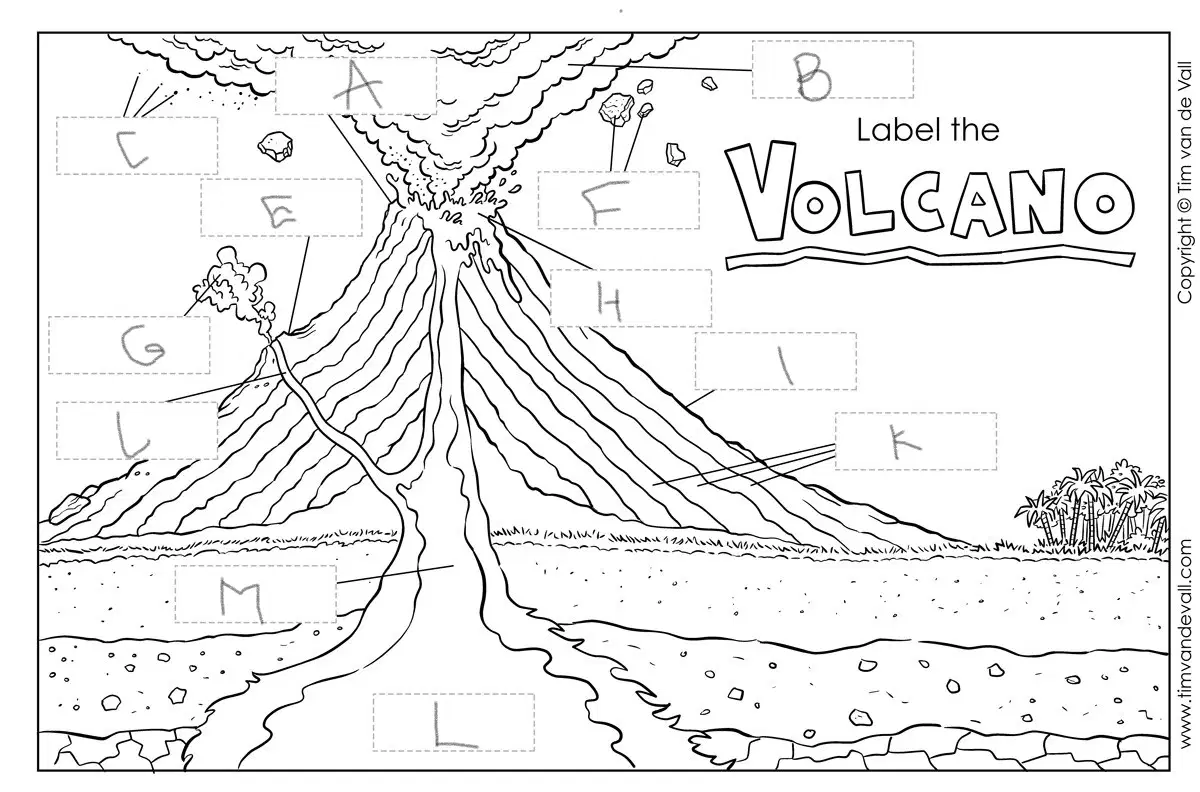
What is M?
Secondary Vent
Magma Chamber
Lava
Main Vent

