wayground logo

Free Printable Worksheets

NEW

Font size

S
M
L
XL
Worksheets

prelim quiz

Total questions: 50

Worksheet time: 1hrs 25mins

Name
Class
Date
1.
The amount of energy required to raise the temperature 1ºC for every kilogram is called____?
a)
Thermal Energy
b)
Specific Heat
c)
Temperature
d)
Kinetic Energy
2.
What is the symbol for Thermal Energy?
a)
Q
b)
t
c)
m
d)
C
3.
What unit do you use to measure Thermal Energy?
a)
J/Kg ºC
b)
Kg
c)
ºC
d)
J
4.
What is the symbol for Specific Heat
a)
Q
b)
t
c)
m
d)
C
5.
What is the equation to measure change in Thermal Energy?
a)
Q=mc∆t
b)
Q=mc
c)
Q= ∆mct
d)
m=QC
6.
Water has a specific heat of 4184 J/KgºC.  Wood has a specific heat of 1760 J/KgºC.  What material needs more energy to raise the temperature 1ºC
a)
Wood
b)
Water
c)
Both are the same
7.
Copper, Stainless Steel, Carbon Steel, and Zinc were all heated using the same thermal energy.  What material would be the coolest after being heated?
a)
Copper
b)
Carbon Steel
c)
Zinc
d)
Stainless Steel
8.
A material was cooled from 100ºC to 40ºC.  What is the temperature change?
a)
60ºC
b)
40ºC
c)
-60ºC
d)
-40ºC
9.
What does temperature measure?
a)
Heat
b)
ºC
c)
Kinetic Energy
d)
Thermal Energy
10.
What is the SI unit for temperature?
a)
Kelvin
b)
Celcius
c)
Fahrenheit
d)
All of these
11.
How does heat flow?
a)
Always from cold to warm
b)
Always from warm to cold
c)
Both warm to cold & cold to warm
d)
It depends on the temperature
12.
The specific heat of aluminum is 0.21 cal/g°C.  How much heat(Q) is released when a 10 g piece of aluminum foil is taken out of the oven and cools from 100° to 50°?
a)
105 J
b)
10.5 J
c)
1.05 J
13.
20 g of water. specific heat of water is 4.18 J/x°C.  temperature changes from 25° C to 20° Chow much heat energy (Q) moves from the water to the surroundings?
a)
418 Joules
b)
209 J
c)
83 J
d)
4.18 J
14.
A material was cooled from 100ºC to 40ºC.  What is the temperature change?
a)
60ºC
b)
40ºC
c)
-60ºC
d)
-40ºC
15.
The specific heat of aluminum is 0.21 cal/g°C.  How much heat(Q) is released when a 10 g piece of aluminum foil is taken out of the oven and cools from 100° to 50°?
a)
105 J
b)
10.5 J
c)
1.05 J
16.
The specific heat(c) of copper is 0.39 J/g °C. What is the temperature change(∆t) when 100 Joules of heat(Q) is added to 20 grams?
a)
12.82 °C
b)
24.12°C
c)
351 °C
17.
Calculate the heat needed to raise the temperature of 0.25 kg of aluminum 7°C (c=900 J/kg°C)
a)
1575 J
b)
-1575 J
c)
514 J
d)
-514 J
18.
The amount of energy required to raise the temperature 1ºC for every kilogram is called____?
a)
Thermal Energy
b)
Specific Heat
c)
Temperature
d)
Kinetic Energy
19.
Water has a specific heat of 4184 J/KgºC.  Wood has a specific heat of 1760 J/KgºC.  What material needs more energy to raise the temperature 1ºC
a)
Wood
b)
Water
c)
Both are the same
20.
How does heat flow?
a)
Always from cold to warm
b)
Always from warm to cold
c)
Both warm to cold & cold to warm
d)
It depends on the temperature
21.
When a  piece of aluminum foil is taken out of the oven and cools from 100° to 50°, What is the change in temperature?
a)
50°
b)
c)
100°
d)
150°
22.
A pot of 2400g of water at a temperature of 25˚C is heated on a stove until the water boils (100˚C).  The specific heat of water is 4.18 J/(g˚C).
Determine the heat energy needed to heat the water in the pot to boiling.
a)
133.76J
b)
43,062.2J
c)
752,400J
d)
1,003,200J
23.
The temperature of an unknown piece of metal with a mass of 30.00 g changes from 25.0 °C to 35.0 °C when the metal absorbs 350.0 J of energy. What is the specific heat of the metal?
a)
1.17 J/g°C
b)
-1.17 J/g°C
c)
0.857 J/g°C
d)
-0.857 J/g°C
24.
How many Joules of energy are required to change 10 gram of water from 20 C to 90 C?
a)
1476 J
b)
2926 J
c)
210,050 J
d)
1,404,500 J
25.

What two forms of energy come from the sun?

a)

mechanical and sound

b)

electrical and chemical

c)

radiant and thermal

d)

kinetic and potential

26.

Which form of energy does a moving object possess?

a)

light energy

b)

sound energy

c)

chemical energy

d)

mechanical energy

27.

Energy is stored as ________________ in the foods we eat. It is also stored in batteries and in a match that is used to light a candle.

a)

chemical

b)

mechanical

c)

thermal

d)

heat

28.

Which form of energy is transferred from one object to the other?

a)

Heat energy

b)

light energy

c)

sound energy

d)

mechanical energy

29.
Which device uses chemical energy to produce electricity?
a)
generator
b)
radio
c)
television
d)
microwave oven
30.
Which example has chemical energy present in it?
a)
electric circuit
b)
light bulb
c)
medicine
d)
television
31.
What form of energy can travel through a vacuum or an empty space?
a)
electrical energy
b)
light energy
c)
mechanical energy
d)
sound energy
32.
Which of the following does NOT possess mechanical energy?
a)
a lighted bulb
b)
pedalling a bike
c)
tapping the drums
d)
pushing a cart
33.
All the following objects produce sound. Which one does not?
a)
drum
b)
guitar
c)
bulb
d)
sonar
34.
How is light energy different from sound energy?
a)
Light energy moves slower than sound.
b)
Light helps you see while sound lets you hear.
c)
Light energy uses vibrations while sound does not.
d)
None of the above.
35.
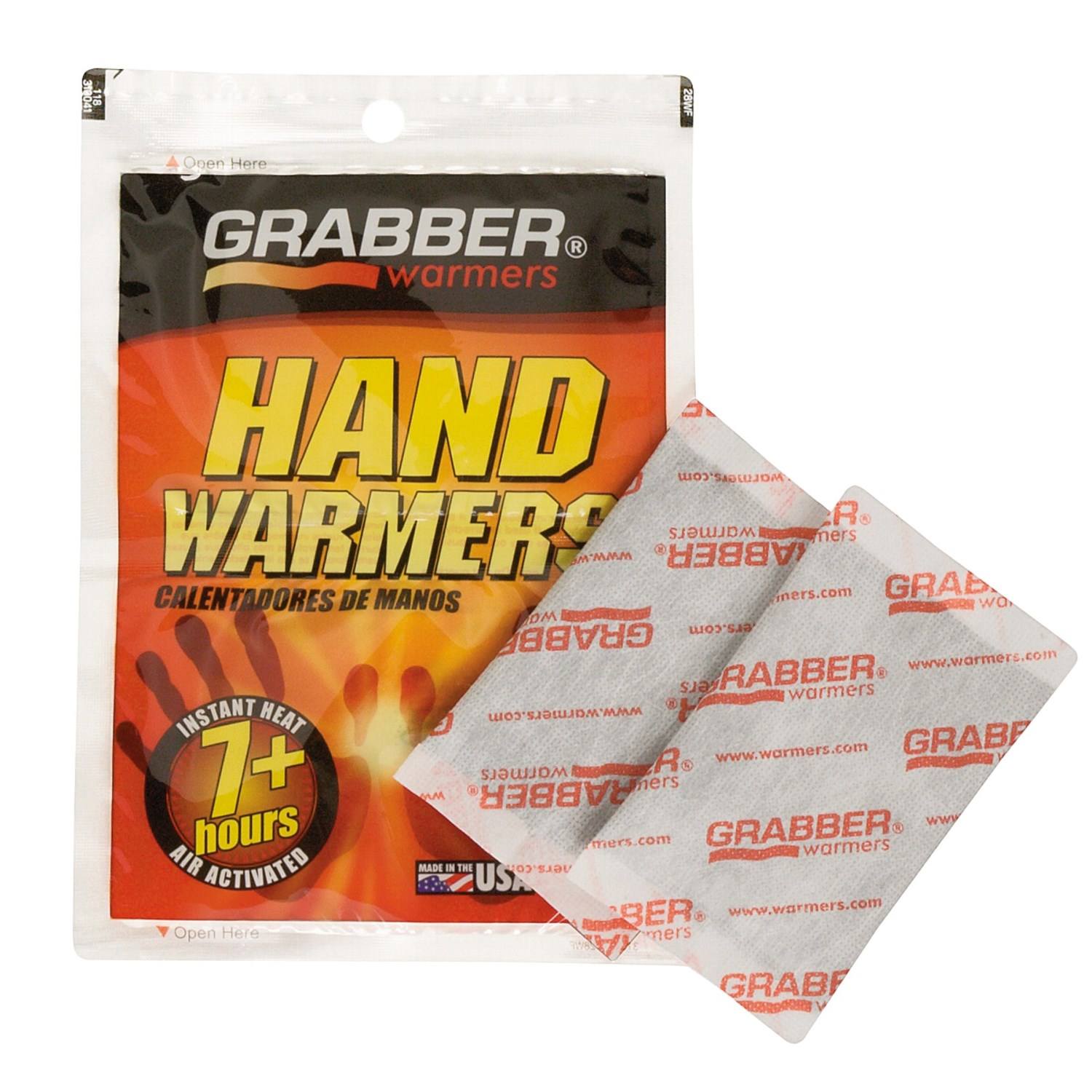
What type of reaction occurs in a hand warmer
a)
exothermic
b)
endothermic
36.
Exothermic reactions...
a)
Absorb energy
b)
Release energy
c)
Release Color
d)
Absorb Color
37.
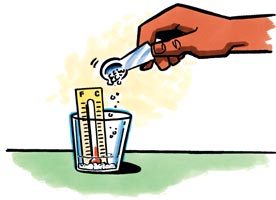
In an endothermic reaction, heat is ...
a)
taken in or absorbed
b)
given out or released 
38.
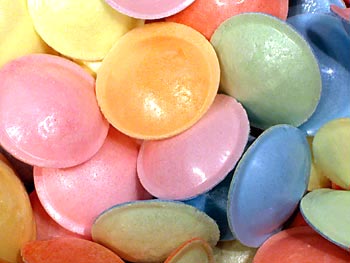
Have you ever eaten sherbet sweets candy? They fizz in your mouth and your tongue feels cold. Why do you think that is?
a)
It is an exothermic reaction
b)
It is an endothermic reaction
c)
It is made of ice
d)
It is dissolving your mouth
39.
If they energy required to break the bonds is greater than the energy given out by making new bonds the reaction is
a)
Exothermic
b)
Endothermic
c)
Neutralisation
40.

_____ reactions usually feel hot!

a)

endothermic

b)

exothermic

41.

____ reactions usually feel cold.

a)

endothermic

b)

exothermic

42.
If they energy required to break the bonds is less than the energy given out by making new bonds the reaction is
a)
Exothermic
b)
Endothermic
c)
Neutralisation
43.

Which form of energy uses water moving through a dam?

a)

Geothermal

b)

Nuclear

c)

Solar

d)

Hydropower

44.

What is one advantage of using hydroelectricity as an energy source?

a)

Heat is captures under the earth

b)

It might change the migration patterns of salmon

c)

Reservoirs can be used to irrigate crops

d)

It doesn't need motion to turn turbines.

45.

Why is it helpful to use natural gas even though it's nonrenewable?

a)

there is a limited supply

b)

it releases less pollution than any other fossil fuel

c)

It takes a while to make

d)

We have an endless supply

46.

What is a disadvantage of using coal as an energy source?

a)

There is lots of it everywhere

b)

It releases radiation as a byproduct

c)

It is inexpensive

d)

Mining can damage the environment

47.

How much work is being done with 200 N of force to the right on object that moves 426 meters to the right? (assume the force and displacement are in the same direction)

a)

85,200 J

b)

45,620 J

c)

90,480 J

d)

62,329 J

48.

If a 1300-kg car has been lifted so it has 19500 J of potential energy, it was lifted up ---.

a)

1.5 m

b)

150 m

c)

15 m

d)

0.67 m

49.

A compressed spring has 16 J of potential energy. What is the maximum speed it can impart to a 2 kg object?

a)

4 m/s

b)

16 m/s

c)

12 m/s

d)

10 m/s

50.

These are the unit for work done except

a)

kg m2 s-2

b)

Joule

c)

Newton meter

d)

Nm-2