wayground logo

Free Printable Worksheets

NEW

Font size

S
M
L
XL
Worksheets

Compounds, mixtures, elements, and atoms

Total questions: 59

Worksheet time: 51mins

Name
Class
Date
1.

What is a substance made of two or more elements that are chemically combined called?

a)

A. element

b)

B. compound

c)

C. mixture

d)

D. solution

2.

Is salt (NaCI) a compound or an element?

a)

Compound

b)

element

3.

What is the definition of a compound?

a)

The smallest part of any substance which can exist on its own

b)

Two or more atoms chemically joined together (can be the same or can be different)

c)

A simple substance in which all the atoms are identical

d)

Two or more different elements chemically joined together

4.
All matter is made of .....
a)
energy 
b)
atoms 
c)
air
d)
chemistry
5.

A substance that cannot be broken down into any other substance by ordinary chemical means is called

a)

a molecule.

b)

a mixture.

c)

an element.

d)

a compound.

6.

Two or more physically combined substances form

a)

a compound.

b)

an acid.

c)

an element.

d)

a mixture.

7.

What is an example of a mixture?

a)

Table salt

b)

Water

c)

Oxygen

d)

Air

8.

A substance that contains only one type of atom is a(n)

a)

compound

b)

element

c)

heterogeneous mixture

d)

homogeneous mixture

9.

A compound is made of ________ atoms.

a)

big

b)

similar

c)

different

10.
Carbon Dioxide is a ______ 
a)
compound 
b)
element 
c)
mixtures 
d)
Battle of Bunker Hill 
11.
Salt is a _________. 
a)
compound 
b)
element 
c)
mixture 
12.
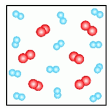
This picture represents which of the following?
a)
element
b)
compound
c)
mixture of elements
d)
mixture of compounds
13.
This picture represents which of the following?
a)
element
b)
compound
c)
mixture
14.
This picture represents which of the following?
a)
element
b)
compound
c)
mixture
15.

The smallest unit of an element is

a)

a compound.

b)

a molecule.

c)

an atom.

d)

a mixture.

16.
Classify the picture with the correct label.
a)
Element
b)
Compound
c)
Mixture of Elements
d)
Mixture of Compounds
17.

What does this illustrate

a)

Elements

b)

Compunds

c)

Mixture of Elements and Compunds

d)

Mixture of Compounds

18.
This diagram represents a _____.
a)
pure substance that is a compound
b)
mixture of elements
c)
pure substance that is an element
d)
mixture of compounds
19.

Element, mixture, or compound?

a)

element

b)

mixture

c)

compound

20.

Element, mixture, or compound?

a)

element

b)

mixture

c)

compound

21.

Ba

a)

Compound

b)

Element

c)

Mixture

22.

KCl2

a)

Compound

b)

Element

c)

Mixture

23.

H3O

a)

Compound

b)

Element

c)

Mixture

24.

Lucky Charms Cereal

a)

Compound

b)

Element

c)

Mixture

25.

H

a)

Compound

b)

Element

c)

Mixture

26.

Chocolate Chip Muffin

a)

Compound

b)

Element

c)

Mixture

27.

Koolaid

a)

Compound

b)

Element

c)

Mixture

28.

Fe2

a)

Compound

b)

Element

c)

Mixture

29.

Mg

a)

Compound

b)

Element

c)

Mixture

30.

Salt (NaCl)

a)

Compound

b)

Element

c)

Mixture

31.

What type of mixture is trail mix?

a)

compound

b)

heterogeneous

c)

homogeneous

32.

What type of mixture is salsa

a)

compound

b)

heterogeneous

c)

homogeneous

33.

What type of matter is this?

a)

compound

b)

element

c)

mixture

34.

What type of matter is this?

a)

compound

b)

element

c)

mixture

35.

What type of matter is this?

a)

compound

b)

element

c)

mixture

36.

The basic part of matter.

a)

Atoms

b)

Protons

c)

Neutrons

d)

Electrons

e)

Nucleus

37.

The particle of an atom without a charge that contributes 1 amu to the atomic mass.

a)

Atoms

b)

Protons

c)

Neutrons

d)

Electrons

e)

Nucleus

38.

The negatively charged particle of an atom.

a)

Atoms

b)

Protons

c)

Neutrons

d)

Electrons

e)

Nucleus

39.

The center of the atom that contains protons and neutrons.

a)

Atoms

b)

Protons

c)

Neutrons

d)

Electrons

e)

Nucleus

40.

The positively charged particle of an atom.

a)

Atoms

b)

Protons

c)

Neutrons

d)

Electrons

e)

Nucleus

41.
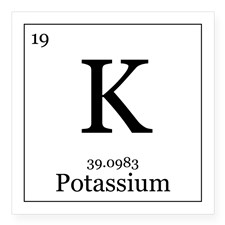
How many neutron are in the atom "K"?
a)
7
b)
2
c)
39
d)
20
42.
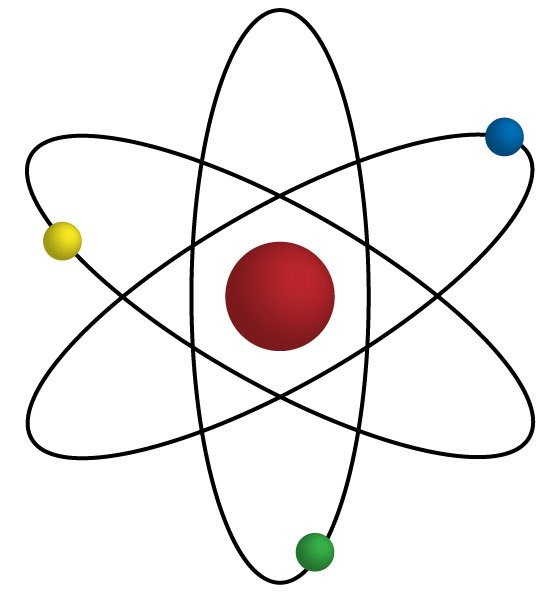
What is the number of protons that the element in this image contain?
a)
14
b)
7
c)
15
d)
18
43.
What are the 3 particles that make-up the atom?
a)
protons, neutrons, and isotopes
b)
neutrons, isotopes, and electrons
c)
positives, negatives, and electrons
d)
protons, neutrons, and electrons
44.
The charge of a neutron in an atom.
a)
positive
b)
negative
c)
neutral
d)
+1
45.
What is the atomic number for an element with three protons?
a)
2
b)
1
c)
3
d)
6
46.
Where are electrons of an atom found?
a)
Nucleus
b)
Electron Cloud
c)
Some are in the nucleus and some in the electron cloud.
d)
They are moving everywhere.
47.
What subatomic particle is positively charged and is located inside of the nucleus?
a)
Proton
b)
Neutron
c)
Electron
d)
Ion
48.
What particle uniquely identifies an element?
a)
Number of Valence Electrons
b)
Number of Protons
c)
Number of Electrons
d)
Atomic Mass
49.
If an atom has 12 positively charged subatomic particles, which of the following must it also have to be considered a neutral atom?
a)
12 neutrons
b)
12 electrons
c)
12 protons
d)
24 protons and neutrons
50.
Which subatomic particles contribute the most to the mass of an atom?
a)
Protons, Neutrons, Electrons
b)
Protons only
c)
Protons and Electrons
d)
Protons and Neutrons
51.
What subatomic particle(s) would be found orbiting the nucleus?
a)
Neutrons only
b)
Electrons only
c)
Protons and Neutrons
d)
Protons and Electrons
52.
If an atom has 10 protons, 10 neutrons, and 10 electrons, what is the mass of the atom?
a)
10
b)
20
c)
30
53.
What is the mass of an atom if it has 11 protons, 12 neutrons, and 11 electrons?
a)
22
b)
11
c)
34
d)
23
54.
an atom with atomic number 6 would have how many protons 
a)
6
b)
12
c)
3
d)
cannot be determined 
55.

If the mass number of this chlorine atom is 36, how many neutrons does it have?

a)

17

b)

18

c)

19

d)

can't be determined

56.
The symbol for Carbon is
a)
6
b)
12.011
c)
C
d)
Ca
57.
Beryllium has how many protons?
a)
4
b)
9.0122
c)
2
d)
13.0122
58.
What is the atomic number?
a)
the number of protons
b)
the number of protons and neutrons
c)
the number of neutrons
d)
the number of protons and electrons
59.
What is the atomic mass of "F"
a)
9
b)
18
c)
17
d)
19