
 Worksheets
Atoms and periodic table
Total questions: 31
Worksheet time: 20mins
What is an atom ?
Atoms are tiny creatures that live inside objects and make them solid.
smallest part of matter that has properties of a chemical element
An atom is a particle that makes up only the liquid elements.
An atom is a peculiar particle found only in space.
Parts of an atom
Neutros, protons electrons & nucleus
Protons , electrons, neutrons
Neutrons, protons and nucleus
Protons, electrons, neutrons and nucleus.
Which subatomic particles are found in the nucleus of an atom?
Protons & electrons
Neutrons & electrons
Protons & neutrons
Neutrons
Which subatomic particle(s) carry a negative charge?
Electrons and neutrons
Protons
Electrons
Neutrons
How many groups are in the periodic table?
17
18
15
7
How many Periods are in the periodic table?
7
5
18
3
The only metal known to occur in liquid form is
Mercury
Aluminium
Golg
Bronze
The property of metals by which they can be beaten in to thin sheets is called
Sonority
Malleability
Ductility
None of the above
The property of metals by which it can be drawn into wires is
Malleability
Sonority
Lustrous
Ductility
Metals are good conductor of
Only heat
Only electricity
Heat and electricity both
None of the above
Which nonmetal is very essential for our life is
Iodine
Oxygen
Nitrogen
Chlorine
Non-metal used in water purification process
Oxygen
Nitrogen
Chlorine
Iodine
The best malleable metal is
Aluminium
Copper
Gold
Zinc
........... is the hardest known substance in nature
Graphite
Iron
Gold
Diamond
Non metal which is good conductor of electricity
Diamond
Oxygen
Graphite
Nitrogen
When ice melts, it becomes a
gas
solid
liquid
plasma
Which state of matter is water at -10 degrees Celsius?
liquid
solid
gas
vapor
Which of these describes a property of all matter?
all matter gives off light
all matter is attracted by magnets
all matter is made of atoms
all matter dissolves in water

An element is identified by
its number of protons
the atomic mass
the type of charge
its number of isotopes

What is the picture displayed?
Carbon Dioxide
Water
Gasoline
Liquid Nitrogen
The central region of an atom where its neutrons and protons are is called it's __________ .
nucleus
electron cloud
core
center
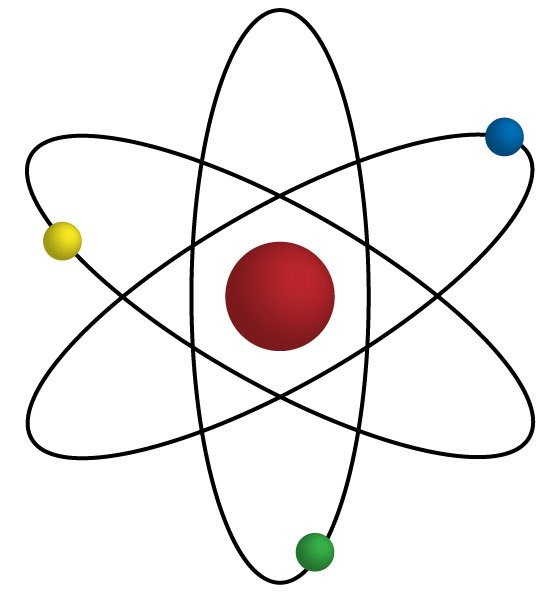

This is a picture of __________________.
molecules
atoms
electrons
protons

This is a picture of a(n)
molecule
atom
electron
nucleus

This is a picture of __________________
molecules
atoms
electrons
protons

