
 Worksheets
Matter Test Cards 1-20
Total questions: 20
Worksheet time: 10mins

1.Based on their properties, which of the objects is most likely iron?
2. Which of these tables correctly identifies the solubility of each substance in water?

A

B

C

D

3. Which of these properties can be used to classify these six objects into more than one group?
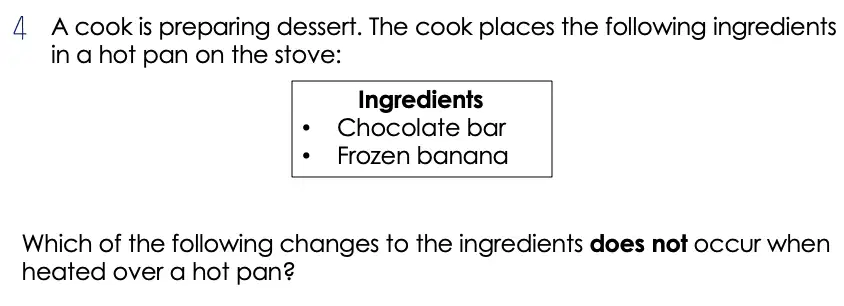
4. Which of the following changes to the ingredients does not occur when heated over a hot pan?
5. Which of the following tables identifies the correct physical properties of the four listed substances?

A

B

C

D

6. Based on the data from the table, which cup is the best thermal insulator?

7. Which liquid is most likely vegetable oil?
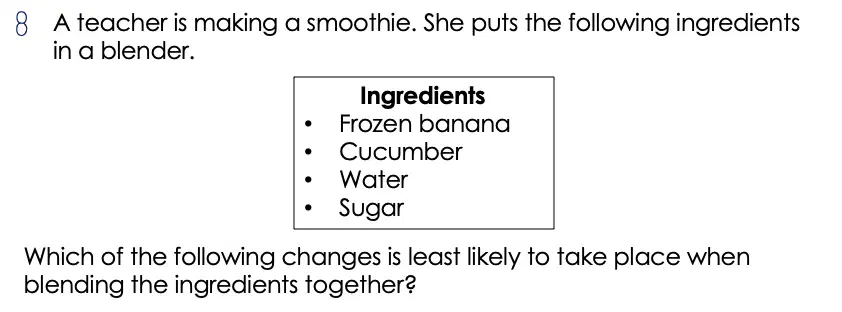
8. Which of the following changes is least likely to take place when blending the ingredients together?

9. Based on their properties, which of the objects is most likely plastic?

10. Based on the table, which material should be used to insulate electrical wires?

11. Which of the following lists the blocks in order from least to greatest mass?

12. Based on their properties, which of these tables properly identifies the objects?

A

B
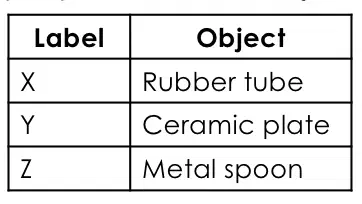
C

D

13. The substances were added to a large beaker of warm water. A student stirred the mixture for 3 minutes. Based on the table, which substance could most likely be separated from the mixture using a strainer?

14. Which of these properties cannot be used to classify these six objects into more than one group?
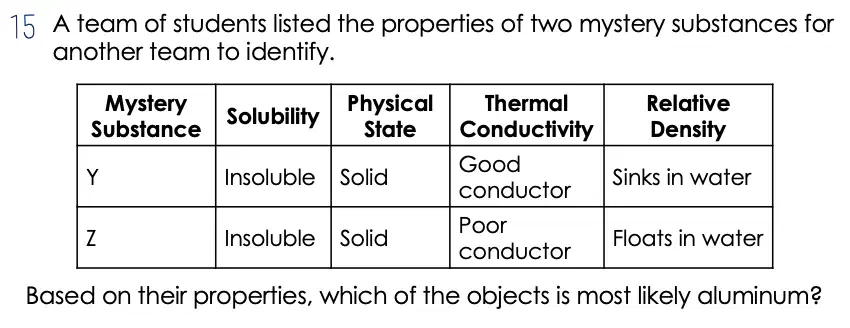
15. Based on their properties, which of the objects is most likely aluminum?
16. A student tested the following items to determine their electrical conductivity and attraction to a magnet: aluminum can, glass plate, copper wire and iron nail.
Which of these tables correctly identifies the physical properties of the items?

A

B

C

D
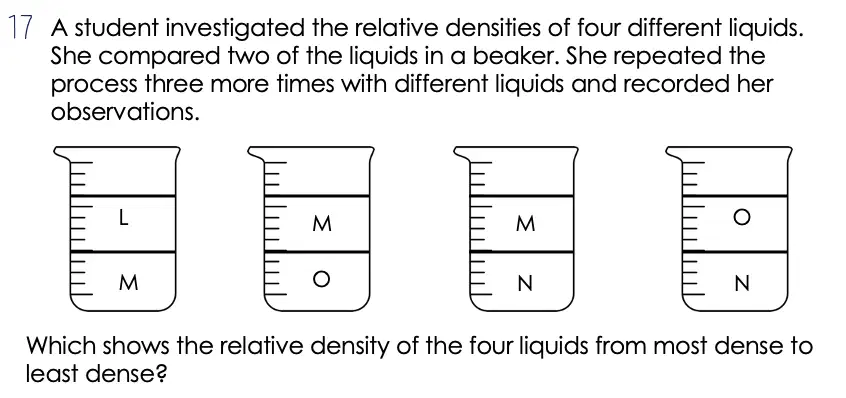
17. Which shows the relative density of the four liquids from most dense to least dense?

18. Based on their properties, which of these tables properly identifies the objects?

A

B
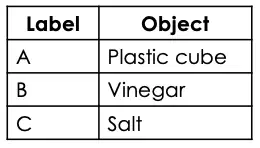
C

D
19. Which of the following tables does not correctly group objects by physical property?

A

B

C

D
20. Which of the following tables correctly groups objects by physical property?

A

B

C

D

