
 Worksheets
EARTH SCIENCE (Midterm Exam Reviewer)
Total questions: 80
Worksheet time: 57mins
Universe was composed
of very small, indivisible
and indestructible
building blocks known as
atoms.
Book Of Genesis
Oscillating Universe
Primordial Universe
Atomic Universe
Things in the universe is from infinitesimally small fragments.
Book Of Genesis
Oscillating Universe
Primordial Universe
Atomic Universe
Describes the universe
and as an oscillating
universe in which a
“cosmic egg” or
brahmanda containing
the whole universe.
Book Of Genesis
Oscillating Universe
Primordial Universe
Atomic Universe
God separated light
from darkness created
the sky, land, sea, moon
and stars in every living
creature in a span of six
days.
Book Of Genesis
Oscillating Universe
Primordial Universe
Atomic Universe
Is the whole cosmic system of matter and
energy of which earth, and therefore human
race, is a part.
(CAPSLOCK ANS)
(a)
Theory of Heliocentric wherein the sun is the center of the solar system and everything revolves around the sun.
Primordial Universe
Atomic Universe
Ptolemaic Universe
Copernican Universe
Establish a geocentric
universe.
Aristotle
Nicolaus Copernicus
Genesis
Anaxagoras
Outline a model of the
universe with many of
characteristic of Newton
started infinite universe.
Einsteinian Universe
Aristotelian Universe
Cartesian Vortex
Universe
Copernican Universe
(a) means pure energy
He discovered that the
galaxies are moving
away from each other.
(a)
"MANY WORLDS"
(a)
It is the favored model of Albert Einstein
Oscillating Universe
Steady State Theory
Inflationary Universe
Bigbang Theory
Universe underwent a short and sudden
episode of great expansion right after
the Big Bang.
Oscillating Universe
Steady State Theory
Inflationary Universe
Bigbang Theory
Predicted the universe that expanded
but did not change its density.
______ ______ Theory
(a)
The planets formed from
debris torn off the sun by
a close encounter with
another star.
(a) HYPOTHESIS
TWO PROBLEMS OF ENCOUNTER HYPOTHESIS:
(SELECT TWO)
Cold gas expands, not
contracts.
The encounters
between stars are
extremely rare.
Hot gas expands, not
contracts.
The encounters
between planets are
extremely rare.
Natural objects in space that exist beyond earth's atmospere.
(a)
Free floating star or Indpendent Star
(a)
A rotating cloud of gas
and dust that cools and
contracts
Encounter Hypothesis
Nebular Hypothesis
Protoplanet Hypothesis
Present working model
of the origin of the solar
system.
Encounter Hypothesis
Nebular Hypothesis
Protoplanet Hypothesis
Accepted hypothesis on how the solar system formed.
(a)
The protoplanet hypothesis was
able to explain why all the planets
revolve in the same direction and
why the inner planets are denser
than the outer ones.
TRUE
FALSE
The Nebular Hypothesis suggests
that the solar system's formation was
triggered by a close encounter
between the Sun and another star,
causing the ejection of planetary
material.
TRUE
FALSE
The (a) , also
called Goldilocks zone,
"JUST RIGHT"
(a)
SELECT THE REASON OF WHY IS THE EARTH "JUST RIGHT"
At the residential planet located in
the Goldilocks zone or habitable
zone
the only habitable planet or planet
known in the solar system that can
support life.
The third planet from the sun and 5th
largest planet in the solar system.
Has unique physical and chemical
characteristics compared to other
neighboring planets
The existence of (a) in
three phases is very
essential to earth's
diverse ecosystem.
It traps heat, Shields the
surface from harmful
radiation, and provides
chemicals needed for
life, such as nitrogen
and carbon dioxide.
(a)
(a) Influences how quickly
atoms and molecules
move.
Light or chemical energy
is used by Organism to
run their life processes
such as the process of
photosynthesis used by
producers like plants.
Sun
Light
Energy from the sun
Heat
Use to build and
maintain an
Organisms body
(a)
Select a Characteristics of
Earth that allow
Existence of Life
Fire
Trees and Mountains
Magentic Fields
Water
Low temperature slows down
chemical reactions
among living organisms.
TRUE
FALSE
Atmosphere provides
chemicals needed for life
TRUE
FALSE
It is a set of interconnected components
that are interacting to form a unified
whole.
(a)
It Refers to Earth´s
interacting physical,
chemical, and
biological
processes.
Subsystem
System
Earlh System
Earth System
The life zone of the
earth and includes all
living organisms, and
all organic matter
that has not yet
decomposed.
Geosphere
Hydrosphere
Atmosphere
Biosphere
Gaseous envelope that
surrounds the earth
and constitutes the
transition between its
and the vacuum of
space.
Geosphere
Hydrosphere
Atmosphere
Biosphere
Comprises the solid
Earth and includes both
Earth’s surface and the
various layers of the
Earth’s interior.
Geosphere
Hydrosphere
Atmosphere
Biosphere
Includes all water on
earth (including
surface water and
ground water)
Geosphere
Hydrosphere
Atmosphere
Biosphere
Defined as a naturally
occurring, inorganic
solid with a definite
chemical composition
and an ordered internal
structure.
(a)
SELECT THE RIGHT COMPOSITION OF MINERALS
Silicates
Oxygen
Native
metals
Chlorine
Halides
LUSTER -
It is the morphology of the crystal
growth.
TRUE
FALSE
DENSITY -
It is a measure of the
resistance of a mineral
(not specifically surface)
to abrasion.
TRUE
FALSE
Two types of IGNEOUS ROCK
Introsive Igneous
Extrusive Igneaus
Extrusive Igneous
Intrusive Igneous
(a) is composed of molten rock
and is stored in the Earth’s crust.
Formed by the
cooling and
crystallization of
magma.
Sedimentary Rocks
Igneous Rocks
Metamorphic Rocks
is the magma that reaches the
surface of our planet through
volcano vent.
(a)
(a) -> COMPACTION AND CEMENTATION = SEDIMENTARY ROCKS
______are
formed by the
accumulation
of sediments.
Sediments
Sedimentary Rocks
Igneous Rock
Erosion
Moving the weathered
products from their
original location and
made possible by
gravity
TRUE
FALSE
Weathering
Breaking down of
rocks into smaller
fragments.
TRUE
FALSE
The process
that turns
sediment into
rock; It is the important step
(a)

Identify the types of
sedimentary rocks
Clastic Sedimentary
Rocks
Chemical Sedimentary
Rocks
Organic Sedimentary
Rocks

Identify the types of
sedimentary rocks
Clastic Sedimentary
Rocks
Chemical Sedimentary
Rocks
Organic Sedimentary
Rocks
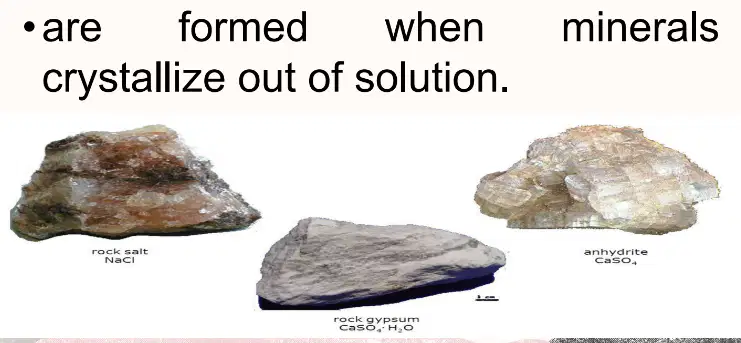
Identify the types of
sedimentary rocks
Clastic Sedimentary
Rocks
Chemical Sedimentary
Rocks
Organic Sedimentary
Rocks
Created through
physical or
chemical alteration
by heat and
pressure of an
existing igneous or
sedimentary.
(a) ROCKS
NON-FOLIATED METAMORPHIC ROCKS
- has a layered or banded
appearance that is produced by
exposure to heat and direct
pressure.
TRUE
FALSE
The sequence of
events in which
rocks are formed,
destroyed, altered,
and reformed by
geological
processes.
(a)
are naturally occuring materials that profitably mined
(a)
it is the process of extracting useful materials from earth
(a)
Used to extract ore minerals near the surface of the earth
SURFACE MINING
UNDERGROUND MINING
Used to extract ore minerals near the surface of the earth
SURFACE MINING
UNDERGROUND MINING
used to extract rocks, minerals and other precious stories that can be found beneath the earth surface.
SURFACE MINING
UNDERGROUND MINING
Energy is the "ability to do
work" or the "capacity to make
things happen.
(a)
These are the things we use to
get the energy we need to
power our homes, vehicles, and
everything else.
(a)
Are sources of energy that
we use up over time, and
once they're gone, they
can't be easily replaced.
Non-Renewable Resources
Renewable Resources
Are sources of energy that
we can use over and over
again because they
naturally replenish
themselves.
Non-Renewable Resources
Renewable Resources
FOSSIL FUELS
Formed from the remains of
tiny sea plants and animals
that died hundred of millions of
years ago.
TRUE
FALSE
SELECT the types of fossil fuels
Petroleum
gas
Coal
Chemical Gas
Nuclear reactions occur when
atoms of one species of chemical
element are transformed into
atoms of another species by
nuclear change.
(a)
Hydroelectric energy is essential due to what type of force?
Acceleration
Gravity
Current
Wind
It uses Heating and Electricity
Geothermal Energy
Hydroelectric Energy
Wind and Solar Energy
Biomass
It uses light energy from the sun and airflow
Geothermal Energy
Hydroelectric Energy
Wind and Solar Energy
Biomass
It is the movement of
water around earth’s
surface and its
subsystem.
(a)
Any Organic matter that can
be used as an energy
source.
Geothermal Energy
Hydroelectric Energy
Wind and Solar Energy
Biomass
what term is used to describe the evaporation if water from the leaves and stems of plants?
Condensation
Sublimation
Transpiration
Precipitation
______ – is any liquid
or frozen water that forms in
the atmosphere and falls
back to the earth.
Condensation
Sublimation
Transpiration
Precipitation
Most of the fresh water on earth are kept in glaciers and hidden away in high mountains and remote artic regions
TRUE
FALSE
It is a type of water
that contains a high
concentration of salt.
(a)

