wayground logo

Free Printable Worksheets

NEW

Font size

S
M
L
XL
Worksheets

Alberta Chemistry 20 unit 1 review

Total questions: 40

Worksheet time: 1hrs 6mins

Name
Class
Date
1.
What would be the proper chemical formula for combining Al3+ and Cl- :
a)
AlCl3
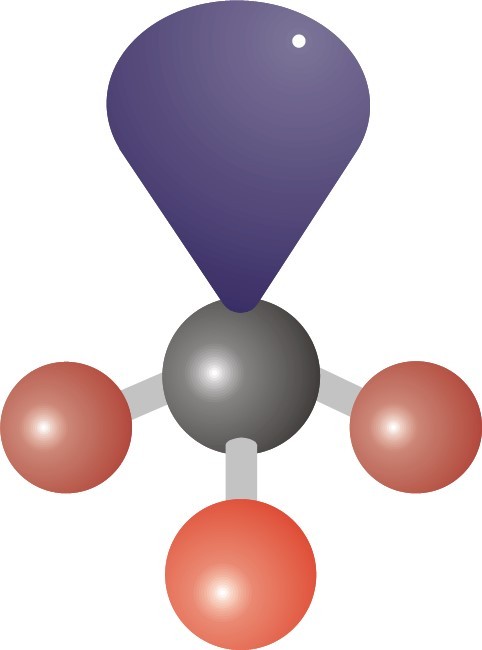
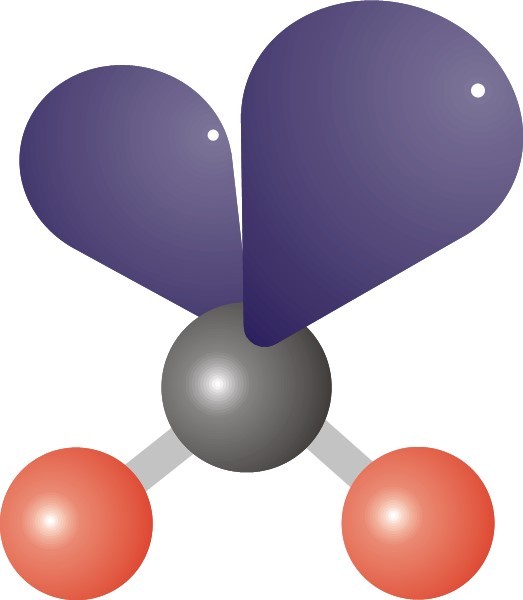
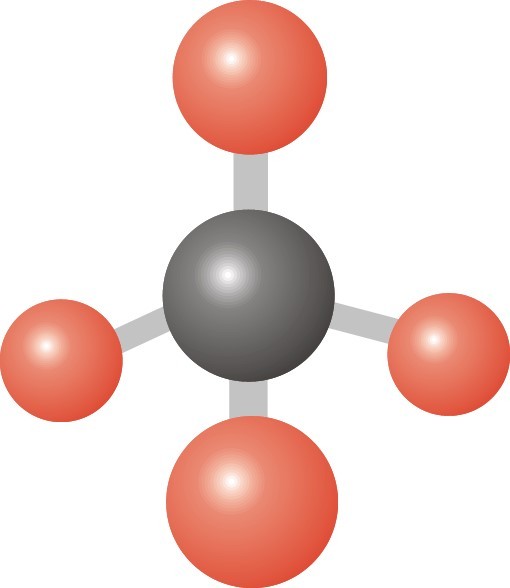
b)
Al3Cl
c)
AlCl
d)
Al3Cl3
2.
Name the following ionic compound: BeCl2
a)
beryllium chlorine
b)
beryllium II chloride
c)
beryllium chloride
d)
beryllium dichloride
3.
What is the name of Ca(NO3)2
a)
calcium nitrite
b)
calcium II nitrate
c)
calcium nitrate
d)
carbon nitrate
4.
What is the name of the compound with the formula FePO4?
a)
iron phosphate
b)
iron (II) phosphate
c)
iron (IV) phosphate
d)
iron (III) phosphate
5.
Which of the following gives the correct chemical formula for the compound Dinitrogen Monoxide?
a)
NO
b)
N2O
c)
N2O2
d)
O2N2
6.
What is the OFFICIAL name for H2O
a)
Hydrogen Oxide
b)
Oxygen Dinitride
c)
Agua
d)
Dihydrogen Monoxide
7.
The chemical formula of dinitrogen textroxide is
a)
Ni₂O₄
b)
NiO
c)
N₂O₄
d)
NiO₂
8.
Classify: 
sulfur dioxide, SO2
a)
ionic compound
b)
molecular compound
c)
metallic element
d)
non-metallic element
9.
How many valence electrons are in Phosphorus?
a)
15
b)
4
c)
5
d)
31
10.
What's a valence electron?
a)
electrons in the second energy level
b)
electrons in the outermost energy level
c)
the atomic number
d)
electrons in the first level
11.

This could be the dot diagram of

a)

Mg

b)

Cl

c)

C

d)

O

12.
How many valence electrons does carbon (C) have?
a)
3
b)
4
c)
5
d)
6
13.
What is the best explanation of VSEPR theory?
a)
It explains the shapes that electrons make around atoms when they repel
b)
It explains how many electrons fit into an element's valent shell
c)
It explains why electrons pair up
d)
It explains why electrons repel each other
14.
Which is true of VSEPR theory?
a)
It explains the origins of the universe
b)
It describes different molecular shapes
c)
It is loosely based on the Norse myth of Woden
d)
It describes which orbital electrons will fill
15.
What is the VSEPR theory used to predict?
a)
Bond Strength
b)
Polarity
c)
Molecular Shape
d)
Electronegativity
16.

How many unshared pairs of electrons will a bent molecule have?

a)

0

b)

2

c)

3

d)

4

17.
Will this molecule be polar or nonpolar? PH3
a)
polar
b)
nonpolar
18.
Will this molecule be polar or nonpolar? CS2
a)
polar
b)
nonpolar
19.
Who could this be?
a)
H2O
b)
NH3
c)
CO2
d)
CH4
20.
Who could this be? 
a)
CO2
b)
NH3
c)
H2S
d)
CH4
21.
Who could this molecule be?
a)
CH4
b)
CO2
c)
PCl5
d)
BF3
22.
What explains the very high melting and boiling point of water
a)
Strong dipole-dipole bonds between water molecules
b)
Strong hydrogen bonds between water molecules
c)
Dispersion forces which are present in all molecules
d)
Asymmetrical shape of the polar bonds.
23.
Does HCl have hydrogen bonding?
a)
yes
b)
no
24.
Does CH4 have hydrogen bonding?
a)
yes
b)
no
25.

Intermolecular forces for: NH3

a)

Dispersion Force

b)

Dipole dipole

c)

Hydrogen bonding

26.

Which substance has the weakest intermolecular forces?

a)

Substance A, boiling point of 75 °C

b)

Substance B, boiling point of 105 °C

c)

Substance C, boiling point of 25 °C

d)

Substance d, boiling point of 45 °C

27.
Ionic Bonding involves...
a)
The transfer of protons
b)
The transfer of nuetrons 
c)
The transfer of electrons
d)
None Of the above
28.

The weaker the intermolecular forces of a substance the _____________ the boiling point

a)

higher

b)

lower

29.
London forces are stronger in heavier atoms or molecules, and weaker in lighter atoms or molecules.  Which of these has the strongest London forces?
a)
F2
b)
Br2
c)
I2
d)
Cl2
30.
What type of forces will the following molecule have?
a)
dispersion forces
b)
dipoles
c)
hydrogen bonding
31.
Rank these in order of strength:
covalent bond
London forces
hydrogen bond
dipole-dipole attraction
a)
dipole-dipole>covalent bond>hydrogen bond>London
b)
London>dipole-diple>hydrogen bond>covalent bond
c)
covalent bond>hydrogen bond>dipole-dipole>London
d)
hydrogen bond>dipole-dipole>London>covalent bond
32.

The polarity of a bond is determined by...

a)

The sum of the electronegativities of the two atoms

b)

The difference in the electronegativities of the two atoms

c)

The charges of the atoms

d)

The number of electrons shared in the bond

33.

In a polar covalent bond, the electrons gather around...

a)

Mostly the atom with the greatest electronegativity

b)

The atom with the lowest electronegativity

c)

Each atom equally

d)

Only the atom with the greatest electronegativity

34.

In a nonpolar covalent bond, the electrons gather around...

a)

Mostly the atom with the greatest electronegativity

b)

The atom with the lowest electronegativity

c)

Each atom Equally

d)

Only the atom with the greatest electronegativity

35.

Which of the following will NOT have hydrogen bonding?

a)
b)
c)
d)
36.

This is an example of a(n) __________.

a)

Hydrogen Bonding

b)

Dipole

c)

Nonpolar Molecule

d)

Intermolecular Force

37.
If fluorine is stronger then carbon, what charge will the fluorine receive?
a)
negative
b)
slight negative
c)
positive
d)
slight positive
38.
What information do we look for on the periodic table if we  want to examine intermolecular forces?
a)
atomic mass
b)
atomic number
c)
electronegativity
d)
ionization 
39.
Intermolecular force present in Cl2?
a)
dipole dipole
b)
H-bond
c)
dispersion
d)
metallic
40.
Which of the following would best remove Sharpie marker from your wall if this marker is known to be non-water soluble. 
a)
salt water
b)
ammonia (nitrogen trihydride)
c)
acetone (finger nail polish remover)
d)
distilled water