
 Worksheets
Properties of Light Quiz
Total questions: 25
Worksheet time: 6mins
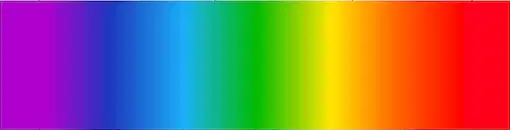
The full spectrum of light energy is called the
reflection
diffraction
electromagnetic spectrum
natural light spectrum
What determines the color and brightness of light?
wavelength and amplitude
frequency and amplitude
amplitude and frequency
amplitude and wavelength
The distance between one peak of a wave and the next peak is known as the ______
amplitude
wavelength
frequency
vibration
The number of waves that pass in a given time is known as the
wavelength
amplitude
wave speed
frequency
Amplitude refers to the _______
The rate of vibration of the wave
The distance between one peak of a wave and the next peak
The height of
each peak
unit time
When white light strikes a green wall, all of the visible wavelengths
are absorbed
are absorbed except for the green wavelength, which bounce off the wall
bounce off of the wall except the green wavelength, which is absorbed
bounce of the wall
Choose the primary colours
Red
Blue
Yellow
Green
Cyan
Choose the secondary colours
Red
Green
Yellow
Cyan
Magenta
The three additive colours comes together to produce _________ while the three subtractive colours comes together to produce______
white, black
cyan, magenta
black, white
yellow, red
Refraction is caused by...
different wave speeds
more than one reflection
displaced images
bending of waves
Light travels through an object during
absorption
transmission
reflection
diffraction

Shadow is form because light travels in a __________________ line.
multiple
long
The two sensitive light detecting cells are known as _______ and _______
retina and pupil
rods and retina
cones and pupil
rods and cones
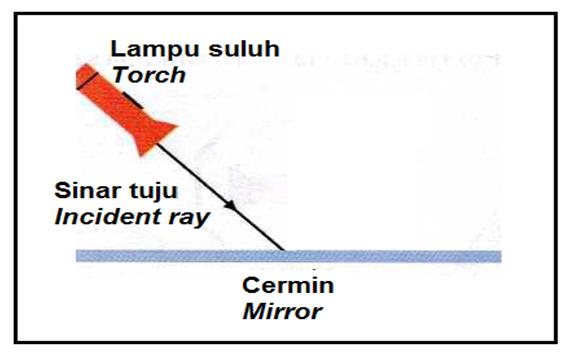
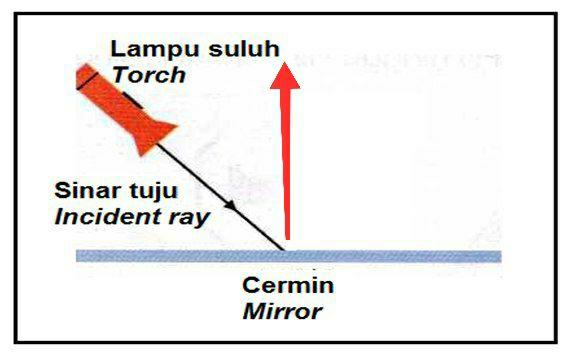
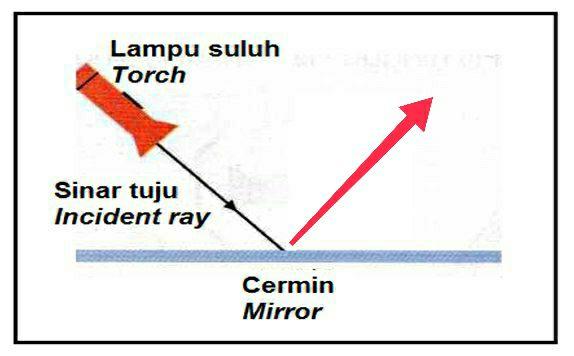
The following diagram shows the ray diagram when a torch light is torched towards a mirror. Which of the following is the correct reflected ray?
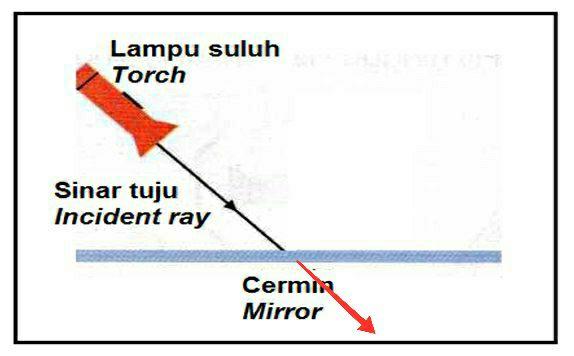

In this diagram, which is the angle of incidence?
Angle A
Angle B
Angle C
Angle D
The most common light source in the microscope is the
Tungsten lamp
Arc lamp
Xenon burner
When a light ray bounces off a rough surface, it reflects all over the place
Diffraction
Reverberation
Scattering
Transmission
Which objects refract light energy?
Lens, prism, mirror
Mirror, lens, passing through water
Lens, prism, passing through water
Shiny object, lens, mirror
Which objects reflect light energy?
Mirror, lens, water
Lens, prism, mirror
Mirror, smooth shiny objects, surface of water
Smooth shiny objects, lens, surface of water
Light rays are disappearing into a surface. What is happening to the light rays?
Transmission
Reflection
Absorption
Adsorption
Viewing a specimen using a halogen light will produce an image that will appear_
bluish
brownish
yellowish
reddish
Which of the following is suitable to be used in a fluorescence microscopes?
Tungsten lamp and halogen bulb
Halogen bulb and arch lamps
Arch lamps and LED
LED and tungsten lamps
Which of these statement is TRUE
Halogen bulbs have a shorter lifespan compared to tungsten lamps
Tungsten lamps typically produce a whiter and brighter light
Halogen bulbs produce a warmer, yellowish light
Halogen bulbs produce more light for the same amount of energy
Why are arc lamps and LEDs used in specialized microscopes?
Arc lamps provide high-intensity illumination and a broad range of colours
Arc lamps provide stable light output over time when properly maintained
LEDs have a long operational life, highly energy-efficient, emit little heat
LEDs can be engineered to emit light at specific wavelengths

