
 Worksheets
1D Cellular Transport Practice Test BIOLOGY
Total questions: 50
Worksheet time: 25mins
Name
Class
Date
1.

This diagram shows cellular activity across a cell membrane.Which two processes does this diagram most directly model?
a)
Energy conversions and synthesis of new molecules.
b)
Synthesis of new molecules and homeostasis.
c)
Transport of molecules and energy conversions.
d)
Homeostasis and transport of molecules.
2.

The diagram may be showing osmosis, facilitated diffusion, active transport, or endocytosis.What are two pieces of evidence that the diagram might be showing active transport?
a)
The movement of two types of ions across a membrane.
b)
The movement of substances against the concentration gradient.
c)
The movement of ions.
d)
The use of energy.
e)
The movement through a phospholipid membrane.
3.
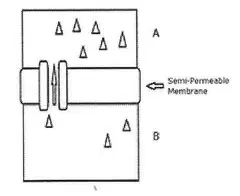
The diagram shows the movement of chemicals from side B to side A across a membrane.What process is occurring?
a)
osmosis from an area of low concentration to high concentration
b)
diffusion from an area of high concentration to low concentration
c)
active transport from an area of low concentration to high concentration
d)
diffusion from an area of low concentration to high concentration
4.
A contractile vacuole helps protists eliminate excess liquid. This is a "pumping" process which reduces pressure inside the cell and prevents the cell from bursting. What is most likely the source of energy for this process?
a)
DNA
b)
lipids
c)
ATP
d)
ribosomes
5.

A type of cellular transport is shown. Which description best identifies this type of cellular transport?
a)
Active transport, because energy is being used to move molecules against the concentration gradient.
b)
Facilitated diffusion, because energy is being used to move molecules with the concentration gradient.
c)
Osmosis, because energy is not being used to move molecules with the concentration gradient.
d)
Endocytosis, because energy is not being used to move molecules against the concentration gradient.
6.
Which of the following distinguishes active transport from passive transport?
a)
The use of energy
b)
The use of a protein channel.
c)
the movement of ions
d)
The presence of a phospholipid membrane
7.
Which of the following statements is correct?
a)
Active transport requires cellular energy, but passive transport does not
b)
Passive transport requires cellular energy, but active transport does not
c)
Both passive transport and active transport require cellular energy
d)
Neither passive transport nor active transport requires cellular energy
8.
When does diffusion occur across a cell membrane?
a)
When the concentration of particles is different on each side of the membrane
b)
When the concentration of particles is equal on both sides of the membrane
c)
When there are no particles on either side of the membrane
d)
When water moves across the membrane
9.
Which of the following is a requirement for diffusion to take place?
a)
A transport protein
b)
A carrier molecule
c)
a transport carbohydrate
d)
A concentration gradient
10.

This picture represents what type of cell transport?
a)
endocytosis
b)
exocytosis
c)
osmosis
d)
passive transport
11.
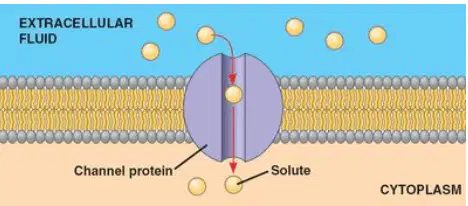
The picture shows molecules moving into a cell through a protein channel.What type of transport is shown?
a)
Facilitated diffusion
b)
Active transport
c)
Diffusion
d)
Osmosis
12.
The cell is taking in substances through membrane proteins, without any energy expenditure of its own. The substances naturally follow their concentration gradient. However, they must go through the protein channels, because they are too large to squeeze through the cell membrane. This process is called -
a)
osmosis
b)
endocytosis
c)
active transport
d)
facilitated diffusion
13.
Which of the following is a function of the cell membrane?
a)
breaks down lipids, carbohydrates, and proteins from foods
b)
stores water, salt, proteins, and carbohydrates
c)
keeps the cell wall in place
d)
regulates which materials enter and leave the cell
14.
The cell membrane plays as essential role in the life of the cell. How does the cell membrane help maintain the health of the cell?
a)
the cell membrane contains genetic information of the cell
b)
the cell membrane provides support and protection for the cell
c)
the cell membrane is where protein molecules are manufactured in a cell
d)
the cell membrane regulates the movement of materials in and out of the cell.
15.

Which molecules are the primary building blocks of the cell membrane?
a)
carbohydrates
b)
lipids
c)
nucleic acids
d)
Proteins
16.
Substances like oxygen pass through the cell without the use of energy and move from an area of high concentration to an area of low concentration. This process is called -
a)
osmosis
b)
filtration
c)
active transport
d)
passive transport
17.
Two types of transport of molecules across a cell membrane are:Transport 1: Solute molecules move across the cell membrane with their concentration gradient; requires no energy expenditure.Transport 2: Solute molecules move across the cell membrane against their concentration gradient; requires expenditure of energy. Which statement is CORRECT?
a)
Transport 1 describes passive transport by diffusion.
b)
Transport 2 describes passive transport by the sodium potassium protein pump.
c)
Transport 2 describes passive transport by a carrier protein.
d)
Transport 1 describes facilitated transport of substances through the phospholipid bilayer.
18.
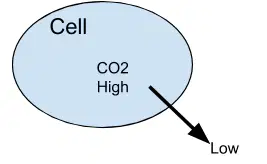
What type of cell transport is being show in the picture.
a)
Active transport
b)
Diffusion
c)
Osmosis
d)
Endocytosis
19.
Which of the following is the primary component that makes up the cell membrane?
a)
Carbohydrates
b)
Nucleic acids
c)
proteins
d)
Phospholipids
20.
Which of the following types of molecules are the major structural components of the membrane?
a)
Phospholipids and cellulose
b)
Nucleic acids and proteins
c)
Phospholipids and proteins
d)
Proteins and cellulose
21.
The cell membrane is made up of a(n) ___.
a)
cholesterol layer
b)
enzyme bilayer
c)
phospholipid bilayer
d)
protein layer
22.
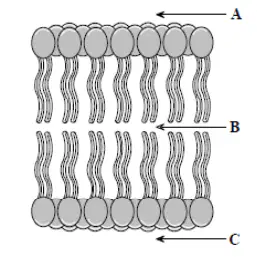
As illustrated, the molecules of many membranes are arranged with their polar heads to the outside and their nonpolar tails to the inside. With this arrangement, where would you MOST likely find water molecules?
a)
A only
b)
B only
c)
C only
d)
A and C
23.
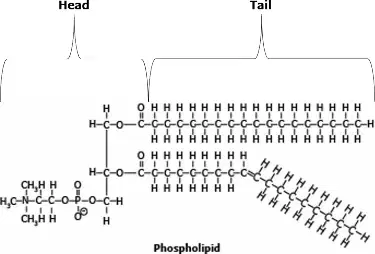
The image shows the structure of a phospholipid, which is a major component of cell membranes. How is the structure of the phospholipid related to its function?
a)
The hydrophobic head attracts water, and the hydrophilic fatty acid tail repels water.
b)
The hydrophobic head repels water, and the hydrophilic fatty acid tail attracts water.
c)
The hydrophilic head attracts water, and the hydrophobic fatty acid tail repels water.
d)
The hydrophilic head repels water, and the hydrophobic fatty acid tail attracts water.
24.
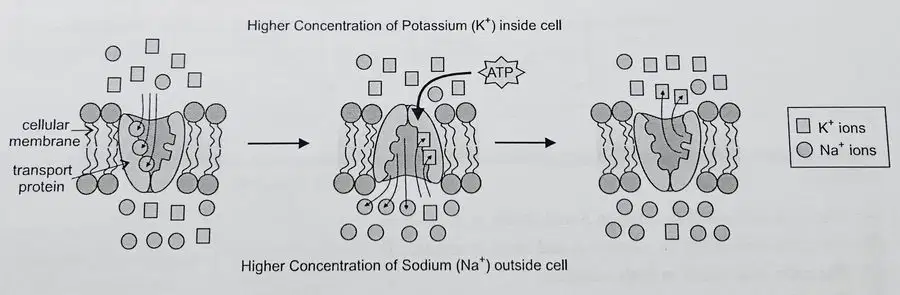
Examine the diagram. The diagram may be showing osmosis, facilitated diffusion, active transport, or endocytosisWhat are two evidences that the diagram might be showing active transport?
a)
The movement of two types of ions across a membrane
b)
The movement of ions
c)
The movement through a phospholipid membrane
d)
The use of energy
e)
The movement of substances against the concentration gradient
25.

In a selectively permeable membrane, specific particles are able to cross the membrane only with the use of cellular energy. The table describes four particles and their movement.Based on the table, which particle is being moved via active transport through the cell membrane?
a)
Oxygen molecules
b)
Water molecules
c)
potassium ions
d)
Glucose molecules
26.
Cell membranes are described as selectively permeable.Four students were asked to explain what this means. Which one is correct?
a)
Student 1: Cell membranes prevent all materials from entering the cell.
b)
Student 2: Cell membranes only provide structural support for the cell.
c)
Student 3: Cell membranes regulate which substances can enter and exit the cell.
d)
Student 4: Cell membranes allow water and water-soluble substances to enter the cell.
27.
If there is 25% oxygen inside the cell and 50% oxygen in the outside blood, which direction will the oxygen move?
a)
Out of the cell
b)
Into the cell
c)
The cell is at equilibrium
28.
Jim is in a crowd of people at the mall looking for his girlfriend Tammy, who was supposed to meet him for dinner. Jim realizes Tammy is across the room as he catches a whiff of her overpowering perfume, 'Paris #6'. Which process explains why Jim is able to smell the perfume?
a)
osmosis
b)
diffusion
c)
active transport
d)
facilitated diffusion
29.

This picture shows molecules of red dye that have moved. What is this type of movement called?
a)
Osmosis; the water molecules are moving from high concentration to low
b)
Diffusion; the dye molecules are moving from low to high concentration
c)
Diffusion; the dye molecules are moving from high to low concentration.
d)
Facilitated diffusion; because the molecules are moving through a protein channel.
30.

Which type of diffusion is being represented in this picture?
a)
Passive Diffusion
b)
Simple Diffusion
c)
Active Diffusion
d)
Facilitated Diffusion
31.
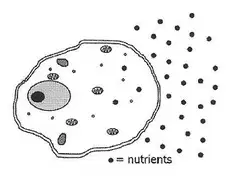
The diagram shows a cell surrounded by nutrients. Which statement most accurately describes the movement of nutrients by diffusion?
a)
the nutrients will move into the cell across the cell membrane
b)
the nutrients will move out of the cell across the cell membrane
c)
the nutrients will move farther away from the cell
d)
the nutrients will remain in their current position
32.
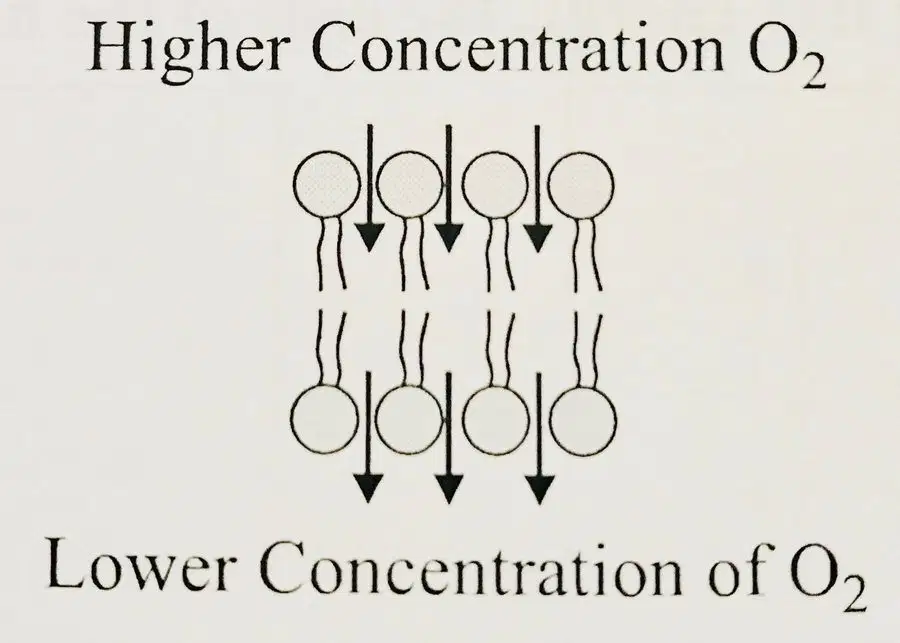
The diagram shows how oxygen moves into lung cells.What best describes this movement of oxygen from an area of higher concentration to an area of lower concentration?
a)
Oxygen gas requires a transport protein to move through the cell membrane in the direction of the concentration gradient
b)
Oxygen gas moves through the cell membrane in the direction of the concentration gradient by simple diffusion
c)
Oxygen gas requires energy to move through the cell membrane against the concentration gradient by using active transport
d)
Oxygen gas moves across the cell membrane by the process of osmosis
33.

A diagram of a cell is shown below. The cell membrane is permeable to both the oxygen and carbondioxide molecules.Initially, the oxygen and carbon dioxide molecules will most likely move in which direction?
a)
oxygen will enter the cell, and carbon dioxide will exit the cell
b)
oxygen will exit the cell, and carbon dioxide will enter the cell
c)
both oxygen and carbon dioxide will enter the cell
d)
both oxygen and carbon dioxide will exit the cell
34.
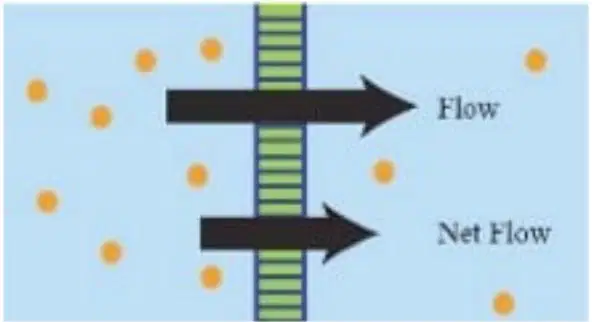
Describe the movement of molecules in the illustration.
a)
Molecules are moving from a lower concentration to a higher concentration.
b)
Molecules are moving from a higher concentration to a lower concentration.
c)
Molecules are moving from a higher concentration to a lower concentration and then from a Lower to higher concentration.
d)
Molecules are moving from a lower concentration to a higher concentration and then from a higher concentration to a lower concentration.
35.
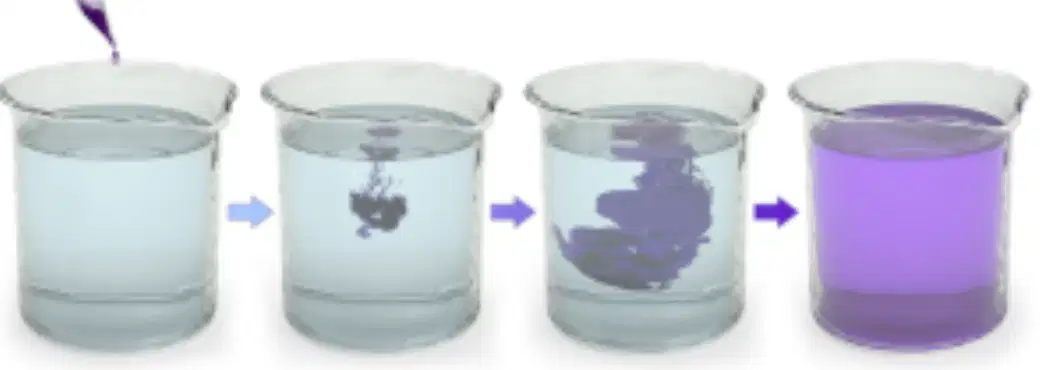
Which process does the diagram represent?
a)
simple diffusion
b)
osmosis
c)
facilitated diffusion
d)
active transport
36.
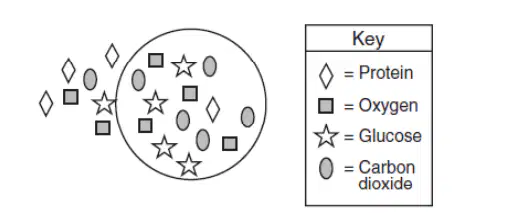
The diagram below shows the relative concentration of molecules inside and outside of a cell.Which of the following is most likely to occur?
a)
Glucose would diffuse into the cell.
b)
Protein would diffuse out of the cell.
c)
Carbon dioxide would diffuse out of the cell.
d)
Oxygen would diffuse into the cell.
37.
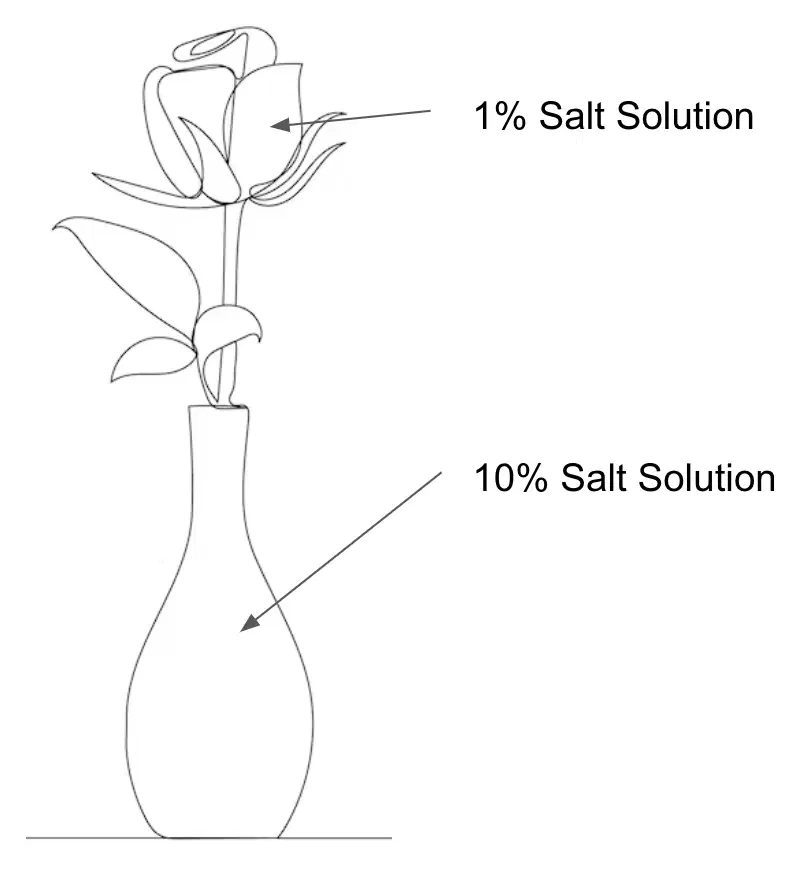
Biology Bob is angry that Chemistry Carl has sent a vase of red roses to his girlfriend, Phyllis Physics. Bob dumps 10% saltwater into the vase. Rose cells have about 1% salt inside.When Phyllis sees the roses, she is thoroughly unimpressed by Carl and is grateful to have a great guy like Bob. What happened to the rose cells?
a)
The rose cells burst, because the saltwater is hypotonic.
b)
The rose cells burst, because the saltwater is hypertonic.
c)
The rose cells shriveled, because the saltwater is hypotonic.
d)
The rose cells shriveled, because the saltwater is hypertonic.
38.

In this situation, where the solute is illustrated by red dots, predict if will WATER move into or out of the cell, and how that will affect the cell.
a)
Water will move into the cell and the cell will expand.
b)
Water will move into the cell and the cell will shrink.
c)
Water will move out of the cell and the cell will expand.
d)
Water will move out of the cell and the cell will shrink.
39.
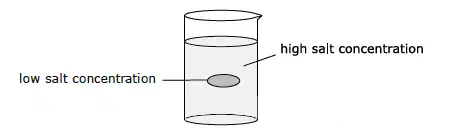
This diagram shows a red blood cell in a beaker that contains a solution with a higher salt concentration than that inside the red blood cell.What will happen to the red blood cell in this environment?
a)
The size of the red blood cell will remain constant.
b)
The red blood cell will swell at first and then shrink.
c)
The red blood cell will swell from absorbing salt molecules.
d)
The red blood cell will shrink from losing water molecules.
40.

Use the diagram to answer the following question. What will happen to the cell?
a)
It will lose water and shrink
b)
It will swell with water
c)
It will gain sodium ions
d)
It will remain the same size
41.
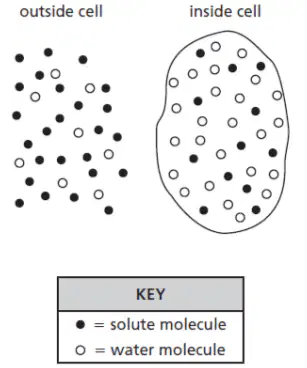
The diagram shows the semipermeable membrane of a cell and the concentration of solutions inside and outside the cell. Which of the following statements best describes how the molecules will move?
a)
Water molecules will move out of the cell
b)
Water molecules will move into the cell
c)
Solute molecules and water molecules will move out of the cell
d)
Solute molecules and water molecules will move into the cell
42.

Beaker B demonstrates a ______________ solution.
a)
Hypertonic
b)
Hypotonic
c)
Isotonic
43.

If the dots represent sugar which is more concentrated, which way will water move?
a)
Inside the cell
b)
Outside the cell
c)
Neither they are equal (equilibrium)
44.
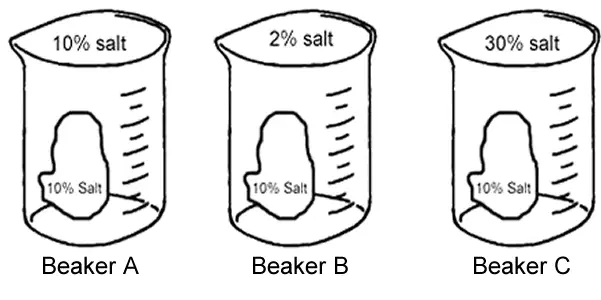
Beaker A represents a ______________ solution.
a)
Hypertonic
b)
Hypotonic
c)
Isotonic
45.
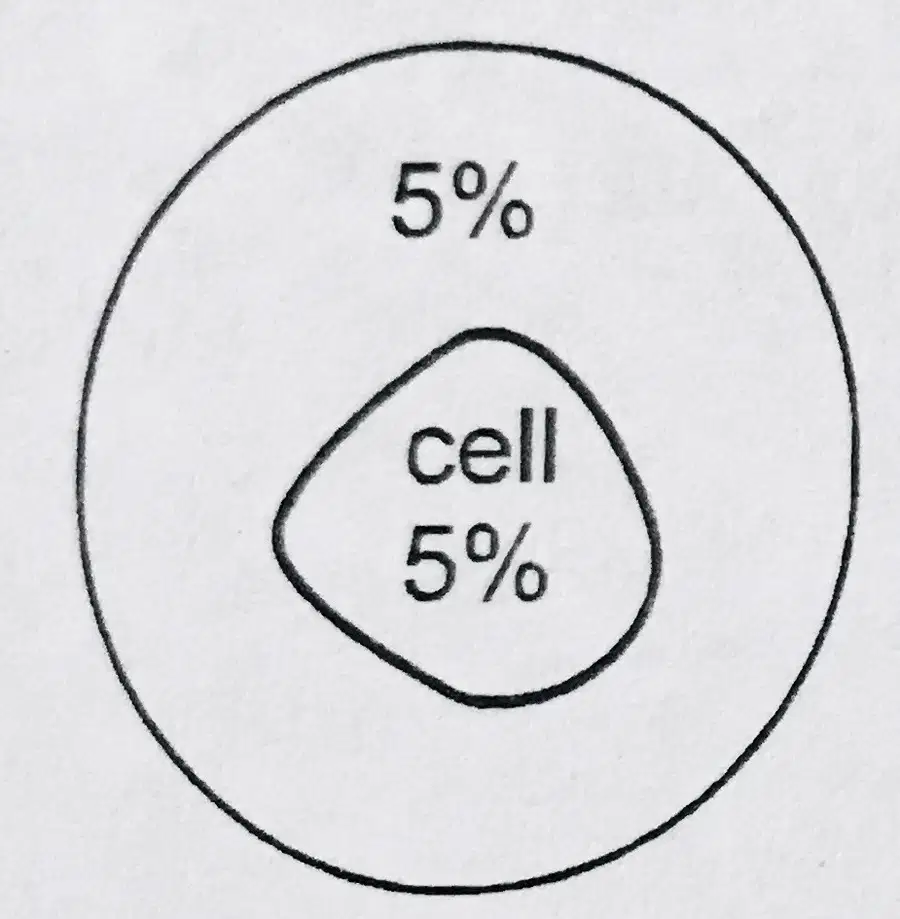
What will likely happen in the animal cell with a labeled internal salt concentration placed in a solution with a labeled salt concentration?
a)
Water will move out of the cell, and the cell will shrink
b)
Water will move into the cell and the cell will swell
c)
The cell will remain the same size because there will be no net movement of water
46.

In the diagram, cells with an internal salt concentration of 5% are placed in two solutions. SolutionA has a salt concentration of 2%, and solution B has a salt concentration of 10%.Which of the following gives the best prediction of what will happen to the cells when placed in eachsolution?
a)
the cells will shrink in both solutions
b)
the cells will swell in solution A and shrink in solution B
c)
the cells will remain unchanged in both solutions
d)
the cells will shrink in solution A and swell in solution B
47.

Some students used vinegar to dissolve a way the shells of three eggs and used these eggs as models of human red blood cells. The students observed the changes in the eggs when they were placed in different solutions.Which statement best describes the role of the cell membrane in this model?
a)
The cell membrane is an impermeable barrier that prevents water from entering the cell.
b)
The cell membrane allows solutions to enter the cell, which causes the cell to shrink.
c)
The cell membrane allows water to enter and leave the cell.
d)
The cell membrane removes solutes from the environment.
48.
A red blood cell placed in distilled water will swell and burst due to the diffusion of
a)
salt from the red blood cell into the water
b)
water into the red blood cell
c)
water from the blood cell into its environment
d)
salt from the water into the red blood cell.
49.

Based on your knowledge of osmosis, which statement best describes osmosis correctly?
a)
Osmosis moves only water across the cell membrane without using cellular energy
b)
Osmosis moves water and sugars across the cell membrane without using cellular energy
c)
Osmosis moves only water across the cell membrane while using cellular energy
d)
Osmosis moves only solutes across the cell membrane while using cellular energy
50.
Which of the following is an example of osmosis?
a)
Oxygen exiting leaves after photosynthesis
b)
A raisin swelling in a cup of water
c)
Water changing from a liquid to a gas
d)
Oxygen moving into an animal cell
100 %

