
 Worksheets
HC 3.3 Finding your way around the periodic table
Total questions: 40
Worksheet time: 29mins
The ROWS on the periodic table are called
groups
periods
families
intersections
The COLUMNS (up and down) on the periodic table are called
groups
periods
families
castles
The word "periodic" means
difficult
random
lengthy
repeating
A(n) ___ is a pure substance that cannot be broken down chemically and is made up of only one kind of atom.
compound
element
molecule
mixture
Elements in the same family or group share similar _____.
physical properties
chemical properties
Today, the elements on the periodic table are arranged_____.
atomic number (top number)
atomic mass (bottom number)
alphabetically
The one or two-letter "abbreviation" of an element's name on the periodic table is its ___.
shortcut
mass
symbol
atomic number
The dark zig-zag line on the periodic table separates the metals from the non-metals. The metals are on the ____ side of the zig-zag line.
right
left
The most "unreactive" family on the periodic table (the noble gases) is located
in the middle of the table.
on the far right side of the table.
on the far left side of the table.
Which element has the symbol "P"?
potassium
lead
plutonium
phosphorus
Find "Be" (beryllium) on the periodic table. Is this element a metal or a nonmetal?
metal
nonmetal
Find carbon ("C") on the periodic table. Is carbon a metal or a nonmetal?
metal
nonmetal
Which family of elements does NOT want to bond to or react with other elements?
Alkali Metals
Noble Gases
Halogens
Alkaline Earth Metals
The first energy shell can hold ______ electrons.
2
8
18

Elements in the same group or column have the same ...
# of valence electrons
# of shells
# of protons
Mass Number
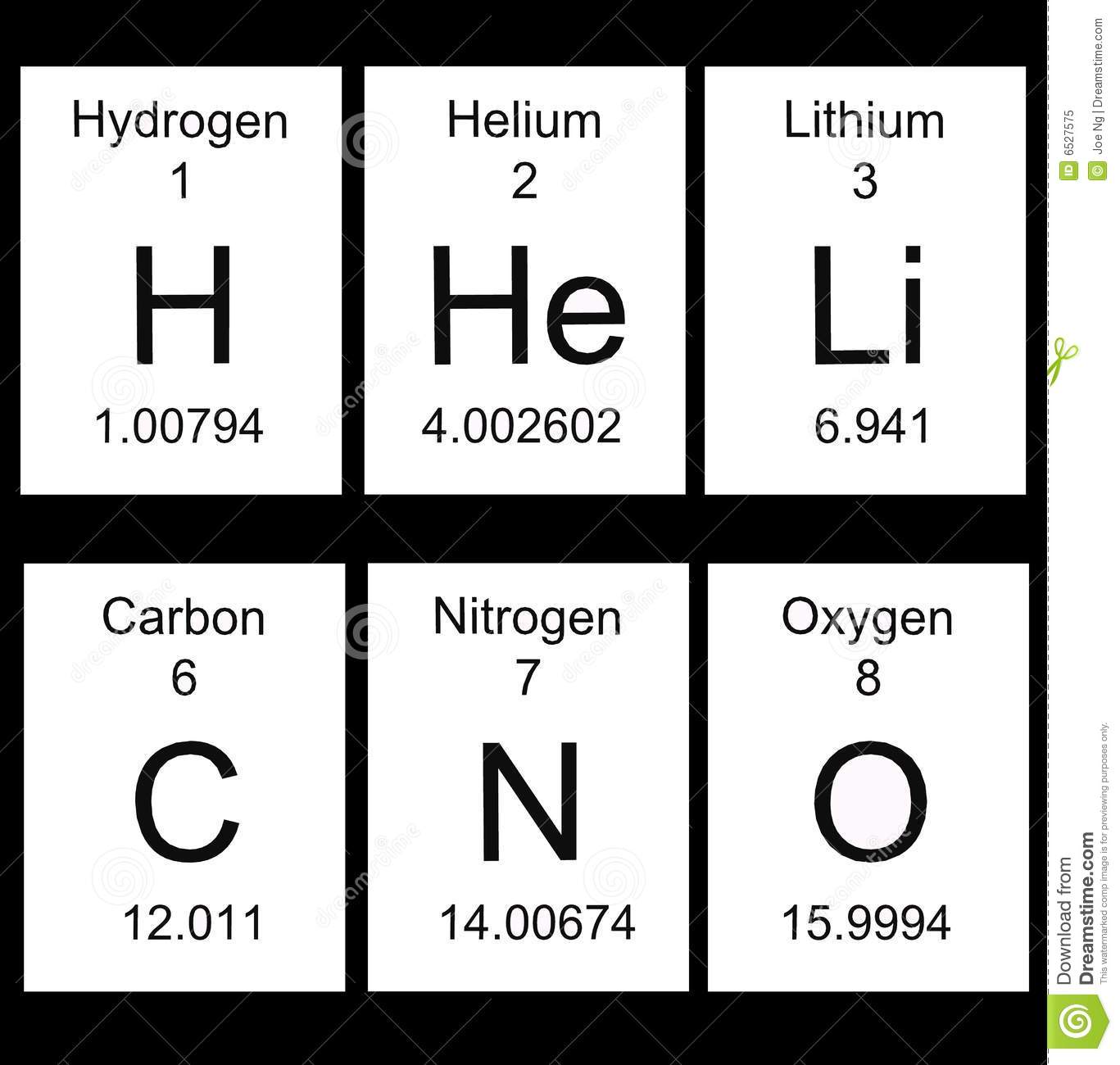
The number at the bottom of each square on the periodic table is the ...
atomic number
atomic mass
chemical symbol
element name

What is the name of the element? (Use the Periodic table provided)
sodium
magnesium
vanadium

How many energy shells does lithium (Li) have?
1
2
3
4

How many energy shells does krypton (Kr) have?
1
2
3
4

Letter A in the diagram is pointing to what type of elements?
metals
nonmetals
metalloids
groups
How are the elements arranged in the periodic table?
alphabetically
by increasing atomic number
by increasing value
density

The pink area (B) on the diagram contains what type of elements?
metals
nonmetals
metalloids
liquids
The location of elements on the periodic table helps us to determine
the year it was discovered
when it was formed
its chemical and physical properties
none of the above
The name of group 17 is?
Transition metals
Alkaline earth metals
Halogen
Alkali metals
Noble gases
The name of group 1 is?
Transition metals
Alkaline earth metals
Halogen
Alkali metals
Noble gases
The name of group 18 is?
Transition metals
Alkaline earth metals
Halogen
Alkali metals
Noble gases
Groups 3-12 are?
Transition metals
Alkaline earth metals
Halogen
Alkali metals
Noble gases
The name of group 2 is?
Transition metals
Alkaline earth metals
Halogen
Alkali metals
Noble gases

What are valence electrons
electrons closest to the nucleus of an atom
outermost electrons, in the shell farthest from the nucleus of an atom
all the electrons in an atom
electrons in the nucleus of the atom

Which element is found in group 2, period 6?
Oxygen (O)
Barium (Ba)
Selenium (Se)
Carbon (C)
Which halogen is found in period 4?
Krypton (Kr)
Xenon (Xe)
Bromine (Br)
Iodine (I)
Elements that have the same number of energy levels are said to be in the same ______.
group
period
family
classification
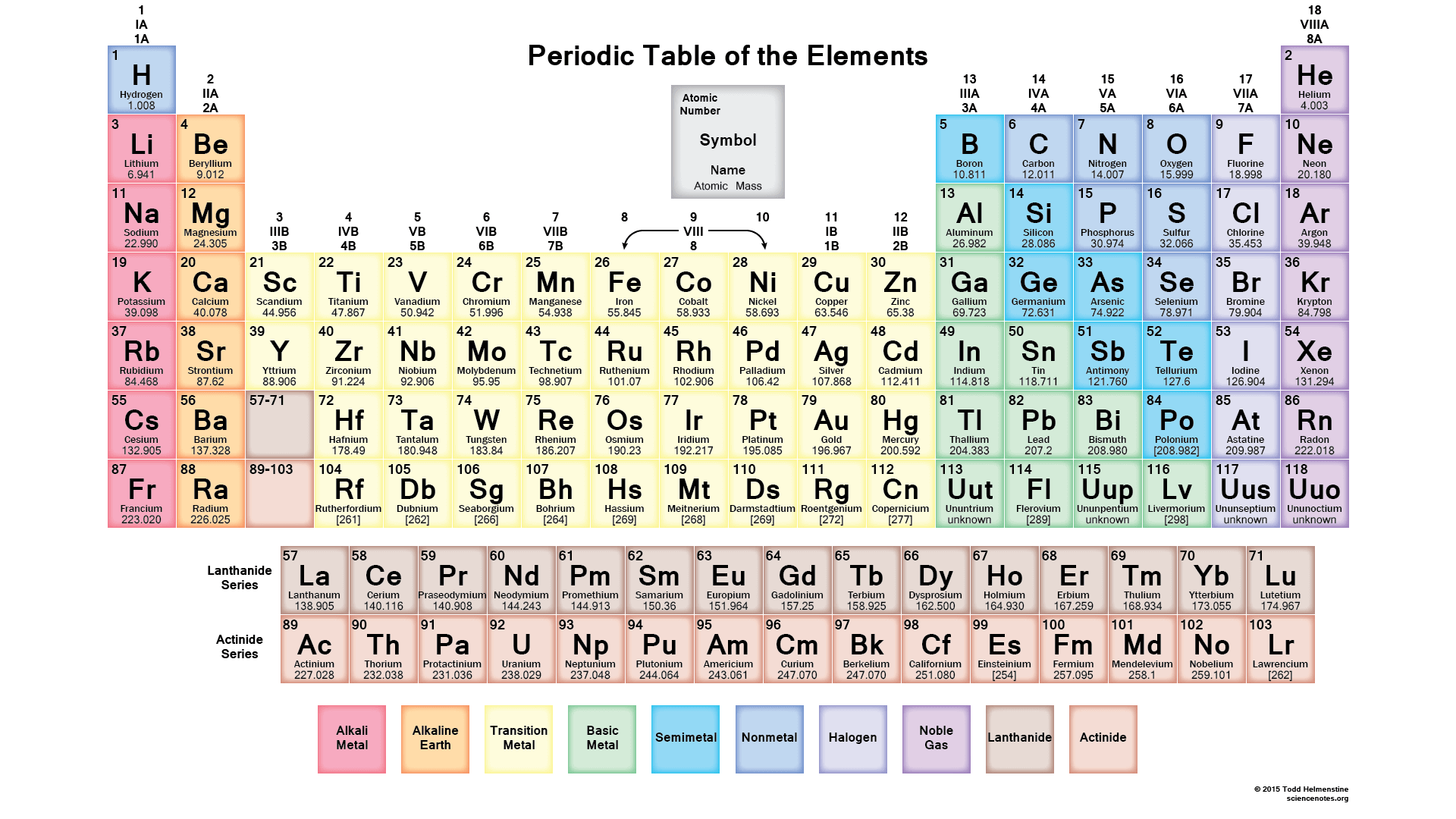
Sodium (Na) is found in group
1
2
3
4
What group number are the halogens found?
18 (8A)
1
2
17 (7A)
Match the following elements to the group they belong to.
sodium
alkali metal
calcium
alkaline earth metal
chlorine
halogen
argon
noble gas
Elements in the same group or family have _____________.
the same number of valence electrons and different properties.
the same number of valence electrons and similar properties
different number of valence electrons and similar properties.
different number of valence electrons and different properties.
How many groups or families and periods does a Periodical Table have?
There are 17 groups or families and 7 periods.
There are 18 groups or families and 7 periods.
There are 7 groups or families and 18 periods.
There are 18 groups or families and 6 periods
I am a nonmetal
I am in period 2
I am in group 16
Ba
Si
O
S
I am a metal
I am in group 2
I am in period 6
I am…
Mo
Re
S
Ba

Which element is in the same group as fluorine (F)?
Magnesium (Mg)
Silver (Ag)
Copper (Cu)
Chlorine (Cl)

