
 Worksheets
EXAM OF UNIT 1 LEVELS OF ORGANISATION OF HUMAN BEINGS
Total questions: 55
Worksheet time: 40mins

Structures in a cell that have specialized jobs.
Similar concept to organs for the human body.
Tissue
Molecule
Atom
Organelles

Groups of cells with similar functions.
Organs
Molecules
Tissues
Organelles

Group of tissues with similar functions.
Organelles
Cells
Tissues
Organs
nucleus consists of....
nucleolus
nuclear envelope
nucleoplasm
chromosome
which of the following organelles is physically connected to the nuclear envelope
Golgi body
Endoplasmic reticulum
plasma membrane
lysosomes
which of the following is true about Golgi body
continuous from outer membrane membrane of nuclear envelope
consists of cis face and trans face
produce lysosomes
involve in packaging, sorting and shipping of protein and lipid
has a flattened membranous sacs (cisternae)
which of the following are TRUE about mitochondria
consists of inner and outer membrane
the infolding inner membrane is called cristae
site for cellular respiration
contain its own DNA
ribosomes is made up of rRNA and proteins
TRUE
FALSE
where ribosomes can be found?
suspended freely in cytosol
attach to smooth endoplasmic reticulum
attach to nuclear membrane
attach to rough endoplasmic reticulum
what is the function of centrioles?
site for photosynthesis
help in organise assembly of microtubules during cell division
digest worn out organelle
synthesise protein
what is the differences between smooth ER and rough ER
Rough ER has ribosomes but not in smooth ER
Rough ER is for protein synthesis but smooth ER for lipid synthesis
Rough ER is in animal cell but not smooth ER
Rough ER is membrane bounded organelle but not smooth ER

Name the circled organelle
Rough endoplasmic reticulum
Smooth endoplasmic reticulum
Golgi body

What am I?
Golgi apparatus
Rough endoplasmic reticulum
Smooth endoplasmic reticulum
what is the function of a lysosome?
To create energy for the cell
To command the cell what to do
To remove waste using digestive enzymes from the cell
To protect the cell
What is the purpose of the nucleus?
It is the command center, contains DNA, and cell division
It protects the cell
It stores energy for the cell
It gets rid of waste in the cell
The _____________ stores food, water, wastes, and other materials in both plant and animal cells.
Vacuole
Ribosome
Mitochondira
Nucleus
________________ create proteins for plant and animal cells.
Golgi Apparatus
Endoplasmic Reticulums
Lysosomes
Ribosomes

Indicate what would happen to the cell in this solution
Hypotonic
Hypertonic
Isotonic

Indicate what would happen to the cell in this solution
Hypertonic
Hypotonic
Isotonic

Indicate what would happen to the cell in this solution
Hypertonic
Hypotonic
Isotonic
Which statement is a part of the cell theory?
all cells come from preexisting cells
humans are multicellular
all life comes from spontaneous generation
all cells are unicellular

Where would you NOT find epithelial tissue?
skin
glands
heart
lining of hollow organs
Which tissue is responsible for transmitting signals?
muscle tissue
epithelial
Nervous
Connective
How are epithelial tissue classified?
by shape
by size
by number of layers
by shape and number of layers.
Another name for skeletal muscles is:
cardiac
involuntary
voluntary
simple squamous
Connective tissue is grouped into dense, loose and _______.
bone
cartilage
blood
tendons
Nerve tissue is made up of:
neurons and neuroglial cells
connective and muscle tissue
neurons and epithelial cells
muscle tissue and neuroglial
Which of the following is connective tissue?
Bone
cartilage
blood
all of these
Which of the following to skeletal muscles have that Smooth muscle does NOT have?
nucleus
cytoplasm
Striations
lysosomes
which tissue is attached to bone?
skeletal muscle
smooth muscle
cardiac muscle
nervous tissue
What do the connective tissues do? (their main job)
protect
connect tissues together
provide movement
provide impulses.
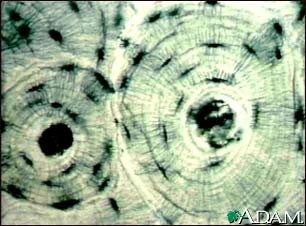
smooth muscle
bone
nerve
blood


What tissue is this?
Epithelial
Nervous
Connective
Muscular

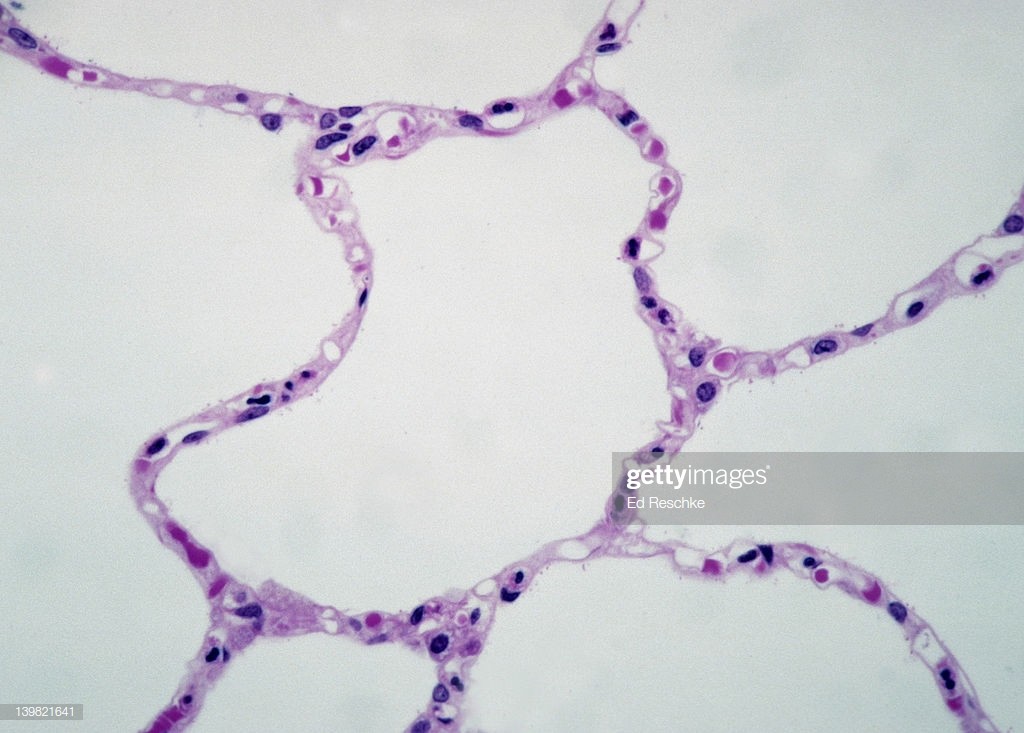
What type of epithelium lines the air sacs in this slide of lung tissue?
simple cuboidal
simple columnar
simple squamous
pseudostratified columnar
Which of these connects bone to bone?
tendon
ligament
Stem cells are ____________________.
cells that grow uncontrollably
undifferentiated cells that can turn into other types of cells
the first cells of a new living organism (fertilized egg)
specialized cells that do one job
What is true of induced pluripotent stem cells?
They can be turned/forced into other types of cells in a lab.
They can't be turned into other types of cells.
They can be turned back into their original type of cell.
all of the above
Why is the use of embryonic stem cells controversial?
The embryos are destroyed in the process of extracting the stem cells.
People consider their use as destroying a life.
They are taken from little kids, which is painful.
They are put into a different person.

