
Font size
 Worksheets
Unit 3 Test Review
Total questions: 78
Worksheet time: 4hrs 54mins
What is the atomic structure of an atom?
The atomic structure of an atom consists of only protons and neutrons, with no electrons.
The atomic structure of an atom consists of a nucleus, which contains electrons, surrounded by protons and neutrons.
The atomic structure of an atom consists of a nucleus, which contains electrons, surrounded by neutrons and protons.
The atomic structure of an atom consists of a nucleus, which contains protons and neutrons, surrounded by electrons in energy levels or shells.
How many electrons can the first energy level hold?
6
4
8
2
What is the electron configuration of oxygen?
1s2 2s2 2p2
1s2 2s2 2p6
1s2 2s2 2p3
1s2 2s2 2p4
What is the electron configuration of sodium?
1s2 2s2 2p6 3s2
1s2 2s2 2p6 3s2 3p1
1s2 2s2 2p6 3s2 3p6
1s2 2s2 2p6 3s1
What is the process of ionic bonding?
Ionic bonding is the process of sharing electrons between atoms to form ions.
Ionic bonding is the process of repelling electrons between atoms to form ions.
Ionic bonding is the process of converting atoms into ions without any electron transfer.
Ionic bonding is the process of transferring electrons between atoms to form ions, which are then attracted to each other due to their opposite charges.
What is the difference between ionic and covalent bonding?
Ionic bonding involves the formation of molecules, while covalent bonding involves the formation of ions.
Ionic bonding involves the attraction between two atoms, while covalent bonding involves the repulsion between two atoms.
Ionic bonding involves the transfer of electrons, while covalent bonding involves the sharing of electrons.
Ionic bonding involves the sharing of electrons, while covalent bonding involves the transfer of electrons.
What is the charge of an ion formed by gaining electrons?
-
++
0
+
What is the charge of an ion formed by losing electrons?
+1
+2
0
-1
What is the formula for sodium chloride?
NaCl
C6H12O6
CO2
H2O
What is the formula for magnesium oxide?
Mg(OH)2
MgO
MgO2
Mg2O
What is the atomic number of carbon?
6
8
12
16
What is the formula for water?
H2O
CO2
NaCl
C6H12O6
What is the electron configuration of carbon?
1s2 2s2 2p2
1s2 2s2 2p6
1s2 2s2 2p3
1s2 2s2 2p4
Which of the following is true for ionic bonding & ionic compounds?
They must be made of ions with like charges.
The negative ion must be written first.
Compounds must have an overall charge of zero.
They are made of metals and nonmetals.
The positive ion must be written first.

Which of these is the correct match to form an ionic compound?


Which of these is the correct match to form an ionic compound?


Which of these is the correct match to form an ionic compound?


Which of these is the correct match to form an ionic compound?


What atom matches this electron configuration?
1s22s22p63s23p64s23d10
zinc
copper
nickel
germanium

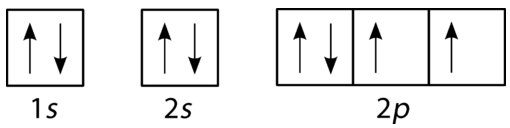

What is the short hand configuration for silicon?
[Ar]2s22p2
[Ne]2s22p2
[Ne]3s23p2
[Ne]3s23p4
What is the short hand configuration for iodine?
[Ar]4s23d6
[Ne]4s23d6
[Kr]5s24d105p5
[Kr]4s24d104p5
With what neutral element is Ag+ isoelectronic?
Cd
Pd
Xe
Kr
Which is the correct orbital notation for nitrogen (atomic # = 7)


Which rule is described as opposite and paired?
Aufbau
Pauli
Hund's

Which rule is violated in this orbital diagram?
Aufbau
Pauli
Hund's

Which rule is violated in this orbital diagram?
Aufbau
Pauli
Hund's


What is the correct shape of CHCl3?
Bent
Trigonal pyramidal
Tetrahedral
Trigonal planar



What is the oxidation state of phosphorous in Mg3(PO4)2
+2
+3
+4
+5
What is the oxidation number for O2
-2
-1
0
+2
What is the oxidation state of vanadium in V(H2O)63+
1+
3+
5+
7+
Why do atoms bond?
They typically don't bond
To add or take away energy levels
To have a full valance shell.
To have a full inner shell
Why do atoms bond?
They typically don't bond
To add or take away energy levels
To have a full valance shell.
To have a full inner shell

Which bond does this picture best represent?
Metallic bond
ionic bond
covalent bond
James Bond
What do positive ions tend to do?
lose electrons
gain electrons
lose protons
gain protons
What happens when magnesium loses 2 electrons?
It stabilizes to a net charge of 0
It turns into an atom
It becomes negatively charged
It becomes positively charged
Ionic Bonding involves:
The transfer of protons
The transfer of neutrons
The transfer of electrons
None Of the above
Covalent compounds:
Share electrons
Transfer electrons
Neither
What is a valence electron?
an electron that is found in the outermost shell of an atom.
an electron found in the innermost shell of an atom.
an electron found in the middle shell.
What is the number of valence electrons for Neon and the other Noble Gases?
5
6
7
8
If an atom transfers an electron to another atom, those atoms form which bond?
Ionic Bond, which is stronger than a covalent bonds
Covalent Bond, which is stronger than ionic bonds

Typically, atoms are more stable when they are
bonded together
apart from each other

Which statement correctly describes what happens to Li and Cl atoms when they bond?
Li loses 1 valence electron and becomes a positive ion, Cl gains 1 valence electron and becomes a negative ion.
Li gains 1 valence electron and becomes a positive ion, Cl loses 1 valence electron and becomes a negative ion.
Li gains 1 valence electron and becomes a negative ion, Cl loses 1 valence electron and becomes a positive ion.
Li loses 1 valence electron and becomes a negative ion, Cl gains 1 valence electron and becomes a positive ion.
What is the molecular shape of this compound?
Trigonal Planar
Tetrahedral
Linear
Which of the following is an example of a COVALENT COMPOUND?
MgO
Kl
CaCl2
H2S
Match the Oxidation Number to the correct element.
Ca
+2
Br
-1
O
-2
Na
+1
Al
+3

Which element would be in group 2?
V
W
X
Y
Z
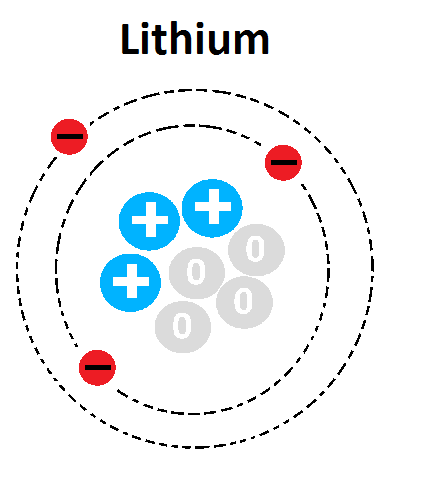
Which is a CORRECT electron dot diagram for Beryllium?


USE THE PERIODIC TABLE
How many dots would an electron dot diagram for Calcium (Ca) have?
(Click on image to enlarge it or use your own periodic table.)
20
2
40
4

(Top picture is A, bottom picture is D.)
Which of these is in group 2?



