
 Worksheets
Organism Diversity Quiz Prep
Total questions: 45
Worksheet time: 11hrs 15mins
Almost all fish have ________ that help them strain out oxygen from the water.
Lungs
Gills
Bronchi
Alveoli
An exoskeleton is hard skeleton found on the inside of the body.
True
False
Animals with internal skeleton, body systems, paired appendages, backbone, and spinal chord are classified as _____
Arthropod
Annelid
Cnidarian
Chordate
Crocodiles, snakes, and lizards are all ectothermic
True
False
Endothermic animals like mammals and birds are able to generate their own heat
True
False
Grouping organisms based on similarities is called
Botany
Classification
Naming
Identifying
What phylum are crabs classified in?
Chordate
Annelid
Arthropod
Cnidarian
What phylum is known for being parasitic, like nematodes?
Cnidarians
Echinoderms
Arthropods
roundworms
Spiders, Shrimp, and Bees are part of the _____ Phylum
Arthropod
Annelid
Chordate
Mollusk
Which animal is part of the Mollusk phylum?
Spiders
Fish
Squid
Koalas
Jellyfish are part of the ______ Phylum
Echinoderm
Cnidarian
Invertebrate
Roundworm
Mosses and Ferns reproduce ________
Sexually
by pollination
By Budding
By Spores

This creature has jointed legs, an exoskeleton, and body segments and is therefore a(n)...
Arthropod
Annelid
Chordate
Mollusk
What is the best distinction between birds and other animals?
Birds have amniote eggs
Birds eat seeds
Birds can fly
Birds have feathers
What is the correct sequence of the Levels of Classification? (Large-->Small)
Species, Order, Phylum, Kingdom, Class, Genus, Family, Domain
Domain, Kingdom, Phylum, Class, Order, Family, Species, Genus
Domain, Kingdom, Order, Family, Genus, Species, Phylum, Class
Domain, Kingdom, Phylum, Class, Order, Family, Genus, Species
Amphibians spend their lives in both land and water
True
False
This plant Phylum produces fruit that contains seeds used to reproduce.
Mosses
Flowering Plants
Conifers
Ferns
A student wants to know if a Kangaroo rat (Diapodomys compactus) and a Kangaroo (Macropus osphranter) have the same genus. Based on the provided names, what can the student conclude about the two organisms?
Both species have a two-part scientific name, so they are from the same genus groups.
Both species have kangaroo in their common name, so they are from the same genus groups.
Both species’ first portion in their scientific name is different, so they are from different genus groups.
Both species’ second portion in their scientific name is different, so they are from different genus groups.
Naming, describing, and classifying organisms into different categories based on their characteristics is the definition of:
Taxonomy
Natural selection
Adaptations
The system of biological classification used today was created by:
Charles Darwin
Gregor Mendel
Carolus Linnaeus
What characteristics best describe the Animalia Kingdom?
Multicellular, autotrophs, prokaryotes
Unicellular, heterotrophs, eukaryotes
Multicellular, heterotrophs, prokaryotes
Multicellular, heterotrophs, eukaryotes
The first part of a scientific name is an organism's _______________ and the second part is its ________________.
species, genus
phylum, order
class, spices
genus, species

What would the scientific name of this organism be?
Kingdom: Animalia
Phylum: Chordata
Class: Mammalia
Order: Carnivora
Family:Canidae
Genus: Canis
species: mesomelas
Mammalia carnivora
Canidae mesomelas
Canis mesomelas
Animalia chordata
What is the scientific name of this organism?
Kingdom:Animalia
Phylum: Chordata
Class: Mammalia
Order: Rodentia
Family: Sciuridae
Genus: Ratufa
species: indica
Indica ratufa
Ratufa indica
Chordata Amimalia
Sciuridea rodenta

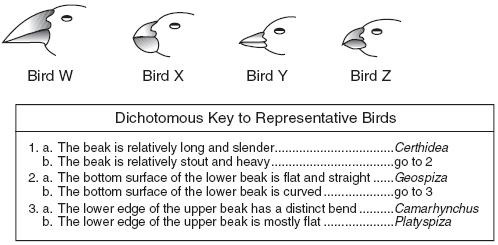
According to the branching dichotomous key given, the next step for a chocolate candy with no nuts should be
a. The candy is round
b. The candy is rectangular
a. The candy is caramel
b. The candy is not caramel
a. The candy is square
b. The candy is long and skinny
a. The candy is with nuts
b. The candy is without nuts

According the the dichotomous key given, what trait separates M&Ms from KitKats?
having caramel
shape of candy
number of candies
having nuts
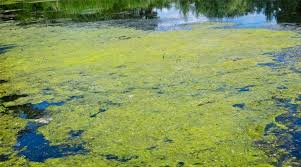
Algea
Flowering
Non Flowering

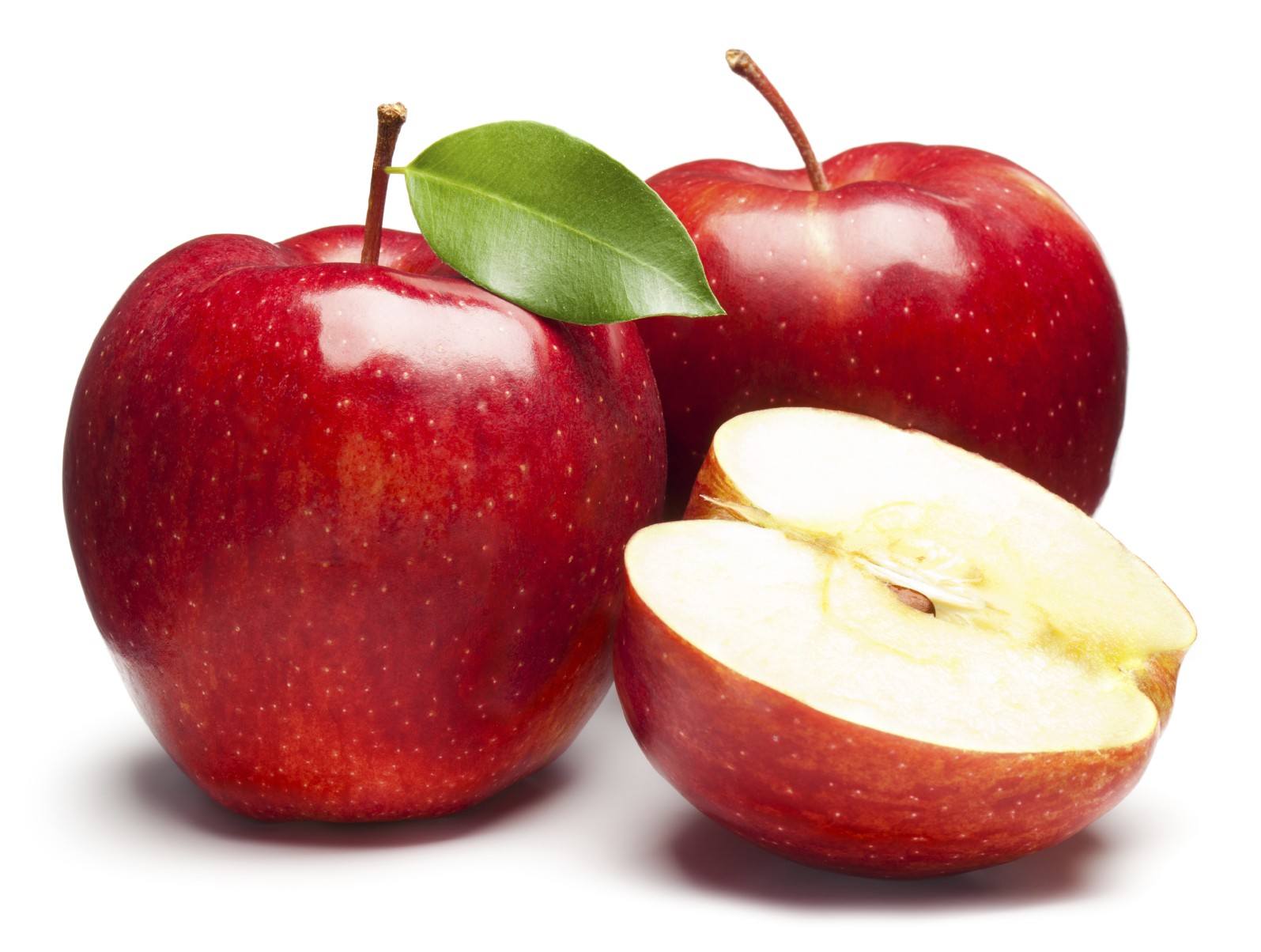
Orange Tree
Non Flowering
Flowering


This type of crop plant has a fibrous root system:
Monocot
Dicot
Monoecious
Dioecious
What classification would a crop plant have if it as 2 cotyledons in each seed?
Monocot
Dicot
Monoecious
Dioecious
What is NOT a category used to classify plants?
mosses
ferns
fragrant
conifers


Student 1: All of the plants are nonvascular plants, so they can each be sorted into the same group. Nonvascular plants must grow in areas where water is present, and vascular plants do not need water in their environments because vascular tissue can transport nutrients to great heights.
Student 2: I know that Plants 2 and 3 are vascular plants due to their tall height. Plants taller than 5 cm must have vascular tissue to transport nutrients. Plant 1 is a nonvascular plant because it is very short. All plants need water, so they must all live in damp areas.
Student 3: Plants 1 and 3 are nonvascular because they do not have true leaves, stems, and roots; therefore, they only grow low to the ground. Plant 2 lives in a similar environment but is a vascular plant because it has these structures and vascular tissue to transport nutrients up the length of the plant.
Student 4: The plants can be sorted into two groups. Plants 2 and 3 are nonvascular because they reproduce using spores. Plant 1 does not reproduce using spores, so it must be a vascular plant.

The student should classify fern with tomato plant and cedar tree since fern does have roots, stems, and leaves.
The student should classify fern by itself under “yes,” vascular tissue and “no,” reproduce with seeds since it does have roots, stems, and leaves, but it does not have seeds.
The student should classify fern by itself under “no,” vascular tissue and “yes,” reproduce with seeds since it is a nonvascular plant.
The student should classify fern with liverwort since both plants do not reproduce with seeds.

Rose and algae could be grouped together as a vascular plant since they have roots, stems, and leaves.
Pine tree and rose could be grouped together as a vascular plant since they have roots, stems, and leaves.
Fern and pine tree could be grouped together as seeded vascular plants since they both reproduce with seeds.
Fern and algae could be grouped together as non-seeded vascular plants since they both do not reproduce with seeds.

