
Font size
 Worksheets
Chemistry - Chapter 4
Total questions: 18
Worksheet time: 26mins

This is the (a) model which was made by (b) .
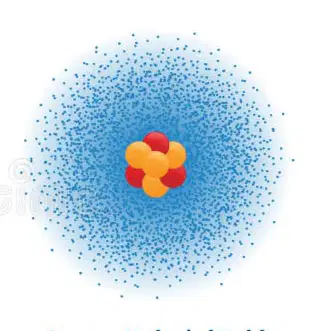
This is the (a) model which was made by (b) .

This is the (a) model which was made by (b) .

This is the (a) model which was made by (b) .
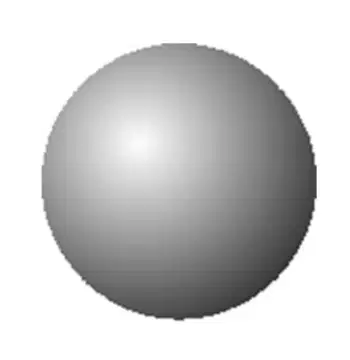
This is the (a) model which was made by (b) .
Gamma Ray: (a)
Beta Particle: (b)
Alpha Particle: (c)
When calculating the atomic mass of an isotope, what formula is used?
Abundance of isotope x mass of isotope = atomic mass
Number of protons + number of neutrons = atomic mass
Click on the proton of the atom
Click on the neutron of the atom
Click on the electron of the atom
One-Twelfth the mass of a carbon-12 atom
Atomic Mass Unit (amu)
Atomic Mass
Isotopes
Alpha Particle
A reaction that involves a change in the nucleus of an atom
Combustion Reaction
Atomic Reaction
Nuclear Reaction
Radioactive Reaction
A spontaneous process in which unstable nuclei lose energy by emitting radiation.
Radiation
Radioactive Decay
Nuclear Reaction
Radiation that is made up of (a) particles; is deflected toward a negatively charged plate when radiation from a radioactive source is directed between two electrically charged plates.
Radiation that is made up of (a) particles; is deflected toward a positively charged plate when radiation from a radioactive source is directed between two electrically charged plates
A particle with two protons and two neutrons, with a 2+ charge; is equivalent to a helium-4 nucleus and is emitted during radioactive decay
Beta particle
Alpha particle
A high speed electron with a 1- charge that is emitted during radioactive decay
Beta particle
Alpha particle
High-energy radiation that has no electrical charge and no mass, is not deflected by electric or megnetic fields, usually accompanies alpha and beta radiation, and accounts for most of the energy lost during radioactive decay.
Radiation
Alpha Radiation
Nuclear Reaction
Gamma Rays

