
NEW
Font size
 Worksheets
DNA_6
Total questions: 45
Worksheet time: 23mins
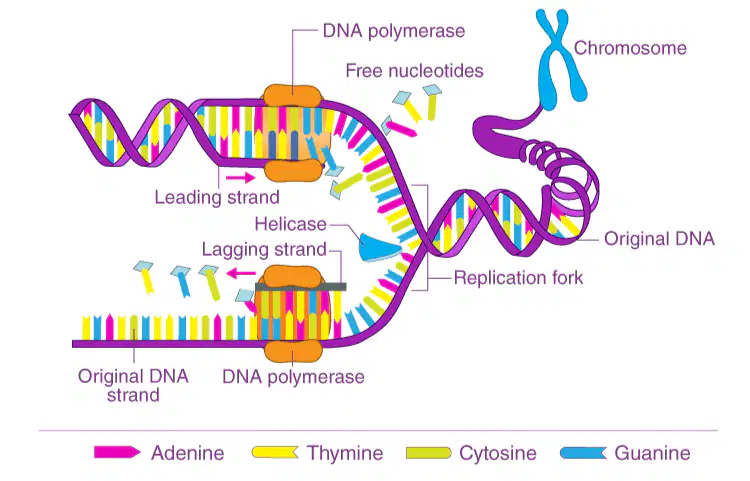
Why is DNA replicated before every cell division?
A) To create genetic diversity
B) To repair damaged DNA
C) To ensure each daughter cell receives an identical copy
D) To increase the number of genes
What is the main purpose of DNA replication?
A) To change the genetic information
B) To create a new DNA structure
C) To repair damaged DNA
D) To produce identical copies of DNA
How does the double helix structure of DNA contribute to the process of replication?
A) It allows DNA to change shape easily.
B) It prevents DNA from replicating.
C) It provides a template for the creation of new strands.
D) It hinders the binding of complementary bases.
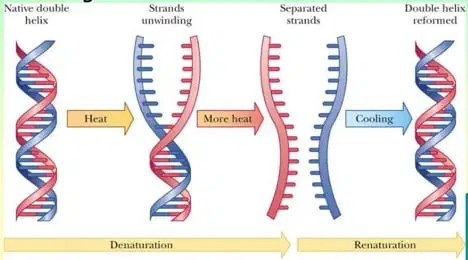
What is the term for the process of unzipping the double helix during DNA replication?
A) Transcription
B) Translation
C) Replication
D) Denaturation
How are the two new DNA strands created during replication?
A) They are synthesized from scratch.
B) They are produced from existing RNA strands.
C) They are built up by complementary base-pairing onto the old strands.
D) They are generated from separate genetic material.
Which process of DNA replication results in the formation of two identical double-stranded DNA molecules from one original molecule?
A) Transcription
B) Translation
C) Semiconservative replication
D) Conservative replication
What is the role of complementary base-pairing in DNA replication?
A) To introduce errors in the new DNA strands
B) To ensure the stability of DNA structure
C) To form hydrogen bonds between bases
D) To generate single-stranded DNA molecules
What does the term "semiconservative replication" mean in the context of DNA replication?
A) Replicating only one strand of DNA
B) Replicating both strands of DNA completely
C) Creating two identical DNA molecules, each with one original and one new strand
D) Replicating DNA only in cells with half the usual amount
What is the complementary base pair for adenine (A) in DNA replication?
A) Cytosine (C)
B) Thymine (T)
C) Guanine (G)
D) Uracil (U)
During DNA replication, which enzyme is responsible for unwinding and separating the double helix?
A) DNA polymerase
B) RNA polymerase
C) Helicase
D) Ligase
What is the function of DNA polymerase in DNA replication?
A) To separate the DNA strands
B) To join the Okazaki fragments
C) To build new DNA strands by adding complementary nucleotides
D) To repair damaged DNA
How does DNA replication ensure the accuracy of copying genetic information?
A) By introducing mutations intentionally
B) By proofreading and correcting errors
C) By increasing the speed of replication
D) By using different base pairs for replication
What term describes the synthesis of a new DNA strand that proceeds continuously in the 5' to 3' direction during replication?
A) Leading strand
B) Lagging strand
C) Complementary strand
D) Template strand
In DNA replication, what is the term for the discontinuously synthesized DNA fragments on the lagging strand?
A) Leading strands
B) Okazaki fragments
C) Helicases
D) Replication bubbles
Which process of DNA replication results in the formation of two identical double-stranded DNA molecules from one original molecule?
A) Transcription
B) Translation
C) Semiconservative replication
D) Conservative replication
Where does DNA replication begin on the DNA molecule?
A) At the replication terminus
B) At the replication midpoint
C) At the replication origin
D) At the replication endpoint
What is the specific term for the enzyme responsible for unwinding and separating the two DNA strands during replication?
A) DNA ligase
B) DNA polymerase
C) DNA helicase
D) DNA primase
What is the primary function of DNA helicase during DNA replication?
A) To synthesize new DNA strands
B) To join the Okazaki fragments
C) To build complementary base
D) To unwind and separate the two DNA strands
What type of bond is broken by DNA helicase when it separates the two DNA strands?
A) Covalent bonds
B) Ionic bonds
C) Hydrogen bonds
D) Van der Waals forces
At the replication origin, what specific sequence of DNA initiates the replication process?
A) Termination sequence
B) Replication fork
C) Promoter region
D) Initiator sequence
What is the term for the Y-shaped structure formed as DNA replication progresses in both directions from the origin?
A) Replication origin
B) Replication fork
C) DNA polymerase
D) Helicase junction
What is the role of the replication fork in DNA replication?
A) To initiate the replication process
B) To synthesize new DNA strands
C) To hold the two DNA strands together
D) To separate the DNA strands and create new templates
In DNA replication, what type of bond is formed between the two new DNA strands and the old strands?
A) Covalent bonds
B) Ionic bonds
C) Hydrogen bonds
D) Peptide bonds
How do the two new DNA strands get built during replication?
A) They are synthesized from scratch.
B) They are transcribed from RNA strands.
C) They are built up by complementary base-pairing onto the old strands.
D) They are generated from separate genetic material.
Which of the following best describes the role of the replication origin?
A) It marks the end of DNA replication.
B) It is where DNA helicase unwinds the DNA strands.
C) It serves as the site where DNA synthesis begins.
D) It joins the two DNA strands during replication.
What is the primary function of DNA ligase during DNA replication?
A) To separate the two DNA strands
B) To synthesize new DNA strands
C) To join the Okazaki fragments
D) To unwind the DNA helix
What is the term for short, discontinuously synthesized DNA fragments on the lagging strand?
A) Leading strands
B) Exons
C) Okazaki fragments
D) Promoter regions
Which type of enzyme is responsible for joining the Okazaki fragments during DNA replication?
A) DNA helicase
B) DNA polymerase
C) DNA ligase
D) DNA primase
What type of bonds form between the nucleotides in the Okazaki fragments to join them together during DNA replication?
A) Covalent bonds
B) Ionic bonds
C) Hydrogen bonds
D) Peptide bonds
What is the specific term for the region where DNA replication is completed, and the new DNA strands have been fully synthesized?
A) Replication origin
B) Replication fork
C) Termination sequence
D) Helicase junction
What are the four nucleotides used to build new DNA strands in replication?
A) A, B, C, D
B) A, C, G, T
C) A, U, G, C
D) X, Y, Z, W
Which of the following nucleotide pairs represents complementary base pairing in DNA replication?
A) A-T and G-C
B) A-G and T-C
C) C-T and G-A
D) A-C and G-T
When there is a "T" base on one of the old DNA strands, which nucleotide will bind to it during complementary base pairing in replication?
A) A
B) C
C) G
D) T
What enzyme is responsible for joining new nucleotides to the old DNA strands during replication?
A) DNA helicase
B) DNA ligase
C) DNA polymerase
D) DNA primase
How are the new nucleotides joined to each other during DNA replication?
A) By hydrogen bonds
B) By ionic bonds
C) By van der Waals forces
D) By strong covalent phosphodiester bonds
What forms the sugar-phosphate backbone in the DNA molecule?
A) Complementary base pairs
B) Hydrogen bonds
C) Strong covalent phosphodiester bonds
D) Replication origin
What is the primary function of DNA polymerase during DNA replication?
A) To unwind the DNA strands
B) To break the hydrogen bonds between base pairs
C) To synthesize new DNA strands
D) To repair damaged DNA
How many different nucleotide combinations can be formed by the four nucleotides (A, C, G, and T)?
A) 4
B) 8
C) 16
D) 64
Which base pairs with guanine (G) during complementary base pairing in DNA replication?
A) Adenine (A)
B) Cytosine (C)
C) Thymine (T)
D) Uracil (U)
How many subunits does the DNA polymerase enzyme contain?
A) 2 subunits
B) 4 subunits
C) 12 subunits
D) 18 subunits
Which type of bond holds the nucleotides together within each DNA strand?
A) Covalent bonds
B) Ionic bonds
C) Hydrogen bonds
D) Van der Waals forces
Which term describes the sequence of nucleotides that make up the genetic code in DNA?
A) Replication origin
B) Genetic alphabet
C) Genetic code
D) Nucleoplasm
What is the role of DNA ligase in DNA replication?
A) To synthesize new DNA strands
B) To join the Okazaki fragments
C) To break the hydrogen bonds between base pairs
D) To unwind and separate the DNA strands
Which enzyme is involved in the initial unwinding of the double helix during DNA replication?
A) DNA polymerase
B) DNA ligase
C) DNA helicase
D) DNA primase
What is the term for the complex of DNA and proteins found in the nucleus of eukaryotic cells?
A) Nucleoplasm
B) Chromatin
C) Ribosome
D) Nucleolus

