wayground logo

Free Printable Worksheets

Font size

S
M
L
XL
Worksheets

Unit 2, Ch. 6.5 Weather Review

Total questions: 64

Worksheet time: 1hrs 2mins

Name
Class
Date
1.
Located at the leading edge of a temperature drop off. Bring heavy thunderstorms, rain, and hail. Cool, fair weather is likely to follow.  
a)
Warm Front
b)
Cold Front
c)
Occluded Front
d)
Stationary Front 
2.
Located at the leading edge of a warm air mass. Brings gentle rain or light snow, followed by warmer, milder weather.  
a)
Warm Front
b)
Cold Front 
c)
Occluded Front 
d)
Stationary Front 
3.
Where the warm and cold air meet and stall, clouds and fog form, and it may rain or snow.  It could bring many days of clouds and precipitation.  
a)
Warm Front
b)
Cold Front
c)
Occluded Front 
d)
Stationary Front 
4.
This is the symbol for a... 
a)
Cold Front
b)
Warm Front
c)
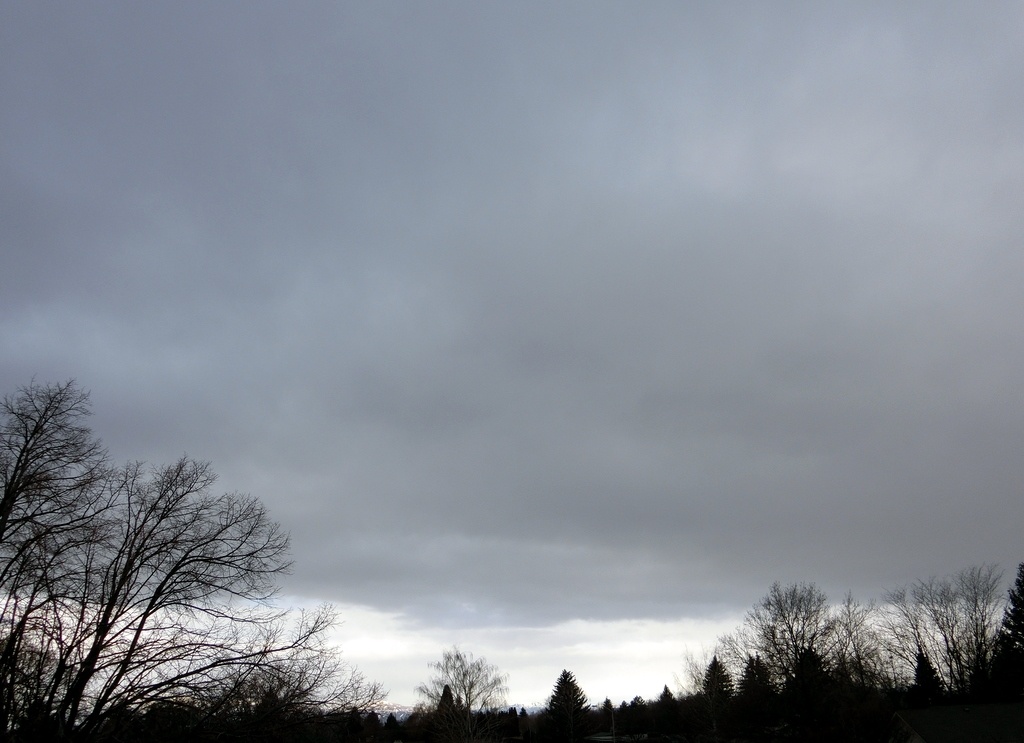
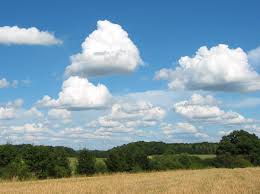
Stationary Front
d)
Occluded Front 
5.
This is the symbol for a... 
a)
Occluded Front
b)
Stationary Front
c)
Warm Front
d)
Cold Front 
6.
This is the symbol for a... 
a)
Stationary Front
b)
Occluded Front
c)
Cold Front
d)
Warm Front
7.
This is the symbol for a... 
a)
Stationary Front
b)
Occluded Front
c)
Cold Front
d)
Warm Front 
8.
Identify the type of front that is shown in the image.
a)
Occluded Front
b)
Cold Front
c)
Stationary Front
d)
Warm Front
9.
Identify the type of front that is shown in the image.
a)
Occluded Front
b)
Cold Front
c)
Stationary Front
d)
Warm Front
10.
Identify the type of front that is shown in the image.
a)
Occluded Front 
b)
Cold Front
c)
Stationary Front
d)
Warm Front
11.
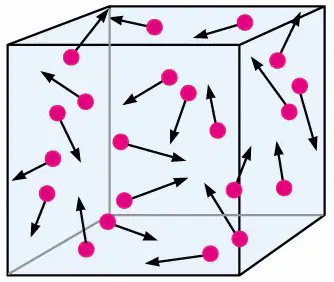
An unequal heating of the surface of Earth by the sun causes areas of high and low pressure to form. What do the arrows in the diagram most likely represent?
a)
wind
b)
precipitation
c)
clouds
d)
runoff
12.
The map below shows a high pressure system. The lines on the map represent areas of equal atmospheric pressure, measured in millibars. The difference in atmospheric pressure between Point X and Point Y causes
a)
wind
b)
gravity
c)
tides
d)
humidity
13.

At which location would winds most likely be the strongest (fastest)?

a)

A

b)

B

c)

C

14.
What is the source of energy that heats the atmosphere and creates air movement?
a)
clouds
b)
the moon
c)
tides
d)
the sun
15.
When the atmosphere is warmed by the sun, a change in air pressure results in
a)
clouds
b)
humidity
c)
precipitation
d)
wind
16.

Low pressure systems will bring: (select all that apply)

a)

clear skies

b)

cloudy skies

c)

increased chance of rain

d)

humid air

e)

dry air

17.

High pressure systems will bring: (select all that apply)

a)

clear skies

b)

cloudy skies

c)

increased chance of rain

d)

humid air

e)

dry air

18.
Air pressure is greater _______.
a)
at the top of the mountain
b)
at the bottom of the mountain
c)
at the center of the mountain
19.

Which air mass would be dry and warm?

a)

F

b)

E

c)

D

d)

B

e)

A

20.

Which air mass(es) would be cold and humid? Select all that apply.

a)

E

b)

D

c)

C

d)

B

e)

A

21.

Which air mass (or masses) is/are maritime tropical? (select all that apply)

a)

F

b)

E

c)

D

d)

B

e)

A

22.

Which air mass (or masses) is/are continental polar? (select all that apply)

a)

F

b)

E

c)

D

d)

B

e)

A

23.
the lines on a weather map connect equal areas of air pressure
a)
contour lines
b)
isotherms
c)
isobars
d)
latitude
24.

Which type of map is this?

a)

Radar Map

b)

Contour Map

c)

Isotherm Map

d)

Isobar Map

25.

Which statement is true?

a)

A is the center of a Low pressure system and B is the center of a High pressure system

b)

A is the center of a High pressure system and B is the center of a Low pressure system

c)

A and B are the centers of two Low pressure systems

d)

A and B are the centers of two High pressure systems

26.
What is an isotherm? 
a)
A line on a weather map that connects points of equal air temperature
b)
 A line on a weather map that connects points of equal air pressure
c)
A pattern of weather that shows cloudy skies and precipitation
d)
A pattern of weather that brings clear skies and warm temperatures 
27.
A body of air that has the same temperature and moisture levels throughout is called what? 
a)
Fronts
b)
Air Masses
c)
A cold front
d)
A warm front
28.

_______ pressure systems are characterized by rising air.

a)

High

b)

Low

29.

_______ pressure systems are characterized by sinking air.

a)

High

b)

Low

30.

The pressure gradient force is when air moves from _______ pressure toward _______ pressure.

a)

high, low

b)

low, high

c)

adiabatic, barometric

31.

This is when the rotation of the Earth causes wind to curve from the direction it was going.

a)

convergent effect

b)

marginal effect

c)

Coriolis effect

d)

Mariolis effect

32.

The _____________ the isobars on a map are to/from one another the ___________ the wind.

a)

closer, slower

b)

closer, faster

c)

farther, faster

33.

When a cold front moves in

a)

it forces warm air to rise rapidly creating big clouds and likely rain

b)

it pushes against warm air and becomes a stationary front

c)

the cold air goes above the warm air causing a clear sky

d)

it forms a wedge and the warm air slowly rises and may form small clouds

34.
Dew Point is the
a)

temperature air must cool down to in order to condense

b)
temperature where ice melts to liquid water
c)
temperature where ice turns directly into water vapor
d)
time of day when dew on the ground disappears
35.
What is relative humidity?
a)
humidity that is related to other humidity
b)
condensation
c)
clouds
d)

the amount of water in the air compared to the amount of water the air can hold (a ratio)

36.
The temperature to which air must be cooled in order to become saturated is the: 
a)
Relative Humidity
b)
Mixing Ratio
c)

Dew Point

d)
Wet-bulb Temperature
37.
Which type of air has a relative humidity of 100%?
a)
space
b)
hot
c)
dry
d)
saturated
38.

Is the air typically colder at the top or bottom of a mountain?

a)

Bottom

b)

Top

39.

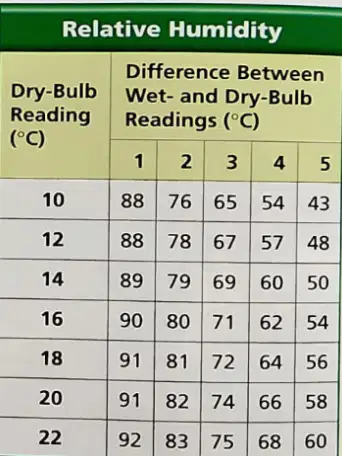
A dry bulb temperature of 20C with a wet bulb temperature of 15C would have what relative humidity?

a)

74%

b)

58%

c)

66%

d)

56%

40.

If the dry bulb temperature is 18C and the relative humidity is 91%, what is the wet bulb temperature?

a)

17C

b)

18C

c)

16C

d)

15C

41.

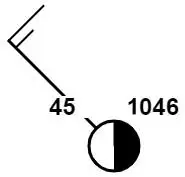
Which way is the wind blowing in this scenario?

a)

from the southeast

b)

toward the southeast

c)

from the southwest

d)

toward the southwest

42.

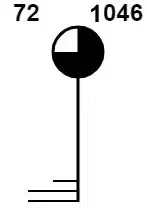
What is the air temperature at this weather station?

a)

72

b)

75

c)

1046

d)

25

43.

What is the air pressure at this weather station?

a)

72

b)

75

c)

1046

d)

25

44.

What is the approximate wind speed and direction at this weather station?

a)

72 mph, north

b)

72 mph, south

c)

25 mph, south

d)

25 mph, north

45.

Select all of the information that is correct for this weather station.

a)

45 degrees

b)

1046 air pressure

c)

50% cloud cover

d)

NW winds

e)

15 mph

46.

What percent cloud cover is shown here?

a)

0.1 = 10% (or less)

b)

0.2-0.3 or 20-30%

c)

0.6 = 60%

d)

0.7-0.8 or 70-80%

47.

Jet stream winds over the United States generally move from

a)

east to west

b)

west to east

c)

north to south

d)

south to north

48.

Which cross section best represents a cold front?

a)
b)
c)
d)
49.
Which kind of front is this?
a)
Occluded Front
b)
Cold Front
c)
Stationary Front
d)
Warm Front
50.
Several days of cloudy, rainy weather with little to no wind is most likely to occur along a(n)
a)
occluded front.
b)
warm front.
c)
stationary front.
d)
cold front.
51.
This type of cloud is thin, wispy, and made of ice crystals
a)
cumulus cloud
b)
stratus cloud
c)
cirrus cloud
d)
cumulonimbus cloud
52.
This type of cloud is flat layers and the edges are not clearly defined
a)
cirrus cloud
b)
cumulus cloud
c)
stratus cloud
d)
cumulonimbus cloud
53.
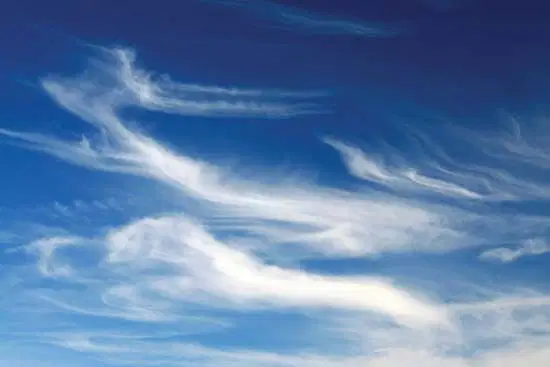
what type of cloud is shown?
a)
cumulus
b)
cirrus
c)
stratus
54.

What causes jet streams?

a)

They are caused due to large thunderstorms.

b)

No one knows.

c)

They form when warm air meets cold air.

d)

Too many jets in the air at one time.

55.

Which diagram best represents the position and direction of the jet stream in the Northern Hemisphere?

a)

b)

c)

d)

56.

Which of these are true about air pressure: (select all that apply)

a)

It is the amount of force exerted by air on a surface it is in contact with.

b)

Flows from areas of high pressure to areas of low pressure

c)

Flows from areas of low pressure to areas of high pressure

d)

Decreases as you increase elevation (altitude)

e)

Increases as you increase elevation (altitude)

57.

What fuels the development of a hurricane?

a)

Warm ocean water

b)

Cold ocean water

c)

Polar easterlies

d)

Sea breezes

58.

Choose the 2 main factors that cause winds to blow in a certain direction. (pick 2)

a)

coriolis effect

b)

gravity

c)

pressure gradient force

d)

friction

e)

precipitation

59.

You notice over the course of a couple of days that the clouds that used to be cirrus (high) clouds, keep getting lower and lower. This most likely means what type of front is approaching you?

a)

Warm

b)

Cold

c)

Occluded

d)

Stationary

60.

What units are used for barometric pressure on weather maps?

a)
atmospheres (atm)
b)
pounds per square inch (psi)
c)

millibars (mb)

d)
kilopascals (kPa)
61.

Which of these are associated with a warm front? Select all that apply.

a)

Sequence as the front approaches of cirrus, then cumulus, then stratus clouds.

b)

Cooler air

c)

Warmer air

d)

Clouds and precipitation

e)

Clear skies

62.

Which of these are associated with a cold front? Select all that apply.

a)

Sequence as the front approaches of cirrus, then cumulus, then stratus clouds.

b)

Cooler, drier air

c)

Warmer, humid air

d)

several days of the same weather

e)

Clear skies following passing thunderstorms

63.

Which of the following statements accurately describes the difference between dry bulb and wet bulb temperature readings and their relation to water saturation in the air?
a)
Dry bulb temperature represents actual air temperature, wet bulb temperature reflects cooling effect of water evaporation, difference between them indicates water saturation level.
b)
Dry bulb temperature reflects cooling effect of water evaporation, wet bulb temperature represents actual air temperature, difference between them indicates water saturation level.
c)
Dry bulb temperature indicates water saturation level, wet bulb temperature reflects actual air temperature, difference between them is irrelevant.
d)
Dry bulb temperature and wet bulb temperature are the same readings, they both indicate water saturation level.
64.

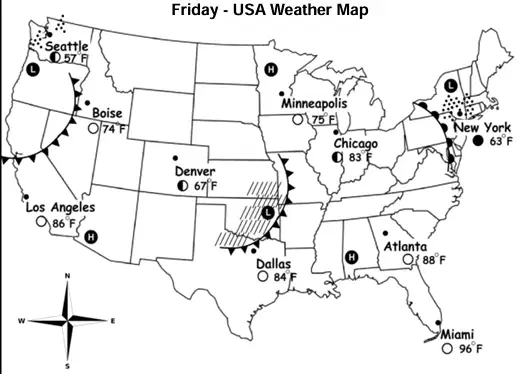
In the next day or two (after the front passes), what type of weather is Boise likely going to have?

a)
The weather in Boise is likely to be sunny with clear skies.
b)
Boise is likely to have heavy snowfall.
c)
Boise is likely to have a heatwave.
d)
Boise is likely to have a hurricane.