
 Worksheets
Ptable C.4-6
Total questions: 62
Worksheet time: 47mins
Which elements have similar properties as neon?
Ar; elements in the same family of the periodic table share the same characteristics.
Fl; elements in the same period of the periodic table share the same characteristics.
.
Fr; elements on opposite corners of the periodic table share the same characteristics.
Li; elements on opposite sides of the periodic table share the same characteristics.

Chemical properties are
an element’s ability to react with other elements.
an element's ability to change into a gas.
an elements attraction to water.
any property which can be observed or measured.

Which of the following chemical formulas has a subscript?
1. H2O
2. 2HCl
3. NaCl
1 only
2 only
3 only
1 and 2

How many oxygen atoms are in an atom of hydrogen peroxide (H2O2) ?
2
4
1
8

How many atoms are in the following chemical formula?
2CaCO3
10
8
4
5
What is true about silicon (Si)?
Silicon has 2 more valence electrons than magnesium (Mg).
Silicon has the same number of valence electrons as the other elements in its same period.
Silicon has the same number of valence electrons as its atomic number.
Silicon has 8 more valence electrons than carbon (C)


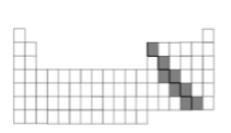
Elements in the shaded area can best be described as -
metalloids
metals
noble gases
nonmetals
Sodium (Na) is in the same group as
Ne
Mg
Ca
K
The _______ tells us how many energy shells an element has.
group
period
atomic number
element symbol
The _________ tells us how many valence electrons an element has.
Group
Period
Atomic Number
Element

What group does the element Zn - Zinc belong to?
12
10
4
5
Elements that are mostly shiny, silver or gray in color, malleable, ductile, and good conductors of heat and electricity are referred to as _______________.
Metals
Nonmetals
Metalloids
Conductor
What can be concluded from the following statements about a property of metals?
•A cast-iron skillet on a stove is used to fry bacon.
•A metal spoon left in a pot of soup heating on a stove is too hot to touch.
•An aluminum playground slide gets hot on a summer day.
Metals conduct heat.
Metals conduct electricity.
Metals are good insulators.
Metals combine with nonmetals.
The alkaline earth metal elements are in the same group in the periodic table because they all have
one valence electron.
eight valence electrons.
seven valence electrons.
two valence electrons.
Element X is a good conductor of electricity. Which of the following most likely describes other elements that are good electrical conductors?
all elements in the same row of the periodic table as X
all elements in the same column of the periodic table as X
all elements that can be combined with X to form ionic compounds
all elements that can be combined with X to form covalent compounds
How many electrons does neon have?
10
15
20
8

WHat is the atomic number of oxygen?
6
2
15.999
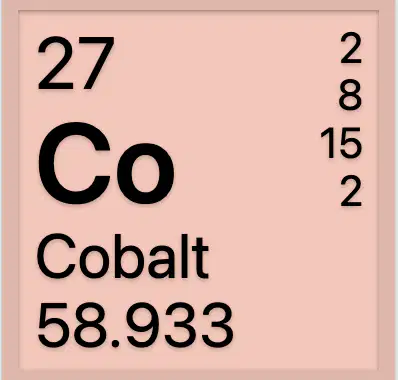
What is the atomic mass of cobalt?
27
58.933
15
2
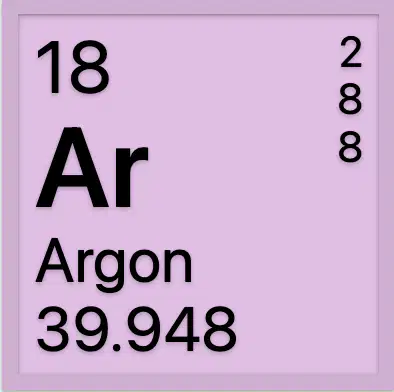
How many protons does argon have?
18
39.948
8
2

What is Neon's atomic mass?
10
20.18

What is Beryllium's atomic number?
4
5
9.01

The fluorine atom has an atomic number of
19
9

What is the number of protons in Magnesium atom ?
12
24
23
8

What is the number of electrons in chlorine atom ?
35
11
18
17
Carbon
C
Ca
Cu
Cr
H2SO4
The smallest unit of a compound that has all the properties of the compound
element
atom
mixture
molecule
The vertical (up and down) columns in the Periodic Table are called
groups
towers
periods
atomic numbers
Elements in a .................. have similar chemical properties.
period
group
row

The vertical (up and down) columns in the Periodic Table are called
groups
towers
periods
atomic numbers
A _________ goes side to side on the periodic table.
Group
Period

According to the Octet Rule, atoms of elements react with each other in order to attain ____ electrons in their outermost energy level or shell.
2
4
6
8
10
What group are the Alkaline Earth Metals in?
3
12
2
5
A ________________________ is an electron located in the outer most shell.
Alkali electron
Halogen electron
Noble electron
Valence electron

