
 Worksheets
Human Body #1
Total questions: 58
Worksheet time: 39mins
Skin is an organ
true
false
In which organ does digestion happen?
heart
stomach
brain
mouth
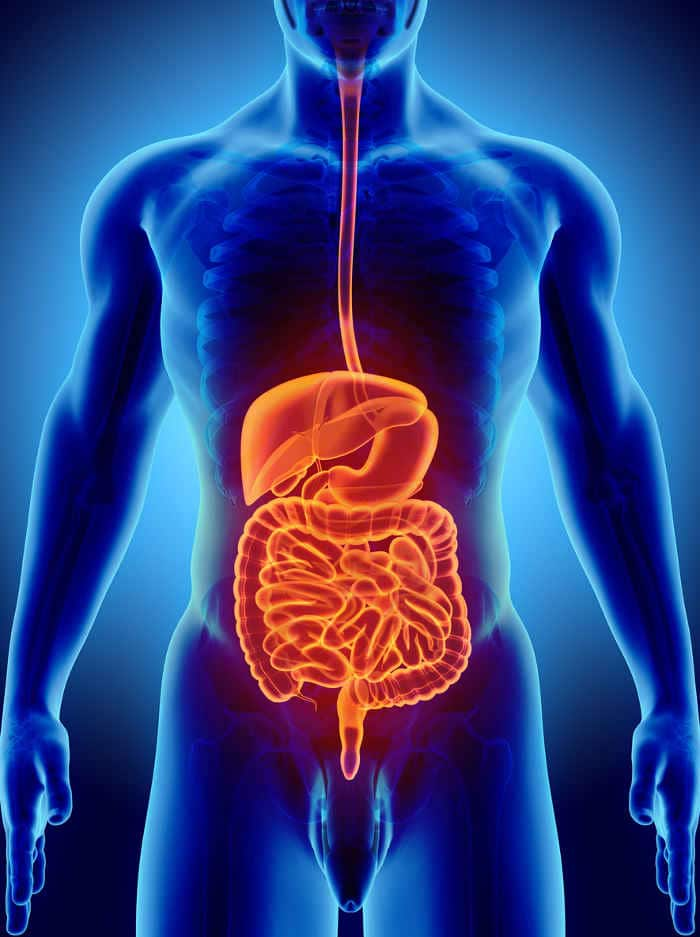
Which human system do you see in the image?
digestive system
respiratory system
circulatory system
nervous system
The system that provides movement, support, and blood cells to the body is?
skeletal system
muscular system
digestive system
urinary stystem
Red blood cells are made in the?
heart
bone marrow
kidneys
brain

Enables movement in the body and internal organs.
circulatory
muscular
nervous
skeletal
The muscles exert forces on the body and enable movement by
Pushing on Tendons
Squeezing Ligaments
Stimulating the spinal cord
Pulling on bones

Which long bone do you see in the figure?
humerus
femur
collarbone
rib
Which two body systems are directly involved in movement?
Muscular and Skeletal
Muscular and Circulatory
Skeletal and Circulatory
Circulatory and Nervous
Which system's function is to protect and support vital organs?
Digestive
Skeletal
Nervous
Excretory

Which series correctly represents the levels of organization in an organism?
Cells -> Organs -> Organ System -> Tissue
Cells -> Tissue -> Organs -> Organ Systems
Tissue -> Cells -> Organ System -> Organs
Tissue -> Organ System -> Cells -> Organs
Which body system consists of the kidneys, bladder, ureters, and urethra?
digestive
excretory
immune
respiratory

What is the primary function of skin cells?
to deliver messages to the brain
to generate movement of muscles
to produce carbohydrates for energy
to provide a physical barrier to the body
Which two organ systems work together to get rid of liquid waste from the body?
digestive and excretory
digestive and circulatory
circulatory and endocrine
circulatory and excretory

Your internal temperature staying around 98.6 degrees Fahrenheit is an example of _________.
homeogenics
homogenous
homeostasis
Michael has to write a paper on the formation of red blood cells. In addition to the circulatory system, what other body system should he research to find information about the formation of red blood cells?
skeletal
muscular
tissue
nervous

Which organ system does the stomach, large intestine, small intestine, and rectum belong to?
digestive
excretory
immune
muscular
In the human body, breaking down of food into simple substances occurs in the ____________.
reproductive system
excretory system
digestive system
nervous system

Which type of muscles can control voluntary movements?
cardiac
skeletal
plasma
smooth
Below the dermis layer is the______, a layer of connective tissue that stores fat and helps the body retain heat.
epidermis
dermis
subcutaneous layer
Which muscle tissue forms the walls of the heart?
smooth
voluntary
cardiac
skeletal

The cellular membrane surrounds every human cell. The membrane protects the cell and transmits information about the cell’s surroundings to organelles inside the cell. What organ system provides a similar function in the human body?
skeletal system
endocrine system
integumentary system
excretory system
Which system has layers of smooth muscle tissue that contract to move solid and liquid nutrients and waste through the body?
respiratory
skeletal
digestive
muscular

What body parts are made of tissues that can contract and then relax back to normal size?
bones
ligaments
muscles
tendons
True or False: Bones are attached to muscles which allow for movement
True
False

Skin produces vitamin D
true
false
Integumentary system includes:
(select all possible answers)
skin
nails
muscles
hair
theet


Which gland controls the rate at which the body produces energy from nutrients (metabolism)?
Thyroid
Parathyroid
What are hormones?
your body's chemical messengers
a collection of glands
Endocrine glands secrete _
Hormones
Neurotransmitters
A wide range of chemical substances
What is the endocrine system?
A system of vessels that circulates blood around the body.
A group of bones and tissue that provides support and structure for the body.
A group of glands that work together with the nervous system to coordinate all body functions
A group of organs that is responsible for eliminating wastes.
What is the main function of the endocrine system?
It creates chemicals, or hormones, that are sent around the body to maintain homeostasis.
It creates electrical messages that are sent around the body to maintain homeostasis.
It maintains the correct level of oxygen in the body to maintain homeostasis.
It releases waste from the body to maintain homeostasis.
The response to stress is called
Stay or Stray Response
Fight or Stay Response
Flee or Stray Response
Fight or Flight Response
What is the main function of the nervous system?
to inhale oxygen and exhale carbon dioxide
to break down food consumed by a person for nutrients
to control the body's activities by relaying messages
to control the body's movements
What are the two divisions of the nervous system?
Central and Lower nervous systems
Central and Peripheral nervous systems
Lower and Cerebral nervous systems
Central and Muscular nervous systems
What are the three parts of the nervous system?
brain, spinal cord, nerves
brain, lungs, spinal cord
heart, brain, nerves
brain, nerves, neurons

The brain stem/medulla is labeled as #...
1
2
3

#1 is pointing to the...
cerebrum
cerebellum
medulla
Which part of the brain controls involuntary movements such as digestion and your heartbeat?
cerebrum
cerebellum
medulla/spinal cord
Which part of the brain controls senses, thinking, and memory?
cerebrum
cerebellum
medulla
Which part of the brain controls balance and coordination?
cerebrum
cerebellum
medulla
Which of the following is NOT a sense?
hearing
nose
smell
touch
True or False: the right side of the brain controls the right side of your body, while the left side of the brain controls the left side of your body.
True
False
Someone who is "right-brained" is considered to be more...
logical
creative
Someone who is "left-brained" is considered to be more....
logical
creative

