
 Worksheets
HFA4U1 Nutrition Test Preparation
Total questions: 81
Worksheet time: 1hrs 16mins
What is the main role of carbohydrates?
Protecting your nerves
maintaining body temperature
forming your cells
supplying energy for your body's functions
According to the new Food Guide what should make up the largest portion of a teenager's diet?
Fruits and Vegetables
Meat
Grains
Dairy
The MINIMUM recommended amount of water that should be consumed in a 24hr period is
1L
2L
4L
10L
Water is extremely important to your health because it
is vital in all of the bodies major functions
makes us sweat
gives us energy
is helps make our blood thicker so it can carry more oxygen
The role of fibre is to
Strengthen teeth and bones
Keep the digestive system healthy
Provides the body with energy
Repairs muscle and tissues
These help your body fight diseases
protein
carbohydrates
vitamins
minerals
Source of dietary fibre
milk
green leafy vegetables
whole grains
option 2 and 3

What is meant by the term 'empty calories'?
Too much sugar
High in fibre
No nutritional benefit
Energy burst

Which of these are mainly simple carbohydrates?
Jam
Cakes
Sweets
All of the above
Which of these symptoms can be caused by a drop in carbohydrates?
Dizziness
Hunger
Tiredness
All of the above
Complex carbohydrates take longer to digest.
True
False
What is the job of Fat?
Protect and insulates cells
Rebuilds muscles
Provide Energy
Saturated Fats mostly come from what source?
Fruits
Vegetables
Animals
Flowers
An example of a saturated fat is
Bacon
Avocado
Corn oil
Soybean Oil
What is unsaturated fat?
Fat that is solid at room temperature
Mostly animal fats like dairy
Fat that is liquid at room temperature
Unsaturated fats mostly come from
Animals
Plants
Sugars
Grains
All of the following are sources of unsaturated fat EXCEPT
Corn
Avocado
Coconut
Olive
What kind of fat is considered 'heart healthy'?
Saturated Fat
Unsaturated Fat
If all 9 essential amino acids are present that food is considered?
A complete protein
An incomplete protein
Which protein can stand alone and doesn't need a friend?
A complete protein
An incomplete protein
Soy is a plant based protein that contains all 9 essential amino acids?
YES
NO
Black beans and whole grain rice are
An incomplete protein that becomes a complete protein
A Complete protein that becomes an incomplete protein
Water is the best drink choice.
YES
NO
Your plate should be divided into three parts.
YES
NO
Fruits and vegetable should make up how much of your plate?
1/2 (Half)
1/4 (one quarter)
2/3 (two thirds)
the entire plate
The 3 categories of Canada's Food Guide are?
1. Fruits and vegetables
2. Proteins
3. Carbohydrates
1. Fruits and vegetables
2. Proteins
3. Whole grains
1. Fruits and vegetables
2. Meats,
3. Carbohydrates
all of the above
Beans, seeds, and lentils are:
Fruits
Proteins
Vegetables
Whole grains
Brown bread is an example of a
Fruit
Protein
Vegetable
Whole grain
Proteins should make up how much of your plate?
1/2 (Half)
1/4 (one quarter)
2/3 (two thirds)
the entire plate
Whole grains should make up how much of your plate?
1/2 (Half)
1/4 (one quarter)
2/3 (two thirds)
the entire plate

How many grams of protein are contained in the entire jar?
3
15
2.5
5

What percent of your daily value of carbohydrates would you consume if you ate the entire can?
1
3
4
10

If you only were to consume one granola bar, how many calories would you conusme?
190
90
60
30

How many total grams of fat are contained in a subway meatball sandwich?
71
1
9
23

What percent of your recommended daily value of IRON is contained in a medium order of fries?
0%
14%
2%
6%
Which of the following nutrients should you try and limit?
sodium
fiber
calcium

How many grams of carbohydrates are listed on this food label?
55
14
17

If I were to eat 1/2 cup of this food, how much cholesterol would I consume?
200g
55mg
6%

How many grams of sugar are in one can of Mountain Dew?
46
60
18

What is the serving size of Nature Valley Granola Bars?
1 bar
2 bars
6 bars
We should try to eat foods with high amounts of cholesterol and sodium.
True
False
Which of the following is considered a "good" fat?
saturated fat
unsaturated fat
trans fat
What does %DV stand for?
percent of dietary value
percent of daily value
percent of dairy value
Which nutrient would you want 20%DV or higher?
sugar
fat
fiber
Which nutrient would you want 5%DV or less?
protein
sodium
vitamin C

According to this nutrition label, which nutrient does a banana give you the higest %DV?
Calcium
Carbohydrates
Vitamin C

What is the main ingredient in Fruit Gushers?
sugar
grape juice
strawberries

Based on this food label, how many chips are in one serving of this bag of potato chips?
6
17
120

What is the main ingredient in this bowl of Cheerios?
sugar
canola oil
whole grain oats
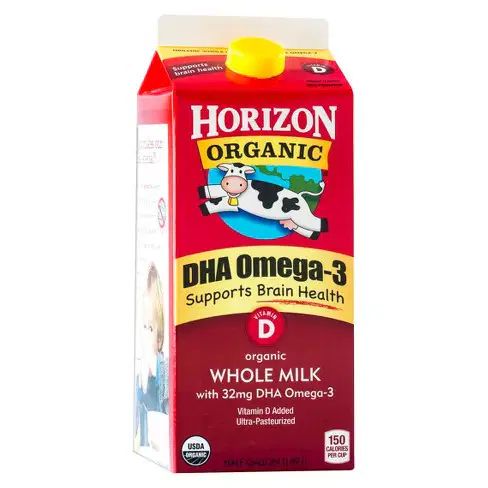
What health claim is being made?
"Organic"
"with 23g of DHA Omega-3"
"Supports Brain Health"
"Ultra pasteurized"
What nutrition claim is being made?
"Organic"
"with 23g of DHA Omega-3"
"Supports Brain Health"
"Ultra pasteurized"
What is "good" cholesterol?
HDL's
LDL's
PDL's
ADL's
What is "bad" cholesterol?
PDL's
ADL's
HDL's
LDL's
True or False: A function of fat is to: insulate your body.
True
False
True or False: A function of fat is to: build and repair your body tissue
True
False
True or False: A function of fat is to: provide a reserve store of energy in your body.
True
False
True or False: A function of fat is to: protect your internal organs.
True
False
True or False: A function of fat is to: help your bones be strong.
True
False
True or False: A function of fat is to: carry vitamins K, A, D, and E through your body.
True
False
What is the RDI for total carbohydrates?
20g
25g
50g
65g
300g
What is the RDI for fibre?
20g
25g
50g
65g
300g
What is the RDI for total fat?
20g
25g
50g
65g
300g
What is the RDI for saturated fat?
20g
25g
50g
65g
300g
What is the RDI for protein?
20g
25g
50g
65g
300g
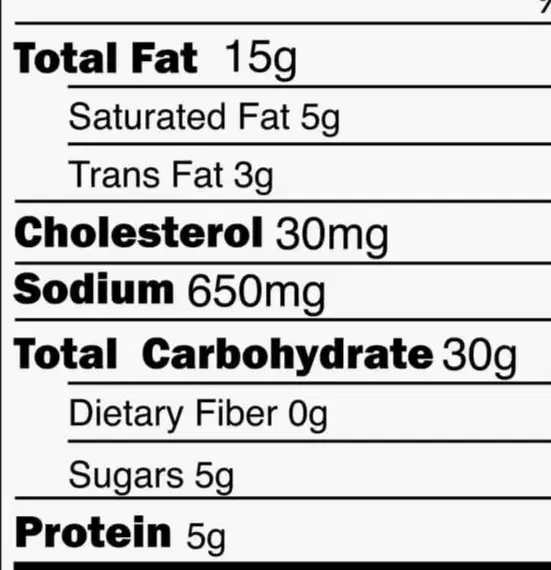
Based on the RDIs discussed in class, calculate the %DV of total carbs in this food item.
10%
15%
20%
28%
Based on the RDIs discussed in class, calculate the %DV of total fat in this food item.
10%
15%
23%
28%
Is this 'a little' total fat or 'a lot'?
'a little'
'a lot'
Based on the RDIs discussed in class, calculate the %DV of saturated fat in this food item.
10%
15%
20%
25%
Is this 'a little' saturated fat or 'a lot'?
'a little'
'a lot'
Based on the RDIs discussed in class, calculate the %DV of protein in this food item.
10%
15%
20%
28%

