
NEW
Font size
 Worksheets
Adaptations
Total questions: 43
Worksheet time: 22mins
What is the best definition of animal adaptation?
Changes to an animal's diet.
Characteristics that help animals survive.
Characteristics of an animal's habitat.
Skills learned in order to hunt.
True or false: All animals have adaptations that help them survive in their habitat.
True
False
Partially true: Not all animals have adaptations
Partially true: adaptations are not for surviving
Animals who travel to warmer habitats in the winter to escape the cold are using which behavioral adaptation?
Mimicry
Camouflage
Hibernation
Migration
True or false: Humans have studied adaptations in order to create technology to survive.
True
False
When animals go into a deep sleep during the winter, they are using which behavioral adaptation?
Hibernation
Mimicry
Migration
Camouflage
Fill in the blanks: A _________ adaptation is the way an animal acts in order to help them survive.
Physical
Behavioral
Simple
Memory
The black bear’s primary diet is fruit, nuts, honey, and berries. However, they also like to eat fish and small mammals. Their long, sharp claws make it possible to climb trees in order to reach some of their food sources. Black bears also have an extremely good sense of smell. Their long nose allows them to smell up to 20 miles away. This is 100 times better than humans can smell. The black bear’s tongue is sticky allowing them to easily eat ants, berries, and nuts. Black bears also have extremely strong legs, allowing them to move rocks and other obstacles out of their way to get to their food. SELECT ONE EXAMPLE OF THE PHYSICAL ADAPTATIONS LISTED ABOVE.
Eating nuts
Sticky tongue
Eating fish and small mammals
Moving rocks
Fill in the blank: A ______________ adaptation is the way an animal looks in order to help them survive.
simple
behavioral
physical
extreme
Some animals are able to copy other animals in order to look more dangerous to get away from predators. What is this called?
Hibernation
Camouflage
Mimicry
Migration
I am a polar bear who lives in the arctic. My fur is a beautiful white, just like the snow I live in. What adaptation is this adaptation called?
camouflage
mimicry
migration
hibernation
I am a grey goose who loves to fly. Every fall when it starts to get cold, I fly south for the warmth. Once my home warms up, I know it is safe to go back home. What adaptation is this?
hibernation
mimicry
camouflage
migration
It is a not learned behavior that allows organisms to survive.
innate behavior
nate behavior
learned behavior
It is an example of an innate adaptation
hibernating
building a nest
hunting
It is an example of an learned adaptation.
finding shelter
breathing
web spinning
Biotic factors
are not considered when describing an environment
describe the effect of other living things on an individual
include only the effects of bacterial, protozoan, and archean life forms
describe the effects of temperature, water, and nutrient availability on an organism
A structural adaptation
refers to evolved changes in the shape and size of an animal to environmental factors
can only be an adaptation to abiotic factors and not biotic factors
would not describe the thickness of a mammal’s fur
Categorise the adaptation
A modification to red blood cells which enables a resistance to the malarial parasite
Structual
Physiological
Behavioural
Categorise the adaptation
Wombats have evolved long claws which are necessary to dig burrows
Structual
Physiological
Behavioural
Categorise the adaptation
Possums have a fine-tuned flight response, and will often flee at the first sign of danger
Structual
Physiological
Behavioural
Categorise the adaptation
When hot, many birds will begin to pant, which reduces their temperature via evaporative cooling
Structual
Physiological
Behavioural
Susan was attempting to characterise the environmental conditions which may affect amphibians living in a tropical rainforest. She identified high humidity as a potential influence. High humidity is
a biotic influence
an abiotic influence
a symbiotic influence
an aerobiotic influence
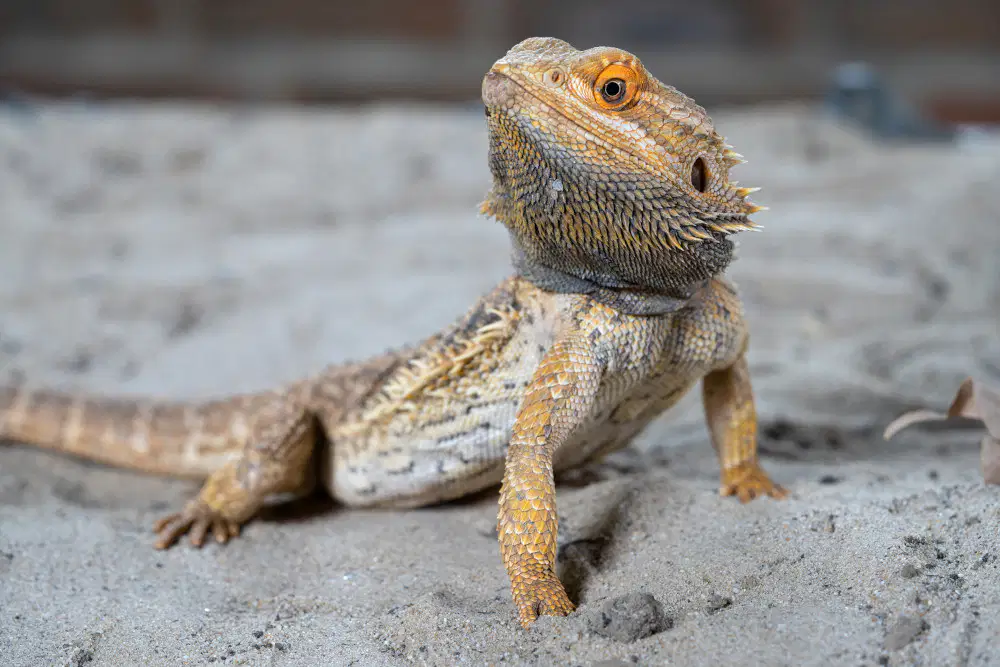
Which of the following provides the strongest evidence that the bearded dragon is adapted to a hot and arid environment?
a spiky epidermis
sharp claws on toes
light coloured scales
a frill that makes the lizard appear larger
A lower SA:V in a cold environment would
increase heat released to the environment
decrease heat released to the environment.
An adaptation of plants to cold environments includes
the production of antifreeze proteins which increases the freezing point of water
the production of seeds which sprout only during warmer months
decreasing the concentration of solutes in the cytosol
An abiotic factor in an alpine region during winter would include
low competition for resources
strong predation by wolves
high temperatures
strong winds
Which of the following is NOT an advantage of torpor?
Torpor allows an animal to avoid harsh conditions for long periods of time
Torpor lowers an animal’s metabolic rate, meaning it requires less food for survival
Torpor increases the allocation of resources to insulation, meaning an animal will lose heat slower
Torpor enables an animal to lower its body temperature, reducing the energy required to maintain its body temperature
Mammals that live in very cold environments have evolved behavioural adaptations that help reduce the rate at which they lose heat. One behavioural adaptation in a cold environment would be
laying out flat in the snow
digging a burrow into the snow
having a thick layer of insulating fat
eating large amounts of snow for hydration

An example of a behavioral adaptation is
The long neck of a giraffe
Penguins huddling together for warmth
A camel's hump used to store water
A polar bear's white fur used for camouflage

An example of a physical adaptation is...
a turtle hiding inside its shell
The spikes on a porcupine fish
a rabbit burrowing underground
a viper biting when threatened

A monkey has a long tail to help it swing from branch to branch.
Behavioral Adaptation
Structural Adaptation

The tundra is a vast plain with frigid temperatures and plenty of snow. Which of the following adaptations does not help the polar bear survive in the tundra.
Layers of fat for insulation
webbed toes for swimming
white fur for camouflage
total herbivorous diet

A Viceroy butterfly looking like a bright colored poisonous Monarch butterfly is an example of __________.
camouflage
mimicry
warning coloration
protective resemblance

How do adaptations help animals?
To escape animals
to hunt for food
to survive in their habitats
All of these are correct

What is required for a trait to be an adaptation
it must look cool
it must help to survive and reproduce
it must create more offspring
it must create competition

A sea worm will emerge out of its tube during high tide to find food. What type of adaptation is this?
physical
social
behavioral
physiological

A clapper rail (bird) has a long bill to probe for food in the mud. What type of adaptation is the long bill?
physical
social
behavioral
physiological

An angler fish produces light to attract prey. Producing light is what type of adaptation
physical
social
behavioral
physiological

Ribbed Mussels have a shell to prevent from dehydration. What type of adaptation is the shell?
physical
social
behavioral
physiological

Referring to the physiological processes of an organism. Includes breathing, digesting, energy use, sleep, etc.
Respiration
Functional
Practical
Regulatory

Is the following a structural, functional or behavioural adaptation? The streamlined shape of a dolphin.
Structural
Functional
Behavioural

Is the following a structural, functional or behavioural adaptation? Octopus changing colour
Structural
Functional
Behavioural

Is the following a structural, functional or behavioural adaptation? Courtship- mantis shirm dancing to attract a mate.
Structural
Functional
Behavioural

Is the following a structural, functional or behavioural adaptation? Migration
Structural
Functional
Behavioural

