
Font size
 Worksheets
HMH unit 1,2 and 1,3
Total questions: 120
Worksheet time: 2hrs 29mins
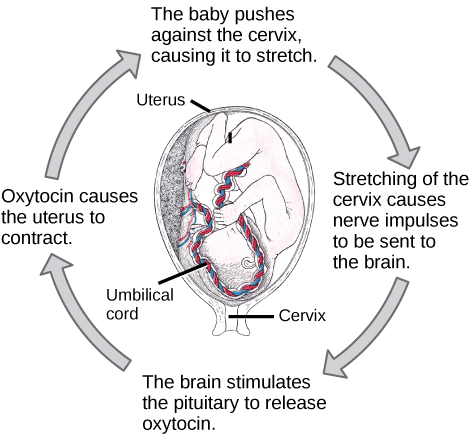
What is the point of a feedback loop?
To provide the body with more energy
To provide the body with more food
To make sure the conditions in the body are always changing
To make sure the conditions in the body remain stable
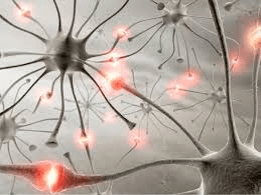

Loops that cause a response to build up and build up until something big happens are called ____________ loops
positive
negative
The heater kicks on and the house warms up, so it kicks off. Then the house cools a bit and the heater kicks back on. This continues all day. It's a _____________ loop.
positive
negative
Homeostatic Mechanisms
keep living systems at a static point
help to keep a relatively constant internal environment in organisms
usually operate by positive feedback
allow organisms to operate under extreme conditions
Which of these conditions indicate positive feedback has occurred?
The production of a particular product continues its production
The production of a particular product stops its production
Sweat evaporates from a person's skin
Which of these conditions indicate negative feedback has occurred?
The production of a particular product continues its production
The production of a particular product stops its production
Sweat evaporates from a person's skin
Thermoregulation happens when organisms regulate
temperature
blood glucose
oxygen and carbon dioxide
water and solutes
Diabetes is a disease where some mammals cannot properly regulate
temperature
blood glucose
oxygen and carbon dioxide
water and solutes
When blood glucose levels get too high, the pancreas stimulates the release of
glucose
glycogen
insulin
glucagon
Which type of feedback system is more common in maintaining homeostasis?
positive
negative
neutral
balanced
Maintaining stable internal conditions despite changes in the external environment
Homeostasis
Metabolism
Protein Synthesis
Adaptation
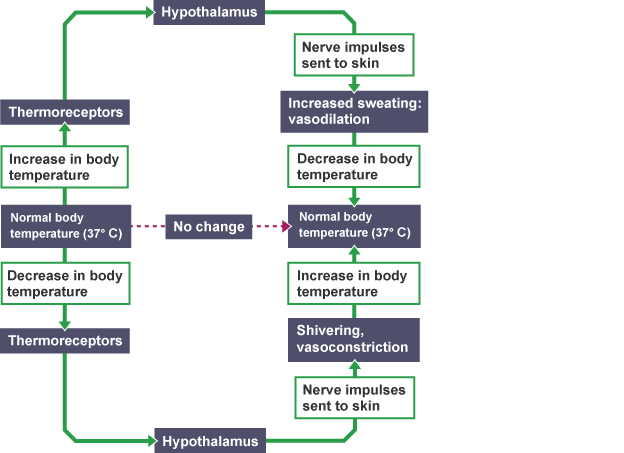
Most of the homeostatic feedback mechanisms are positive feedback systems.
True
False
An example of a negative feedback loop is
Blood glucose regulation
Blood pressure regulation
Thermoregulation
All of the above
An example of a positive feedback loop is ____________.
Childbirth
Blood Pressure regulation
Thermoregulation
All of the above
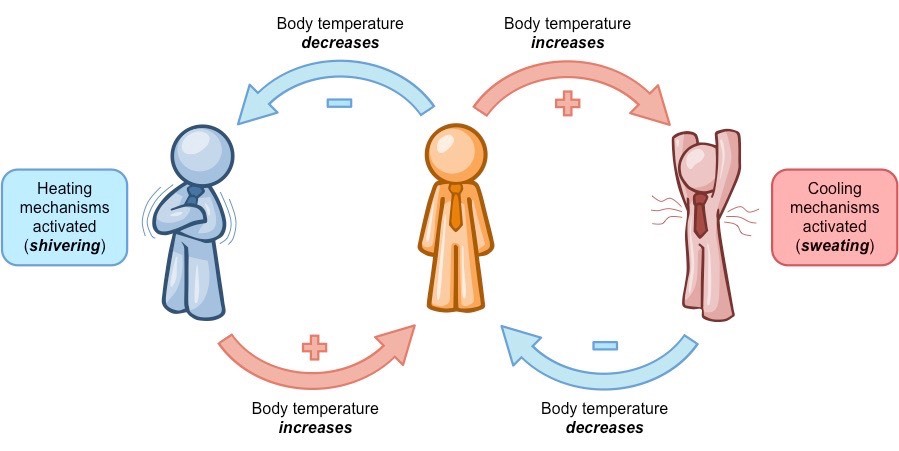
In this body temperature feedback loop, predict what would happen if cooling mechanisms were NOT activated?
The body would not warm up.
The body would not cool down.
Your body would get colder and colder.
Your body would release lots of heat.
___________ cell --> _________ tissue --> Stomach --> Digestive System --> Human
Epithelial Cell --> Epithelial Tissue --> Lungs --> _________________ --> Human
stomach or lungs
_________ _________ are a special type of body cell that can develop into different types of cells.
(a)
_____________ ______________ is the process by which cells that are not specialized develop into their specialized form.
(a)
Why do stomach cells function differently than skin cells?
They contain entirely different DNA
They use different genes in the DNA

What type of cells are these? They are responsible for sending messages and communication!!
Neurons
Blood
Bone
Skin

What type of cells are these? They are part of the OUTER LAYER of your body!
Lung
Skin
Stomach
Bone

What type of cells are these? They are part of the skeletal system.
Liver
Blood
Stomach
Bone

What type of cells are these? They are responsible for MOVEMENT!
Liver
Blood
Muscle
Skin

What type of cells are these? They make up your circulatory system and carry oxygen in your body.
Skin
Blood
Liver
Lung

What type of cells are these? They make up your digestive system and help break down food.
Red Blood
Intestinal
White Blood
Bone

What type of cells are these? They are part of the immune system and help fight off infection.
Red Blood Cells
Fur Balls
Liver Cells
White Blood Cells
True or False: There are over 20 trillion cells in our bodies and they are all working together to help us function!
True
False
What is cell differentiation?
Process by which cells produce MORE cells.
Process by which cells become UNSPECIALIZED
Process by with cells become SPECIALIZED
Process by which cells become old and DIE
What is one goal of cellular differentiation?
To create many identical copies of cells.
To make stem cells for use in the future.
To make single-celled organisms.
To make specialized cells to maintain homeostasis.
Stem cells are cells that...
grow uncontrollably
are undifferentiated
never divide
Are made up of small structures called organelles
animal cells
plant cells
both
neither
Contain a large central vacuole
animal cells
plant cells
both
neither
Contains chloroplasts
plant cells
animal cells
both
neither
Contains a cell membrane
animal cell
plant cell
both
neither
Is the basic unit of life
animal cell
plant cell
both
neither
Contains a cell wall
animal cell
plant cell
both
neither
Can join together to create tissues
animal cell
plant cell
both
neither
Are the building blocks of life
animal cell
plant cell
both
neither
Contain organs
animal cell
plant cell
both
neither
Are made mostly of water
animal cell
plant cell
both
neither
Come in a wide variety of shapes and sizes
animal cell
plant cell
both
neither
Can perform photosynthesis
animal cell
plant cell
both
neither
Perform cell respiration and contain mitochondria
animal cell
plant cell
both
neither
Contain ribosomes that perform protein synthesis
animal cell
plant cell
both
neither
Contain a nucleus which controls cell activities through the genetic information stored in DNA
animal cell
plant cell
both
neither
Jelly-like substance found inside cell that all organelles are surrounded by


An animal cell has the following except a/an...
Nucleus
Lysosome
Cell Wall
Endoplasmic reticulum
Which of the following are in the correct order?
organ system, cell, organ, tissue, organism
cell, organ, tissue, organ system, organism
cell, tissue, organelle, organ system, organism
cell, tissue, organ, organ system, organism
Homeostasis mechanisms...
keep everything exactly the same.
usually operate by positive feedback systems.
act to keep the internal environmental conditions outside the normal range
is the ability to maintain a relatively stable internal environment
Which type of feedback system is more common in maintaining homeostasis?
positive
negative
neutral
balanced
What type of feedback system is more dangerous to an organism?
positive
negative
neutral
balanced
This feedback system amplifies a change until a desired outcome is reached.
positive feedback system
negative feedback system
neutral feedback system
self-monitoring feedback system
This is the term used to describe the normal range of a variable in an organism
control center
effector
stimulus
set point
This is the term used to describe a body part that provides the response needed to influence a change.
control center
effector
sensor
set point
It transmits signals to the control center when it detects a change.
control center
effector
response
sensor
The reaction of the effector is called..
response
sensor
stimulus
set point
receives and analyzes information received from the sensors
control center
effector
sensor
response
A noticeable change in an organism's environment.
control center
response
stimulus
set point
The feedback system that returns the body back to the normal set point.
positive
negative
neutral
returnable

What type of feedback system is described above?
positive
negative
neutral
leofied

What type of feedback system does the model represent?
positive
negative
neutral
glyogen

What is the stimulus in the model above?
body temperature
increase in body temperature
decrease in body temperature
blood vessels dilating
What is the sensor in the model above?
Hypothalamus
muscles
thermoreceptors
Blood vessels
What is the control center in the model above?
Hypothalamus
muscles
thermoreceptors
Blood vessels
What is an effector in the model above?
Hypothalamus
sweat glands
thermoreceptors
sweating
What is a response (not the result) in the model above?
body temperature increasing
sweat glands
thermoreceptors
sweating
What hormone is released when blood glucose levels rise above normal?
insulin
glucagon
glycogen
leptin
What hormone is released when blood glucose fall below normal?
insulin
glycogen
glucagon
leptin
What organ releases hormones that regulate blood glucose levels?
salivary glands
stomach
small intestine
pancreas
What does insulin promote in the liver?
hydrolysis of glycogen
hydrolysis of glucagon
release of glucose
production of glycogen
What does glucagon promote in the liver?
hydrolysis of glycogen
hydrolysis of glucose
production of glycogen
release of insulin
How does insulin reduce blood glucose levels?
it breaks down glucose
promotes the release of glucose from cells through a transporter
promotes the uptake of glucose into cells through a transporter
it prevents the intestine from releasing glucose into the blood
What causes type 1 diabetes?
lack of exercise
obesity
eating too much carbohydrates
autoimmune disease
How do you treat type 2 diabetes?
take insulin
reduce carbohydrates in diet
replace beta cells of pancreas
gain weight

