
 Worksheets
09SCI - Light and Sound revision
Total questions: 127
Worksheet time: 1hrs 19mins


Materials that do not let light pass through them
Reflection
Prism
Opaque
Transparent
A transparent material that separates white light into its component colors.
Opaque
Prism
Refraction
Transparent

This material allows almost SOME of the light to pass through it. This material is:
Transparent
Translucent
Opaque
Transaction
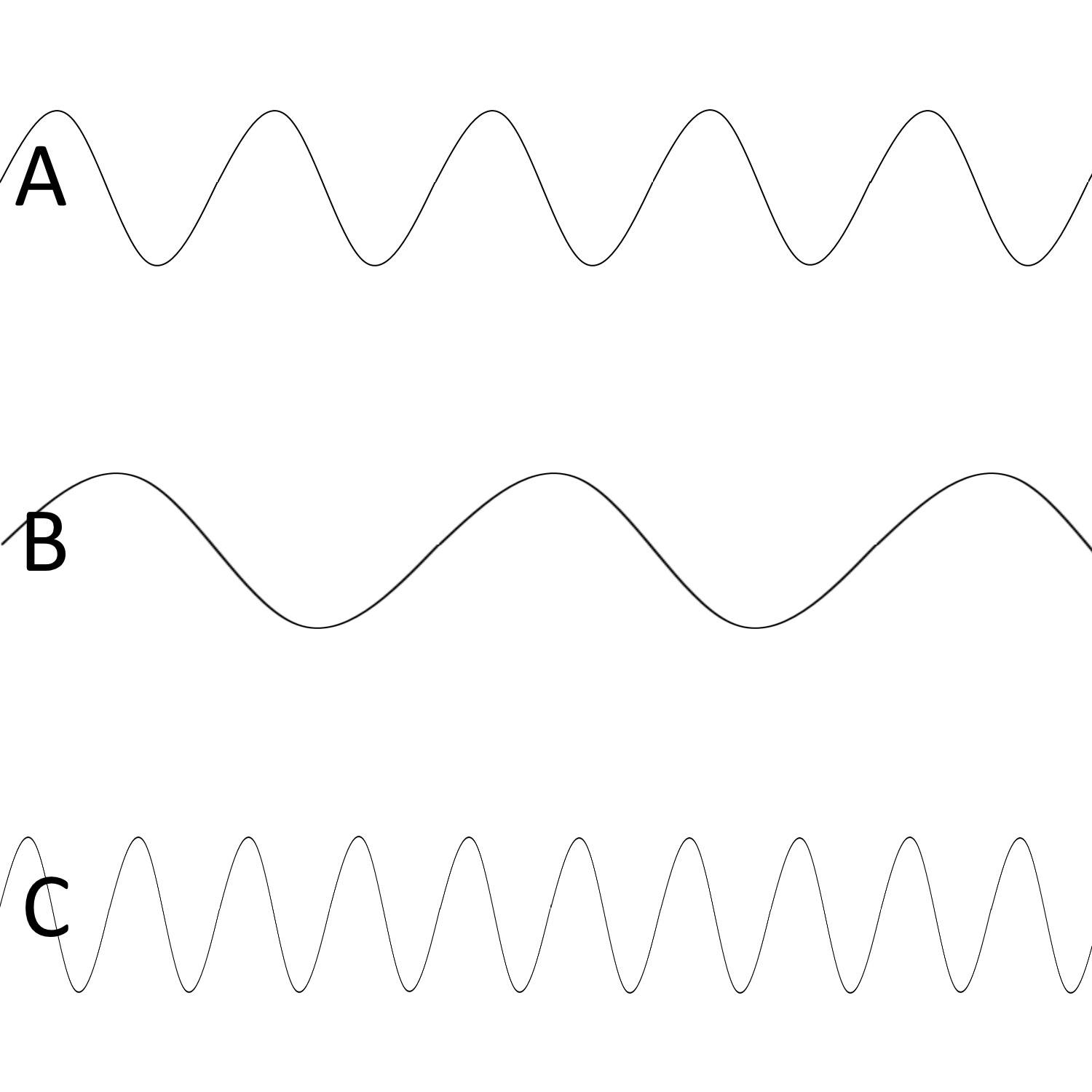
Which wave has the longest wavelength?
A
B
C
None (same wavelength)

Which wave has the highest frequency?
A
B
C
None (same frequency)

What is the relationship between frequency and wavelength?
high frequency --> short wavelength
high frequency --> long wavelength
low frequency --> short wavelength
there is no relationship

What does the outlined picture below illustrate?
Visible Light Spectrum
Electromagnetic Spectrum
Frequency Indicator
Color Line

Which type of light has the highest frequency of this group (be careful of the order!)?
red
yellow
green
blue

Of the visible spectrum, what color has the longest wavelength?
Blue
Green
Yellow
Red
Violet

In the diagram, which letter represents the angle of incidence?
A
B
C
D
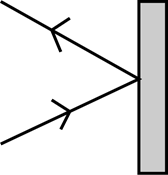
In the illustration, the light ray striking the object is-

Given that the angle of incidence = 30 degrees
a. Draw a ray diagram, labelling clearly the normal, incident ray, angle of incidence, reflected ray and angle of reflection accurately.
Which is the correct diagam?
Why can you see most objects?
According to the laws of reflection, if i = angle of incidence and r = angle of reflection,

If a capital letter R is seen in an ordinary mirror, what does it look like?


A student is conducting an experiment with four different types of mirrors. Which mirror in the experiment is a convex mirror?
mirror 1
mirror 2
mirror 3
mirror 4
What word means to bend light rays toward each other?
Converging light
Diverging light
Virtual Light
Real Light
A dentist uses a small dental mirror to help magnify teeth in your mouth. What type of mirror is this?
a convex mirror
a concave mirror
a convex lens
a concave lens

Type of mirror used in a convenience store to provide a wide angle view...
Plane
Convex
Concave

Type of mirror used by a dentist to get magnified view of a patient's teeth...
Plane
Convex
Concave

Type of mirror found in a bathroom...
Plane
Convex
Concave

Type of mirror used as a side mirror on a vehicle to provide a wide angle view...
Plane
Convex
Concave

Type of mirror that can produce a real image...
Plane
Convex
Concave

Type of mirror that can produce an inverted image...
Plane
Convex
Concave

Type of mirror that provides a wide angle view...
Plane
Convex
Concave

The size of an object and its image are the same in this type of mirror...
Plane
Convex
Concave

According to the law of reflection the angle of incidence is ____________ the angle of reflection.
less than
greater than
equal to
Type of mirror that can produce a virtual image...
Plane
Convex
Concave
All of the above

When light passes at an angle to the normal from one medium into another in which its speed is higher
it is bent toward the normal.
it always lies along the normal.
it is unaffected.
it is bent away from the normal.
If all other variables are held constant, what happens to the angle of refraction if the angle of incidence increases?
the angle of refraction stays the same
the angle of refraction decreases
the angle of refraction increases
cannot be determined from the information provided
When light passes at an angle to the normal from one medium into another in which its speed is lower
it is bent towards the normal.
it always lies along the normal.
it is unaffected.
it is bent away from the normal.

Based on the image, as light passes from medium 1 to medium 2
light speeds up and bends towards the normal
light speeds up and bends away from the normal
light slows down and bends towards the normal
light slows down and bends away from the normal
The visible spectrum is
Colours which make up white light (ROYGBIV)
The amount of refraction that occurs when colour passes through a prism
The splitting up of white light through a prism
Also called a rainbow
The primary colours of light are
Red, blue, green
Blue, indigo, violet
Red, magenta, green
Magenta, cyan, yellow
Which of the following is correct?
Blue + Maroon = Magenta
Green + Blue = Cyan
Red + Blue = Green
Yellow + Cyan = Green

Which colour light is being reflected?
Magenta
Red + Blue
Orange
All colours except for orange

This piggy bank appears as the colour it is because....
Blue and green light is being absorbed into your eyes
Blue and yellow light is being absorbed into your eyes
Blue light is being reflected into your eyes
Blue and green light is being reflected into your eyes
A 'pigment' is
How dark a colour appears
A term used to describe the absorption of light
Chemical that can only reflect certain colours
When two primary colours of light overlap to form a secondary colour of light
Red,orange,yellow,green,blue,indigo,violet
Red,orange,yellow,green,blue,violet
red,orange,orange,yellow,blue,violet
red,orange,yellow,green,blue,blue,violet
When angle of incident (i) equals to critical angle (c) if light is traveled from a denser medium to a less dense medium,
total internal reflection occurs.
angle of refraction is equal to 90 degree.
light is refracted out
light travel in straight line
What is total internal reflection
Where a wave is refracted at the boundary between a dense medium and a less dense medium when the angle of incidence is greater than the critical angle.
Where a wave is refracted at the boundary between a dense medium and a less dense medium when the angle of incidence is smaller than the critical angle.
Where a wave is reflected at the boundary between a dense medium and a less dense medium when the angle of incidence is greater than the critical angle.
Where a wave is reflected at the boundary between a dense medium and a less dense medium when the angle of incidence is smaller than the critical angle.
When will total internal reflection occur?
When light travels from a less dense to a more dense medium
When the angle of incidence is smaller than the critical angle
When the angle of incidence is greater than the critical angle
When the light cannot pass through a medium
When the angle of refraction is 90 ° the angle of incidence is called the...
Angle of incidence
Critical angle
Angle of total internal reflection
Angle of refraction
For total internal reflection to occur, light must
travel from a more dense to a less dense medium
travel from a less dense to a more dense medium
Fiber optic cables work because of the principle of _____.
total internal refraction
incomplete internal refraction
total internal reflection
partial internal reflection

Which diagram correctly describes the critical angle c for air-water surface?
A
B
C
D

Light travels through a glass block as shown. Which angle is the critical angle for light in the glass?
A
B
C
D

The figure below is an optical phenomenon caused by the refraction of light. What is this effect called?
Dispersion
Mirage
Rainbow
Diffraction

Is a convex lens thicker or thinner in the middle?
Thicker
Thinner
A diverging lens is also known as a ____lens.
refracted
diffracted
convex
concave
What does the word "diverging" mean?
to spread apart
to come together
parallel
perpendicular
A converging lens is also known as a ____ lens.
convex
concave
double
refracted
What does the word "converging" mean?
to separate
to come together
parallel
perpendicular

Is a concave lens thicker or thinner in the middle?
Thicker
Thinner

If you were to accidentally scratch the outermost part of your eye, which part would you damage?
The cornea
The lens
The retina
The pupil

What would happen to your pupils if it's extremely bright outside?
They would let a lot of light into your eyes
They would expand and become very large
They would contract and become very small
They would close up completely

Which part of your eye is most like the film in a camera?
The iris
The retina
The pupil
The lens

What might happen if the lens of your eye became damaged?
Your eyes wouldn't be able to focus properly.
You wouldn't be able to see in color.
You wouldn't be able to see at night.
All the images you saw would be upside-down.
Part of the eye that function to regulate the amount of light entering the eyes is ....
cornea
iris
pupil
lens
retina
An object will clearly visible to the eye if the image falls right into the ....
cornea
iris
pupil
lens
retina
A thin membrane protecting the inner part of the eyes from the outside materials is called ...
cornea
retina
iris
lens
pupil
Part of the eye that the functions to capture images formed by the eye lens is ....
cornea
optic nerve
retina
pupil
iris
The space behind the cornea, in between the cornea and the iris, filled with a thin watery liquid called ....
cillary muscle
liquid jelly
tears
aqueous humor
optic nerve
Part of the camera that has the same function as retina of the eye is ....
diaphragm
film layer
camera lens
the blitz lamp
tripod
why pupil gets smaller in bright light?
to get as much light as possible.
to prevent damaged to eye due to bright light.
to make sure light gets refracted.
what is the function of iris in the eye?
it detect colours.
it focuses the light.
it controls the size of pupil.
The image formed on the retina is _____________
upside
upside down
rotated at 90 degrees angle.
Which part of the camera focuses light?
sensor
shutter
lens
Nerve impulses are sent to the brain along the _____________
optic nerve
nasal nerve
pulmonary nerve
Which one of the following is true both for human eye and digital camera?
the sensor detects light.
the aperture controls the amount of light that enters.
the lens focuses the light.
Which one of the following is not true for human eye?
the picture that forms on retina is upside down.
the pupil size changes due change in amount of light.
the iris is the transparent part of the eye.
The light energy transferred by sensor into electrical signals is stored on _________________ in a digital camera.
shutter
aperture
memory card

What is the name given to the type of material which will not let any light pass through?
Opaque
Translucent
Transparent
Bats use ________ to locate mosquitoes in the air.
solar
ecology
echolocation
refraction
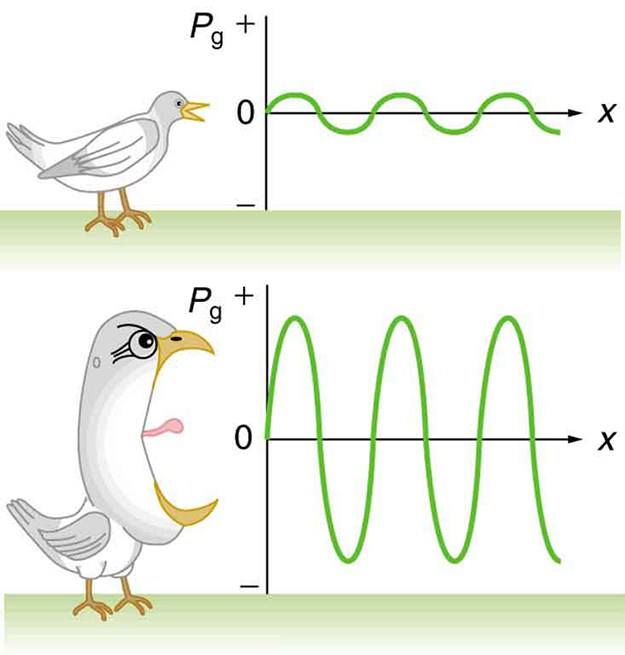
One important characteristic of sound waves is that they are ___________________ waves.
mechanical
short
ultraviolet
primary
Sound waves can NOT travel through
Air
Water
Earth
space
Longitudinal waves means that the disturbance of the wave travels in different directions as the wave.
True
False
This is a visual of a sound wave. It is an example of _____________________ wave.
a mechanical
a longitudinal
both a mechanical and longitudinal
What is the source of a sound wave?
Electricity
Vibration
Light waves
Tiny nuclear explosions
A wave in which the direction of vibration of medium is in the same direction as that in which the wave is traveling
longitudinal wave
ocean wave
transverse wave
mechanical wave
The unit for measuring frequency is the ---
joule
hertz
gram
newton
The ear has three parts
the cochlea, the eardrum and the ear canal
the outer, middle and inner ear
the outer ear, earwax and ossicles


Inner ear includes:
pinna and ear canal
ossicles
eardrum
cochlea - auditory nerve
The cochlea is like a ...
spiral
square
line

Which part is where vibrations are turned into nerve impulses?
E
H
C
I

The cells shown at J are the
ear cells
cochlea cells
nerve cells
hair cells

