Wayground logo

Free Printable Worksheets

Font size

S
M
L
XL
Worksheets

QSTSS Semester 2 Midterm Review

Total questions: 127

Worksheet time: 4hrs 14mins

Name
Class
Date
1.
a)
Motor
b)
Mouse
c)
Ground
d)
Fuse
2.
a)
Battery
b)
Fuse
c)
Diode
d)
Switch (open)
3.
a)
Switch (Closed)
b)
Switch (Open)
c)
Bulb
d)
Chassis Ground
4.
What is this symbol for?
a)
light bulb
b)
switch
c)
battery
d)
resistor
5.

This symbol represents a ..........

a)

bulb

b)

wire

c)

cell

d)

resistor

6.

This symbol represents a ..............

a)

valve

b)

voltmeter

c)

Voltage

d)

Vacuum

7.

This symbol represents a .............

a)

Anode

b)

Alternator

c)

Amplifier

d)

Ammeter

8.

This symbol represents a ............

a)

angry circle

b)

bulb

c)

Resistor

d)

cell

9.

This symbol represents a .........

a)

Resistor

b)

Battery

c)

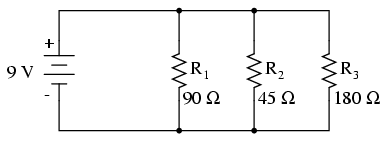
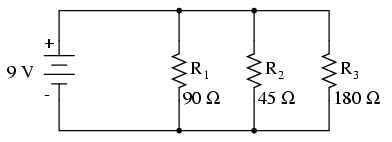
Twix

d)

buzzer

10.

What is the name of this component?

a)

fuse

b)

cell

c)

wire

d)

bell

11.

The function of this instrument is to measure .........................

a)

current

b)

voltage

c)

charges

d)

resistance

12.

The function of this instrument is to measure .........................

a)

current

b)

voltage

c)

charges

d)

resistance

13.

In which of the following circuits will all of the remaining light bulbs go out if bulb 3 burns out?

a)
b)
c)
d)
14.

Short circuits means :

a)

A) Unwanted connections

b)

B) Connection between 2 point that should not be

c)

C) Direct connect between electric circuit component

d)

D) Both A and B

15.
The power of an appliance is...
a)
the amount of voltage going through it 
b)
the amount of energy transferred per second
c)
the amount of charge that passes through per second
16.
Electrical power can be calculated using
a)
Resistance x Voltage
b)
Voltage x Current 
c)
Voltage ÷ Current
17.
Watts is the same as...
a)
Joules per second
b)
Voltage per second
c)
Current per second
18.
The voltage supplied to a circuit is 17 V and the current running through is 10 A. What is the power generated?
a)
170 W
b)
170 A
c)
1.7 V
d)
1.7 W
19.
Calculate the electric power of an electrical appliance in which 10 A of current is flowing through a resistor of 2 ohms.
 
Remember: V=IR and P=VI
a)
80 W
b)
200 W
c)
2.5 A
d)
22.5 KJ
20.
What will be the current drawn by an electric bulb of 1000 W when it is connected to a source of 220 V?
Remember: I = P/V
a)
4.55 A
b)
28800 J or 28.8 KJ
c)
80 W
d)
200 W
21.
a pair of 15-watt computer speakers are connected to a 12-volt power supply. what is the electric current running through the speakers? 
a)
1.25 A
b)
0.8 A
c)
12.5 A
d)
180 A
22.
If an oven has a power of 2000 W and the voltage is 230 V what fuse is required?
a)
3A
b)
5A
c)
13A
23.

What is the unit of Electrical Power?

a)

Joule

b)

Watt

c)

Where

d)

Amp

24.
What is the power of a 20V bulb with 5A through it?
a)
100W
b)
100V
c)
6.3W
d)
6.3A
25.
The current has only has one loop to flow through in this circuit. 
a)
Series Circuit 
b)
Parallel Circuit 
26.
What will happen if one light bulb is removed from this circuit?
a)
The other bulbs will go out.
b)
The other bulbs will stay on
c)
The other bulbs will get dimmer.
d)
The battery will become stronger.
27.
The picture shows an electrical circuit. This circuit is a series circuit because: 
a)
It has 3 light bulbs.
b)
The same current flows through all three light bulbs.
c)
It uses a single battery.
d)
The electrical current is divided between the three light bulbs.
28.

Will the light bulb in this circuit light? Why or why not?

a)

yes, because it has two batteries

b)

no, because the switch is open

c)

yes, because it is in a circuit

d)

no, because the bulb is burned out

29.
Electric current is the flow of:
a)
electrons
b)
protons
c)
neutrons
d)
none of these
30.

Electrical lights will not come on unless their electrical circuit is a --

a)

parallel circuit

b)

series circuit

c)

closed circuit

d)

open circuit

31.
What is a switch's function in a circuit?
a)
to make the current hotter or colder
b)
turn on and off the flow of current
c)
the pathway that current flows
d)
to add more power to the circuit
32.

If one bulb is disconnected in this circuit, will the other bulb still shine?

a)

Yes

b)

No

33.

The following image shows resistors in 

a)

parallel

b)

series

34.

The bulb will shine in the following circuit

a)

True

b)

False

35.

What is this symbol?

a)

Cell

b)

Switch

c)

Bulb

d)

2 cell battery

36.
In a parallel circuit if one of the light bulbs burns out the rest _________.
a)
stop the flow of electricity
b)
 can still light up
c)
 will go out
d)
of the light bulbs burn out also
37.
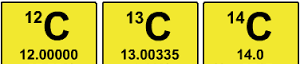
What do these isotopes of carbon all have in common?
a)
neutrons & mass number
b)
atomic number and neutrons
c)
atomic number and electrons
d)
protons, atomic number, and mass number
38.
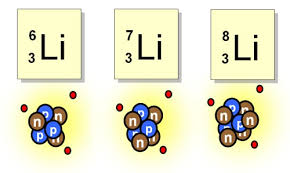
How many neutrons does the isotope of lithium have?
a)
8
b)
3
c)
4
d)
5
39.
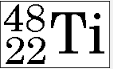
How many protons does this isotope of titanium have?
a)
48
b)
22
c)
26
d)
70
40.
which atom has  4 neutrons?
a)
Li-6
b)
Li-7
c)
Li-8
d)
they have the same # of neutrons
41.
Isotopes are atoms of the same element with different #’s of __________ & therefore different __________.
a)
n0 ;  atomic #’s
b)
p+ ; atomic #’s
c)
e- ; atomic masses
d)
n0 ; atomic masses
42.
Two isotopes of carbon are carbon-12 and carbon-14.  These isotopes differ from one another by two protons.
a)
true
b)
false
43.
An atom is electrically neutral when
a)
protons and neutrons are the same
b)
protons and electrons are the same
c)
neutrons and electrons are the same
d)
neutrons balance the protons and electrons
44.

12 protons and 13 neutrons

a)

Mg-12

b)

Mg-13

c)

Mg-25

d)

Mg-24.305

45.
In order for an atom to be neutral what has to be true?
a)
The atom has more protons than neutrons
b)
The atom has more neutrons than protons
c)
The atom has the same number of protons and neutrons
d)
The atom has the same number of protons and electrons
46.
Most of the mass in an atom is made up of _____________________?
a)
protons and electrons
b)
protons and neutrons
c)
neutrons and electrons
d)
electrons and quarks
47.
Which is a neutron?
a)
A
b)
B
c)
C
48.
Which is a proton?
a)
A
b)
B
c)
C
49.
Which is an electron?
a)
A
b)
B
c)
C
50.

Calculate the average atomic mass of the element iron (Fe) using the following data:

[Isotope / % abundance]

[Iron 54 / 6% ] [Iron 56 / 92% ] [ Iron 57 / 2% ]

a)

53.7 amu

b)

54.9 amu

c)

5592.0 amu

d)

55.9 amu

51.

Naturally occurring chlorine that is put in pools is 75.53 percent 35Cl (mass = 34.969 amu) and 24.47 percent 37Cl (mass = 36.966 amu). Calculate the average atomic mass.

a)

35.46 amu

b)

35.00 amu

c)

37.00 amu

d)

17.00 amu

52.

Metal atoms are most likely to form...

a)

positively charged cations.

b)

negatively charged anions.

c)

neutral molecules.

d)

bations.

53.

Non-Metal atoms are most likely to form...

a)

positively charged cations.

b)

negatively charged anions.

c)

neutral molecules.

d)

bations.

54.

What is the formula of an ionic compound formed from Lithium and Oxygen?

a)

Li2O

b)

LiO2

c)

2LiO

d)

Li2O

55.

What is the name of an ionic compound formed from Calcium and Oxygen?

a)

Calcium Oxide

b)

Calcium Monoxide

c)

Monocalcium Monoxide.

d)

Calcium Dioxide

56.

How many valence electrons does aluminum (Al) have?

a)

13

b)

3

c)

2

d)

4

57.
What is the formula for aluminum fluoride?
a)
AlF
b)
Al2F3
c)
AlF3
d)
Al3F2
58.

An atom has 7 valence electrons. In order to get a full valence shell, it is easier for that atom to:

a)

lose 7 electrons

b)

gain 1 valence electron

c)

lose 1 valence electron

d)

gain 2 more valence electrons

59.

How does oxygen become an oxide ion?

a)

it loses 2 electrons

b)

it gains 2 electrons

60.

Why do all bonds form?

a)

so the number of protons equals the number of electrons

b)

so an atom can become unstable

c)

to fill the outermost energy level

61.

Magnesium bromide is an ionic compound with the chemical formula MgBr₂.  What does the "2" tell you?

a)

Bromide has a 2- charge

b)

Bromide has a 2+ charge

c)

There are 2 bromide ions for every magnesium ion

d)

There are 2 magnesium ions to every bromide ion

62.

If an atom loses electrons, the charge will be positive.

a)

true

b)

false

63.
a)
2
b)
8
c)
3
d)
13
64.
Valence electrons are the...
a)
Innermost electrons
b)
Middle electrons
c)
Outermost electrons
d)
Any electrons
65.

How many valence electrons does carbon have?

a)

4

b)

5

c)

6

d)

7

66.
Name the compound using appropriate rules:
FeCl3
a)
Chloride Iron
b)
Iron III Chloride
c)
Chloride III Iron
d)
I have no clue
67.
Write formulas for the following compound:
tin (II) fluoride
a)
SnF2
b)
Sn2F
c)
FeF2
d)
Fe2F
68.
Manganese II
a)
Mg +2
b)
Mg -2
c)
Mn +2
d)
Mn -2
69.

Zn3S2

a)

zinc sulfide

b)

zinc (II) sulfide

c)

trizinc disulfide

d)

zinc (II) sulfur

70.

Fe2O3Fe_2O_3  

a)

iron oxide

b)

iron (II) oxygen

c)

iron (III) oxide

d)

di-iron trioxide

71.

What's the formula for iron(II) sulfide?

a)

FeS

b)

Fe2S

c)

SFe

d)

S2Fe

72.
All solids at room temperature
a)
ionic compounds
b)
covalent compounds
73.
Some are solids, some are liquids, and some are gases at room temperature.
a)
ionic compounds
b)
covalent compounds
74.
Molten compound conducts electricity.
a)
ionic compound
b)
covalent compound
75.

When dissolved in water, the solution is always a very good conductor of electricity.

a)
ionic compounds
b)
covalent compounds
76.

What id the molar mass of UF6?

a)

101 g/mol

b)

238 g/mol

c)

257 g/mol

d)

352 g/mol

77.

Calculate the molar mass for Al(OH)3

a)

78.0 g/mol

b)

72 g/mol

c)

28 g/mol

d)

25 g/mol

78.
What is the molar mass of B2(CO3)3?
a)
81.632 g/mol
b)
94.842 g/mol
c)
38.822 g/mol
d)
201.648 g/mol
79.
How many grams are in 11.9mol of chromium?
a)
0.229g
b)
4.37g
c)
618g
d)
619g
80.
How many grams are in 3.3 moles of potassium sulfide?
a)
21.6 g
b)
33 g
c)
235 g
d)
3.6x10² g
81.
What is the molar mass of NaOH?
a)
368 g/mole 
b)
40 g/mole
c)
57 g/mole
d)
23 g/mole
82.
36.0 g of Be contains how many moles?
a)
0.25 mol
b)
4.0 mol
c)
45 mol
d)
320 mol
83.
How many moles are in 16.94g of water?
a)
16.94 mol H2O
b)
0.9401 mol H2O
c)
305.3 mol H2O
d)
1.063 mol H2O
84.

Determine the mass of 4.20 moles of C6H12

a)

353 g

b)

0.0499 g

c)

337 g

d)

2.53 x 1024 g

85.
What is the mass of 0.89 mol of CaCl2?
a)
111 grams
b)
0.008 grams
c)
98.9 grams
d)
none of the choices
86.
Which resistor will prevent the most current flow?
a)
1 ohm
b)
100 ohms
c)
1000 ohms
d)
0.5k ohms
87.
How does resistance affect current?
a)
less resistance - less current
b)
more resistance - less current
c)
more resistance - more current
d)
resistance does not affect current
88.
Comparing branches in a parallel circuit:
a)
the voltage is the same in all branches
b)
the voltage depends on the resistance
c)
the resistance depends on the voltage
d)
the resistance is the same in all branches
89.
What happens to the current in a parallel circuit?
a)
It is the same before the path splits and after the paths rejoin
b)
It is divided in two
c)
It is doubled
d)
It increases when the paths split
90.
Comparing 2 bulbs in series vs 2 bulbs in parallel:
a)
Brighter in series because they share the current
b)
Brighter in parallel because the current is higher
c)
Brighter in series because there is less electricity
91.
What is one benefits of using a parallel circuit?  
a)
It gets confusing.
b)
If battery powered the battery will last longer.
c)
If one bulb goes out it does not  affect the others. 
d)

It is easier to set up

92.
what kind of circuit is this?
a)
parallel
b)
series
c)
chris barton
d)
open
93.

What would you need to do to the voltage if you wanted to increase the current in a series circuit?

a)

Increase

b)

Greater

c)

Decrease

d)

Smaller

94.

What is the current of a series circuit with a total resistance of 10 ohms and a voltage of 110 V

a)

0.09

b)

11.0

c)

1100.0

d)

10.0

95.

As the voltage increases, the current...

a)

increases

b)

decreases

c)

stays the same

96.

How do you calculate total resistance in a parallel circuit?

a)

R1 + R2 + R3

b)

R1 - R2 - R3

c)

1/R1 +1/R2 + 1/R3 = 1/RT

d)

R1 = R2 = R3

97.

How to you calculate the total resistance in a series circuit?

a)

R1 + R2+ R3

b)

R1 - R2 - R3

c)

1/R1 + 1/R2 + 1/R3

d)

R1 = R2 = R3

98.

The total resistance in this circuit is

a)

100 Ω

b)

450 Ω

c)

400 Ω

d)

30 Ω

99.
The current going through the 45 ohm resistor is 
a)
0.05 amps
b)
0.2 amps
c)
0.1 amps
d)
5 amps
100.
The total resistance of this circuit is 
a)
25.7 ohms
b)
315 ohms
c)
324 ohms
d)
90 ohms
101.
The total current going through the battery of this circuit is
a)
0.35 amps
b)
0.0286 amps
c)
0 amps
d)
9 amps
102.
If the Voltage stays the same and Resistance is increased, Current will 
a)
Increase
b)
Decrease
c)
Stay the same
d)
X
103.

The slope of voltage (V) versus current (I) is called

a)

resistance

b)

conductance

c)

resistivity

d)

conductivity

104.

A student carries out an experiment and plots the V-I graph of three samples of nichrome wire with resistances R1 R2 and R3 respectively. Which of the following is high ?

a)

R1 = R2 = R3

b)

R1 > R2 > R3

c)

R3 > R2 > R1

d)

none of these

105.
The flow/movement of electric charges 
a)
Voltage
b)
Resistance 
c)
Current 
d)
Circuit 
106.

This is a correct dot diagram for nitrogen (N)

a)

true

b)

false

107.

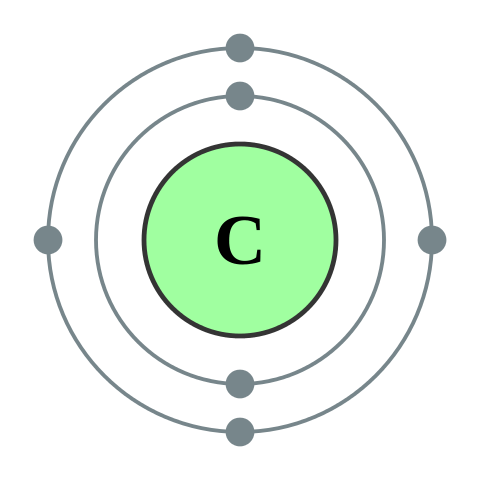
What element is represented in this Bohr Model?

a)

Carbon

b)

Hydrogen

c)

Aluminum

d)

Lithium

108.
Isotopes are elements with a different amount of
a)
protons
b)
neutrons
c)
electrons
d)
atoms
109.
What is the name of this element?
a)
Lithium
b)
Boron
c)
Carbon
d)
Neon
110.

14. Using the image, identify what type of chemical bond would most likely be formed? (choose all that apply)

a)

An ionic bond because there are positive and negative ions.

b)

A covalent bond because the electrons are being shared.

c)

An ionic bond because it happens by transfer of electron

d)

An ionic bond because it happens between two non metals.

111.
What two types of atoms make a covalent bond?
a)
2 Nonmetals
b)
1 Nonmetal and 1 Metal
c)
2 Metals
d)
2 Noble Gases
112.
Ionic Bonding involves...
a)
The transfer of protons
b)
The transfer of nuetrons 
c)
The transfer of electrons
d)
None Of the above
113.

What part of the atom makes a bond?

a)

Electrons

b)

Protons

c)

Neutrons

d)

Any subatomic particle

114.

An atom with 1 valence electron 'needs' a full shell, so it can either gain 7 electrons or lose 1. Which is more likely to occur?

a)

nothing

b)

gain 7

c)

lose 1

115.

18. Which of the following compounds would be identified as covalent? Check all that apply

a)

CO2

b)

NaCl

c)

CaCl

d)

H2O

e)

FBr

116.
What is the correct formula for this molecule?
a)
NH
b)
N3H
c)
NH3
d)
NH4
117.

What is the correct formula for this molecule?

a)

CH

b)

C1H4

c)

CH4

d)

C4H

118.

Which is the correct molecular structure for carbon dioxide CO2?

a)
b)
c)
d)
119.

Why are dots and crosses used to show the electrons in the bonds?

a)

To show which atoms the electrons belong to

b)

Because this is what electrons looks like

c)

To show if the electron came from a metal

d)

To show if the electrons are gained or lost

120.

A Metal + Nonmetal compound is a(n)...

a)

ionic compound

b)

covalent compound

121.

Each atom contributes ________ to ensure that both atoms have a full valence shell.

a)

One valence electron

b)

Two valence electrons

c)

Four valence electrons

d)

Eight valence electrons

122.
What is the element name of the atom pictured? 
a)
Fluorine
b)
Neon
c)
Argon
d)
Potassium
123.
What is the atomic number of the atom pictured? 
a)
9
b)
10
c)
18
d)
19
124.
Which letter represents an electron?
a)
A
b)
B
c)
C
d)
D
125.
What is the name of this element?
a)
Helium
b)
Hydrogen
c)
Argon
d)
Silver
126.

What kind of circuit is in the picture?

a)

open circuit

b)

closed circuit

c)

short circuit

127.

What is a Short circuit?

a)

A short circuit is an electrical circuit with a very small resistance, close to zero

b)

a physical property of a material due to which, the material resists the flow of electricity through it.

c)

the pressure from an electrical circuit's power source that pushes charged electrons

d)

NONE OF THE ABOVE