
 Worksheets
Unit II Review - Eras of Change
Total questions: 100
Worksheet time: 2hrs 40mins

Who painted the Mona Lisa?
Michelangelo
Donatello
Jan Van Eyck
Leonardo da Vinci
What does "Renaissance" mean?
Reconvert
Rebirth
Re-examine
Review

What is one way that Medieval and Renaissance artists differ?
Renaissance art focuses more on religion
Medieval artists were more realistic
Renaissance artist turned to Roman and Greek works for inspiration
They are the same

Which of these famous structures did Michelangelo paint?
the Louvre
the Coliseum
the Sistine Chapel
the Eiffel Tower
Which of these statements describes a change brought about by the Renaissance?
Society was dominated by the church.
Society began to value individualism.
Society was focused on warfare.
Society was dominated by lords.

Who wrote the essay "The Prince?"
Michelangelo
Machiavelli
Erasmus
Sir Thomas More

The statue of "David" was created by _____________.
Da Vinci
Michelangelo
Erasmus
Gutenberg
Renaissance Europeans turned towards non-religious interests/topics. This is known as:
Nationalism
Secularism
Humanism
Realism

Which of the following best describes, "the spirit of the renaissance"?
"People should work hard and stick to tradition."
"People are not creative and shouldn't try new things."
"People are capable of learning and should create new things."
"knowledge is reserved only for those in positions of authority.”
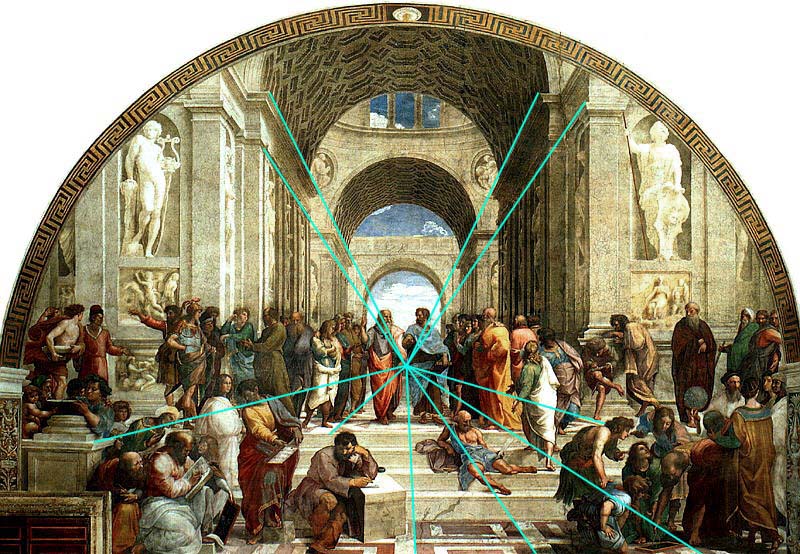
The Renaissance occurred during what years?
200-299
100-900
500-1300
1300-1600
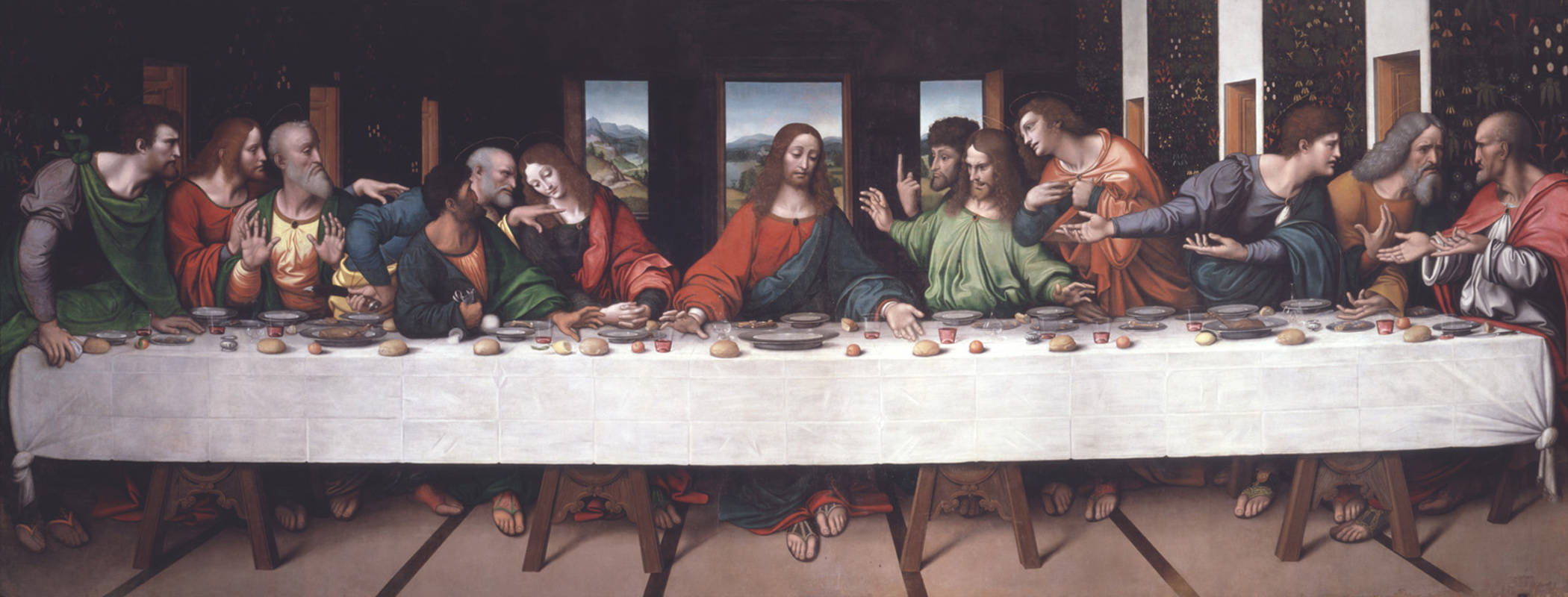
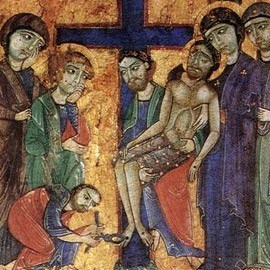
What kind of art is this?
Classical Art
Middle Ages Art
Renaissance Art
Islamic Art
What was the most important city-state in Italy?
Naples
Rome
Florence
Venice

The Renaissance is most famous for its _______.
invention of the guillotine
invention of bricks
floppy hats with feathers in them
artistic achievements
How did Humanism lead to the Protestant Reformation?
It encouraged people to leave the Catholic Church.
It encouraged the idea that each person could understand the Bible.
It encouraged people to seek jobs outside of the Church where they could make more money.
Which of the following are effects of the printing press? (Select all that apply)
Books become cheaper.
Ideas spread faster and further.
The Catholic Church becomes more powerful.
Some people print information that the Catholic Church does not support.
No one is able to learn about Columbus's discovery of the New World for many years.
What is the name of Martin Luther's written protest against the Catholic Church's use of indulgences?
The Protestant Reformation
The 95 Theses
The Whittenberg Church Door

What was the Catholic Church's response to Martin Luther's 95 Theses?
Excommunication
The Peace of Westphalia
The Counsel of Trent
They ignored it

Luther's followers called themselves what?
Protestants
Protestors
Reformers
Transformers


What was an important effect of the invention of the printing press?
It increased the literacy rate and use of vernacular in Europe
It led to the increased use of Latin
It led to more people converting to Catholicism
It led to the Kings and Popes having more power over the people
The act of selling pardons for sins to reduce punishment?
Confession
Usury
Indulgences
Free pass
What was the most stable, dependable, and wealthy institution in Europe?
Feudalism
Protestant Church
Orthodox Church
Catholic Church
A Heretic is:
Someone who disagrees with the Catholic Church's teachings
Someone who becomes a saint
Someone who believes everything the Pope says
Someone who joins the Catholic Church


He was a polish mathematician and astronomer who was first to determine that the sun was the center of the solar system.
Galilieo
Humes
Copernicus
Descartes

A German mathematician who was known for his laws of planetary motion in elliptical orbits around the sun.
Leviticus
Kepler
Columbus
Newton

Who was the English scientist who discovered the laws of gravitation?
Galileo
Newton
Kepler
Copernicus

Who proposed a system of EXPERIMENTATION to find new truths through this type of scientific method.
Newton
Bacon
Descartes
Frisius

Who proposed a mathematical system using REASON and LOGIC to find new truths through this type of scientific method.
Bacon
Newton
Boyle
Descartes
Which term means that people have to power to choose their leaders?
Liberty
Constitutional Government
Popular Sovereignty
Freedom of the press
During the 1600s and the 1700s, kings ruled with few restrictions on their power. What is this called?
Permanent Rule
Absolute Rule
Democracy
Dictatorship
John Locke believed in natural rights. What are the "big 3?"
Liberty
Life
Voting
Food
Property
Kings or Queens who held all of the power within their states' boundaries
Absolute Monarch
Divine Right
Huguenots
Enlightenment
Idea from Thomas Hobbes that suggested all humans are naturally selfish and wicked and must hand over their rights to a strong ruler to create/run their government.
Social Contract
Estate
Tennis Court Oath
Great Fear
When was 'the Enlightenment?'
1685 - 1815
1700 - 2000
1570 - 1776
1618 - 1917
What was the other name for French Enlightenment thinkers?
Hon hon hon intelligente
Philosopherrs
Galaxie Brain
Philosophes
What did Enlightenment thinkers base their questions and thinking on? What did they use to question tradition?
Faith
Reason
Math
Nachos
The theory that people will interact or behave in a certain way when unregulated
Human rights
State of nature
Human nature
Natural rights
Using rational, logical thinking
Philosophy
Thinking
Reasoning
The theory that an agreement to exchange some freedoms for protection exists between the people and their ruler or government - if the government breaks this agreement, the people have a right to rebel
Human rights
Divine right of Kings
Social welfare
Social contract
What movement coincided with the Enlightenment and ALSO challenged the power of the Catholic Church in Europe?
The Scientific Revolution
The Great Awakening
The Diet of Worms
The Protestant Reformation
Which group had the POTENTIAL to benefit MOST from the spread and real-world APPLICATION of Enlightenment ideals?
Merchants
Nobles
Peasants
Monarchs
He believed laws existed to preserve security and order. He believed punishments for crimes should work the same way, and argued against the death penalty for any crime.
Cesare Beccaria
John Locke
Jean Jacques Rousseau
Thomas Hobbes
This enlightenment philosopher argued strongly in favor of free speech as a human right, and criticized intolerance and oppression, especially that of the Catholic Church
John Locke
Voltaire
Thomas Hobbes
Olympe de Gouges
This philosopher firmly believed that life, liberty and property were natural rights of all people. He inspired the Declaration of Independence
Thomas Hobbes
Voltaire
John Locke
Baron de Montesquieu
This philosopher was the first to propose two major features of modern American government - Separation of powers and Checks & Balances
Thomas Hobbes
Baron de Montesquieu
Olympe de Gouges
John Locke
This philosopher had a negative view of human nature, believing that people were generally greedy and selfish.
John Locke
Voltaire
Cesare Beccaria
Thomas Hobbes
Describe the difference between Medieval Art & Renaissance Art
Medieval Art=simple, religious, and lacks depth; Renaissance Art=has shading, depth, secular, and is realistic.
Medieval art is obsessed with humanism while Renaissance art is more focused on religion
Renaissance art emphasizes crayons and markers while Medieval art focuses on chalk as a tool
How did religion and the church change in Europe from 1500 to 1700?
Normal people began to truly accept the teachings of the Catholic Church for the first time.
The Catholic Church became way more chill and definitely didn't launch the Inquisition afterwards.
The Catholic Church gained wealth and authority as a result of the Protestant Reformation. Luther and King Henry VIII created more Catholic churches which accepted the Pope’s authority.
The church lost wealth and authority as a result of the Protestant Reformation. Luther and King Henry VIII began their own Protestant churches which rejected the Pope’s authority.
Who was Leonardo da Vinci?
He is the leader of the Ninja Turtles
He was the most famous figure of the Renaissance. He painted the Mona Lisa and is the ideal "Renaissance Man'.
He was the leader of Florence during the Renaissance
He was the student of Machiavelli and wrote "The King", the sequel to "The Prince"
Who is King Henry VIII?
King of England during the High Middle Ages. Commonly confused with Aethelberd of Kent.
King of England during the Reformation. He proved his loyalty to the Pope and was named Holy Roman Emperor
King of England during the Protestant Reformation. He created the Church of England because the Pope wouldn’t grant him a divorce.
King of France during the Reformation. He was good friends with Luther and helped France transition from Catholicism to Lutheranism.
What is an indulgence?
Indulgences were only possibly because of the Printing Press
An indulgence was permission from the Church to indulge in any sin they wished.
An indulgence is an invitation to dine with the local priests.
An indulgence is a pardon that the clergy sold which relieved (forgave) people of their sins.
Please choose the correct order (earliest to latest)
- Middle Ages 2. Ancient Times 3. Reformation 4. Renaissance
- Ancient Times 2. Renaissance 3. Middle Ages 4. Reformation
- Reformation 2. Renaissance 3. Middle Ages 4. Ancient Times
- Ancient Times 2. Middle Ages 3. Renaissance 4. Reformation
What made the Printing Press so important?
It allowed people to press different prints onto their clothing, setting off a creative boom in fashion.
It allowed the Pope to make more money, as he could sell more Bibles to more people
It allowed ideas to be more easily refuted since people could easily find counter-arguments.
It helped spread criticisms of the Catholic Church to the masses. This allowed the Protestant Reformation to begin.
Thomas Hobbes wrote in _, his best-known book on political philosophy, that life in the state of nature is "solitary, poor, nasty, brutish, and short."
Discourses on Livy
Leviathan
Two Treatises on Government
The Prince
Thomas Hobbes used the term "_" to describe life without government, as it might have been among early humans.
oligrachy
state of nature
antidisestablishmentarianism
common exile
The political theory that God selects the monarch and therefore all should obey. Locke dismissed this idea.
divine right of kings
papal authority
Godly guidance in governance
social contract theory
Match the following quotes with the Enlightenment philosopher:
"I disapprove of what you say, but I will defend to the death your right to say it."
Voltaire
"I prefer liberty with danger than peace with slavery.”
Rousseau
"When the legislative and executive powers are united in the same person, or in the same body of magistrates, there can be no liberty"
Montesquieu
"It is better to prevent crimes than to punish them."
Cesare Beccaria
If someone is devious and ruthless, especially in politics, they might be called
Antagonistic
Philosophical
Belligerent
Machiavellian
.
What is the primary characteristic of a feudal society?
exchange of land for services
exchange of religous services
exchange for weapons
Feudalism is a political and economic system. In the Middle Ages, it worked because it provided something that people needed. What did people need?
Education
Protection
Freedom
Under the Feudal System, the King:
Owned no land
Owned some of the land
Owned all of the land

Most economic activities on this feudal manor were related to
banking
industry
agriculture
cultural diffusion

The illustration represents a society based on
democratic ideals
accumulated wealth in the form of gold
social class determined by birth
educational achievement

I am a knight. I ______.
provide military service to the king and the baron
am not allowed to own land
answer only to the king

I am a peasant. I ______.
provide free labor and have no rights
provide labor for minimal pay and free housing
provide services for the king and own my land
Why did the Reformation begin?
Luther wanted to start a new religion.
The Church was poor and needed a new leader.
Calvin wanted to head the Church.
There were abuses in the Church that needed changing.
Which of the following was NOT a complaint against the Catholic Church.
They were corrupt
Popes cared more about money and power than spiritual matters.
They sold indulgences.
They gave away too much money to the poor.

