
 Worksheets
Unit 5 Renaissance and Reformation Review
Total questions: 43
Worksheet time: 22mins
Name
Class
Date
1.
Renaissance means
a)
Revive
b)
Reread
c)
Rebirth
d)
Redo
2.
Name of the king who established the Church of England.
a)
Henry VIII
b)
Elizabeth I
c)
William III
d)
Charles I
3.
What is the artistic technique used to create a 3-demensional appearance?
a)
Perspective
b)
Classicalism
c)
Humanism
d)
3-D Drawing
4.
Name of a wealthy Italian banking family who were patrons of the arts
a)
Vinci
b)
Medici
c)
Duerer
d)
Julius
5.
Italian painter and inventor
a)
Niccolo Machiavelli
b)
Martin Luther
c)
Leonardo da Vinci
d)
Michaelangelo
6.
What is the name of Michaelangelo's famous sculpture of a man?
a)
David
b)
Goliath
c)
Pieta
d)
Peter
7.
To cancel or invalidate
a)
End
b)
Annul
c)
Perspective
d)
Medici
8.
A theocracy is
a)
a government run by church leaders
b)
a government run by the hereditary elite
c)
a government run by a monarch
d)
none of the above
9.
The Renaissance began in the city-states of this European country
a)
England
b)
France
c)
Germany
d)
Italy
10.
All of the following were Renaissance artists except:
a)
Micaelangelo
b)
Medici
c)
Leonardo
d)
Raphael
11.
Who painted the Last Supper?
a)
Leonardo
b)
Donatello
c)
Michaelangelo
d)
Raphael
12.
The purchase of a certificate of indulgence was supposed to provide
a)
a position in the Catholic Church
b)
protection from civil responsibility from actions
c)
freedom from feudal obligations
d)
a reduction of punishment for sins
13.
Italian interest in classical tradition was fueled by
a)
a concentration of the Italian population in rural villages
b)
the Roman heritage in Italy and contact with Eastern scholars
c)
centuries of Greek rule by Sicily
d)
Italy's use of Latin as its vernacular language.
14.
Which of the following statements would humanists agree with?
a)
"Education can make every man great."
b)
"Religion holds the key to all life's questions."
c)
"Only nobles will be successful in business and life."
d)
All of the above
15.
Which vocabulary word refers to a lessening of punishment for sins for a price?
a)
Indulgence
b)
Predestination
c)
Humanism
d)
Annul
16.
What was the name of Thomas More's book about an ideal or perfect society?
a)
Utopia
b)
The Book of the Courtier
c)
"The Praise of Folly"
17.
Which of the following best explains why the Renaissance occurred in northern Europe later than it did in Italy?
a)
There was little interest in the arts in Northern Europe
b)
The Black Death delayed economic growth in northern Europe
c)
Few people were educated in northern Europe
d)
Northern Europe was a region of peasants
18.
The development of printing in Europe led to
a)
religious tolerance
b)
increased trade competition with China
c)
increased literacy
d)
increased corruption in the Catholic Church.
19.
Luther criticized the Roman Catholic Church for
a)
selling indulgences
b)
preaching forgiveness
c)
translating the Bible into German
d)
believing in the Bible
20.
Gutenberg helped the spread of Renaissance ideas by
a)
developing a revolutionary printing method
b)
opening a school in Venice for northern Europeans.
c)
opening a school in Florence for sculptures
d)
bringing Leonardo da Vinci and other scholars to Paris.
21.
Ties between the Catholic Church and England were weakened by
a)
Henry VIII’s decision to execute Anne Boleyn.
b)
queen Mary’s decision to bring Protestant doctrine into the English Church.
c)
Henry VIII’s decision to divorce or annul his marriage to Catherine of Aragon
d)
the death of young Edward VI.
22.
Luther believed that salvation could be achieved through faith alone. This is called
a)
justification by faith
b)
heaven through faith
c)
predestination
d)
annulment
23.
Which of the following was an effect of the printing revolution in the 1500s?
a)
the spread of new ideas
b)
decreased funding for the arts
c)
increased competition with China
d)
the beginning of compulsory education.
24.
What action did Martin Luther take that sparked the Protestant Reformation?
a)
He invented the printing press.
b)
He started a theocracy in Geneva, Switzerland.
c)
He posted 95 theses to a church door in Wittenberg.
d)
He wrote the treatise "Defense of the Seven Sacraments."
25.
Which of the following was an effect of the printing revolution in the 1500s?
a)
The spread of new ideas
b)
decreased funding for the arts
c)
increased competition with China
d)
the beginning of compulsory educatoin
26.
Which of the following is something that Martin Luther believed?
a)
good deeds were necessary for salvation.
b)
the Bible was a hoax.
c)
salvation could be achieved through faith alone.
d)
the Pope was the sole religious authority.
27.
All of the following led to the Renaissance EXCEPT,
a)
crusades spurred demand for middle east goods
b)
trade & accrued wealth, hurt the feudal system
c)
medieval kings persuaded serfs to move to cities
d)
Plague- led to a demand for labor - serfs went to cities for work
28.
Intellectual movement focused on worldly subjects rather than religions ones
a)
Utopia
b)
Recant
c)
Indulgence
d)
Humanism
29.
the idea that God determined long ago who would achieve salvation
a)
Utopia
b)
Recant
c)
Indulgence
d)
Predestination
30.
To give up one's views
a)
Utopian
b)
Recant
c)
Predestination
d)
Indulgence
31.
Ideal or perfect society
a)
Utopian
b)
Recant
c)
Predestination
d)
Indulgence
32.
How did Henry VIII react when the Pope refused to annul his marriage?
a)
He started a war
b)
He took over the English church
c)
He started the Reformation
d)
He imposed fines on the Roman Catholic Church
33.
By traveling to Italy, this engraver artist helped move Renaissance ideas to northern Europe.
a)
Leonardo da Vinci
b)
Hubert van Eyck
c)
Albrecht Dürer
d)
Thomas More
34.
Religious reformer who believed in justification by faith
a)
Martin Luther
b)
John Calvin
c)
John Knox
d)
Henry VIII
35.
English queen who led a moderate course in religion known as Anglicanism
a)
Matilda
b)
Mary I
c)
Elizabeth I
d)
Anne
36.
Famous playwright inspired by the Greek and Roman classics who wrote works like Romeo and Juliet and Macbeth
a)
William Shakespeare
b)
Thomas More
c)
Albrecht Dürer
d)
John Calvin
37.
What is the title of Niccolò Machiavelli's political treatise?
a)
Utopia
b)
All's Well That Ends Well
c)
The Prince
d)
Humanism
38.
Europe from the 1500s could be roughly divided between
a)
a Protestant south and a Catholic north
b)
a Protestant east and a Catholic west
c)
a Protestant north and a Catholic south
d)
a Protestant west and a Catholic east
39.
What was the name of the Reformation reformer who believed in predestination?
a)
Martin Luther
b)
John Knox
c)
John Calvin
d)
Sir Thomas More
40.
Education involving history, literature, grammar and rhetoric
a)
Absolutist
b)
Classicalism
c)
Humanities
d)
STEAM
41.
Greek and Roman culture
a)
Absolutist
b)
Classicalism
c)
Humanism
d)
Romanticism
42.
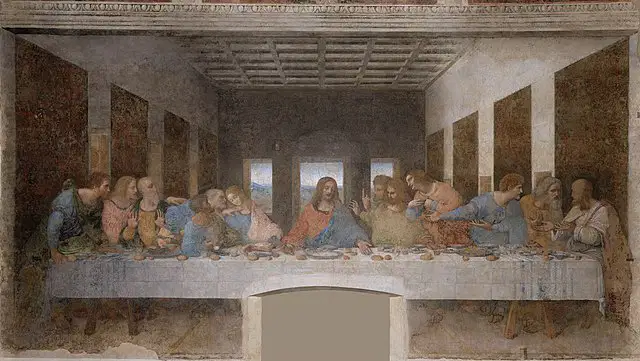
Who painted this work of art?
a)
Leonardo da Vinci
b)
Michaelangelo
c)
Martin Luther
d)
John Calvin
43.
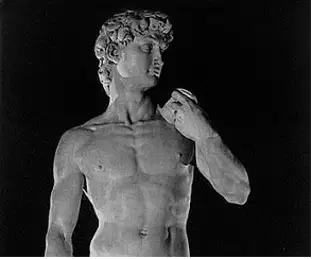
Who sculpted this artwork?
a)
Leonardo da Vinci
b)
Michaelangelo
c)
Thomas More
d)
John Calvin
100 %

