wayground logo

Free Printable Worksheets

NEW

Font size

S
M
L
XL
Worksheets

Solar System & Moon

Total questions: 53

Worksheet time: 1hrs 26mins

Name
Class
Date
1.
How old is our solar system?
a)
4.6 billion years
b)
13.8 billion years
c)
6,000 years
d)
15,000 years
2.
What celestial body eventually evolved into our modern solar system?
a)
a nebula
b)
a supernova
c)
a quasar
d)
a galaxy
3.
Smaller particles collecting together into larger and larger objects is called . . .
a)
accretion
b)
contraction
c)
explosion
d)
rotation
4.
The Nebular Theory is:
a)
A theory on how the Milky Way galaxy was formed
b)
A theory on how the universe was formed
c)
A theory on how the solar system will be destroyed
d)
A theory on how the solar system was formed
5.
A nebula starts to collapse because of:
a)
A nearby star shining it's light
b)
A passing spaceship
c)
A passing comet
d)
Gravity
6.
As a nebula collapses it also begins:
a)
Expand
b)
Rotate
c)
Shake
d)
Turn to ice
7.
The group of inner planets are known as:
a)
The Terrestrial Planets
b)
The Gas Giants
c)
The Outer Planets
d)
The Hallow Planets
8.
What caused the lighter elements to leave the terrestrial planets?
a)
Gravity from the Gas Giants
b)
Nothing, the lighter elements stayed
c)
Gravity from the Sun
d)
Heat from the Sun
9.
The group of outer planets are known as:
a)
The Terrestrial Planets
b)
The Gas Giants
c)
The Inner Planets
d)
The Rocky Planets
10.
The shape of the planets and dwarf planets after accumulating all their material is:
a)
Irregular
b)
A Sphere
c)
An Oval
d)
A disk
11.
What materials could not survive the heat where the rocky planets were formed?
a)
Gamma Rays
b)
Plasma
c)
Ice and Gas
d)
Rocks
12.

Where in our solar system would you expect to find a planet that is mostly made of gas?

a)

very close to the sun

b)

outside of the sun's gravitational pull

c)

very far from the sun

d)

very close to other planets

13.

What process created the plantesimals (the young version of our planets)?

a)

Accretion of particles in the solar nebula

b)

Gravitational pull between the sun and the planets

c)

The solar wind that blew dust to the outer edge of the solar system

d)

Nuclear fusion

14.

Where would you expect to find a planet that is small, dense, and rocky?

a)

close to the sun

b)

outside of the sun's gravitational pull

c)

far away from the sun

d)

close to the gas planets

15.

What is one way exoplanets are indirectly detected?

a)

The Hubble Space Telescope

b)

Infrared Waves

c)

X-Rays

d)

The doppler shift

16.

What is it called when a planet crosses directly in front of it's star?

a)

a Hot Jupiter

b)

an eclipse

c)

a direct line

d)

a transit

17.

Does this exoplanet's star have a wobble? 

a)
Yes
b)
No
18.

The streak of light that is seen when a space rock enters the planet's atmosphere.

a)
meteor
b)
meteorite
c)
asteroid
d)
comet
19.
Objects made of ice, gas and dust and orbit our sun are called:
a)
Asteroids
b)
Comets
c)
Meteroids
d)
Meteors
20.
When a meteoroid STRIKES the surface of the earth scientists refer to them as:
a)
Asteroids
b)
Comets
c)
Meteors
d)
Meteorites 
21.

The moon was formed when a _____ smashed into Earth, spreading debris into orbit that then _____ to form the moon.

a)

asteroid, froze

b)

planetesimal, accreted

c)

comet, accreted

d)

planetesimal, froze

22.

How does the temperature of inner planets compare to the outer planets?

a)

The inner planets are cooler because they are close to the Sun

b)

The outer planets are cooler because they are far from the Sun

c)

The inner planets are warmer because they are far from the Sun

d)

The outer planets are warmer because they are close to the Sun

23.

Which model of the Solar System do scientists currently accept?

a)

Geocentric-Earth Centered

b)

Heliocentric-Sun Centered

c)

Juliacentric-Jupiter Centered

d)

Redshift

24.
What is similar about all of the inner planets?
a)
rocky
b)
gasses
c)
many moons
d)
takes a long time to revolve around the sun
25.
Between which two planets is the asteroid belt located?
a)
Mercury & Venus
b)
Mars & Jupiter
c)
Uranus & Neptune
d)
Neptune & Pluto
26.
Which planet is red because of iron oxide or rust?
a)
Venus
b)
Mars
c)
Jupiter
d)
Saturn
27.

The "Great Red Spot" is a storm on which planet?

a)

Earth

b)

Mars

c)

Jupiter

d)

Saturn

28.

Which planet rotates on its side?

a)

Venus

b)

Earth

c)

Saturn

d)

Uranus

29.
The Nebular Theory is:
a)
A theory on how the Milky Way galaxy was formed
b)
A theory on how the universe was formed
c)
A theory on how the solar system will be destroyed
d)
A theory on how the solar system was formed
30.
The group of inner planets are known as:
a)
The Terrestrial Planets
b)
The Gas Giants
c)
The Outer Planets
d)
The Hallow Planets
31.
Which objects are also called gas giants? 
a)
inner planets
b)
outer planets
c)
terrestrial planets
32.
Which planets do not have solid surfaces? 
a)
inner planets
b)
terrestrial planets
c)
gas giants
33.
A natural satellite that orbits an object other than a star.
a)
moon
b)
comet
c)
asteroid
34.

Why can we see the Moon?

a)

It reflects sunlight.

b)

It goes through phases.

c)

It produces its own light

d)

It comes out at night.

35.

What causes the Moon to revolve around Earth?

a)

Earth's gravity

b)

the Sun's gravity

c)

the Moon's lack of gravity

d)

the Moon's jet packs

36.

What caused the moon's craters?

a)

a big monster was walking on the moon and those are his footprints

b)

repeated moon landings

c)

asteroid crashes

37.
Which of the following is a characteristic of both the Earth and the Moon?
a)
Atmosphere containing oxygen
b)
Rocky surface covered with landforms
c)
Flowing water in oceans and rivers
d)
Fossils and fossil fuels under the surface
38.

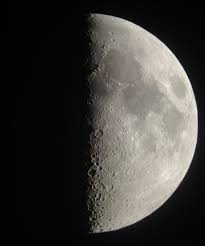
What moon feature is this?

a)

highlands (mountains)

b)

crater

c)

maria

39.

What was unique about the rocks from the moon that were brought back to Earth?

a)

They were very high in iron.

b)

The were very similar to the crust of the Earth.

c)

They were very similar to the core.

d)

They had water in them.

40.

A large, flat land area composed of dark lava flows on the surface of the moon is _______

a)

Highlands

b)

Maria

c)

Rille

d)

Craters

41.

Small, tiny pebbles on the lunar surface are known as ___________________________.

a)

regolith

b)

highlands

c)

maria

d)

lowlands

42.

What are the lighter regions on the surface of the moon?

a)

atmosphere

b)

highlands

c)

lowlands

d)

craters

43.

What two features make up the lowlands?

a)

maria and regolith

b)

craters and highlands

c)

maria and craters

d)

craters and regolith

44.

What is true about the moon's atmosphere

a)

it is much less dense than Earth's atmosphere

b)

it doesn't slow asteroids down

c)

there are very few molecules in the atmosphere

d)

all of the above are true

45.
When the visible (lit) portion of the moon is increasing, the moon is:
a)
waning
b)
full
c)
waxing
d)
new
46.
Changes in the moon's appearance are
a)
phases
b)
eclipses
c)
stages
d)
cycle
47.
Why do we always see the same side of the moon from Earth?
a)
because the phases change
b)
because it rotates and revolves at the same rate
c)
because half of the moon always receives sunlight
d)
The moon changes positions
48.
Define Gibbous
a)
Less than half of moon visible
b)
More than half of moon visible
c)
All of moon visible
d)
None of moon visible
49.
Define Full Moon
a)
None of moon is visible
b)
Half moon phase is visible
c)
Complete moon face is visible
d)
Less Than half of moon is visible
50.
Name the moon phase
a)
Waxing Gibbous
b)
Waxing Crescent
c)
Waning Crescent
d)
Waning Gibbous
51.
Name the moon phase
a)
Waning Crescent
b)
Waxing Crescent
c)
Waning Gibbous
d)
Waxing Gibbous
52.
Name the moon phase
a)
First Quarter
b)
Last Quarter
c)
New Moon
d)
Full Moon
53.
For a solar eclipse to occur, what has to happen?
a)
The sun must be directly between Earth and the moon.
b)
The moon must be directly between Earth and the Sun.