
 Worksheets
Cell Processes
Total questions: 63
Worksheet time: 3hrs 6mins


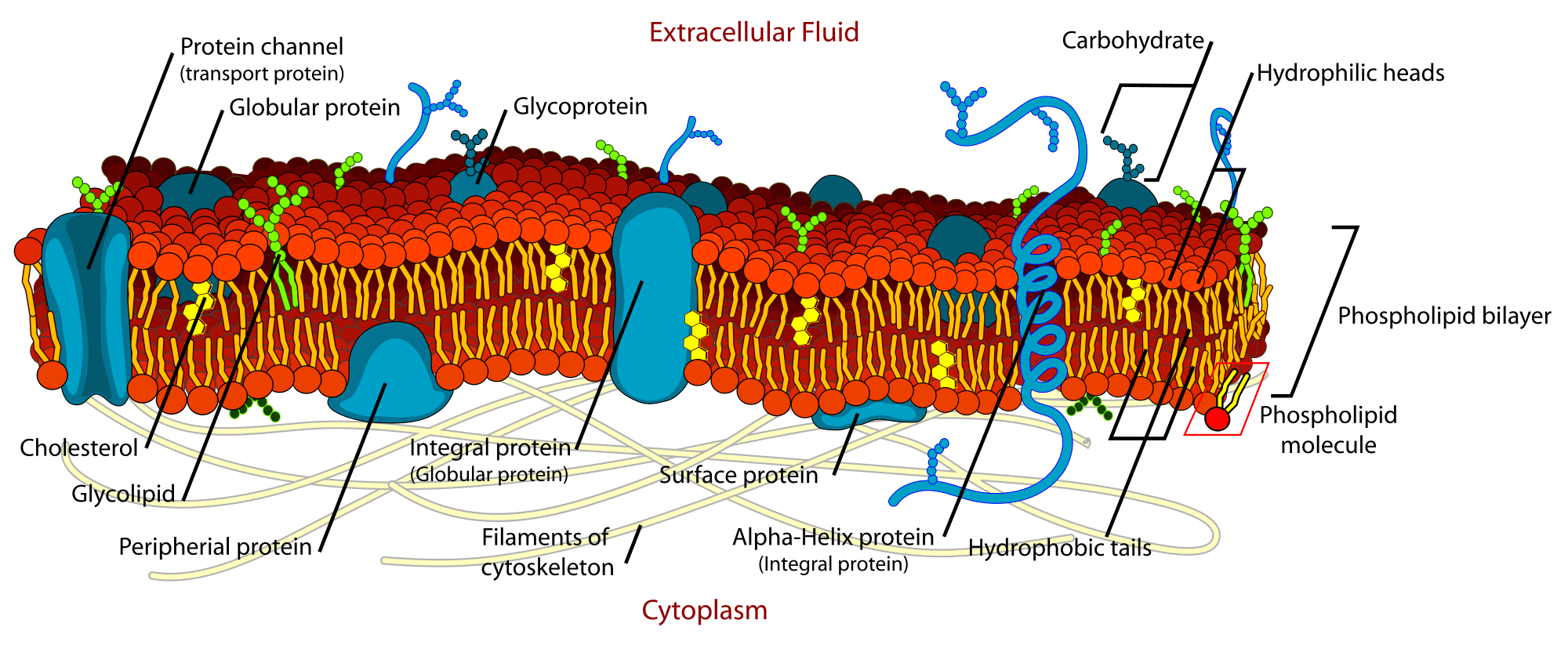


when some molecules can cross the membrane while others cannot.
Passive transport moves material __________ its concentration gradient. While active transport moves substances ___________ its concentration gradient.
down, against
against, down
down, down
up, up
Which organic molecule would a long-distance runner most likely choose to eat two hours before a race?
A protein, because it builds muscle mass.
A lipid because it provides long term energy storage.
A carbohydrate because it releases energy quickly.
A protein, because it transports oxygen into the blood stream.
Monosaccharides are the building blocks of which group of biomolecules?
protein
lipid
carbohydrate
nucleic acid
Which biomolecules provide quick energy for the cell and also provide materials to build the cell membrane/wall?
Carbohydrates
Proteins
Lipids
Nucleic Acids
Your friend is feeling irritable, lightheaded and dizzy. They are also feeling a bit of confusion and brain fog. Which biomolecule would you recommend your friend consume?
Protein
Carbohydrates
Nucleic Acid
Lipid
Which biomolecules contains your genetic information?
Proteins
Lipids
Carbohydrates
Nucleic Acids
Amino Acids are the monomers of __________.
Nucleic Acids
Proteins
Carbohydrates
Lipids
Glycerol and fatty acids are the monomers of _________.
Lipids
Carbohydrates
Proteins
Nucleic Acids
Which biomolecules act as energy storage for the cell and also cushions and insulates organs?
Carbohyrdates
Lipids
Proteins
Nucleic Acids
The monomer of Nucleic Acids is known as _________.
Amino Acid
Fatty Acid
Nucleotide
Saccharide
Which of the following contains the most lipid?


Which of the following is the correct pair of biomolecules and their monomers?
Carbohydrate: Fatty Acids
Protein: Amino acid
Lipid: Nucleotide
Nucleic Acid: DNA
Enzymes are an example of
lipids
carbohydrates
protein
nucleic acid
Each enzyme only has 1 substrate that will fit its active site. What is this called?
reusable
catalyst
fragile
specific

Letter D...
enzyme
active site
substrate
products

Letter B...
substrate
active site
enzyme
products
What happens when enzymes are heated to a high temperature?
The shape of the enzyme are changed and it denatures
The enzymes die
The enzymes' amino acid sequence changes
The enzymes remain the same
What happens to an enzyme when it is denatured?
Activation energy is lowered
It becomes stronger
It loses its shape
Activation energy is raised
Which of the following is an enzyme?
lactose
adenosine
protease
phosphate

What is the optimum temperature for this enzyme?
20 degrees Celsius
45 degrees Celsius
52 degrees Celsius
64 degrees Celsius
Which suffix (word ending) is used in the names of most enzymes?
-ase
-in
-ine
-ose

What can be inferred using the graph?
Cells can function equally as well at all pH values.
Cells do not function well at pH values that are too high or too low.
Cells function best at high pH values.
Cells function best at low pH values.
Each enzyme produced by the body is
open - meaning it is able to catalyze a reaction with any molecule.
immature - meaning it cannot catalyze a reaction until many years later.
incomplete - meaning it requires other parts before it is able to bind to a molecule.
specific - meaning it is only able to catalyze a rection with a certain molecule.
Which of the following two factors affect an enzyme's operation the most?
amount of light and temperature
blood glucose and pH
temperature and pH
amount of light and pressure

What is the optimum pH for the enzyme salivary amylase?
2
5
6.2
9.1
Enzymes are a type of which macromolecule?
carbohydrate
lipid
protein
nucleic acid
Which would be the enzyme that breaks down the starch amylose?
amylase
maltase
lactase
amylose
What does it mean when an enzyme is denatured?
that there is an acid around
that the enzyme works faster
that it is providing energy for the cell
that the shape is changed of the active site & it no longer works
What is the name of the macromolecule that makes up the majority of the cell membrane?
Lipid
Carbohydrate
Nucleic acid
Protein
The primary component of the cell membrane is the group of lipids called
prostaglandins
cholesterol
phospholipids
carbohydrate
"water loving"
Hydroloric
Hydroelectric
Hydrophilic
Hydrophobic
Describes the arrangement of the cell membrane as bendable and made of many parts.
the fluid mosaic model
the major mobility model
the crazy cell model
the cell theroy model
Which of the following are embedded in the phospholipid bilayer and help substances pass through?
cholesterol
lipids
proteins
carbohydrates
a solution with a higher solute concentration on the outside of the cell and a lower solute concentration on the inside of the cell. Water will move out of the cell causing the cell to shrink and shrivel.
Hypertonic Solution
Hypotonic Solution
the movement of molecules LIKE OXYGEN OR HYDROGEN from areas of higher concentration to areas of lower concentration.
DIFFUSION
OSMOSIS
molecules LIKE GLUCOSE AND SALT diffuse across the cell membrane with help from membrane PROTEINS, such as channel and carrier proteins.
FACILITATED DIFFUSION
OSMOSIS
a process by which cells absorb or take in external materials by engulfing it (taking in) with the cell membrane. Examples of this is pinocytosis and phagocytosis.
ENDOCYTOSIS
EXOCYTOSIS
process that occurs when a cell moves large materials OUTSIDE of the cell through secretory vesicles. This type of transport is active and requires energy.
ENDOCYTOSIS
EXOCYTOSIS

