
 Worksheets
Collection Lect 2-10 _ COA MCQ T3 2023
Total questions: 100
Worksheet time: 1hrs 2mins
individual blocks or records have a unique address based on physical location with __________
associative
physical access
direct access
sequential access
_________ is the simplest mapping technique and maps each block of main memory into only one possible cache location.
Direct mapping
Associative mapping
Set associative mapping
None of the above
Which of the following has the capability to store the information permanently?
ROM
RAM
DRAM
Both RAM and ROM
Component of CPU which is responsible for comparing the contents of two pieces of data is _______________.
Register
Control Unit (CU)
Memory
Arithmetic Logic Unit (ALU)
Computer operation in which new word replaced the old one in a particular memory location is termed as ___________________________.
load Operation.
store Operation.
read operation.
write operation.
To determine which instruction to be executed, the control unit will read the contents of __________.
Program counter
Accumulator
Memory address register
Memory buffer register
In nonvolatile archival storage, information remains when the power is turned off.
True
False
Select the correct hierarchy for the memory in term of read / write operation (speed: slowest to fastest).
A.
B.
C. D.
Secondary memory, primary memory, register, solid state drive (SSD)
Register, cache, read only memory (ROM), random access memory (RAM)
Solid state drive (SSD), random access memory (RAM), cache, register
Primary memory, solid state drive (SSD), cache, register
What is (are) the purpose of Status Register?
i- Allow computers to keep track of special condition of arithmetic carry and overflow
ii- Allow computers to keep track of special condition of Internal computer error
iii- Allow computers to keep track of special condition of power failure
i and ii
i and iii
ii and iii
all of the above
Any data or instructions you enter into the memory of a computer
Input
Output
ALU
CPU
An I/O module has TWO major functions:
Interface to the processor and memory via the system bus.
Interface to one or more peripheral devices by tailored data links.
Used to perform arithmetic and logic operation
Performs most of the processing inside a computer
Select THREE categories external devices
Human readable
Machine readable
Communication
Random Access Memory
All are the function I/O module except:
Control & Timing
CPU Communication
Error detection
Direct Memory Access (DMA)
Select THREE I/O techniques
Direct memory access
Programmed I/O
Interrupt-Driven I/O
Data Buffering
Data that has been processed into useful form called information
Input
Output
ALU
CPU

CPU carries out a cycle called___.
Execute-decote-fetch
Fetch-decode-execute
Fetch-execute-decode
Decode-execute-fetch


This term refers to the number of F-D-E cycles PER SECOND carried out by the CPU
Cache size
Core
Intel
Clock Speed
Which of the following doesn’t affect the performance of the computer
Which is NOT a major part of a CPU?
Control unit
ALU
ROM
Register set
An I/O module has TWO major functions:
Interface to the processor and memory via the system bus.
Interface to one or more peripheral devices by tailored data links.
Used to perform arithmetic and logic operation
Performs most of the processing inside a computer
An I/O module has TWO major functions:
Interface to the processor and memory via the system bus.
Interface to one or more peripheral devices by tailored data links.
Used to perform arithmetic and logic operation
Performs most of the processing inside a computer
An operation by which the data that have been processed is prompt out to user via output devices
Input device
Input operation
Output device
Output operation
Select THREE categories external devices
Human readable
Machine readable
Communication
Random Access Memory

THREE interface in block diagram of an External Device
Control Signal
Control Logic
Buffer
Transducer
All are the function I/O module except:
Control & Timing
CPU Communication
Error detection
Direct Memory Access (DMA)
Select THREE I/O techniques
Direct memory access
Programmed I/O
Interrupt-Driven I/O
Data Buffering
Any data or instructions you enter into the memory of a computer
Input
Output
ALU
CPU
Why peripherals are not connected to the system bus directly?
Peripherals use different data formats and data lengths
Data transfer rate in devices are much slower
Peripherals have different ways of operations
All of the above
______ is the interface to one or more peripheral devices by tailored data links.
Processor
Memory module
I/O module
System bus
Paper jam reported by the printer is handled by which function of the I/O module?
Device communication
Error detection
Control and timing
Processor communication
Primary storage is known as main storage or memory
TRUE
FALSE
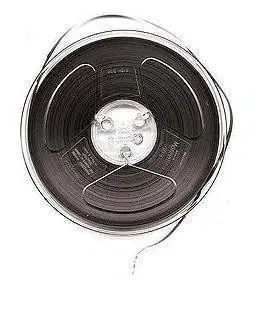
Magnetic tape is an example of direct access devices
TRUE
FALSE

ROM is a primary storage device
TRUE
FALSE
All secondary storage devices are external to the computer .
TRUE
FALSE
If you use an online storage and your internet goes down, the data will be permanently lost
TRUE
FALSE
A hard disk drive is a type of primary storage
TRUE
FALSE
The data is NOT lost when you turn off the computer means the storage is
VOLATILE
NON-VOLATILE
we need a secondary storage device in computer to store files for a long period of time and for future use.
FALSE
TRUE

A Flash drive is an example of magnetic storage
FALSE
TRUE
Secondary Storage devices are ONLY found inside a computer
TRUE
FALSE
What is the key difference between primary and secondary memory?
colour of device
speed of access
the capacity of memory
Why the speed of reading and writing in secondary memory is much slower?
Secondary memory is located close to the CPU on the computer motherboard.
Secondary memory is located close to the adapter card slot on the computer motherboard.
Secondary memory is usually physically located within a separate storage device.
What are the examples of primary memory?
RAM
ROM
HDD
SSD
What are the examples of secondary memory?
RAM
ROM
HDD
SSD
Which one does provide temporary application data storage?
RAM
ROM
HDD
A typical computer system is equipped with a hierarchy of memory subsystems, some internal to the system and some external.
True
False
__________ refers to whether memory is internal or external to the computer.
Hierarchy
Tag
Location
Access
Internal memory capacity is typically expressed in terms of _________
hertz
nanos
bytes
LOR
The L1 cache is faster than the L2 cache
True
False
__________ is the time from the instant that an address is presented to the memory to the instant that data have been stored or made available for use.
memory cycle time
direct access
transfer rate
access time
The __________ holds the address of a memory location and the _________holds the data value in that memory location.
MDR, MAR
MAR, MDR
MDR, data bus
MAR, address bus
Which of the following has the capability to store the information permanently?
ROM
RAM
DRAM
Both RAM and ROM
Computer operation in which new word replaced the old one in a particular memory location is termed as ___________________________.
load Operation.
store Operation.
read operation.
write operation.
To determine which instruction to be executed, the control unit will read the contents of __________.
Program counter
Accumulator
Memory address register
Memory buffer register
In nonvolatile archival storage, information remains when the power is turned off.
True
False
Select the correct hierarchy for the memory in term of read / write operation (speed: slowest to fastest).
A.
B.
C. D.
Secondary memory, primary memory, register, solid state drive (SSD)
Register, cache, read only memory (ROM), random access memory (RAM)
Solid state drive (SSD), random access memory (RAM), cache, register
Primary memory, solid state drive (SSD), cache, register
There are two types of Memory which are Non-volatile memory and Secondary Memory.
True
False
What is (are) the purpose of Status Register?
i- Allow computers to keep track of special condition of arithmetic carry and overflow
ii- Allow computers to keep track of special condition of Internal computer error
iii- Allow computers to keep track of special condition of power failure
i and ii
i and iii
ii and iii
all of the above
The primary memory (also called main memory) of a personal computer consists of
RAM only
ROM only
Both RAM and ROM
Cache Memory
USB-type storage device is -
Secondary
Auxillary
Tertiary
Primary
What is the full form of ROM?
Read-Only Memory
Random Only Memory
Register Only Memory
Readable Only Memory
Which of the following memory is non-volatile?
RAm
ROM
Cache
ROM and Cache
Which of the following is the lowest in the computer memory hierarchy?
Cache
RAM
Secondary memory
CPU registers
Which memory acts as a buffer between CPU and main memory?
RAM
ROM
Cache
Storage
It stores both data and instructions.
CPU
Main Memory
Input devices
Output devices
Bus
The RAM loses content when the power is lost. True or false?
True
False
Which memory has very least access time due to which it is the most fastest memory?
Registers
Cache
RAM
Flash Drives
Which memory is most expensive ?
Registers
Cache
RAM
Flash Drives
Which memory has the smallest storage capacity?
Registers
Cache
Hard Disk
SSD
Which two memories are closely attached with CPU?
Registers and Cache
Hard Disk and Floppy Disk
USB and Memory Card
RAM and ROM

What does the acronym CPU stand for?

What is the purpose of the CPU?
To process all the data and instructions.
To turn the computer on.
To create PowerPoint presentations.
To provide power to the computer.
CPU carries out a cycle called___.
Execute-decote-fetch
Fetch-decode-execute
Fetch-execute-decode
Decode-execute-fetch
This term refers to the number of F-D-E cycles PER SECOND carried out by the CPU
Cache size
Core
Intel
Clock Speed

Describe the purpose of the ALU within the CPU
Carrying out arithmetic i.e. calculations and logic comparisons i.e. is one number larger than another
Controls the flow of data around a computer. Fetches and decodes using system buses
Stores frequently accessed data
Stores programs, data and instructions currently in use

Describe the purpose of the Control Unit within the CPU
Fetches the data/instructions, decodes it and sends the signals via buses to the hardware components.
Carries out calculations and comparisons, to see if one value is larger than another.
Processors have a speed measured in
Bits
Seconds
Bytes
Hertz
Data and Instructions in use are stored in the:
Which of the following doesn’t affect the performance of the computer
Performs calculations (i.e. addition, division, multiplication, subtraction)
MAR (Memory Address Register)
MDR (Memory Data Register)
CIR (Current Instruction Register)
PC (Program Counter)
ALU (Arithmetic and Logic Unit)
Which is NOT a major part of a CPU?
Control unit
ALU
ROM
Register set
Which of the following is the last step of an instruction cycle?
fetch
decode
execute
configure
What is the basic operation performed by a central processing unit?
computer cycle
machine cycle
motherboard cycle
Which register is being described?
Stores the results of the calculations done by the ALU
Which register is being described?
Holds the memory address about to be used by the CPU
Which register is being described?
Holds the data / instructions that have been fetched from memory
Which register is being described?
Holds the memory address of the instruction for each cycle
Describe the tasks that the control unit carries out
Fetches the data/instructions, decodes it and sends the signals via buses to the hardware components.
Carries out calculations and comparisons, to see if one value is larger than another.
When storing a signed integer in a single word, which one is the sign bit?
The least significant bit
The most significant bit

