wayground logo

Free Printable Worksheets

Font size

S
M
L
XL
Worksheets

Bacteria Culturing and Morphology

Total questions: 35

Worksheet time: 28mins

Name
Class
Date
1.

Thick peptidoglycan in cell wall

a)

Gram positive bacteria

b)

Gram negative bacteria

2.

Thin peptidoglycan in cell wall

a)

Gram positive bacteria

b)

Gram negative bacteria

3.

Stained pink

a)

Gram positive bacteria

b)

Gram negative bacteria

4.

Stains purple

a)

Gram positive bacteria

b)

Gram negative bacteria

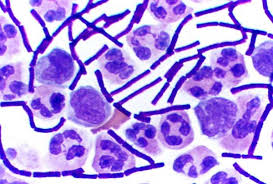
5.

This is an example of the staining of what type of bacteria?

a)

That's not bacteria

b)

Gram positive

c)

Both types of bacteria

d)

Gram negative

6.

The main difference between GRAM positive and GRAM negative bacteria is?

a)

They have no difference

b)

Ribosomes and nucleoid

c)

Its cell wall

d)

Its scourges

7.

Which part of the bacteria contains Peptidoglycan?

a)

Lipoproteins

b)

Cell wall

c)

Cell membrane

d)

Porin channel

8.

Which type of bacteria contains more than 1 layer of phospholipids?

a)

Gram Negative

b)

Gram Positive

c)

Both (-) and (+)

9.

Which layer of the bacteria is dyed/stained purple?

a)

Cell membrane

b)

cell wall

c)

capsule

d)

slime layer

10.
These bacteria are
a)
gram positive
b)
gram negative
c)
nonliving
d)
viral
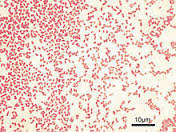
11.
These bacteria are
a)
gram positive and negative
b)
gram positive
c)
gram negative
d)
viral
12.
?
a)
coccus
b)
bacillus
c)
spirilla
d)
none of these
13.
Name the three cell shapes of prokaryotes
a)
rod, circle spiral
b)
cocci, bacilli, spirilli
c)
crystal, tube, spaghetti
14.
The purpose of streaking a plate is to obtain 
a)
large quantities of bacteria
b)
bacteria in pure culture
15.
When streaking a plate, the loop should be flamed
a)
At the beginning and end 
b)
 At the beginning and end and between the first 2 zones 
c)
At the beginning and end and between the second and third zone 
d)
At the beginning and end and between each zone 
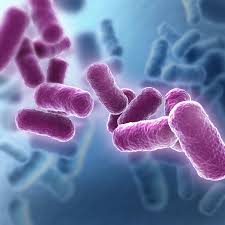
16.
What type of bacteria is this? 
a)
Coccus
b)
Bacillus
c)
Spirillum
d)
Virus
17.

What is agar

a)

growth medium in which microorganisms can be grown

b)

nutrient broth in which microorganisms can be grown

c)

growth medium in which protists can be grown

d)

nutrient broth in which viruses can be grown

18.
When streaking a plate, the loop should be flamed
a)
At the beginning and end 
b)
 At the beginning and end and between the first 2 zones 
c)
At the beginning and end and between the second and third zone 
d)
At the beginning and end and between each zone 
19.
When streaking a plate, the lid should be
a)
placed on the bench top, top side up 
b)
placed on the bench top, inside surface up
c)
should be held in the same hand as the plate 
d)
should be held in the opposite hand from the plate
20.

Flaming the neck of the test tube after uncapping the tube and before recapping is essential during culture transfer.

a)

True

b)

False

21.

What is the inoculation loop used for?

a)

Nutrients for bacteria

b)

Sterilising equipment

c)

Collecting/spreading bacteria

d)

Stopping contamination

22.

What is the bunsen burner used for?

a)

Nutrients for bacteria

b)

Sterilising equipment

c)

Collecting/spreading bacteria

d)

Stopping contamination

23.
What type of environment is best for the growth of most microorganisms?
a)
Hot and dry
b)
Sunny, cold and dry
c)
Warm, dark and moist
d)
Cold and wet
24.
If you see someone in a laboratory using aseptic technique, what might that person be doing?
a)
Talking to a co-worker
b)
Looking through a microscope
c)
Properly cleaning equipment
d)
Adjusting the room temperature
25.

What is the goal of aseptic techniques

a)

To prevent contamination of the worker only

b)

To prevent contamination of the environment only

c)

To prevent contamination of the worker and the environment

26.

How can we avoid the agar plate being cross contaminated with unwanted microorganisms when it is open? Pick all that apply?

a)

Work near a bunsen

b)

Wipe the surface of the agar with antiseptic

c)

Minimise the time the lid is open and close it as soon as you are finished inoculation

d)

Pass the agar through the bunsen flame

27.
Which of the following correctly represents the aseptic technique?
a)
When you no longer need the petri dish, it can be left open
b)
all equipment must be sterilized before culturing
c)
Clean work space upon entering-not leaving; that is the next person's job
d)
hand washing is not a part of aseptic technique - just universal precautions
28.
The goal of streak-plating is
a)
to obtain pure colonies
b)
to see what all grows
c)
to count the total number of colonies
d)
to diagnose disease
29.
After using an inoculating loop or needle to transfer a culture from one medium to the next, what stop should be taken next to avoid contamination.
a)
Heat the inoculating loop or needle with the bunsen burner flame until it becomes cool to the touch.
b)
Heat the inoculating loop or needle with the bunsen burner flame until it becomes purple hot.
c)
Heat the inoculating loop or needle with the bunsen burner flame until it becomes red hot.
30.
When should lab bench tops be cleaned with disinfectant solution?
a)
Never, take a chance!
b)
At the beginning and end of lab.
c)
Only at the end.
31.

How should agar plates be incubated

a)

Right side up

b)

Upside down

c)

Sideways

d)

All of the above

32.
What is the first thing you should do?
a)
put on gloves
b)
wash your hands
c)
sterilize your workspace
33.
What is the last thing you should do?
a)
take off your gloves
b)
wash your hands
c)
sterilize your workspace
34.
Which of the following instruments are used to perform a streak plate. 
a)
Incinerating loop
b)
Inoculating loop
c)
Clamp
d)
Stock photo
35.
George streaks a plate of medium from a broth culture.  After incubation, he sees confluent growth in all sectors.  Which of the following errors could NOT explain this result?
a)
He forgot to pick a colony from the plate
b)
 He forgot to flame the loop between sectors
c)
He picked additional culture from the plate after the first sector
d)
He crossed over the previous streak too many times at the beginning of a new sector.