
Font size
 Worksheets
ANATOMY 2 Axial skeleton LU 3
Total questions: 46
Worksheet time: 28mins
These bones help form the prominences of the cheeks and the lateral wall and floor of the eye orbits
zygomatic
temporal
maxillary
sphenoid
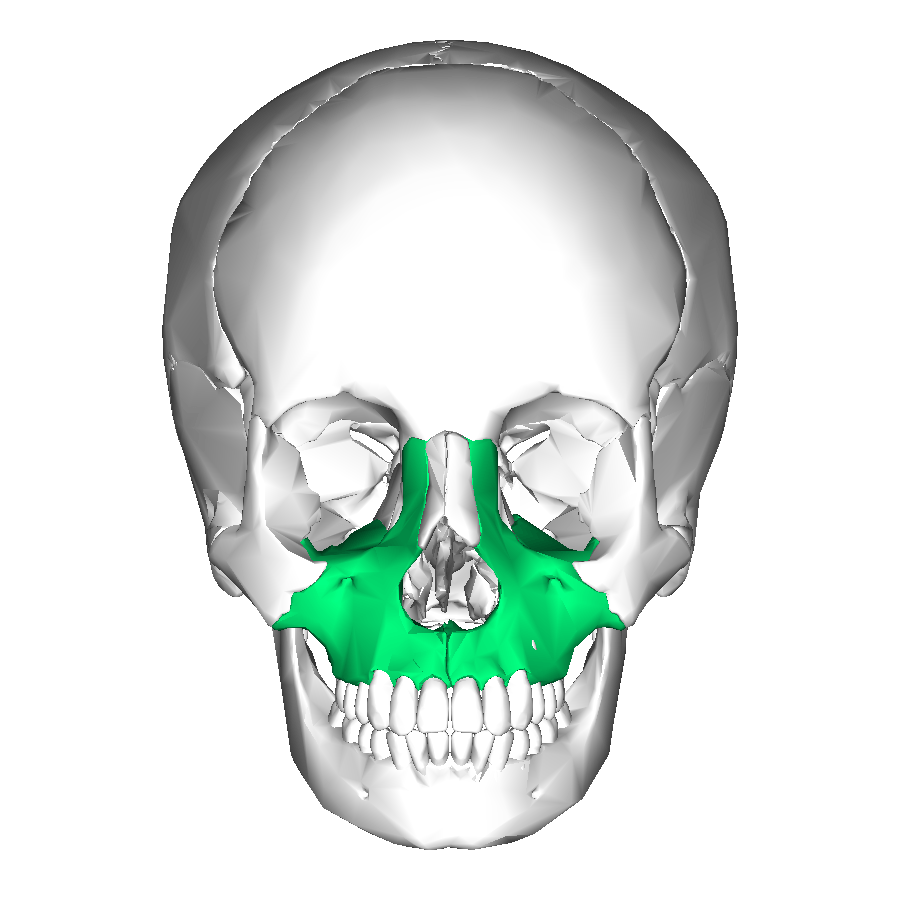
What bones are indiated in green?
Mandible
Maxillae
Zygomatic
Lacrimal
What is the perpendicular portion of the mandible called?
perpendicular plate
body
rami
condylar process
This forms the inferior and posterior portion of the nasal septum.
septal cartilage
vomer
perpendicular plate of the ethmoid bone
palatine process
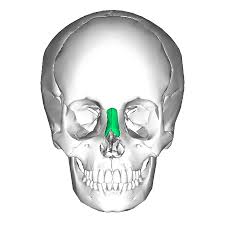
What bones are indicated in green in the picture?
Nasal
Lacrimal
Ethmoid
Vomer
What is the seventh cervical vertebrae known as?
axis
atlas
cervical prominens
These are paired bones and are described as being L-shaped.
palatine
maxillary
temporal
lacrimal
The axis superiorly articulates with
atlas
occipital condyle
C3
C2
What is the inferior part of the vertebral column?
coccyx
ensiform process
manubrium
body
sacrum
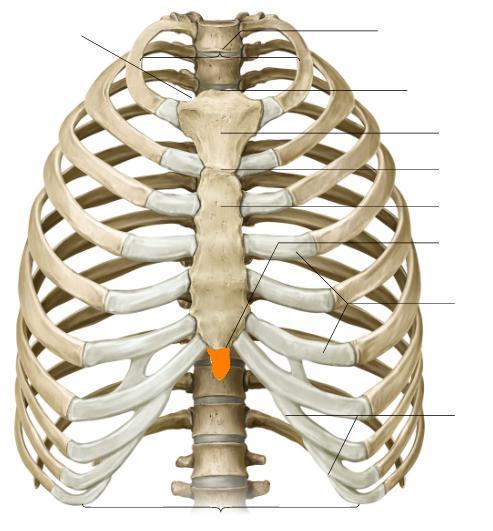
What is indicated in orange in the picture?
Manubrium
Xiphoid Process
Body
Costal Cartilage
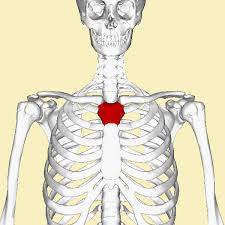
What is indicated in red in the picture?
Manubrium
Body
Xiphoid Process
Clavicle
This bone is suspended from the styloid process of the temporal bone by ligaments and muscles.
hyoid
vomer
mandible
pharynx
The manubrium, body, and xiphoid process are all part of the
Sternum
Vertebral column
Temporal bone
Pelvis
This bone supports the skull and articulates with the occipital condyles of the occipital bone.
axis
vomer
atlas
cervical prominens
What is the horizontal portion of the mandible called?
body
gladiolus
rami
angle
alveolar process
What is the posterior portion of the rami that articulates with the mandibular fossa of the temporal bone called?
condylar process
alveloar process
coronoid process
mandibular notch
The depression that is located in the medial, superior portion or the manubrium is
jugular notch
clavicular notch
mandibular notch
sternal notch
sternal angle
Which of the following bones are oblong shaped and sit side by side at the upper and middle part of the face?
lacrimal
nasal
zygomatic
malar
maxillary
What is the inferior part of the sternum referred to as?
coccyx
ensiform process
manubrium
body
sacrum
What is the superior triangular portion of the sternum called?
xiphoid process
gladiolus
manubrium
ensiform process
sternal angle
What are the paired bones that form the upper jaw bone called?
mandible
zygomatic
maxillary
temporal
nasal
palatine
inferior nasal conchae
vomer
maxillary
frontal
occipital
ethmoid
sphenoid
temporal
lacrimal
zygomatic
mandible
Which of the following ribs articulate directly to the sternum and vertebrae?
true ribs
false ribs
floating ribs
strong ribs
Which bone forms the posterior 1/4 of the hard palate?
palatine bone
maxillary bone
palatine process of the maxillae
horizontal plate of the palatine bone
How many floating ribs are there?
12
2
4
7
What are the smallest of the facial bones?
palatine
lacrimal
nasal
malar
inferior nasal conchae
The notch or depression between the condylar and coronoid processes is called
mandibular fossa
mandibular notch
coronoid notch
rami
angle
The second ribs articulates at the sternal angle
true
false
Which ribs attach to vertebrae only; they are not attached to sternum or another rib by costal cartilage?
floating ribs
false ribs
true ribs
loose ribs
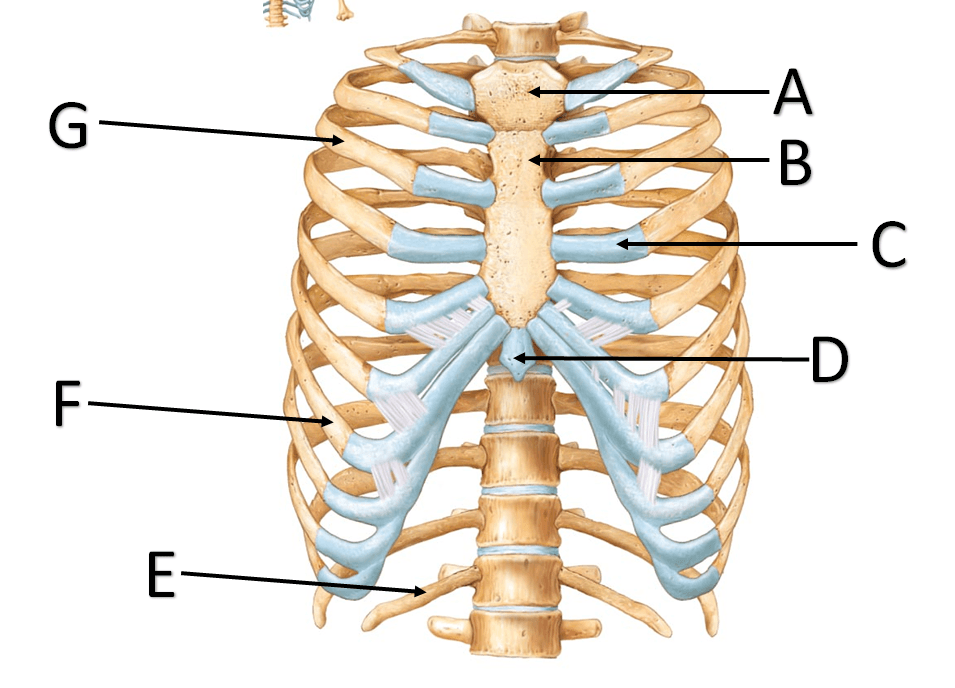
Letter F is pointing to:
False Rib
Manubrium
Costal Cartilage
Floating Rib
True Rib
The clavicular notch of the sternum articulates with the sternal end of the clavicle forming the sternoclavicular articulation
True
False
What is the anterior portion of the rami (of the mandible) that serves as a point of attachment for the temporalis muscle referred to as?
coronoid process
condylar process
mandibular notch
angle of the mandible
Match the following
atlas
lacks a body
axis
odontoid process
maxillary
palatine process
mandible
mental emeinence
C 7
non bidfid spinous process
Which of the following is not part of the vertebral column
Sternum
Cervical
Thoracic
Lumbar
Sacrum
Which of the following bones is the largest and strongest of the facial bones?
mandible
maxillary
zygomatic
frontal
These are located on each side of the jugular notch
clavicular notch
sternal end
suprasternal notch
sternal angle
Letter C is pointing to:
False Rib
Manubrium
Costal Cartilage
Floating Rib
True Rib
Which is true
There are 12 ribs
There are 12 pairs of ribs
There are 7 pairs of true ribs
There are 4 floating ribs
Ribs connect directly to the vertebra and the sternum
Thes paired bones are located posterior and lateral to the nasal bones and help form the medial borders of the eye orbits?
lacrimal
vomer
nasal
palatine
Where does the manubrium meets the body of the sternum?
sternal angle
sternal notch
ensiform process
gladiolus
Letter G is pointing to:
False Rib
Manubrium
Costal Cartilage
Floating Rib
True Rib
What is the name of the ribs that have costal cartilage that individually attach to the sternum?
true
false
floating
costal
Connects the true ribs to the sternum.
osteocytes
costal cartilage
osseous tissue
amphiarthotic joint
Letter E is pointing to:
False Rib
Manubrium
Costal Cartilage
Floating Rib
True Rib
Describe the axial skeleton.
This part of the skeletal system is mainly composed of the bones in your appendages, or limbs.
This is the central part of your skeletal system that contains the bones lying along a central axis, or midline, of your body.

