
Font size
 Worksheets
BTEC Sport Level 3 - Respiratory System
Total questions: 64
Worksheet time: 31mins
What is the name of the receptors that detect change in blood pH?
Baroreceptors
Chemoreceptors
pH receptors
chemicalreceptors
What part of the brain receives signals regarding changing breathing rate?
Cardiac control centre
Respiratory control centre
Breathing control centre
Hypothalamus
Name the missing part in the travel of air into the lungs:
pharynx, larynx, trachea, bronchi, _________ alveoli
Epiglottis
Diaphragm
Thoracic Cavity
Bronchioles
Select the 3 characteristics of the membranes that increase efficiency of gaseous exchange.
one cell thick
large surface area
layer of moisture
lots of holes
Definition: "The volume of air
breathed in and out
with each breath"
Breathing rate
Tidal Volume
Inspiratory Reserve Volume
Vital Capacity
Definition: "The amount of air that can be forced out of the lungs after maximal inspiration."
Tidal Volume
Breathing Rate
Vital Capacity
Inspiratory Reserve Volume
Select the acute adaptations of the respiratory system
Increased breathing rate
Increased strength of respiratory muscles
Increased size of thoracic cavity
Increased tidal volume
Select the chronic adaptations of the respiratory system.
Increased breathing rate
Increased strength of respiratory muscles
Increased Tidal Volume
Increased Vital Capacity
Name the nerve that stimulates an increase in the contraction rate and force of respiratory muscles
Breathing nerve
Phrenic Nerve
Siatic Nerve
Trochlear nerve
What are the possible negative effects of training at altitude?
Home sickness
Altitude sickness
Clouds
Lack of motivation
Poor coaching
What is different about training at altitude and sea level that causes adaptation to occur?
The amount of food to eat
The partial pressure of O2
The partial pressure of CO2
The partial pressure of nitrogen
Which respiratory muscles work during inspiration?
Diaphragm
Internal intercostals
External Intercostals
Which respiratory muscles work during expiration?
Diaphragm
Internal intercostals
External intercostals
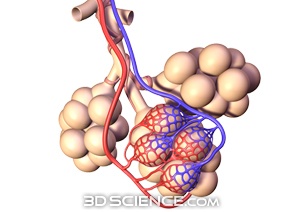
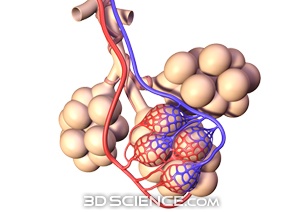
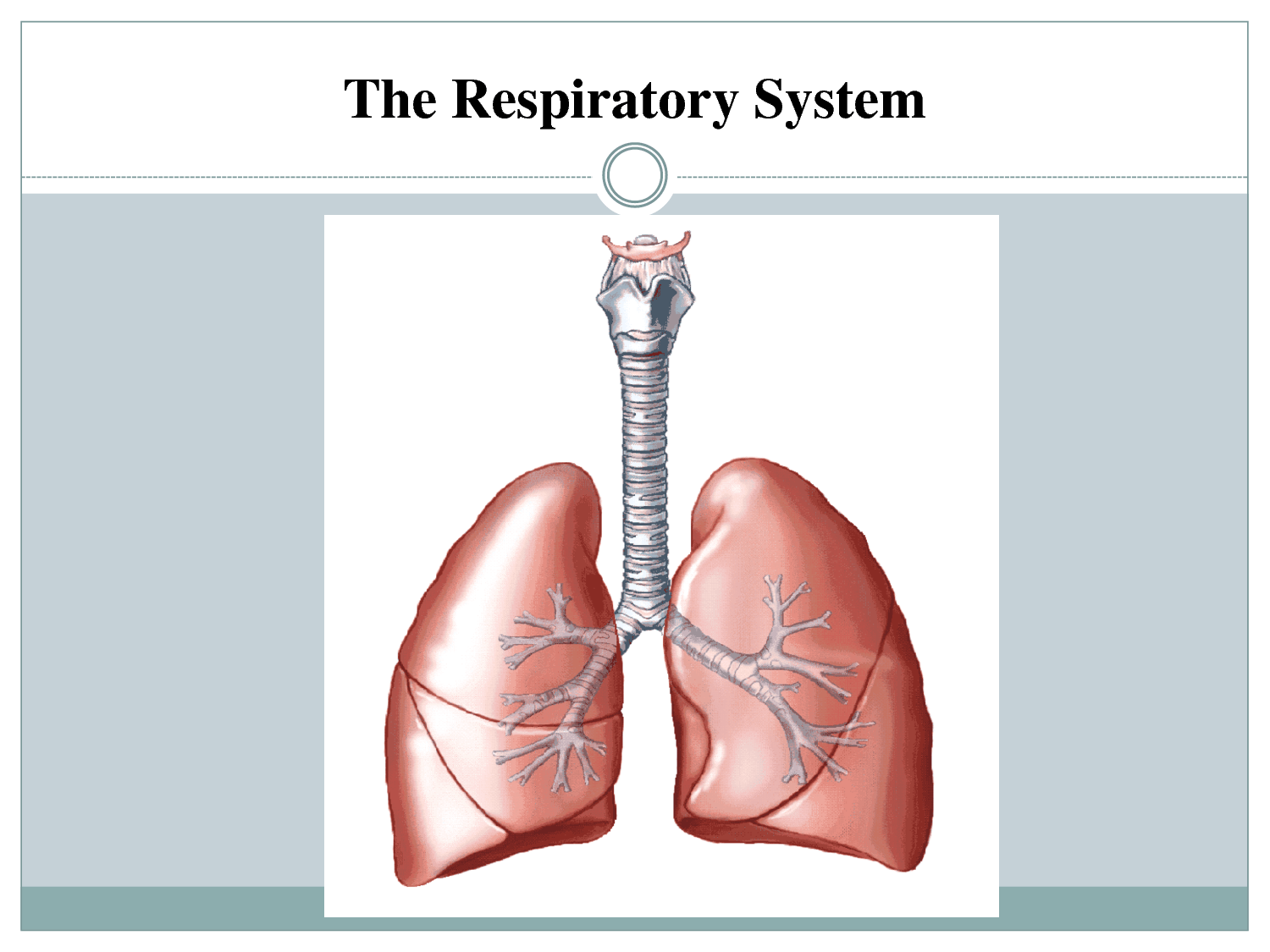
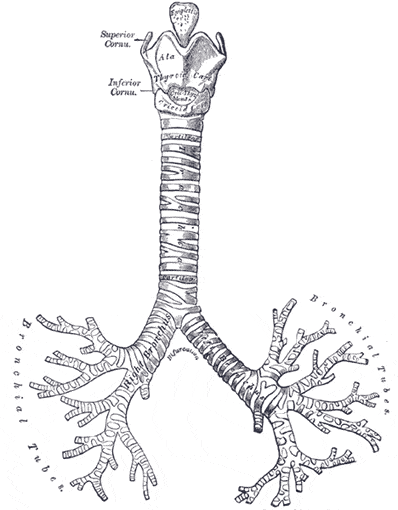

Which of the following happens when you exhale?
chest cavity expands
your lumgs become smaller
your chest cavity becomes smaller
your lungs take in and give off oxygen
In order for oxygen to diffuse into the blood during inhalation, what is true about blood concentration?
both gases are at equivalent levels
carbon dioxide levels are low
oxygen levels are high
oxygen levels are low
What is the compound called when oxygen binds with hemoglobin in a mammal?
oxyplasma
oxyhemoglobin
carbon dioxide
bicarbonate ion
Gas exchange that occurs at the level of the tissues is called................
external respiration
interpulmonary respiration
internal respiration
pulmonary ventilation
How are respiratory gases moved or transported across the membrane?
Active Transport
Diffusion
Endo and Exocytosis
Protein Pumps
Which of the following structures is also called the voice box, and contains the vocal cords?
Pharynx
Larynx
Trachea
Epiglottis
Which part of the Respiratory System collects air from the environment & heats/moistens the air before entering the body?
lungs
nose
heart
mouth
A small flap of tissue that covers the trachea when swallowing is called the
bronchi
larynx
pharynx
epiglottis
Short-term (immediate) responses to exercise for the respiratory system include...
Increased breathing rate
Increased vital capacity
Increased tidal volume
Increased heart rate
How does altitude affect the respiratory system?
Reduces the amount of oxygen available
Muscles fatigue more rapidly
We breath in less air
Decreases the body's red blood cell count
The respiratory system provides __________ to body tissues and removes waste products.
Carbon dioxide
Lactic-acid
Oxygen
Water
Main function of the respiratory system are...
Pulmonary circulation & gas exchange
Pulmonary ventilation & gas exchange
Thermoregulation & gas exchange
The chamber of the chest is known as the...
Lungs
Thoracic cavity
Diaphragm
Pharynx
The role of the intercostal muscles during INSPIRATION.
External intercostals CONTRACT and internal intercostals RELAX. This lifts the ribs/thoracic cavity UP and OUT.
External intercostals RELAX and internal intercostals CONTRACT. This lifts the ribs/thoracic cavity DOWN and IN.
External intercostals RELAX and internal intercostals CONTRACT. This lifts the ribs/thoracic cavity UP and OUT.
External intercostals CONTRACT and internal intercostals RELAX. This lifts the ribs/thoracic cavity DOWN and IN.
Select the correct answer which best describes the breathing mechanics during INSPIRATION.
Ribs move down and in, diaphragm relaxes and moves upwards, chest decreases, external intercostal muscles relax.
Ribs move down and in, diaphragm contracts and moves downwards, chest decreases, external intercostal muscles relax.
Ribs move up and out, diaphragm relaxes and moves upwards, chest increases, external intercostal muscles relax.
Ribs move up and out, diaphragm contracts and moves down/flattens, chest expands, external intercostal muscles contract.
Explain the process of gas exchange at the alveoli.
Concentration of oxygen in the alveoli is high. Concentration of oxygen in the blood is low. This creates a steeper diffusion gradient/ oxygen diffuses quicker. Oxygen moves from the alveoli into the blood.
Concentration of oxygen in the alveoli is low. Concentration of oxygen in the blood is high. This creates a steeper diffusion gradient/ oxygen diffuses quicker. Oxygen moves from the blood into the alveoli.
Concentration of oxygen in the alveoli is the same as the concentration of oxygen in the blood. This removes the diffusion gradient. Oxygen does not move anywhere.
The respiratory control centre located in the _________________ ___________________ of the brain controls breathing.
Chemo-receptor
Medulla Oblongata
Lungs
Respiratory muscles
Chemoreceptors which detect changes...
in blood pH (acidity of blood)
in blood viscosity (thickness of blood)
in blood temperature
in blood volume
Chemoreceptors send signals to the medulla oblongata to cause breathing rate to change - how does this occur?
Signals are sent through the lungs and then to the medulla oblongata.
Signals are sent to the respiratory muscles and then to the medulla oblongata
Increases the frequency of signals to the respiratory muscles. The respiratory muscles contract at a faster rate.
Gases will always diffuse (gas exchange) from areas of...
High concentration to areas of a low concentration.
Low concentration to areas of high concentration.
equal concentrations to high concentration.
high concentration to areas of equal concentration.
'The volume of air inspired or expired per breath' is referred to as the _____________________________.
Pulmonary ventilation
Tidal volume
Breathing rate
Vital capacity
Residual volume
'The volume of air inspired or expired per minute' is referred to as the _____________________________.
Pulmonary ventilation
Tidal volume
Breathing rate
Vital capacity
Residual volume
Pulmonary ventilation (VE) = __________________ X ________________
Residual volume X Breathing rate
Expiratory reserve volume X Residual volume
Tidal volume X Breathing rate
Vital capacity X Breathing rate
Asthma is...
a disorder characterized by low bone mass, leading to bone fragility, and consequent increase in fracture risk.
a medical condition in which a person's spine has a sideways curve. The curve is usually "S"- or "C"-shape.
a common condition where airways can become restricted. The tightening of the muscles surrounding the trachea prevent gases from freely moving in or out.
a condition in which the body or a region of the body is deprived of adequate oxygen supply at the tissue level.

Label 1, 2 & 3 above:
1 = Pharynx, 2 = Lung & 3 = Diaphragm
1 = Nasal cavity, 2 = Trachea & 3 = Alveoli
1 = Larynx, 2 = Trachea & 3 = Bronchi
1 = Nasal cavity, 2 = Bronchi & 3 = Alveoli
What occurs between the alveoli and capillaries?
Expiration
Osmosis
Gas exchange
Inspiration
The role of the internal intercostal muscles during expiration:
External intercostal muscles relax
Internal intercostal muscles relax
Internal intercostal muscles contract
During inspiration the air pressure is higher...
inside our chest
outside our chest (air)
it is equal
During expiration the air pressure is higher...
inside our chest
outside our chest (air)
it is equal
During inspiration our diaphragm...
contracts and flattens
relaxes and is a domed shape
does not move
moves up and down
During expiration our diaphragm...
contracts and flattens
relaxes and is a domed shape
does not move
moves up and down
Which lung volume is approximately 0.5 litres at rest?
Vital capacity
Tidal volume
Pulmonary ventilation
Breathing rate
The total lung capacity is calculated by adding the:
Vital capacity + residual volume
Tidal volume + residual volume
Pulmonary ventilation + breathing frequency
Breathing rate + frequency
Tidal volume can increase up to ___ times higher than at rest to cope with exercise demands.
4-6
1-3
100-150
5-9
Exercise causes an increase in breathing rate and depth of breathing. This is due to a greater need for _________ in the body and removal of carbon dioxide.
fluids
air
oxygen
lactic acid
Select the correct responses of the respiratory system to exercise:
Increased breathing rate & increased strength of respiratory muscles
Increased breathing rate & increased vital capacity.
Increased tidal volume & increased breathing rate.
Increased tidal volume & increased vital capacity.
Asthma causes...
an increase in breathing rate/decrease in tidal volume.
a decrease in breathing rate/ increase in tidal volume.
an increase in performance.
bands of tissue around the airway to dilate and get bigger.
One of the short- term effects of exercise on the respiratory system is:
low demand of oxygen
increased breathing rate
decreased depth of breathing
low rate of CO2 removal
When inhaling, the pathway of air is which of the following?
Nasal cavity, trachea, bronchi, bronchioles and alveoli
Nasal cavity, trachea, alveoli, bronchi, bronchioles
Nasal cavity, trachea, bronchioles, bronchi and alveoli

Which is not a job of the respiratory system?
taking in oxygen
taking in carbon dioxide
moisten air
transport glucose
When chemoreceptors detect a slight decrease in pH, this means that _______________ concentrations have increased, and the breathing rate must ________________ .
Carbon dioxide; increase.
Carbon dioxide; decrease.
Oxygen; increase.
Oxygen; decrease.
The number and depth of breathing increases during exercise. Which bodily system is this associated with?
(a)
After exercise what has to be paid back ?
(a)
During exercise, your breathing rate increased in order to accommodate:
Increased carbon dioxide needs of your muscles
Increased oxygen needs of your heart
Increased oxygen needs of your muscles
Increased carbon dioxide needs of your lungs

