wayground logo

Free Printable Worksheets

Font size

S
M
L
XL
Worksheets

Unit 5 - Part 3 - Energy in Roller Coaster

Total questions: 82

Worksheet time: 2hrs 37mins

Name
Class
Date
1.

When engineers are building Roller Coasters, they consider the minimum velocity for the coaster to travel, what is that equation?

a)
v = g/r
b)
v = sqrt(rg)
c)
v = r/g
d)
v = rg
2.

As a students, we must stand and fight, am I right soldier?

a)
I don't know
b)
Maybe
c)
Yes
d)
No
3.

When you find the minimum velocity, use the kinetic equation to the kinetic energy, why do you add the potential energy on to it?

a)
To make the equation more complicated
b)
To make the object feel better about itself
c)
To confuse students
d)
To account for the potential energy of the object due to its position above the ground.
4.

Is it often easier to use cm over meters in physics questions?

a)
Yes
b)
No
c)
Sometimes
d)
Not always
5.

Figure 1: A ball rolls down a hill with a vertical height of 10 meters, starting from rest as shown below. The ball has a mass of 0.5 kg, and you may assume that g = 10 N/kg for this problem.

a) At what position would the ball have the most gravitational potential energy? *

a)
At the middle of the hill
b)
At the bottom of the hill
c)
At the top of the hill
d)
At the side of the hill
6.

b) At what position would the ball have the most kinetic energy? *

a)

The position with the highest velocity at the lowest

b)

The position with the lowest velocity at the highest

c)
The position with the highest potential energy
d)
The position with no velocity
7.

If a system is closed, than the mechanical at the start will be the same at the bottom

a)
True
b)
Sometimes
c)
Depends on the system
d)
False
8.

d) What is the gravitational potential energy of the ball at the top of the hill (h = 10 meters)? If you feel you're missing information, be sure to check the image description... *

Figure 1: A ball rolls down a hill with a vertical height of 10 meters, starting from rest as shown below. The ball has a mass of 0.5 kg, and you may assume that g = 10 N/kg for this problem.

Will it be the same if the kinetic energy was at the lowest point.

a)

50 J No

b)

50 J Yes

c)
100 J
d)
0.1 J
9.

What is the equation to find velocity in a kinetic energy equation?

a)
v = KE/m
b)
v = sqrt(2KE/m)
c)
v = KE^2/m
d)
v = KE*m
10.

How do roller coasters make it to the top of the hill?

a)

a motorized chain

b)

magnets

c)

the engine

11.

When does a roller coaster reach its maximum potential energy?

a)

At the bottom of the hill

b)

At the top of the hill

c)

When going around a loop

12.

Positional energy is also called?

a)

Friction

b)

Kinetic energy

c)

Potential energy

13.

The force that attracts a body toward the center of the earth is called

a)

Friction

b)

Gravity

c)

Potential energy

14.

What force causes a roller coaster to go down hill?

a)

Gravity

b)

Friction

c)

Kinetic energy

15.

Potential energy changes to what type of energy after a roller coaster goes down a hill?

a)

gravitational

b)

positional

c)

Kinetic

16.

Other than friction, what is the other force that slows down a roller coaster?

a)

air resistance

b)

gravity

c)

kinetic energy

17.

What is a result of friction?

a)

speed

b)

Ice

c)

Heat

18.

While gravity pulls you toward the ground, what force pulls you to the top of the loop?

a)

Inertia

b)

friction

c)

potential energy

19.

No engine is required on a roller coaster because of what force?

a)

Friction

b)

Gravity

c)

Inertia

20.

The resistance that one surface or object encounters when moving over another.

a)

Friction

b)

Gravity

c)

Inertia

21.

Inertia is one of the laws of physics described by whom?

a)

Jane Goodall

b)

Sir Isaac Newton

c)

Albert Einstein

22.
The graph respresents
a)
no motion
b)
constant velocity
c)
increasing velocity
d)
decreasing velocity
23.
At what time did runner A pass runner B?
a)
0 seconds
b)
1 second
c)
2 seconds
d)
3 seconds
24.
Calculate the acceleration for segment A.
a)
2 m/s2
b)
2 m/s
c)
-2 m/s2
d)
0 m/s2
25.
At 60 seconds, how far had this object traveled? 
a)
0 m
b)
10 m
c)
20 m
d)
40 m
26.
Which runner got a head start?
a)
red line runner
b)
blue line runner
27.
Which runner is faster?
a)
red line runner
b)
blue line runner
28.
What is happening between 2 and 3 seconds?
a)
The object is not moving.
b)
The object is not accelerating.
c)
The object is slowing down.
d)
The object is speeding up.
29.
What happens at 4 seconds?
a)
The object changes direction.
b)
The object is at the starting point.
30.

Find the total displacement in the 7 seconds of motion.

a)

1 centimeter

b)

0 centimeters

c)

9 centimeters

d)

12 centimeters

31.
Who had the greatest average speed after 100 seconds?
a)
Mike
b)
Katelyn
c)
Alex
d)
They had the same average speed
32.

A dog running with an initial speed of 7.5 m/s comes to a stop in 5 seconds. What is the dog's displacement?

a)

0 m

b)

7.5 m

c)

37.5 m

d)

18.8 m

33.
A roller coasters accelerates from an initial velocity of of 6.0 m/s to a final velocity of 70 m/s over 4 seconds.  What's the acceleration?
a)
24 m/s2
b)
18 m/s2
c)
16 m/s2
d)
16 m/s
34.

What is the displacement of a ball that is thrown straight up to a height of 20 m, and then falls back to its initial height?

a)

0 m

b)

20 m

c)

40 m

d)

-20 m

35.

The unit for speed is:

a)

m

b)

m/s

c)

m/s2

d)

s

36.
A golf ball starts with a speed of 2 m/s and slows at a constant rate of 0.5 m/s2, what is its velocity after 2 s?
a)
0 m/s
b)
0.5 m/s
c)
1 m/s
d)
1.5 m/s
37.

How long would it take a car, starting from rest and accelerating uniformly in a straight line at 5 m/s2, to cover a distance of 200m

a)

9.0s

b)

10.5s

c)

12.0s

d)

15.5s

38.

Kinematic equation can only be used when you have a constant ....

a)

Position

b)

Velocity

c)

Acceleration

d)

Time

39.
A boat travels 12.0 m while it reduces its velocity from 9.5 m/s to 5.5 m/s. What is the magnitude of the boat’s acceleration while it travels the 12.0 m?
a)
1.3 m/s2
b)
2.5 m/s2
c)
3.0 m/s2
d)
7.5 m/s2
40.

An engineer is designing the runway for an airport. Of the planes that will use the airport, the lowest acceleration rate is likely to be 3 m/s2. The takeoff speed for this plane will be 65 m/s. All airplanes will start from rest. Assuming this minimum acceleration, what is the minimum allowed length for the runway?

a)

v=vo+at

b)

d=vot+1/2at2

c)

v2=vo2+2ad

d)

d=1/2(v+vo)t

41.
Energy due to motion is ____________ energy. 
a)
Potential 
b)
Energy
c)
Kinetic
d)
Friction
42.
The faster an object moves, the ________ kinetic energy it has. 
a)
more
b)
less
c)
none of the above
d)
all of the above 
43.
__________ is stored energy. 
a)
Potential
b)
Kinetic
c)
None of the above 
d)
All of the above 
44.
Friction is a force that acts in an ___________ direction of movement.
a)
similar
b)
opposite
c)
parallel
d)
west
45.
Where is potential energy the GREATEST on a roller coaster?
a)
At the bottom of the first hill
b)
At the top of the first hill
c)
Half way down the first hill
46.
Where is kinetic energy the LEAST on a roller coaster?
a)
At the bottom of the first hill
b)
At the top of the first hill
c)
Halfway down the first hill
47.
Where is potential energy the LEAST on a roller coaster?
a)
At the top of the first hill
b)
Halfway down the first hill
c)
At the bottom of the first hill
48.
Where is kinetic energy the GREATEST on a roller coaster?
a)
At the bottom of the first hill
b)
At the top of the first hill
c)
Halfway down the first hill
49.
Velocity is both ____ and _____. 
a)
speed , direction 
b)
direction, mass
c)
volume, density 
d)
direction, magnitude 
50.
What is the speed of a car that traveled 56 m in 4 seconds?
a)
64 m/s
b)
34 m/s
c)
14 m/s
d)
0.0625 m/s
51.
Any object with mass has gravity.
a)
True
b)
Sometimes
c)
False
d)
Never
52.
Gravity is the force objects put on each other because of their ______.
a)
Mass
b)
Friendliness
c)
Acceleration
d)
Speed
53.
Which of the following is a unit of mass?
a)
kilogram
b)
liter
c)
meter
d)
pound
54.

Energy is never created or destroyed. This is the...

a)

Energy Hypothesis

b)

Law of Conservation of Energy

c)

Energy Law

d)

Energy's First Principle

55.

GPE (Gravitational Potential Energy) =

a)

mass x velocity

b)

height x velocity

c)

height x mass x gravitational constant

d)

height x velocity x gravitational constant

56.
What is the relationship between kinetic energy and speed
a)
They are directly proportional
b)
There is no relationship
c)
They are indirectly proportional
d)
They are brother and sister
57.
Jose is stretching a rubber band so that it is tight.  Before he lets the rubber band fly, the rubber band has:
a)
Magnetic Energy
b)
Kinetic Energy
c)
Potential Energy
d)
None of these types of Energy
58.
At which point is potential energy greatest?
a)
W
b)
X
c)
Y
d)
Z
59.
What kind of energy is in a rock at the edge of a cliff?
a)
Potential
b)
Kinetic
c)
Both potential and kinetic energy
d)
none of the above
60.
Which is the best example that something has kinetic energy?
a)
a. a car parked on a steep hill 
b)
b. a tennis ball rolling across the court
c)
c. a picture hanging on the wall 
d)
d. a piece of coal before it's burned 
61.
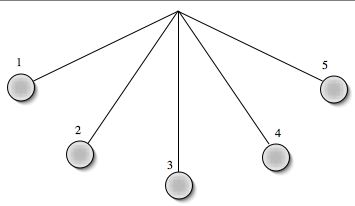
When a pendulum swings, at which point is potential energy at its greatest?
a)
1
b)
2
c)
3
d)
4
62.
At the top of a loop there is more of this type of energy?
a)
Potential
b)
Kinetic
63.
On a roller coaster, where is maximum potential energy?
a)
At the bottom of a big hill
b)
When going around a corner
c)
When going upside down
d)
At the top of a big hill
64.
On a roller coaster, where is maximum kinetic energy?
a)
At the bottom of a big hill
b)
When going around a corner
c)
When going upside down
d)
At the top of a big hill
65.
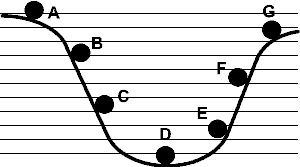
Which point has the most potential energy?
a)
G
b)
f
c)
b
d)
a
66.
Which 2 letters have the most kinetic energy
a)
W & Y
b)
X & Z
67.
At which point is potential energy greatest?
a)
W
b)
X
c)
Y
d)
Z
68.

The higher the position the ____ the KE and the ______ the PE.

a)

Less/ more

b)

more/ less

69.

The faster the speed the __________ the PE and the ________ KE.

a)

more/ less

b)

less/ more

70.
How far will an object move in 12 seconds if it is traveling at a velocity of 8 m/s?
a)
96 m
b)
0.7 m
c)
20 m
d)
4 m
71.

When finding the potential energy at the maximum height of a loop, we must consider the radius of the circle!

a)
False
b)
Not necessary
c)
True
d)
Only if the loop is inclined
72.

The total energy can also include not only the final energy, but thermal and work!

a)
false
b)
only work
c)
true
d)
only thermal energy
73.

Mr. H-M perform a pendulum demonstration for the class. 

Briefly explain (2-3 sentences) whether energy is conserved. Describe how energy is transformed from one form to another

a)

The finial and initial energy are different

b)

The intital energy is equal to the finial energy plus the work done

74.

Friction can be considered work

a)
False
b)
Depends on the situation
c)
Sometimes
d)
True
75.

A sledder effortlessly glides from position A across the snow to position B (as shown in the diagram). Resistance forces are negligible. 

Given: KA = 4,750 J UA = 5,550 J UB = 3,850 J

  1. What is the total mechanical energy of the sledder at position A?

a)
9,000 J
b)
12,500 J
c)
7,200 J
d)
10,300 J
76.

A sledder effortlessly glides from position A across the snow to position B (as shown in the diagram). Resistance forces are negligible. 

Given: KA = 4,750 J UA = 5,550 J UB = 3,850 J

  1. What is the kinetic energy of the sledder at position B?

a)
2,500 J
b)

6,400 J

c)
4,000 J
d)
1,700 J
77.

A job is done slowly, and an identical job is done quickly. Both jobs require the same amount of work but different amounts of

a)

Power

b)
Resources
c)

Energy Pick me!

d)
Money
78.

Which requires more work: lifting a 70-kg sack vertically 2 meters or lifting a 35-kg sack vertically 4 meters?

a)
lifting a 70-kg sack vertically 2 meters
b)
lifting a 35-kg sack horizontally 4 meters
c)
lifting a 70-kg sack vertically 4 meters
d)

Both

79.

An object that has kinetic energy must be

a)
stationary
b)
in motion
c)
at rest
d)
not moving
80.

You throw a 0.145 kg baseball straight up in the air, giving it an initial upward velocity of 20.0 m/s. Calculate the initial kinetic energy of the ball.

a)
29.0 J
b)
0.29 J
c)
14.5 J
d)
0.725 J
81.

The initial velocity of the 0.145 kg baseball is doubled when thrown straight up into the air. Briefly describe how this would affect the kinetic energy of the baseball.

a)
The kinetic energy of the baseball would remain the same.
b)
The kinetic energy of the baseball would triple.
c)
The kinetic energy of the baseball would double.
d)
The kinetic energy of the baseball would quadruple.
82.

Lets consider conservation of energy! If I give you height, my mass, and velocity. You are able to not only calculate my Kinetic and Potential Energy (you have to accept its a very closed system), but you can calculate my highest height and my fastest velocity

a)
We can only calculate the potential energy, not the kinetic energy
b)
The conservation of energy principle cannot be used to calculate the highest height and fastest velocity
c)
We can calculate the potential energy and kinetic energy using the given formulas. To find the highest height, we can use the conservation of energy principle and equate the kinetic energy with the potential energy at the highest point. This gives us h = (v^2)/(2g). To find the fastest velocity, we can use the conservation of energy principle again and equate the initial kinetic energy with the potential energy at the highest point. This gives us v = sqrt(2gh).
d)
The given information is not enough to calculate the potential and kinetic energy, highest height, and fastest velocity