Wayground logo

Free Printable Worksheets

Font size

S
M
L
XL
Worksheets

Year 10 Physics Unit Revision Quiz

Total questions: 50

Worksheet time: 2hrs 20mins

Name
Class
Date
1.
A  car starts from rest and after  7 seconds it is moving at 42  m/s. What is the car’s acceleration?
a)
0.17
b)
1.67
c)
6
d)
7
2.
A car accelerates at 2 m/s2. Assuming the car starts from rest, how much time does it need to accelerate to a speed of 16 m/s?
a)
4 s
b)
8 s
c)
16 s
d)
1/16 s
3.
A car accelerates from a standstill to 70 m/s in 10 seconds.  What is the acceleration?
a)
0.7m/s2
b)
7m/s2
c)
14m/s2
d)
none of the above
4.
A golf ball starts with a speed of 2 m/s and slows at a constant rate of 0.5 m/s2, what is its velocity after 2 s?
a)
0 m/s
b)
0.5 m/s
c)
1 m/s
d)
1.5 m/s
5.
A measurement of how fast an object is moving
a)
Velocity
b)
Speed
c)
Vector
d)
Acceleration
6.
Which runner stopped for a rest?
a)
Albert
b)
Bob
c)
Charlie
7.
Which runner won the race?
a)
Albert
b)
Bob
c)
Charlie
8.
What does this graph represent?
a)
Constant Speed
b)
Acceleration
c)
Not moving
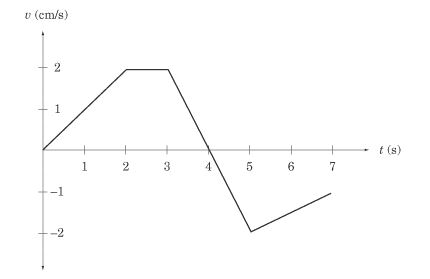
9.

What is happening between 2 and 3 seconds?

a)

The object is not moving.

b)

The object is not accelerating.

c)

The object is slowing down.

d)

The object is speeding up.

10.
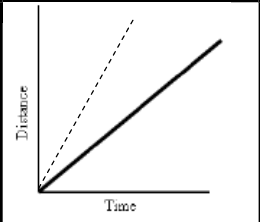
Which runner had a head start?
a)
A
b)
B
c)
C
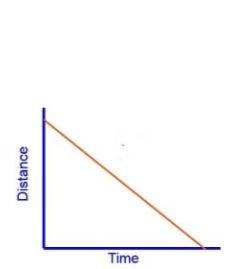
11.

What is this line of this graph showing?

a)

moving away from starting point at a constant speed

b)

moving back towards the starting point at a constant speed

c)

acceleration (getting faster)

d)

deceleration (getting slower)

12.
At 60 seconds, how far had this object traveled? 
a)
0 m
b)
10 m
c)
20 m
d)
40 m
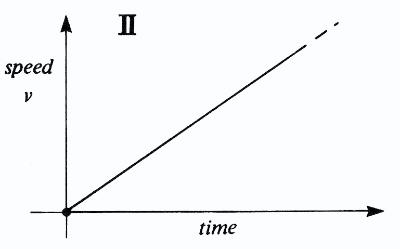
13.
What does this graph represent?
a)
Constant speed
b)
Acceleration
c)
Not moving
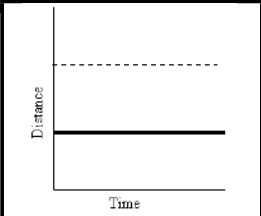
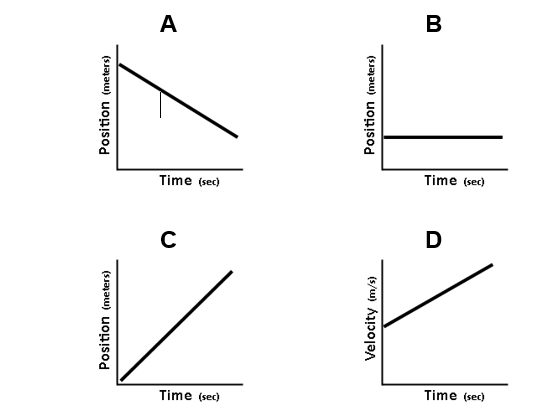
14.
Which graph shows the object standing still?
a)
A
b)
B
c)
C
d)
D
15.

what is the motion described in the graph

a)

all of above

b)

constant speed

c)

acceleration

d)

constant position

16.
Which of the following is NOT an example of acceleration?
a)
a person jogging at 3 m/s along a winding path
b)
a car stopping at a stop sign
c)
a cheetah running 27 m/s east
d)
a plane taking off
17.

What is the matching velocity vs. time graph?

a)

b)

c)

d)

18.

Which velocity time graph matches the position time graph?

a)

b)

c)

d)

19.

Newton's Law of Inertia (first law) describes the motion of-

a)
Objects at rest only
b)
Objects in motion only
c)
Objects at rest and objects that are in motion
d)

Objects that accelerate

20.
Which one of Newton’s Laws of Motion best explains why the dishes do not move when the table cloth is removed?
a)

Law of Inertia

(First Law)

b)

Law of Acceleration

c)

Law of Action-Reaction

d)

Law of Gravitation

21.
Which law best explains why people remain in motion when a car crashes, if they are not wearing a seat belt?
a)

Law of Inertia

(First Law)

b)

Law of Acceleration

c)

Law of Action - Reaction

d)

Law of Gravitation

22.
Which law states that acceleration depends on an objects mass and the force acting on it.
a)
Newton's 1st
b)
Newton's 2nd
c)
Newton's 3rd
23.
Which law states that an object in motion will stay in motion or at rest unless acted upon by a nonzero force
a)
Newton's 1st
b)
Newton's 2nd
c)
Newton's 3rd
24.
Action and reaction forces acting in opposite directions don't cancel out because they are acting on different _________.
a)
Opinions
b)
Objects
c)
Angles
d)
Forces
25.
If you sit on a chair, the chair pushes up with a ________ force
a)
stronger
b)
weaker
c)
equal 
26.
Rockets are launched into space using jet propulsion where exhaust accelerates out from the rocket and the rocket accelerates in an opposite direction.
a)
Newton's 1st Law
b)
Newton's 2nd Law
c)
Newton's 3rd Law
d)
None of them
27.
An object at rest will remain at rest unless acted on by an unbalanced force. An object in motion continues in motion with the same speed and in the same direction unless acted upon by an unbalanced force.
a)
Newton's 1st Law
b)
Newton's 2nd Law
c)
Newton's 3rd Law
d)
None of them
28.

If a 10 kilogram object accelerates suddenly at 15 m/s2, how much force was applied to the object?

a)

150 Newtons

b)

15 Newtons

c)

150 kilograms

d)

100 kilograms

29.
A 20 kg bike accelerates at 10 m/s2.  what was the force?
a)
25 Newtons
b)
20 Newtons
c)
200 Newtons
d)
10 Newtons
30.

A 5 kg block is pulled across a table by a net force of 32 N. Calculate the acceleration of the object.

a)

160 m/s2

b)

6.4 m/s2

c)

0.16 m/s2

31.

What is the unit for force?

a)

m/s2

b)

kg

c)

N

d)

F

32.
Which law best explains why more force must be applied to the bowling ball to make it accelerate at the same rate as the tennis ball. 
a)

First Law

b)

Second Law

c)

Third Law

d)

Fourth Law

33.

speed with a direction

a)

motion

b)

velocity

c)

acceleration

d)

distance

34.

the standard international unit for energy

a)

newton

b)

joule

c)

kilogram

d)

m/s/s

35.

Daily Review - What is the potential energy of a 25 kg backpack sitting on a 0.8 m high table?


PE = mgh

4 lines
36.

What is the kinetic energy of a 44 kg cheetah running at 31 m/s?


KE = ½ mv2

4 lines
37.

A 6kg cat misjudges a jump and falls 5 meters. How much gravitational potential energy does the cat have? (The cat is fine by the way.)

a)

294 J

b)

180000 J

c)

1225 J

d)

3920000 J

38.

A 2kg television falls from 1 meter. How much energy does it have?

a)

19.6 J

b)

196 J

c)

2 J

d)

9.8J

39.
The faster an object moves, the ________ kinetic energy it has. 
a)
more
b)
less
c)
none of the above
d)
all of the above 
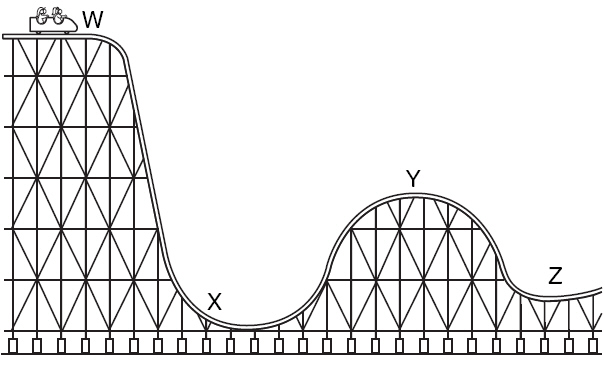
40.
At which point is potential energy greatest?
a)
W
b)
X
c)
Y
d)
Z
41.
What kind of energy is in a rock at the edge of a cliff?
a)
Potential
b)
Kinetic
c)
Both potential and kinetic energy
d)
none of the above
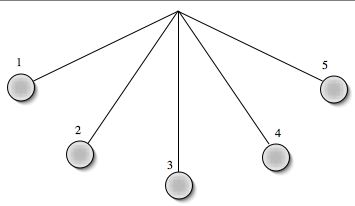
42.
When a pendulum swings, at which point is potential energy at its greatest?
a)
1
b)
2
c)
3
d)
4
43.
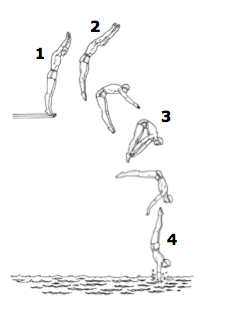
2. The diagram to the right represents a diver’s motion from the top of a high diving board into a pool of water. At what point does the diver have the greatest kinetic energy and the least potential energy?
a)
1
b)
2
c)
3
d)
4
44.

A 70 kg skier is at rest at the top of a hill that is 10 m above the ground. What will their speed be at the bottom? (Hint: PE → KE)

a)

14 m/s

b)

30 m/s

c)

5 m.s

45.

Some safety features are designed to increase the time of a collision because this reduces the maximum force.

a)

True

b)

False

46.

Old cars are safer because they are built like tanks, you could hit a tree and the front end wouldn't crumple.

a)

True

b)

False

47.

Airbags absorb the inertia of your body in a crash by increasing the __________ it takes to slow your body down.

a)

Time

b)

Pressure

c)

Acceleration

d)

Momentum

48.

Headrests protect you from what common injury?

a)

Broken bones

b)

Whiplash

c)

DEATH!

d)

Loss of limb

49.

Crumple zones are designed to deform to absorb forces. What safety feature prevents the area around the people from deforming with the crumple zone?

a)

Airbags

b)

Crumple zone

c)

Seatbelts

d)

Safety Cage

e)

Breaks

50.

How do crumple zones protect us?

a)

They increase the force by increasing the contact time

b)

They decrease the force by decreasing the contact time

c)

They increase the force by decreasing the contact time

d)

They decrease the force by increasing the contact time