
 Worksheets
Periodic Table and Trends Test
Total questions: 42
Worksheet time: 1hrs 3mins
Atomic radius INCREASES when you go (a) a group
Atomic radius DECREASES when
when you go across a row from right to left
when you go down a group
when you go across a row from left to right
when you go across a group from left to right
Ionization energy ________________ as you go DOWN a group
increases
decreases
Which atom has larger ionization energy
aluminum
sulfur
Electron affinity (a) as you go from left to right
This element has the lowest electron affinity
magnesium
sodium
silicon
sulfur
What element is the most electronegative
chlorine
bromine
iodine
astatine
What element is the LEAST electronegative
cadmium (Cd)
antimony (Sb)
Zirconium (Zr)
Strontium (Sr)
What non-metal is the most reactive
iodine
sulfur
oxygen
fluorine
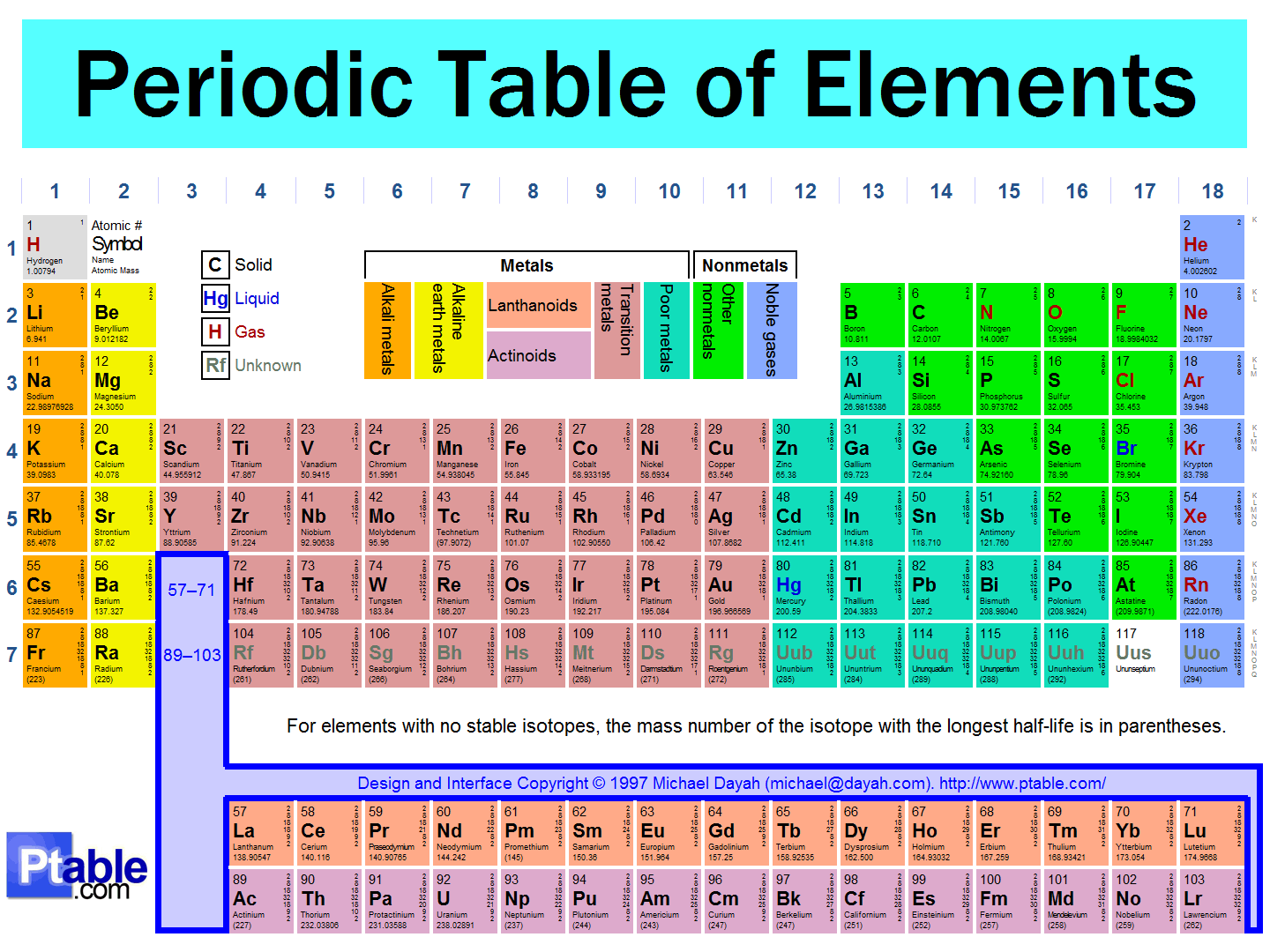
The vertical (up and down) columns in the Periodic Table are called
groups
towers
periods
atomic numbers
The letter, C, is a ... of carbon.
Name
Nickname
Chemical Symbol
Pseudonym
True or False: The reactivity of metals tends to decrease as you move from left to right across the periodic table.
True
False
Name this group: These metals are the most reactive.


Name this group: These metals are the second most reactive.


I am a metal
I am in group 2
I am in period 6
I am…
Mo
Re
S
Ba
I am a nonmetal
I am in period 2
I am in group 16/6A
Ba
Si
Ba
O
Find an element with similar chemical properties to Barium (Ba).
Ca an Ra, because they are in the same group and have similar chemical properties.
Cs and La, b/c they are in the same period number.
Ca and Y, b/c they are 90 degree angle and have similiar properties.
Ionization energy (and electronegativity) __________ from left to right within a period and __________ from top to bottom within a group.
decreases, increases
increases, increases
increases, decreases
stays the same, increases
Vertical columns of elements (these are also known as a "family") - they also have the same number of valence electrons and are known as ________________.
groups
periods
quadrants
rows
Most noble gases have _______ valence electrons.
1
2
7
8

Group 3 elements have ____ electrons in their outermost shell.
1
2
3
4
Which two elements on the periodic table are in the same period?
Sn and Rb
K and Ba
F and Cl
Se and Te
The horizontal rows on the periodic table, which indicate the number of energy levels/orbitals that an atom has, are called ___________.
Periods
Element
Atomic Number
Group
Which element would have the same number of energy levels or orbitals as Zinc?
Cadmium
Krypton
Silver
Tin
Rank the following from lowest ioniziation energy to highest ionization energy: C, P, S, As
C, P, S, As
As, C, P, S
P, S, As, C
C, As, P, S
The valence electrons and energy levels help to determine the ___________ of an element.
conductivity
physical properties
reactivity
texture

Name the group that contains inert (nonreactive) elements. These elements are stable because they have a filled valence shell (eight electrons).
noble gases
halogens
alkali metals
alkaline earth metals
When moving from left to right across a period, the number of protons that will be found in each element's nucleus, ___________________________.
Remains the same
Increases
Decreases
Multiplies by two
Group 2 on the Periodic Table contains the _____________________________. The oxidation number of these elements is _________________.
alkali metals, -2
alkaline earth metals, +2
halogens, +1
noble gases, -3
Electronegativity is...
the ability of an atom to attract/ accept electrons
the ability of an atom to lose electrons
the energy required to remove an electron from an atom
how easy it is to make friends.
What group is Copper found in?
7
7
11
12
What period is Phosphorus found in?
1
2
3
4
What element is found in period 4 group 4?
Titanium
Zirconium
Vanadium
Tungsten

