
 Worksheets
PBS 2.1.2 Vital Signs
Total questions: 20
Worksheet time: 16mins
Match the following tools with the vital sign they collect

Blood Pressure

Temperature

Oxygen Saturation

Lung/breath Sounds

Weight
Match the following tools with what they measure
Spyghmomanometer
Blood Pressure
Thermometer
Temperature
Scale
Weight
Pulse Oximeter
Oxygen Saturation
Stethoscope
Lung/breath sounds
Match the following units to the correct measurements
mm Hg
Blood Pressure
bpm
Pulse or respiratory rate
kg or lbs
Weight
F or C
Temperature
Feet/inches
Height

What is the temperature shown? Type just the number, including the decimal.
(a)
What is the normal heart rate range for adults?
If you are checking a patient's heart rate and you counted 15 beats in 15 seconds, what would her heart rate be in bpm?
(a)
What is the normal respiratory rate for an adult at rest?
What is pulse oximetry?
A method used to measure the oxygen level in the blood
What is a normal range for SpO2?
95% - 99%
What is systolic pressure?
The pressure in your arteries when your heart relaxes to allow the chambers to fill with blood
The pressure in your arteries when your heart contracts to push blood throughout the body
What is diastolic pressure?
The pressure in the arteries when the heart is at rest to allow the chambers to fill with blood
When writing the blood pressure, which goes on top: systolic or diastolic pressure?
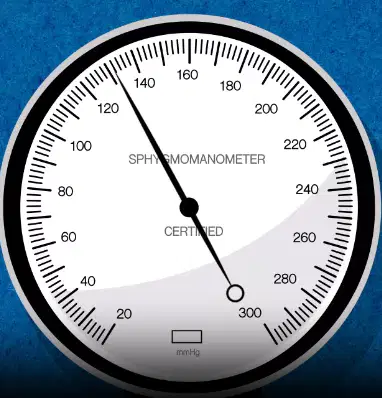
Look at the picture and read the pressure shown (systolic pressure)
132 mmHg
126 mmHg
130 mmHg
150 mmHg
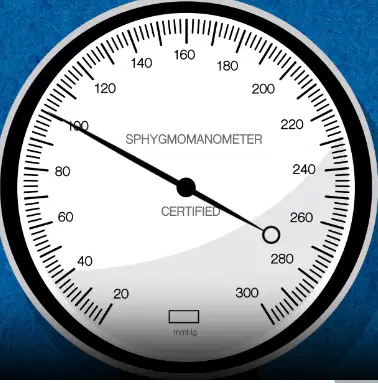
Look at the picture and read the pressure shown (diastolic pressure)
100 mmHg
90 mmHg
110 mmHg
80mmHg

If the first picture is systolic and the second picture is diastolic pressure, what is the patient's blood pressure?
132/100 mmHg
126/100 mmHg
100/126 mmHg
100/132 mmHg
Abnormally high blood pressure is known as:
What is a normal blood pressure for an average adult?

If a patient's weight is 120 lbs and his height is 5 ft. 10 in., calculate his BMI using the following formula provided. Round to the nearest tenth. Note: There are 12 inches in 1 foot.
(a)
Convert 6 feet to inches
(a)
What is 72 squared?
(a)

