
 Worksheets
BIOL-1240 Digestion Ch 34 Pt. 3
Total questions: 25
Worksheet time: 13mins
Name
Class
Date
1.
Which of the following does not correctly pair an animal with its foods source or strategy?
a)
A. Hyenas -- dead animals
b)
B. Baleen whales -- suspended particles
c)
C. Frogs-- other animals
d)
D. Locusts -- other insects
e)
E. Giraffes-- leaves
2.
Which of the following is not a basic nutrient required by all animals?
a)
A. Minerals
b)
B. Lipids
c)
C. Vitamins
d)
D. Proteins
e)
E. Water
3.
The process is enzymatic hydrolysis takes place during:
a)
A. Ingestion
b)
B. Digestion
c)
C. Egestion
d)
D. Elimination
4.
Food that is not digested and absorbed is discharged via:
a)
A. Egestion
b)
B. Ingestion
c)
C. Elimination
d)
D. Excretion
e)
E. More than one above
5.
Which of the following would be considered a primary consumer?
a)
A. Autotroph
b)
B. Carnivore
c)
C. Herbivore
d)
D. Decomposer
e)
E. Scavenger
6.
Bacteria present in the digestive tracts of some herbivores function:
a)
A. Provide bulk to their feces.
b)
B. Produce minerals for their hosts.
c)
C. Detoxify harmful materials found in the food.
d)
D. Digest the waste products from the herbivore diet.
e)
E. Digest the cellulose cell wall of plant cells.
7.
Which of the following statements about a complete digestive system is false?
a)
A. It is characteristics of all invertebrates.
b)
B. It is a tube with two openings.
c)
C. Its regions are specialized to perform specific functions.
d)
D. It is often associated with accessory glands that secrete digestive juices.
e)
E. Food enters the mouth and is eliminated through the anus.
8.
In the process of peristalsis:
a)
A. waves of muscular contractions force food down the digestive tract.
b)
B. chemical digestion of food takes place in the digestive tract.
c)
C. food is discharged from the bodies of unicellular animals.
d)
D. digestion occurs intracellularly within food vacuoles.
e)
E. digestion of food takes place outside the body of an animal.
9.
Saliva performs all of the following functions except:
a)
A. moistening food
b)
B. lubricating food
c)
C. dissolving food for taste
d)
D. starting enzymatic digestion of lipids
e)
E. starting enzymatic digestion of starch
10.
Familiarize yourself with the digestive tissue layers.
a)
Will do!
b)
Will do!
11.
Digestion of complex carbs begins in the:
a)
A. mouth
b)
B. stomach
c)
C. duodenum
d)
D. jejunum
e)
E. large intestine
12.
Which of the following enzymes digests starch?
a)
A. carboxypeptidase
b)
B. amylase
c)
C. trypsin
d)
D. chymotrypsin
e)
E. pepsin
13.
The function of the rugae of the stomach is to:
a)
A. secrete amylase
b)
B. crush the food
c)
C. increase the holding capacity of the stomach
d)
D. mix the food with gastric juices
e)
E. increase the surface area for secretion
14.
When ______ comes in contact with acidic gastric juices, it is converted to_______the man digestive enzyme of the stomach.
a)
A. carboxyamylase; amylase
b)
B. amylase; carboxyamylase
c)
C. pepsin; pepsinogen
d)
D. pepsinogen; pepsin
e)
E. bolus; chyme
15.
Most chemical digestion occurs in the
a)
A. stomach
b)
B. mouth
c)
C. cecum
d)
D. small intestine (specifically duodenum)
e)
E. large intestine (specifically colon)
16.
Which of the following structures contributes to the large surface area f the small intestine?
a)
A. microvilli
b)
B. goblet cells
c)
C. rugae
d)
D. mucosa
e)
E. simple columnar epithelium
17.
The liver performs all of the following functions except:
a)
A. breaking down proteins
b)
B. converting excess glucose to glycogen
c)
C. Secreting bile
d)
D. detoxifying alcohol and other drugs
e)
E. converting amino acids to urea
18.
Bile is:
a)
A. produced in the pancreas and stored in the liver
b)
B. produced in the gallbladder and stored in the duodenum
c)
C. produced in the liver and stored in the gallbladder
d)
D. produced in the liver and stored in the liver
e)
E. produced in the gallbladder and stored in the gallbladder
19.
All of the following are enzymes of the pancreas except:
a)
A. trypsin
b)
B. chymotrypsin
c)
C. pancreatic lipase
d)
D. maltase
e)
E. pancreatic amylase
20.
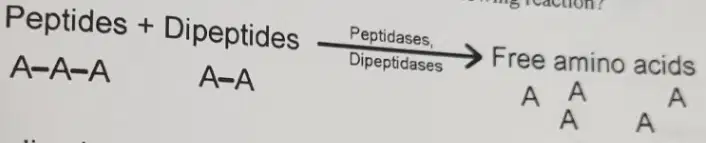
Which of the following statements accurately describes the following reaction?
a)
A. enzymatic digestion of carbohydrates in the mouth by enzymes secreted by the salivary glands
b)
B. enzymatic digestion of proteins in the stomach by the enzyme secreted by the pancreas
c)
C. Enzymatic digestion of lipids in the stomach by enzymes secreted by the pancreas
d)
D. Enzymatic digestion of proteins in the small intestines by enzymes secreted by the small intestines
e)
E. Enzymatic digestion of lipids in the small intestines by enzymes secreted by the pancreas
21.
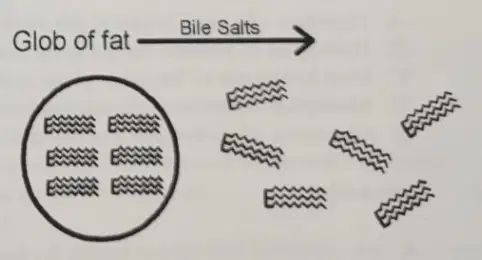
The process illustrated in the accompanying figure is called:
a)
A. peristalsis
b)
B. hydrolysis
c)
C. emulsification
d)
D. proteolysis
e)
E. diffusion
22.
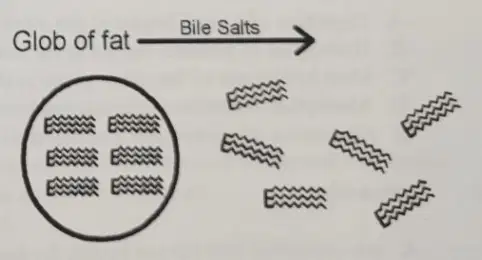
The chemical reaction in the accompanying figure occurs in the:
a)
A. stomach as the result of secretions from the pancreas
b)
B. Small intestines as the result of secretions from the small intestines
c)
C. large intestines as the result of secretion from the small intestines
d)
D. stomach as the result of secretions from the stomach
e)
E. small intestines as the result of the secretions from the liver
23.
Which of the following organs is not considered part of the digestive system?
a)
A. tongue
b)
B. spleen
c)
C. gallbladder
d)
D. pancreas
e)
E. salivary gland
24.
Each villus contains a lacteal, which functions to:
a)
A. absorb the products of lipid digestion
b)
B. aid in the absorption of carbohydrates
c)
C. secrete enzymes to aid in the absorption of fats
d)
D. remove protein from the interstitial fluid
e)
E. remove protein from the interstitial fluid
25.
Which of the following statements is false?
a)
A. digestion of a meal begins in the mouth
b)
B. Hydrolysis of proteins begins in the stomach
c)
C. Most hydrolysis of fats takes place in the stomach
d)
D. Absorption of amino acids takes place in the small intestine
e)
E. Absorption of water takes place in the large intestine.
100 %

