wayground logo

Free Printable Worksheets

Font size

S
M
L
XL
Worksheets

chem prof sI

Total questions: 126

Worksheet time: 3hrs 42mins

Name
Class
Date
1.
Which of the following is an ionic compound:
a)
CH4
b)
I2
c)
LiBr2
d)
CO
2.
Name the following ionic compound: BeCl2
a)
beryllium chlorine
b)
beryllium II chloride
c)
beryllium chloride
d)
beryllium dichloride
3.
name the following ionic compound: NaF
a)
nitrogen fluorine
b)
sodium fluoride
c)
nitrogen fluoride
d)
sodium fluorine
4.
Which of these combinations is an ionic compound made of?
a)
Metal and Metal
b)
Nonmetal and Nonmetal
c)
Metal and Nonmetal
d)
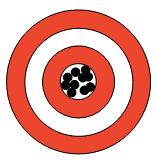
Cation and Cation
5.
What would be the proper chemical formula for combining Al3+ and Cl- :
a)
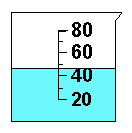
AlCl3
b)
Al3Cl
c)
AlCl
d)
Al3Cl3
6.

N2O

a)

Nitrogen Oxide

b)

Dinotrogen dioxide

c)

Nitrous dioxide

d)

Nitrogen Oxygen

7.

AlCl3

a)

Aluminum dichlorine

b)

Aluminum trichlorine

c)

Monoaluminum chloride

d)

Aluminum chloride

8.
NH4+
a)
nitrogen hydride
b)
ammonium
9.
OH-
a)
hydronium
b)
hydroxide
10.
acetate
a)
C2H3O21-
b)
C3H2O31-
c)
C2H2O31-
d)
C3H3O21-
11.
What is the charge on a chloride ion?
a)
-1
b)
1
c)
+2
d)
+1
12.
Magnesium bromide is an ionic compound with the chemical formula MgBr₂.  What does the "2" tell you?
a)
There are 2 bromide ions for every magnesium ion
b)
Bromide has a 2- charge
c)
Bromide has a 2+ charge
d)
There are 2 magnesium ions to every bromide ion
13.
What is the formula of Sodium oxide?
a)
Na2O
b)
NaO2
c)
Na2O2
d)
Na2O
14.
What is the formula of calcium oxide?
a)
CaO2
b)
CaO
c)
Ca2O
d)
CO
15.
What is the formula for copper(I) sulfate?
a)
CuSO3
b)
CuSO4
c)
Cu2SO3
d)
Cu2SO4
16.
What is the formula for sodium nitrate?
a)
Na3NO
b)
NaNO
c)
Na3NO3
d)
NaNO3
17.
What is the formula for iron(II) carbonate?
a)
Fe2CO3
b)
FeCO3
c)
Fe2CO2
d)
FeCO4
18.
What is the formula for calcium carbonate?
a)
CaCO
b)
CaCO2
c)
CaCO3
d)
Ca3CO3
19.
How do covalent bonds form?
a)
Donating & receiving valence e- between atoms.
b)
Opposite slight charges attract each other between compounds.
c)
Scientists are still not sure how they form.
d)
Sharing valence e- between atoms.
20.
Which of the following is NOT formed by a covalent bond?
a)
K2S
b)
H2O
c)
I2
d)
CO2
21.
Covalent bonds are between...
a)
Metal and Non-metal
b)
Non-metal and Non-metal
c)
Metal and Metal
22.
What is a valence electron?
a)
The sum of neutrons and protons.
b)
The # of electrons in the last shell.
c)
A type of bond.
d)
A popular compound.
23.
Ionic or covalent?
NaBr
a)
Ionic
b)
Covalent
24.
Ionic or covalent?
H2O
a)
Ionic
b)
Covalent
25.
Phosphorous trichloride
a)
PCl3
b)
P3Cl
c)
P3Cl3
d)
PCL
26.
silicon dioxide
a)
SO2
b)
NaO2
c)
SiO2
d)
SiO
27.
phosphorus trichloride
a)
KCl3
b)
PCl3
c)
K3Cl
d)
P3Cl
28.
The name of P₄S₁₀ is
a)
phosphorous sulfide
b)
phosphorus sulfide
c)
tetraphosphorus decasulfide
d)
phosphorus (X) sulfide
29.
The chemical formula of tetraphosphorus heptaoxide is
a)
F₄O₁₀
b)
P₄O7
c)
PO
d)
P₁₀O₄
30.
The chemical formula of dinitrogen textroxide is
a)
Ni₂O₄
b)
NiO
c)
N₂O₄
d)
NiO₂
31.

What is 78.5 rounded to one significant figure?

a)

79

b)

78.5

c)

70

d)

80

32.

Round 0.010229 to four significant figures

a)

1022

b)

1023

c)

0.01023

d)

0.01022

33.

What is 7.555 rounded to two significant figures?

a)

7.6

b)

7.5

c)

70

d)

76

e)

7.60

34.

What is 0.658 rounded to 1 significant figure?

a)

0

b)

0.66

c)

0.7

d)

0.658

35.
Round 1047.78 to three sig figs
a)
104
b)
105
c)
1050
d)
1050.00
36.
How many significant figures does the following number have?
0.00345
a)
6
b)
5
c)
3
d)
Ambiguous: 3,4,5, or 6
37.
How many significant figures does the following number have: 0.00204
a)
6
b)
4
c)
3
d)
2
38.

How many significant figures does the following number have?1.2500 x 10310^3  

a)
5
b)
3
c)

Ambiguous: 3 or 5

d)

7

39.
How many significant figures does the following number have: 100.00210
a)
7
b)
8
c)
10
d)
Ambiguous: 7 or 8
40.
Round 1289 to three significant figures
a)
1290
b)
130
c)
1300
d)
1.29x10³
41.

Which one is rounded correctly for the following equation?

1.987 - 0.48 = ?

a)

1.5

b)

1.51

c)

1.507

d)

2

42.

Which one is rounded to the correct number of significant figures for the following equation?

7520 x 0.021 = 157.92

a)

157.92

b)

157.9

c)

158

d)

160

43.

Which answer is rounded to the correct place for the equation below?

457.1 + 459.32 = 916.42

a)

916.42

b)

916.4

c)

916.0

d)

916

44.

Which answer is rounded to the correct place for the equation below?

487.0 / .0024 = 121750.0

a)

121750.0

b)

121800

c)

122000

d)

120000

45.

How would you write 0.0005 in scientific notation?

a)

50 x 10-5

b)

5 x 10⁻⁴

c)

5 x 10³

d)

.5 x 103

46.

Convert this number into scientific notation:


0.068

a)

6.9 x 10⁶

b)

6.8 x 10⁻⁹

c)

6.8 x 10⁻²

d)

None of the above

47.

Which value is the greatest?

a)

5.0 x 10⁻⁹

b)

5.0 x 10⁻⁴

c)

5.0 x 10⁶

d)

5.0 x 10⁸

48.

What is the correct notation for: 352,300,000

a)

3.0 x 10⁸

b)

0.3523 x 10⁹

c)

352.3 x 10⁶

d)

3.523 x 10⁸

49.

7,000 g = ____ kg

a)

70

b)

700

c)

7

d)

0.07

50.

648 g = ____ mg

a)

6,480

b)

64,800

c)

648,000

d)

64.8

51.

240 cm = ___________ m

a)

2400

b)

24

c)

2.4

d)

0.24

52.
a)

Student A

b)

Student B

c)

Student C

d)

Cannot be determined

53.
This bullseye demonstrates...
a)
High Accuracy & High Precision
b)
High Accuracy & Low Precision
c)
Low Accuracy & High Precision
d)
Low Accuracy & Low Precision
54.

This bullseye demonstrates...

a)

High Accuracy & High Precision

b)

High Accuracy & Low Precision

c)

Low Accuracy & High Precision

d)

Low Accuracy & Low Precision

55.

A student's measured length during a science experiment was 12.00 cm. The actual size was 14.25 cm.


What was the percent error?


*Hint: You now know how to calculate error, and you should know how to calculate a percent, so put the two together to find this answer.

a)

15.79%

b)

18.75%

c)

2.25%

56.

Jessie estimates the weight of her cat to be 8 pounds. The actual weight of the cat was 10 pounds.


What was the percent error?


*Hint: You now know how to calculate error, and you should know how to calculate a percent, so put the two together to find this answer.

a)

15%

b)

20%

c)

25%

d)

30%

57.

Based on the markings of this beaker, what is the estimated volume?

a)

48 mL

b)

48.2 mL

c)

48.25 mL

d)

0.04 L

58.

A set of data are all close in value to each other, but they are not close to the actual value. This set of data can be described as _________________.

a)

precise

b)

accurate

59.

An element with 3 protons in each atom has an atomic number of:

a)

1

b)

2

c)

3

d)

4

60.

An atomic number of 8 means the atom has ________ protons.

a)

7

b)

8

c)

16

d)

88

61.

An element with 12 protons in each atom has an atomic number of:

a)

12

b)

21

c)

2

d)

24

62.

True or false: If the number of protons changes in an atom, it becomes a different element.

a)

True

b)

False

63.

An element has an atomic number of 35. How many protons do the atoms contain?

a)

3

b)

35

c)

70

d)

150

64.

How many protons are in Sodium?

a)

11

b)

22

c)

12

d)

33

65.

How many electrons are in Aluminium?

a)

40

b)

27

c)

13

d)

14

66.

How many neutrons are in Magnesium?

a)

36

b)

12

c)

24

d)

6

67.

How many neutrons are in Phosphorus?

a)

16

b)

15

c)

31

d)

46

68.

How many electrons go in the first shell (ring) ?

a)

6

b)

8

c)

4

d)

2

69.

This is a Bohr Diagram of Aluminum. How many valence electrons does Aluminum have?

a)

3

b)

4

c)

5

70.

How many valence electrons does Lithium (Li) have?

a)

8

b)

1

c)

5

d)

2

71.

How many valence electrons does Bromine (Br) have?

a)

5

b)

6

c)

7

d)

8

72.
What is a valence electron?
a)
an electron that is found in the outermost shell of an atom. 
b)
an electron found in the innermost shell of an atom.
c)
an electron found in the middle shell.
73.

How many electrons can a d sublevel hold?

a)

14

b)

10

c)

2

d)

6

74.

How many orbitals does a d sublevel have?

a)

1

b)

3

c)

5

d)

7

75.

Electrons fill energy levels and sublevels _____ in energy first.

a)

lower

b)

higher

76.

Which periodic table group contains elements that are soft, shiny metals that react with water and must be stored in oil?

a)

Alkali Metals

b)

Alkaline Earth Metals

c)

Metals

d)

Metalloids

77.

______ are salt-producing elements found in group 17 and have 7 valence electrons.

a)

Halogens

b)

Noble Gases

c)

Alkaline Earth Metals

d)

Alkali Metals

78.

_____ are elements that exhibit some properties of metals and some properties of nonmetals.

a)

Metalloids

b)

Alkali Metals

c)

Alkaline Earth Metals

d)

Halogens

79.

________ are not shiny and are poor conductors of electricity.

a)

Nonmetals

b)

Metals

c)

Metalloids

d)

Halogens

80.

After one ____________ of a radioactive element, half of the original radioactive material remains.

a)

half-life

b)

cycle

c)

decay

81.
What decay product has a mass number of 4?
a)
alpha
b)
beta
c)
gamma
d)
none of them
82.

What type of radiation is the most penetrating?

a)

alpha

b)

beta

c)

gamma

d)

none of them

83.

If some Protactinium (Pa) decays by beta it would become...


[The large number at the top is the atomic number]

a)

Actinium (Ac)

b)

Thorium( (Th)

c)

Uranium (U)

d)

Neptunium (Np)

e)

Plutonium (Pu)

84.

What do these isotopes of carbon all have in common?


126C, 136C, 146C

a)

they all have the same number of neutrons & mass number

b)

they all have the same atomic number and neutrons

c)

they all have the same atomic number and electrons

d)

they all have the same number of protons, atomic number, and mass number

85.
Positively charged particles that consist of two protons and two neutrons are called
a)
alpha particles
b)
beta particles
c)
gamma rays
d)
neutron emissions
86.

If we start off with element 5024X, and alpha decay occurs we get another element [Y] that looks like....

a)

5022Y

b)

4622Y

c)

4820Y

d)

5426Y

87.

Identify the missing substance in each of the following nuclear reactions.

_____→13756 Ba + 0−1B

a)

13755Ba

b)

13757La

c)

13856Ba

d)

13755Cs

88.
After the third half-life, how much of the sample is left?
a)
1/2
b)
1/3
c)
1/16
d)
1/8
89.
If 10 mg of iodine 131 is given to a patient, how much is left after 24 days? The half-life of iodine-131 is 8 days.
a)
1.25mg
b)
1.25g
c)
10g
d)
10mg
90.
The half-life of strontium-90 is 25 years. How much strontium-90 will remain after 100 years if the initial amount is 4.0 g?
a)
3.0g
b)
0.25mg
c)
0.3g
d)
0.25g
91.
If the half-life of uranium-232 is 70 years, how many half-lives will it take for 10 g of it to be reduced to 1.25 g?
a)
1 half-life
b)
2 half-lives
c)
3 half-lives
d)
4 half-lives
92.

According to the Octet Rule, atoms of elements react with each other in order to attain ____ electrons in their outermost energy level or shell.

a)

2

b)

4

c)

6

d)

8

e)

10

93.
Which electron configuration belongs to Chlorine (Cl)?
a)
1s2s2p3s3p5
b)
1s2s2p3s3p6
c)
1s2s2p3s3p7
94.
What atom matches this electron configuration?
1s22s22p63s23p64s23d10
a)

Zinc (Zn)

b)

Copper (Cu)

c)

Nickel (Ni)

d)

Germanium (Ge)

95.
What atom matches this electron configuration?
1s22s22p63s2
a)

Neon (Ne)

b)

Magnesium (Mg)

c)

Aluminum (Al)

d)

Potassium (K)

96.
What is the noble gas configuration for beryllium?
a)
[He]1s2
b)
[He]2s2
c)
[Li]2s1
d)
[Li]2s2
97.
What is the noble gas configuration for boron?
a)
[He]1s22s2
b)
[He]2s22p2
c)
[He]2s22p1
d)
[Li]2s22p1
98.

Who arranged the known elements into horizontal rows of increasing atomic mass leaving gaps for as yet undiscovered elements?

a)

Mendeleev

b)

Meyer

c)

Newlands

d)

Moseley

99.
Who arranged the first periodic table.
a)
Mosely
b)
Einstein
c)
Mendeleev
d)
Bohr
100.

Cations

a)

Gain electrons, has an overall positive charge

b)

Lose electrons, has an overall positive charge

c)

Lose electrons, has an overall negative charge

d)

Gain electrons, has an overall negative charge

101.

Anions

a)

Gain electrons, has an overall positive charge

b)

Lose electrons, has an overall positive charge

c)

Lose electrons, has an overall negative charge

d)

Gain electrons, has an overall negative charge

102.

Which of the following is an anion?

a)

Lithium

b)

Magnesium

c)

Iodide

d)

Silver

103.

A Beryllium atom that has lost 2 electrons would look like

a)

Be2+

b)

B2-

c)

B2+

d)

Be2-

104.

The cation Rb+ has

a)

Had nothing happen to it

b)

Gained 1 electron

c)

Lost 1 electron

d)

Become negative

105.
Solve this equation for alpha decay.
20985At = ___ + 42He
a)
20583Bi
b)
20986Rn
c)
20781Tl
d)
20885At
106.
Balance the following equation:
146C --> 0-1e + ________
a)
145B
b)
146C
c)
147N
d)
42He
107.

Which atom has the largest atomic radius?

a)

potassium

b)

rubidium

c)

francium

d)

cesium

108.
As you move down the periodic table atoms get bigger.  This is because ____________.
a)
The atoms have more mass.
b)
The atoms have more protons.
c)
The atoms have more energy levels
d)
The atoms have more nuetrons
109.
As you move across the periodic table atoms tend to get smaller because, ______________.
a)
the atoms have more mass.
b)
the atoms have less mass
c)
the atoms have more protons.
d)
the atoms have less electrons.
110.
The atom with the largest atomic radius in Group 18 is - 
a)
Ar
b)
He
c)
Kr
d)
Rn
111.
Which has the greater EN: 
H or F?
a)
H
b)
F
112.
Put these in increasing order:
C, H, and O
a)
H < C < O
b)
H < O < C
c)
O < C < H
d)
C < H < O
113.
Electronegativity is...
a)
how good an atom is at attracting electrons
b)
the ability of an atom to lose electrons
c)
the energy required to remove an electron from a specific atom
d)
how easy it is to make friends. 
114.
The element with the largest electronegativity in the halogens is - 
a)
At
b)
F
c)
Cl
d)
Br
115.
How many Valence Electrons are on Oxygen
a)
2
b)
7
c)
6
d)
1
116.
Which of the following is a Diatomic Molecule 
a)
K2
b)
C2
c)
S2
d)
N2
117.
A polar bond is one that
a)
Has an electronegativity difference greater than 0.7
b)
Has an electronegativity difference greater than 0.5
c)
Has an electronegativity difference less that 0.5
d)
Has an electronegativity difference less than 0.7
118.
Which of these would be covalently bonded
a)
Fr and K
b)
Sc and O 
c)
F and Cl
d)
He and Pt
119.
What type of bond forms when 2 or more electrons are SHARED?
a)
Covalent bond
b)
Incomplete bond
c)
Ionic bond
d)
Metallic bond
120.
Discrete covalent bonds are between _______ and ________. 
a)
metal and nonmetal 
b)
metal and metal
c)
nonmetal and nonmetal 
121.
Ionic bonds _____ dissolve in polar solvents. 
a)
will
b)
will not 
c)
might 
d)
I don't know
122.

Has a high melting point and boiling point

a)

ionic compound

b)

colalent molecule

c)

nonmetal

d)

noble gases

123.

Involves the transfer of electrons

a)

ionic bond

b)

covalent bond

c)

james bond

d)

neutron bond

124.

___ or "bright-line" spectra can be used to study the elemental composition of stars.

a)

Absorption

b)

Dark

c)

Continuous

d)

Continuous

125.

Each element on the periodic table can be identified by its

a)

classification as a solid, liquid or gas.

b)

location on the table.

c)

ability to react to form compounds.

d)

unique spectral "fingerprint."

126.

Emission spectra emitted by an element (or compound) will produce ___ through a spectroscope.

a)

bright lines

b)

a continuous rainbow

c)

dark lines

d)

white light