wayground logo

Free Printable Worksheets

Font size

S
M
L
XL
Worksheets

Chemistry Semester One Exam-BHS

Total questions: 125

Worksheet time: 3hrs 56mins

Name
Class
Date
1.

The amount of matter in a sample is:

a)

density.

b)

weight.

c)

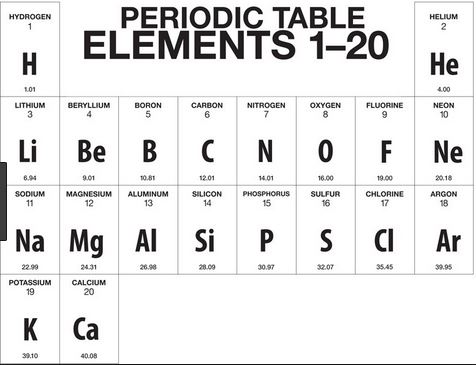
volume.

d)

mass.

2.

A solid substance is

a)

always frozen regardless of kinetic energy

b)

is a crystal lattice

c)

maintains its shape at constant temperature

d)

always losing particles regardless of its container.

3.
Write this number in standard form: 2.34 x 10³
a)
2,340
b)
23,400
c)
23.40
d)
2.340
4.
How many significant figures in the number: 98,401
a)
4
b)
5
c)
3
d)
2
5.
If you have 15 kilograms, how many grams do you have? 
a)
.0015 g
b)
15 g
c)
1,500 g
d)
15,000 g
6.

In a controlled experiment, which group does NOT receive the independent variable and allows the comparison of results?

a)

control group

b)

experimental group

c)

dependent group

d)

variable group

7.

You measured 32.3 but your teacher said you should have got 35.0. What was your percent error?

a)

7.7%

b)

1.2%

c)

15.8%

d)

25.4%

8.

Multiply and round to the correct number of sig figs:

23.22 x 8.1

a)

188.082

b)

188

c)

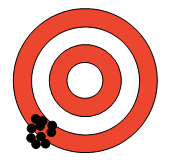
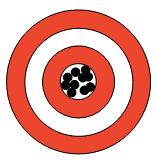
190

d)

190.0

9.

Things will float on water if they are...

a)

more dense

b)

less dense

c)

hotter

d)

colder

10.

This relationship is...

a)

directly proportional

b)

indirectly proportional

11.

The smallest form of an element is a(n)...

a)

atom

b)

compound

c)

molecule

d)

formula unit

12.

Which subatomic particle is equal to the atomic number?

a)

proton

b)

neutron

c)

electron

d)

valence electron

13.

The mass number will equal

a)

p + e

b)

p - n

c)

n + p

d)

n + e

14.

Which particle is not included in the mass number?

a)

proton

b)

neutron

c)

electron

d)

nucleus

15.

An atom has 11 protons, 12 neutrons, and 10 electrons. What is its atomic number?

a)

11

b)

23

c)

1-

d)

1+

16.

12C and 14C are both carbon, but have different masses. They are...

a)

isotopes

b)

polyatomic

c)

resonance

d)

ions

17.

Trail mix is a(n)...

a)

element

b)

compound

c)

homogeneous mixture

d)

heterogeneous mixture

18.

How many electrons can the 3rd shell hold?

a)

2

b)

8

c)

18

d)

32

19.

Which ion would have 10 electrons?

a)

S2-

b)

C

c)

Na 1+

d)

Br 1-

20.

Which would be found in a neutral iron atom?

a)

24 electrons

b)

26 electrons

c)

30 electrons

d)

56 electrons

21.

Which element is in period 3, group 2?

a)

Mg

b)

Y

c)

B

d)

Li

22.

Which element has 6 valence electrons?

a)

C

b)

O

c)

N

d)

Ne

23.

According to the octet rule, most atoms want 8...

a)

valence electrons

b)

orbitals

c)

neutrons

d)

energy levels

24.

Dots in a Lewis structure represent...

a)

valence electrons

b)

atomic charge

c)

atomic number

d)

energy levels

25.

An atom has 10 protons, 15 neutrons and 10 electrons what is its mass number.

a)

10

b)

20

c)

25

d)

35

26.

What is the atomic number of the atom pictured?

a)

9

b)

8

c)

18

d)

19

27.

Which of the following determines the identity of an element?

a)

number of protons

b)

number of neutrons

c)

atomic mass

d)

number of shells

28.

Elements which are shiny, conduct electricity and heat are called

a)

metal

b)

metalloid

c)

nonmetal

d)

nonexistent

29.

A neutron has a charge of

a)

+2

b)

+1

c)

-1

d)

no charge

30.

How are elements ordered on the Periodic Table?

a)

Alphabetical Order

b)

By their atomic mass.

c)

By their color.

d)

By their atomic number.

31.

Rows on the period table are called _____ while columns are called _____.

a)

groups, families

b)

periods, groups

c)

groups, periods

d)

families, groups

32.

Metals generally have the following properties EXCEPT for being:

a)

Shiny

b)

Malleable

c)

Non-conductors

d)

Ductile

33.

Nonmetals do NOT have which of the following characteristics:

a)

Shiny

b)

Brittle

c)

Many are gasses

d)

Good insulators

34.

Who first came up with the idea of atoms?

a)

Democritus

b)

Aristotle

c)

John Dalton

d)

JJ Thomson

35.

What are the four parts of Dalton's Atomic Theory?

(select 4)

a)

Atoms are Tiny, Indivisible particles

b)

Atoms of one element are all the same

c)

Atoms of different elements are different

d)

Compounds form by combining atoms

e)

Atoms of the opposite force attract each other

36.

Who came up with the theory that Negative electrons

are spread through a positive sphere?

a)

JJ Thomson

b)

Ernest Rutherford

c)

James Chadwick

d)

Niels Bohr

37.

Who discovered the Electron?

a)

JJ Thomson

b)

Ernest Rutherford

c)

Erwin Schrodinger

d)

Niels Bohr

38.

Who came up with the theory that the atom had a

dense, positively charged Nucleus surrounded

by electrons?

a)

Ernest Rutherford

b)

JJ Thomson

c)

Erwin Schrodinger

d)

James Chadwick

39.

Who discovered the Nucleus?

a)

Ernest Rutherford

b)

JJ Thomson

c)

John Dalton

d)

Democritus

40.

Who came up with the theory that electrons travel in specific

circular orbits around the nucleus corresponding to discrete energy levels?

a)

Niels Bohr

b)

James Chadwick

c)

Erwin Schrodinger

d)

John Dalton

41.

Who came up with the theory of a neutral particle is

present in the nucleus of the atom?

a)

James Chadwick

b)

Niels Bohr

c)

JJ Thomson

d)

Erwin Schrodinger

42.

Who discovered the Neutron?

a)

James Chadwick

b)

John Dalton

c)

Aristotle

d)

Democritus

43.

Who created this model?

Plum Pudding Model

a)

JJ Thomson

b)

Ernest Rutherford

c)

John Dalton

d)

James Chadwick

44.

Who used the Cathode Ray Tube?

a)

JJ Thomson

b)

Ernest Rutherford

c)

Erwin Schrodinger

d)

Niels Bohr

45.

Who used the Gold Foil Experiment?

a)

Ernest Rutherford

b)

Democritus

c)

Erwin Schrodinger

d)

Niels Bohr

46.

Who created this model?

Planetary Model

a)

Niels Bohr

b)

James Chadwick

c)

John Dalton

d)

JJ Thomson

47.

Who created this model?

Neutron Model

a)

James Chadwick

b)

Erwin Schrodinger

c)

Ernest Rutherford

d)

John Dalton

48.

Who created this model?

Quantum Mechanical Model

a)

Erwin Schrodinger

b)

James Chadwick

c)

JJ Thomson

d)

Ernest Rutherford

49.

Which of the following shows the correct order of Atomic Theory Timeline

a)

Rutherford, Bohr, Dalton, Democritus, Thomson

b)

Bohr, Democritus, Thomson, Rutherford, Dalton

c)

Dalton, Thomson, Rutherford, Bohr, Democritus

d)

Democritus, Dalton, Thomson, Rutherford, Bohr

50.

What did Rutherford discover in his experiment?

a)

nucleus

b)

electrons

c)

neutrons

d)

protons

51.
Ernest Rutherford discovered that atoms were mostly _________________. 
a)
negatively charged
b)
positively charged
c)
electrons
d)
empty space. 
52.

Which element is this?

a)

Nickel

b)

Neon

c)

Sodium

d)

Nitrogen

53.

Name this element.

a)

Argon

b)

Chlorine

c)

Aluminum

d)

Boron

54.

What is the atomic number of this atom?

a)

2

b)

4

c)

6

d)

8

55.

How many valence electrons?

a)

2

b)

3

c)

4

d)

5

56.
How many electrons should Nitrogen have around its Lewis dot model?
a)
1
b)
3
c)
4
d)
5
57.
How many electrons should Flourine have around its Lewis dot model?
a)
5
b)
6
c)
7
d)
8
58.

How many valence electrons does Magnesium Have?

a)

1 Valence electron

b)

2 Valence electron

c)

3 Valence electron

d)

4 Valence electron

e)

5 Valence electron

59.

How many valence electrons does Phosphorus Have?

a)

1 Valence electron

b)

2 Valence electron

c)

3 Valence electron

d)

4 Valence electron

e)

5 Valence electron

60.
24.1% of all the isotopes of a an element have a mass of 75.23 amu, 48.7% have a mass of 74.61 amu, and 27.2% have a mass of 75.20 amu.
What is the average mass of this element?
a)
74.92 amu
b)
24.97 amu
c)
75.01 amu
d)
74.51 amu
61.

Compute the average atomic mass for this element.

a)
27.977
b)
28.09
c)
28.976
d)
The average mass cannot be determined from provided information.
62.
An element has two naturally occurring isotopes. One is 10.013 amu and is 19.9% abundant. The other is 11.01 amu and is 80.1% abundant. What is the average atomic mass? What element is it?
a)
9.012, Beryllium
b)
12.011, Carbon
c)
6.941, Lithium
d)
10.812, Boron
63.

Allison discovered that a toy car had a mass of 14.0g and volume of 7.0mL. What is the density of the toy car?

a)

28 g/mL

b)

.02 g/mL

c)

200 g/mL

d)

2.0 g/mL

64.

What is the volume of a block of wood that has a mass of 27g if the density is 3 g/cm3?

a)

9000 cm3

b)

9.0 g

c)

9.0 cm3

d)

.09 cm3

65.

A student has a sample of Aluminum that has a volume of 10cm3. Aluminum has a density of 2.7g/cm3. What is the mass of the sample?

a)

270 g

b)

.27 g

c)

27.0 g

d)

27.0 g/mL

66.
Convert 17 m to cm:
a)
0.17 cm
b)
0.017 cm
c)
1,700 cm
d)
170 cm
67.
Convert 8 kilometers to meters
a)
800 m
b)
80,000 m
c)
8,000 m
d)
.008 m
68.
Convert 5 cm to mm:
a)
5,000mm
b)
0.5 mm
c)
0.05 mm
d)
50 mm
69.
1000 grams = _____ kilograms
a)
0.0001
b)
1,000,000
c)
10
d)
1
70.

How many centimeters are in an inch?

a)

2.54 inches

b)

2.54 cm

c)

12 inches

d)

10 cm

71.

What does the prefix "Mega-" represent?

a)

1,000,000

b)

1/1,000,000

c)

10,000,000

d)

100,000

72.

John is conducting an experiment that lasts for 565,900 seconds. How many days does his experiment last?

a)

4.500 days

b)

5.500 days

c)

6.500 days

d)

7.500 days

73.

Convert 3.5 gallons into cups. (1gal = 16cups)

a)

56 cups

b)

0.21875 cups

c)

19.5 cups

d)

48 cups

74.
The waiting time to ride a roller coaster is 20 minutes when 150 people are in line. How long is the waiting time when 240 people are in line?
a)
32 People
b)
32 Min.
c)
12.5 Min.
d)
12.5 People
75.
How many significant figures: 0.012 km
a)
1
b)
2
c)
3
d)
4
76.
How many significant figures: 153.0 mL
a)
1
b)
2
c)
3
d)
4
77.
How many significant figures: 1000 mL
a)
1
b)
2
c)
3
d)
4
78.
Solve and give your answer with the correct number of significant figures
24.28 + 12.5
a)
3.687 x 101
b)
36.8
c)
37
d)
3.70x101
79.
How many significant figures does the following number have: 0.002040
a)
6
b)
4
c)
3
d)
2
80.
calculate the following to the correct number of sig figs.
0.00401  x  2.00  x  501
a)
4.02
b)
4
c)
4.0
d)
4.0180
81.
Solve and give your answer with the correct number of significant figures
24.28 + 12.5
a)
3.687 x 101
b)
36.8
c)
37
d)
3.70x101
82.
How would you write 564,000,000 in scientific notation?
a)
5.64 x 10⁻⁷
b)
5.64 x 10⁶
c)
5.64 x 10⁸
d)
56.4 x 10⁷
83.
How would you write 0.0005 in scientific notation?
a)
50 x 105
b)
5 x 10⁻⁴
c)
5 x 10⁻³
d)
.5 x 103
84.
Which of the following is correct scientific notation?
a)
20.35 x 10⁴
b)
.2035 x 104
c)
2035 4
d)
2.035 x10⁴
85.
Convert to standard notation:
2.4 x 10⁻³ 
a)
2400
b)
0.24
c)
0.024
d)
0.0024
86.
What is scientific notation?
a)
A long way to write really short  numbers
b)
A short way to write really long numbers
c)
I don't know...
d)
None of the above
87.
Multiply:
(1.4 x 10⁵)(2 x 10⁷)
a)
2.8 x 1035
b)
2.4 x 10¹²
c)
2.8 x 10¹²
88.
Divide:
5.2 x 10¹¹ ÷  2 x 10⁵
a)
3.2 x 10⁶
b)
2.6 x 10⁶
c)
2.6 x 10¹⁶
89.

Add

(3.4 x 10⁵) + (1.2 x 10⁴)

a)

3.52 x 10⁵

b)

4.6 x 10⁹

c)

1.54 x 10⁵

90.

Subtract

(2 x 10³) - (1.9 x 10²)

a)

1.81 x 10⁵

b)

1.81 x 10³

c)

1.81 x 10⁶

d)

1.81 x 10⁴

91.
How would you write 4.3756 x 10in standard form?
a)
437,560,000
b)
0.00043756
c)
43,756
d)
4,3756
92.
It is a measure of how close measurements come to each other when they are made in the same way
a)
Accuracy
b)
Precision
c)
Error
d)
Extrapolation
93.

How close a measurement is to the true value is called..

a)

Accuracy

b)

Precision

c)

Significant

d)

Estimate

94.
This bullseye demonstrates...
a)
High Accuracy & High Precision
b)
High Accuracy & Low Precision
c)
Low Accuracy & High Precision
d)
Low Accuracy & Low Precision
95.
?
a)
High Accuracy & High Precision
b)
High Accuracy & Low Precision
c)
Low Accuracy & High Precision
d)
Low Accuracy & Low Precision
96.
Describe the accuracy and precision of the image
a)
Accurate and Precise
b)
Accurate and not precise
c)
Not Accurate and Precise
d)
not accurate and not precise
97.
Jessie estimates the weight of her cat to be 8 pounds.  The actual weight of the cat was 10 pounds.  Find the percent error.  
a)
15%
b)
20%
c)
25%
d)
30%
98.

In a lab, it is best to be...

a)

accurate

b)

precise

c)

accurate and precise

d)

neither accurate nor precise

99.

The deer population is estimated to be 17,600 in northern Illinois, but an actual count was 21,300. What is the percent error?

a)

21%

b)

17.37%

c)

17.4%

d)

21.02%

100.
What is matter?
a)
Anything that has mass and volume
b)
The shape of an object
c)
How much an object weighs
d)
The pull of objects on one another
101.
Which state of matter has a definite shape?
a)
Gas
b)
Solid
c)
Liquid
d)
Plasma
102.
Liquids....
a)
have a definite shape
b)
are always clear
c)
take the shape of their container
d)
are not matter
103.
What are the three states of matter?
a)
 oxygen, hydrogen, nitrogen
B) solid, liquid, gas
C) earth, wind, fire
D) electron, proton, neutron

b)
A) oxygen, hydrogen, nitrogen
electron, proton, neutron
c)
earth, wind, fire
d)
solid, liquid, gas
104.
Evaporation is
a)
Gas changing to a liquid
b)
Solid changing to a liquid
c)
Liquid changing to a solid
d)
Liquid changing to a gas
105.
A solid changing to a liquid is...
a)
melting
b)
freezing
c)
condensing
d)
evaporating
106.
Liquid water turning into an ice cube is an example of.....
a)
melting
b)
freezing
c)
condensing
d)
evaporating
107.
Water vapor cooling and turning into water droplets/steam is an example of......
a)
Condensation
b)
Melting
c)
Freezing
d)
Evaporation
108.
tightly packed packed particles that keep their shape
a)
solid
b)
liquid
c)
gas
109.
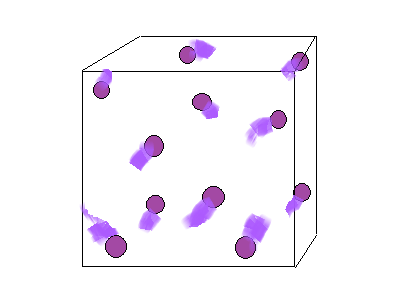
What state of matter does this picture show?
a)
Liquid
b)
Gas
c)
Solid
d)
Matter
110.
What term describes a solid changing to a gas?
a)
Deposition
b)
Sublimation
c)
Evaporation
d)
Freezing
111.
Is wood burning a physical or chemical change?
a)
Physical 
b)
Chemical
112.
Is milk going sour a physical or chemical change?
a)
Physical 
b)
Chemical
113.
Is Gatorade powder dissolving in water physical or chemical change?
a)
Physical 
b)
Chemical
114.
Is sharpening a pencil a physical or chemical change?
a)
Physical 
b)
Chemical
115.
Is copper tarnishing a physical or chemical change?
a)
Physical 
b)
Chemical
116.

Which of the following is not a clue that a chemical reaction has taken place?

a)

Changing size

b)

Changing color

c)

A gas being formed

d)

Formation of a precipitate

117.
A solid piece of chocolate is melted and changed to liquid form. Which property of the piece of chocolate will remain the same?
a)
Texture
b)
Temperature
c)
Shape
d)
 Mass
118.
Fizzing, foaming, and burning are all examples of
a)
Chemical change
b)
Physical change
119.
Photosynthesis is an example of a
a)
physical change
b)
chemical change
120.
Dissolving sugar in water is an example of a 
a)
physical change
b)
chemical change
121.

the study of the composition (what it is made of) and the structure (how it is organized) of MATTER and the CHANGES matter undergoes.

a)

Biology

b)

Chemistry

c)

Physics

d)

Organic Chemistry

122.

Measure of Earth’s Gravitational Pull for Matter

a)

mass

b)

weight

c)

matter

123.

Measure of the Quantity of Matter.

a)

mass

b)

volume

c)

weight

124.

Q1. What is an element?

a)

An element is an atom and two atoms

b)

An element is one or more atoms of the same kind

c)

An element is more than one of different kinds

125.
Using the picture, which what must be true about Liquid A when compared to liquid C?
a)
Liquid A is denser than Liquid C
b)
Liquid C is denser than Liquid A
c)
Liquid C is less dense than Liquid A
d)
They have the same density