
 Worksheets
Grade 8 Review Quiz -Unit 2
Total questions: 35
Worksheet time: 18mins
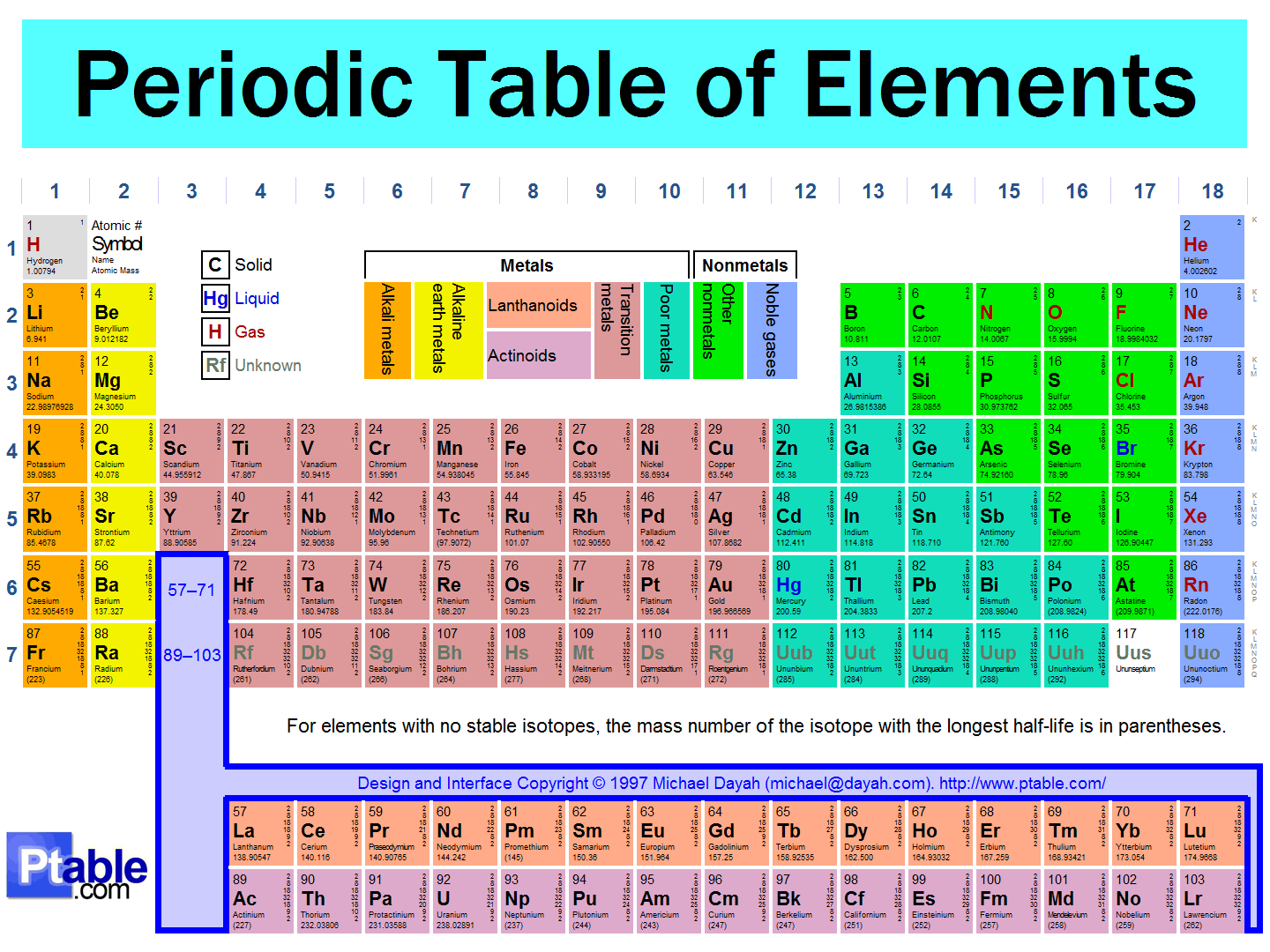
What is the atomic number of carbon?
20
12
6
30
What is the chemical symbol for gold?
Fe
Ag
Hg
Au
What is the process of a substance changing from a solid to a gas without passing through the liquid phase called?
sublimation
vaporization
condensation
melting
What is the chemical name for table salt?
Chlorine sodium
Sodium chlorate
Saltium chloride
Sodium chloride
What is the lightest element in the periodic table?
Gold
Carbon
Hydrogen
Oxygen
What is the chemical symbol for iron?
Io
Fe
In
Ir
What is the process of a substance changing from a gas to a liquid called?
Solidification
Evaporation
Condensation
Sublimation

The table shows the pH of several solutions. Which solution is the most acidic?
vinegar
milk
water
bleach
Zn(OH)2 is an example of a...
acid
base
salt
water
Four substances were tested for pH, lemon juice (pH 2), baking soda (pH 9), bleach (pH 12), and milk (pH 6). Which of the following correctly lists the substances from most basic to acidic?
lemon juice, milk, baking soda, bleach
bleach, baking soda, milk, lemon juice
milk, lemon juice, baking soda, bleach
baking soda, bleach, lemon juice, milk
Which of these is a property of acidic solutions?
they taste sour
they feel slippery
they are in many cleaning products
they taste bitter
Which of the following statements is true concerning acids and bases?
acids and bases don't react with each other
acids mixed with bases neutralize each other
acids mixed with bases make stronger bases
acids mixed with bases make stronger acids
Neutral solutions have a pH of:
0
1
7
14

What element is represented in this Bohr Model?
Carbon
Hydrogen
Aluminum
Lithium


How many outer electrons does Carbon have?
4
5
6
7
Covalent bonds are formed when_____________.
electrons are transferred
electrons are shared
electrons vanish
protons absorb electrons

Which of the following is the correct Lewis dot structure for the molecule fluorine (F₂)?
A
B
C
D
Why do all bonds form?
so the number of protons equals the number of electrons
so an atom can become unstable
to fill the outermost energy level
When atoms bond together, a _________ is formed.
Mixture
Compound
Pair
Solution
Covalent bonds form between
1. Metal - Non-metal
2. Non-metal - Non-metal
3. Metal - Metalloid
4. Non-metal - Metalloid
1 and 2
2 and 3
3 and 4
2 and 4
In ionic bonds, electrons are
Gained or lost
Shared
Mixed randomly
Negatively charged
Which bond has HIGH melting and boiling point?
Covalent
Ionic
Chemical
James
Solutions are made up of...?
Solutes and insolubles
Solubles and solutes
Solutes and solvents
Solubles and solvents
In a solution of saltwater, what is the solute?
Water
Saltwater
Salt
There is no solute, it is insoluble
What are the three types of mixtures?
Suspension, colloid and solution
Solution, solute and solvent
Colloid, insoluble and soluble
Distillate, colloid and suspension

Name the separation technique
Centrifuge
Bunsen burner
Distillation
Evaporation

