Wayground logo

Free Printable Worksheets

Font size

S
M
L
XL
Worksheets

Ionic Bond

Total questions: 60

Worksheet time: 1hrs 9mins

Name
Class
Date
1.

What is the correct formula for potassium oxide?

a)

KO2

b)

KO

c)

K2O

d)

OK2

2.

What is the correct name for SrF2?

a)

fluoride strontium

b)

strontium fluorine

c)

strontium diflluoride

d)

strontium fluoride

3.

What is the correct name for VBr3?

a)

vanadium(III) bromide

b)

vanadium bromide

c)

vanadium(III) bromate

d)

vanadium tribromide

4.

What is the correct name for CrO?

a)

chromium monoxide

b)

chromium(I) oxide

c)

chromium(II) oxide

d)

chromium oxide

5.

What is the formula for copper(II) phosphide?

a)

Cu2P3

b)

Cu3P2

c)

Cu3(PO4)2

d)

Cu2P

6.

What is the correct name for Zn(CN)2?

a)

zinc cyanide

b)

zinc dicyanide

c)

zinc carbide

d)

zinc(I) cyanide

7.

What is the correct name for (NH4)2CO3?

a)

diammonium carbonate

b)

nitrogen hydrogen carbon oxide

c)

ammonium carbonate

d)

ammonium carbide

8.

What is the correct name for Al2(SO4)3?

a)

aluminum(II) sulfate

b)

dialuminum trisulfate

c)

aluminum sulfide

d)

aluminum sulfate

9.

What is the correct formula for iron(III) permanganate?

a)

FeMnO4

b)

Fe(MnO4)3

c)

Fe3MnO4

d)

FeMn3O12

10.

What is the correct name for NiSO3?

a)

nickel(I) sulfite

b)

nickel(II) sulfite

c)

nickel(II) sulfate

d)

nickel(I) sulfate

11.
Sliver Phosphide
a)
Ag3P
b)
Ag3PO4
c)
Ag3PO3
d)
AgP
12.
Li2Cr2O7
a)
Lithium Dichromate
b)
Lithium Chromate
c)
Dilithium Dichromate
d)
Dilithium Dichromium Heptoxide
13.
Cu3PO4
a)
Copper I Phosphate
b)
Copper II Phosphate
c)
Copper Phosphide
d)
Copper I Phosphite
14.
What is the charge of Ni in NiBr3?
a)
+2
b)
+3
c)
-3
d)
+6
15.
The roman numeral in a compound name indicates ___________________.
a)
the number of metal ions
b)
the charge of the metal ion
c)
nothing
d)
the number of total ions
16.
Magnesium ion would take a charge of
a)
1+
b)
2+
c)
3+
d)
0
17.
In the compound TiO2, titanium has a charge of
a)
4+
b)
2+
c)
2-
d)
4-
18.
What is an ionic bond?
a)
electrostatic force of attraction that binds oppositely charged ions.
b)
electrostatic force of attraction that binds same charged ions.
19.
A(n) _________ is an ion with a positive (+) charge.
a)
anion
b)
cation
c)
ion
d)
solute
20.
What is the ionic compound formed between LI and N?
a)
Li3N
b)
Li2N2
c)
Li3N2
d)
LiN3
21.
What is the ionic compound formed between Ca and Br?
a)
CaBr
b)
CaBr2
c)
Ca2Br
d)
Ca2Br
22.

What is the correct name for SrF2?

a)

fluoride strontium

b)

strontium fluorine

c)

strontium diflluoride

d)

strontium fluoride

23.

What is the correct name for VBr3?

a)

vanadium(III) bromide

b)

vanadium bromide

c)

vanadium(III) bromate

d)

vanadium tribromide

24.

What is the correct name for CrO?

a)

chromium monoxide

b)

chromium(I) oxide

c)

chromium(II) oxide

d)

chromium oxide

25.

What is the formula for copper(II) phosphide?

a)

Cu2P3

b)

Cu3P2

c)

Cu3(PO4)2

d)

Cu2P

26.

What is the correct name for Zn(CN)2?

a)

zinc cyanide

b)

zinc dicyanide

c)

zinc carbide

d)

zinc(I) cyanide

27.

What is the correct name for (NH4)2CO3?

a)

diammonium carbonate

b)

nitrogen hydrogen carbon oxide

c)

ammonium carbonate

d)

ammonium carbide

28.

What is the correct name for Al2(SO4)3?

a)

aluminum(II) sulfate

b)

dialuminum trisulfate

c)

aluminum sulfide

d)

aluminum sulfate

29.

What is the correct formula for iron(III) permanganate?

a)

FeMnO4

b)

Fe(MnO4)3

c)

Fe3MnO4

d)

FeMn3O12

30.

What is the correct name for NiSO3?

a)

nickel(I) sulfite

b)

nickel(II) sulfite

c)

nickel(II) sulfate

d)

nickel(I) sulfate

31.
Sliver Phosphide
a)
Ag3P
b)
Ag3PO4
c)
Ag3PO3
d)
AgP
32.
Cu3PO4
a)
Copper I Phosphate
b)
Copper II Phosphate
c)
Copper Phosphide
d)
Copper I Phosphite
33.
What is the charge of Ni in NiBr3?
a)
+2
b)
+3
c)
-3
d)
+6
34.
The roman numeral in a compound name indicates ___________________.
a)
the number of metal ions
b)
the charge of the metal ion
c)
nothing
d)
the number of total ions
35.
Magnesium ion would take a charge of
a)
1+
b)
2+
c)
3+
d)
0
36.
In the compound TiO2, titanium has a charge of
a)
4+
b)
2+
c)
2-
d)
4-
37.
A(n) _________ is an ion with a positive (+) charge.
a)
anion
b)
cation
c)
ion
d)
solute
38.
What is an ionic bond?
a)
electrostatic force of attraction that binds oppositely charged ions.
b)
electrostatic force of attraction that binds same charged ions.
39.
What is the ionic compound formed between LI and N?
a)
Li3N
b)
Li2N2
c)
Li3N2
d)
LiN3
40.
What is the ionic compound formed between Ca and Br?
a)
CaBr
b)
CaBr2
c)
Ca2Br
d)
Ca2Br
41.

The positive ions tend to _____________ electrons.

a)

lose

b)

gain

42.

The negative ions tend to _____________ electrons.

a)

lose

b)

gain

43.

Why are sodium and chlorine attracted to each other?

a)

they have opposite charges

b)

they both have negative charges

c)

they both have positive charges

44.

Valence electrons are found

a)

in the innermost energy level of an atom

b)

in the middle energy levels of an atom

c)

in the outermost energy levels of an atom

45.

How many valence electrons does hydrogen have?

a)

1

b)

2

c)

3

d)

4

46.

When an atom loses an electron, it becomes a

a)

positive ion

b)

negative ion

c)

neutral ion

d)

neutral atom

47.

Why do all bonds form?

a)

so the number of protons equals the number of electrons

b)

so an atom can become unstable

c)

to fill the outermost energy level

48.
Ionic bonds are between...
a)
Metal and Non-metal
b)
Non-metal and Non-metal
c)
Metal and Metal
49.
How are ionic bonds formed?
a)
Transfer of electrons
b)
Sharing of electrons
50.
Why do elements bond?
a)
To be friends
b)
To create a new element
c)
To become stable
51.
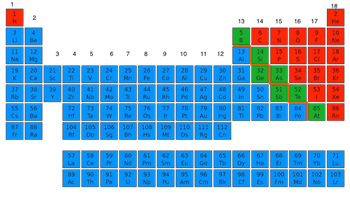
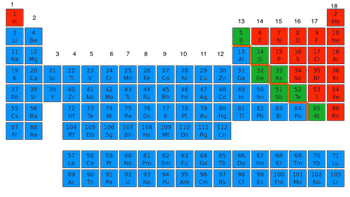
Where are the nonmetals located on the periodic table? 
a)
Blue
b)
Red
c)
Green
52.
Where are metals located on the periodic table?
a)
Blue
b)
Green
c)
Red
53.
Atoms that gain electrons become...
a)
negatively charged
b)
positively charged
c)
remain neutrally charged
d)
21
54.
What is the charge on a Hydrogen ion?
a)
+1
b)
1
c)
2
55.
How many valence electrons does calcium have?
a)
2
b)
4
c)
6
d)
7
56.
Ionic bonds form between two ions that have...
a)
ionic compounds
b)
negative charges
c)
positive charges
d)
opposite charges
57.
An atom that has gained or lost electrons is called ...
a)
a winner
b)
an isotope
c)
an ion
d)
a loser
58.

What type of elements form cations?

a)

metals

b)

nonmetals

c)

metalloids?

59.

Cations

a)

Gain electrons, has an overall positive charge

b)

Lose electrons, has an overall positive charge

c)

Lose electrons, has an overall negative charge

d)

Gain electrons, has an overall negative charge

60.

Anions

a)

Gain electrons, has an overall positive charge

b)

Lose electrons, has an overall positive charge

c)

Lose electrons, has an overall negative charge

d)

Gain electrons, has an overall negative charge