
Font size
 Worksheets
Federalism
Total questions: 202
Worksheet time: 2hrs 10mins

This is an image of the Indian system which is called
Coming Together
Unitary
Federalism
The jurisdiction of different tiers of government are specified by the .....
State Government
Central Government
Constitution
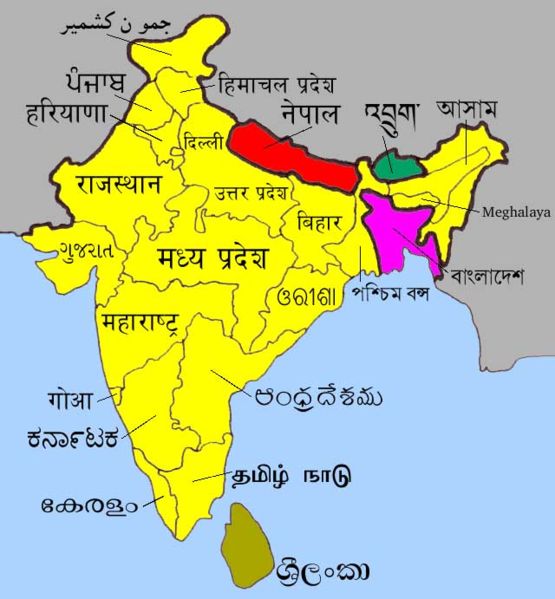
This map of India denotes accommodation based on
Linguistic Diversity
Economic and Social Diversity
System of government

System of governance where states are weak and centre is strong is .....
Bicameral
Unitary
Federal
Example of Holding Together is
India,US ,Canada
Spain ,Belgium ,Australia
India,Spain,Belgium

What form of federalism is practiced in the US
Holding Together
Coming Together
Unitary
Sources of revenue of each level of government are specified to ensure
regional diversity
administration
financial autonomy
Belgium has a
unitary system of governance
federal system of governance
where constituent units have equal power vis -a vis the federal system
In a Unitary System.......
State government has power of its own
safeguards unity and accommodates regional diversity
one level of government or sub units are subordinate to the central government
Example of coming together
USA ,Australia ,Switzerland
Australia,Spain and Switzerland
USA,India ,Spain
What is federalism?
Two or more than two levels of government
Rulers elected by the people
A system where monarch is the head
One man rule
Which subject is not included in the Union List?
Defence
Foreign Affairs
Agriculture
Banking
When a large country decides to divide its power between the constituent states and national government, it is called (a) .
Which third tier was added later on in the system of Indian government?
Lok Sabha
Panchayats and Municipalities
Centre
States
What are residuary subjects?
Subjects that do not fall into the category of any three lists
Subjects like computer software
Union government has the power to legislate over these subjects
All of the above
Which form of government existed in Sri Lanka?
Federal form of government
Unitary form of government
Parliamentary form of government
None of these
How Belgium shifted from a unitary to a federal form of government?
Changes in the Belgian constitution
Regional governments were no longer dependent on the Central government
Reducing the powers of the Central government and giving these to the regional governments
All of the above
When power is taken away from the Central and State governments and given to the local governments, it is called (a) .
What is the basic idea behind decentralization?
Large number of problems and issues are best settled at the local level
People have better knowledge of problems in their localities
It helps to inculcate a feeling of democratic participation
All of the above

Identify the lady in the picture.
Kamaljeet Sehrawat
Mira Aggarwal, Former Mayor of MCD
BJP counsellor - Preeti Aggarwal
None of these
In a ‘Holding together federation’:
The Central government tends to be more powerful vis-a-vis the States.
A large country divides its power between constituent states and the national government.
All the constituent states usually have equal powers.
Constituent states have unequal powers.
Consider the following statements on the practice of federalism in India. Identify those which hold true for decentralisation after 1992.
Local governments did not have any power or resources of their own.
It became constitutionally mandatory to hold regular elections to local government bodies.
The state governments are required to share some powers and revenue with local government bodies.
No seats are reserved in the elected bodies for scheduled castes, scheduled tribes and other backward
In case of a clash between the laws made by the centre and a state on a subject in the concurrent list:
the state law prevails.
the central law prevails.
both the laws prevail within their respective jurisdictions
the Supreme Court has to intervene to decide.
5. The Constitution of India
divided powers between centre and states in three lists.
divided powers between centre and states in two lists.
listed the powers of the states and left the undefined powers to the state.
Specified the pow ers of the states and left the residuary powers with the centre.
An ideal federal system must have
Mutual trust between different levels of government
Agreement to live together
Both of these
None of these
The key change to convert Unitary form of government to federal form of government in Belgium was ______
to give more power to state government
to reduce the power of the Central Government
To solve the problem with judiciary
In which year the change took place in Belgian government?
1993
1994
1995
1996
In ------ government national government has all the powers.
Parliamentary
federal
unitary
democratic
Belgium is shifted from ------- to ---------- form of government.
Parliamentary to Presidential
federal to unitary
unitary to federal
parliamentary to federal
Sri Lanka is a -------- form of government.
Unitary
Federal
Parliamentary
Presidential
What form of govt. was demanded by the tamil leaders in Sri Lanka?
Federal
Unitary
Parliamentary
Presidential
Usually, a federation has ------- level of government
one
two
------- system has only one level of the government.
Unitary
Federal
Presidential
Parliamentary
In Unitary form of govt ------- government can pass or orders to the provincial govts.
Unitary
Federal
Parliamentary
Presidential
The fundamental provisions of the constitution can be changed by ----- the levels of the govt.
one
both
all
-------- have the power to interpret the constitution and the powers of different levels of government.
Judiciary
Central government
State government
local government
The Constitution declared India as ------------
United States
United Provinces
Union of States
Diplomatic country
Example of 'coming together federation' is -------
India
Spain
USA
Belgium
This subject is under the Union list.
police
defence
commerce
trade
-------- list includes subjects of common interest to both the Union Government as well as the state government
Union
State
Concurrent
Residuary
The Central Government has special powers in running the ----
state governments
union government
union territories
local governments
Any change in the power sharing arrangement needs ------ majority in both the houses of the parliament
2/3
1/4
3/4
1/2
In case of any dispute about the division of powers ------- and -------- make a decision.
central and state governments
state and local governments
judges and lawyers
High courts and Supreme Court
The Union and State govts have the power to raise resources by --------
levying taxes
loans
banks
people
----- govt has the right to pass laws for the subjects of union list
Central
State
Local govts
India comes under which form of federation?
Coming together federalism
Holding together Federalism
Both
None
Which of the following is not included in State List
Law and Order
National Defence
Education
Agriculture
The concept of Decentralisation signifies
The three tier government at urban level
The two tier government at only rural level
Power taken away from both State and Centre and given to local governance at both urban and rural levels
Autonomy given to State government
The Highest institution of Panchayati Raj System in rural
Gram Sabha
Gram Panchayat
Gram Samiti
Zilla Parishad
In what way changes can be made in the federal constitution
Changes can be Unilateral
Changes require consent of both the levels of government
Changes can be through Judiciary
Changes require only consent of the people
Residuary Powers rest in the hands of (a) Government
Who is known as the Father of Panchayati Raj System?
Balwant Rai Mehta
Abraham Lincoln
Mahatma Gandhi
Sardar Valla Bhai Patel
Select the two bases on which the new states of India have been created
Religion and geography
Language and Regional
Culture and Religion
Geography and Language
Who is the Political Head of Municipality and Gram Panchayat?
Mayor and Sarpanch
Deputy Collector and Mayor
Sarpanch and Deputy Collector
Mayor and Chief Minister
According to Census 2011, How many languages were included in 'Scheduled Languages'?
25
23
21
22
Hindi is (a) language of the country
How many languages are spoken in India and what is the ratio of Hindi speaking people in India
114 languages spoken and 40% people speak Hindi
20 languages spoken and 60% people speak Hindi
21 languages spoken and 54% people speak Hindi
114 languages spoken and 60% people speak Hindi
Which Indian State had been given special status
Haryana
Assam
Delhi
Jammu & Kashmir
'Bundelkhandi' language was grouped under (a) Major Language
The (a) was scrapped in Jammu & Kashmir
This is an image of the Indian system which is called
Coming Together
Unitary
Federalism
The jurisdiction of different tiers of government are specified by the .....
State Government
Central Government
Constitution
This map of India denotes accommodation based on
Linguistic Diversity
Economic and Social Diversity
System of government
System of governance where states are weak and centre is strong is .....
Bicameral
Unitary
Federal
What form of federalism is practiced in the US
Holding Together
Coming Together
Unitary
Sources of revenue of each level of government are specified to ensure
regional diversity
administration
financial autonomy
In a Unitary System.......
State government has power of its own
safeguards unity and accommodates regional diversity
one level of government or sub units are subordinate to the central government

The third tier of rural local body in India is
State government
Panchayat Samiti
Municipal Corporation
Zila Parishad
What is the basic idea behind decentralization?
Large number of problems and issues are best settled at the local level
People have better knowledge of problems in their localities
It helps to inculcate a feeling of democratic participation
All of the above
How Belgium shifted from a unitary to a federal form of government?
Changes in the Belgian constitution
Regional governments were no longer dependent on the Central government
Reducing the powers of the Central government and giving these to the regional governments
All of the above
The jurisdiction of different tiers of government are specified by the .....
State Government
Central Government
Constitution
What are the aspects of Ideal Federal structure
Authority
Mutual trust and Coordination
balance of power
Division of Power
All those matters , which requires uniform policy are stated under
Concurrent lists
State lists
Union Lists
Residuary Lists
In a unitary form of government there are two levels of government
true
false
An example of a coming together federation is
India
Switzerland
Spain
China
Any changes in the constitution requires
Approval of central government
2/3rd majority of Lok Sabha
2/3rd majority of both the houses + Ratification by state legislature(1/2)
Approval of state and central government
The real success for federalism lies in __________ of nation.
Constitution
Democratic Structure
Power Sharing
Shared Ideals
Which of the following states are based on the Ethnic Culture
Nagaland
Ladakh
Daman and Diu
Bihar
When did the use of English stopped for the official purposes in India?
1967
1969
1965
1971
Which of the following is not a feature of Coalition Government?
Majority in Lok Sabha
forming partnerships at centre
Agreement on different ideologies
Power sharing with different political groups
The scheduled languages are part of Which schedule of Indian Constitution.
11th
12th
8th
10th
The elections to Municipal Council are conducted by
Muncipalties
Election Commission of India
Municipal Corporation
State Election Commission
the Chairperson of Municipal Corporation
Mayor
District Collector
Municipal Councillor
Ward Councillor
Which of the Following Union of India comes under Central Government Administration.
Bihar
Telangana
Pudducherry
Gujarat
Which subject is not included in the Union List?
Defence
Foreign Affairs
Agriculture
Banking
System of governance where states are weak and centre is strong is .....
Bicameral
Unitary
Federal
Pick the odd one out with respect to division of Powers.
Currencies
Foreign Policies
Armed Forces
Education Policies
What is federalism?
Two or more than two levels of government
Rulers elected by the people
A system where monarch is the head
One man rule
Which subject is not included in the Union List?
Defence
Foreign Affairs
Agriculture
Banking
Which third tier was added later on in the system of Indian government?
Lok Sabha
Panchayats and Municipalities
Centre
States
Which form of government existed in Sri Lanka?
Federal form of government
Unitary form of government
Parliamentary form of government
None of these
In a ‘Holding together federation’:
The Central government tends to be more powerful vis-a-vis the States.
A large country divides its power between constituent states and the national government.
All the constituent states usually have equal powers.
Constituent states have unequal powers.
Consider the following statements on the practice of federalism in India. Identify those which hold true for decentralisation after 1992.
Local governments did not have any power or resources of their own.
It became constitutionally mandatory to hold regular elections to local government bodies.
The state governments are required to share some powers and revenue with local government bodies.
No seats are reserved in the elected bodies for scheduled castes, scheduled tribes and other backward
What is the basic idea behind decentralization?
Large number of problems and issues are best settled at the local level
People have better knowledge of problems in their localities
It helps to inculcate a feeling of democratic participation
All of the above
In case of a clash between the laws made by the centre and a state on a subject in the concurrent list:
the state law prevails.
the central law prevails.
both the laws prevail within their respective jurisdictions
the Supreme Court has to intervene to decide.
5. The Constitution of India
divided powers between centre and states in three lists.
divided powers between centre and states in two lists.
listed the powers of the states and left the undefined powers to the state.
Specified the pow ers of the states and left the residuary powers with the centre.
This is an image of the Indian system which is called
Coming Together
Unitary
Federalism
This map of India denotes accommodation based on
Linguistic Diversity
Economic and Social Diversity
System of government
System of governance where states are weak and centre is strong is .....
Bicameral
Unitary
Federal
Example of Holding Together is
India,US ,Canada
Spain ,Belgium ,Australia
India,Spain,Belgium
What form of federalism is practiced in the US
Holding Together
Coming Together
Unitary
Sources of revenue of each level of government are specified to ensure
regional diversity
administration
financial autonomy
Belgium has a
unitary system of governance
federal system of governance
where constituent units have equal power vis -a vis the federal system
Belgium has a
unitary system of governance
federal system of governance
where constituent units have equal power vis -a vis the federal system
Example of coming together
USA ,Australia ,Switzerland
Australia,Spain and Switzerland
USA,India ,Spain
union territories do not have the power of a state
true
false

What is federalism?
Two or more than two levels of government
Rulers elected by the people
A system where monarch is the head
One man rule
Which subject is not included in the Union List?
Defence
Foreign Affairs
Agriculture
Banking
Which third tier was added later on in the system of Indian government?
Lok Sabha
Panchayats and Municipalities
Centre
States
Which form of government existed in Sri Lanka?
Federal form of government
Unitary form of government
Parliamentary form of government
None of these
In a ‘Holding together federation’:
The Central government tends to be more powerful vis-a-vis the States.
A large country divides its power between constituent states and the national government.
All the constituent states usually have equal powers.
Constituent states have unequal powers.
Consider the following statements on the practice of federalism in India. Identify those which hold true for decentralisation after 1992.
Local governments did not have any power or resources of their own.
It became constitutionally mandatory to hold regular elections to local government bodies.
The state governments are required to share some powers and revenue with local government bodies.
No seats are reserved in the elected bodies for scheduled castes, scheduled tribes and other backward
What is the basic idea behind decentralization?
Large number of problems and issues are best settled at the local level
People have better knowledge of problems in their localities
It helps to inculcate a feeling of democratic participation
All of the above
5. The Constitution of India
divided powers between centre and states in three lists.
divided powers between centre and states in two lists.
listed the powers of the states and left the undefined powers to the state.
Specified the pow ers of the states and left the residuary powers with the centre.
This is an image of the Indian system which is called
Coming Together
Unitary
Federalism
Example of Holding Together is
India,US ,Canada
Spain ,Belgium ,Australia
India,Spain,Belgium
Sources of revenue of each level of government are specified to ensure
regional diversity
administration
financial autonomy
Belgium has a
unitary system of governance
federal system of governance
where constituent units have equal power vis -a vis the federal system
In 1947 boundaries of several states were changed to ensure
that people who spoke the same language lived in the same state
that people who followed the same religion lived in the same state
hat people who ate the same food lived in the same state
The head of the municipal corporation is the
chief minister
district collector
mayor
one - third of the seats are reserved for women in the panchayat system
false
true
System of governance where states are weak and centre is strong is .....
Bicameral
Unitary
Federal
What form of federalism is practiced in the US
Holding Together
Coming Together
Unitary
The Constitution in its eighth schedule has
22 languages other than Hindi
23 languages
24 languages
One of the following was the first and a major test for democratic politics in our country
Centre state relationship
Language policy
Creation of linguistic states
Interim government
One of the following states is the newly created state
Kerala
Uttarkhand
Sikkim
Jammu and Kashmir
This is the national language of India
Hindi
English
Sanskrit
None of the above
One of the following is the official language
Hindi
Tamil
English
Sanskrit
Besides Hindi there are ------ languages recognised as Scheduled Languages.
21
22
23
24
According to the constitution, the use of English for official purposes was to stop in ------.
1947
1950
1956
1965
Expand SRC
State Registration Committee
State Reorganisation Commission
Scheduled and Recognised Community
Significant changes take place in the federal features in India after -----
1990
1991
1992
1993
What is the proportion of Hindi speaking people in India
above 40%
above 50%
above 30%
above 75%
Scheduled languages are included in the ---- schedule of the Indian Constitution
5th
6th
7th
8th
The System of Panchayati Raj involves
The village, block and district levels
The village, and state levels
The village district and state levels
The village, state and Union levels
none of these
Which of the following subjects is not included in the state list?
Law and order
National defence
Education
Agriculture
America’s central government is known as the federal government.
True
False
The Constitution divides federal power among three branches of government.
True
False

Which level of government is responsible for printing money?
federal government
state government
local government

Citizens are subject to both state and federal laws. This is a characteristic of which constitutional principle?
Popular Sovereignty
Rule of Law
Limited Government
Federalism
please write your email id
Which of the given countries is an example of ‘ coming together federation.
Spain
Belgium
India
USA
The system of Panchayati Raj involves which of the following:
The village, District and State Levels
The village, State and Union Levels
The village, Block and District Levels
Village and State Levels
Which of the following subjects Union List includes:
Police, trade, commerce, agriculture and irrigation
Education, forest, trade unions, marriages, adoption and succession
Defence, Foreign Affairs, Banking, currency, communication
Residuary subjects like computer software
Which of the given subject is not included in the state list?
National Defence
Law and Order
Agriculture
Education
Identify the Government that consists of two or more levels
Coalition Government
Community Government
Unitary Government
Federal Government
The Constitution of India has
Divides power between centre and state into two lists
Divides power between centre and state into three lists
Listed the powers of the state and left the undefined powers to the state
Specified the powers of the state and left the residuary powers with the state
The ………… Government alone can make laws relating to the subjects mentioned in the Union List
Union
Residuary
Judiciary
Local
The ………… plays an important role in overseeing the implementation of constitutional provisions and procedures.
Union
Residuary
Judiciary
People
A third tier of government is called ………… government.
Local
Union
Judiciary
Panchayat
The political head of a Municipal Corporation is called the ………… .
Teacher
Mayor
Major
Minor
This is an image of the Indian system which is called
Coming Together
Unitary
Federalism
The jurisdiction of different tiers of government are specified by the .....
State Government
Central Government
Constitution
This map of India denotes accommodation based on
Linguistic Diversity
Economic and Social Diversity
System of government
System of governance where states are weak and centre is strong is .....
Bicameral
Unitary
Federal
Example of Holding Together is
India,US ,Canada
Spain ,Belgium ,Australia
India,Spain,Belgium
What form of federalism is practiced in the US
Holding Together
Coming Together
Unitary
Sources of revenue of each level of government are specified to ensure
regional diversity
administration
financial autonomy
Belgium has a
unitary system of governance
federal system of governance
where constituent units have equal power vis -a vis the federal system
In a Unitary System.......
State government has power of its own
safeguards unity and accommodates regional diversity
one level of government or sub units are subordinate to the central government
Example of coming together
USA ,Australia ,Switzerland
Australia,Spain and Switzerland
USA,India ,Spain
What is federalism?
Two or more than two levels of government
Rulers elected by the people
A system where monarch is the head
One man rule
Which subject is not included in the Union List?
Defence
Foreign Affairs
Agriculture
Banking
Which third tier was added later on in the system of Indian government?
Lok Sabha
Panchayats and Municipalities
Centre
States
What are residuary subjects?
Subjects that do not fall into the category of any three lists
Subjects like computer software
Union government has the power to legislate over these subjects
All of the above
Which form of government existed in Sri Lanka?
Federal form of government
Unitary form of government
Parliamentary form of government
None of these
How Belgium shifted from a unitary to a federal form of government?
Changes in the Belgian constitution
Regional governments were no longer dependent on the Central government
Reducing the powers of the Central government and giving these to the regional governments
All of the above
What is the basic idea behind decentralization?
Large number of problems and issues are best settled at the local level
People have better knowledge of problems in their localities
It helps to inculcate a feeling of democratic participation
All of the above
In a ‘Holding together federation’:
The Central government tends to be more powerful vis-a-vis the States.
A large country divides its power between constituent states and the national government.
All the constituent states usually have equal powers.
Constituent states have unequal powers.
Consider the following statements on the practice of federalism in India. Identify those which hold true for decentralisation after 1992.
Local governments did not have any power or resources of their own.
It became constitutionally mandatory to hold regular elections to local government bodies.
The state governments are required to share some powers and revenue with local government bodies.
No seats are reserved in the elected bodies for scheduled castes, scheduled tribes and other backward
In case of a clash between the laws made by the centre and a state on a subject in the concurrent list:
the state law prevails.
the central law prevails.
both the laws prevail within their respective jurisdictions
the Supreme Court has to intervene to decide.
5. The Constitution of India
divided powers between centre and states in three lists.
divided powers between centre and states in two lists.
listed the powers of the states and left the undefined powers to the state.
Specified the pow ers of the states and left the residuary powers with the centre.
An ideal federal system must have
Mutual trust between different levels of government
Agreement to live together
Both of these
None of these
-Belgium initially had
a unitary form of government
a federal form of government

