
Font size
 Worksheets
Edexcel GCSE PE - Musculo-Skeletal System
Total questions: 67
Worksheet time: 30mins
Name the main muscle in the shoulder
deltoid
bicep
trapezius
hamstring
Name the main muscle in the front of the arm
deltoid
bicep
trapezius
hamstring
Name the main muscle in the chest
pectoralis major
latissimus dorsi
trapezius
hamstring
Name the main muscle in the back
gluteus maximus
latissimus dorsi
trapezius
lats
which muscles work in pairs to allow movement at the elbow?
bicep and tricep
bicep and deltoid
pectoralis major and tricep
trapezius and tricep
which muscles work in pairs to allow movement at the knee joint
gluteus maximus and gastrocnemius
hamstring and quadricep
gluteus maximus and hamstring
quadricep and gastrocnemius
name the agonist during dorsi flexion
hamstring
gastrocnemius
quadricep
tibialis anterior
name the agonist during plantar flexion
hamstring
gastrocnemius
quadricep
tibialis anterior
name the agonist during flexion of the knee joint
hamstring
gastrocnemius
quadricep
tibialis anterior
name the agonist during extension of the knee joint
hamstring
gastrocnemius
quadricep
tibialis anterior
name the agonist during extension of the hip joint
hamstring
gluteus maximus
quadricep
tibialis anterior
name the agonist during flexion of the hip joint
hamstring
gluteus maximus
quadricep
hip flexor
name the agonist during flexion of the elbow joint
bicep
tricep
deltoid
pectoralis major
name the agonist during extension of the elbow joint
bicep
tricep
deltoid
pectoralis major
bending movement that decrease the angle between body parts is known as
flexion
extension
rotation
abduction
straightening movement that increases the angle between body parts is known as
flexion
extension
abduction
adduction
movement that pulls towards the midline of the body is known as
flexion
extension
abduction
adduction
movement that pulls away the midline of the body is known as
flexion
extension
abduction
adduction
Dorsi-flexion is defined as
moving a part of the body in a circular or conical shape
bending or flexing the toes up, closer to the shin
extending or pointing the toes down, away from the shin
bending movement that decreases the angle between body parts.
plantar-flexion is defined as
moving a part of the body in a circular or conical shape
bending or flexing the toes up, closer to the shin
extending or pointing the toes down, away from the shin
bending movement that decreases the angle between body parts.
Define antagonistic pair
muscles that work together to create movement.
the amount of force exerted per muscular contraction
muscles that work together to generate power
the contracting muscle
Define type 1 muscle fibres
fast twitch suited to anaerobic work
slow twitch suited to aerobic moderate intensity work
a red pigment that transports oxygen to muscle
the point around which the lever rotates
define voluntary muscles
are under your control and known as skeletal muscles
are not under your control, by contracting and relaxing automatically
are only found in the walls of the cardiac muscle
relating to blood vessels
define ligament
strong, flexible connective tissue that connects bones to other bones.
strong, flexible connective tissue that connects muscles to other bones.
movement around a single axis or fixed point
the stored form of glycogen in the bones
define tendon
strong, flexible connective tissue that connects bones to other bones.
strong, flexible connective tissue that connects muscles to other bones.
movement around a single axis or fixed point
the stored form of glycogen in the bones

What bone is highlighted?
Skull (Cranium)
Mandible
Clavicle
Scapula
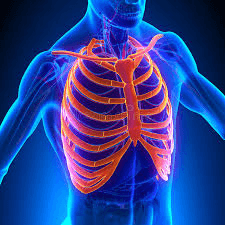
What bone is highlighted?
Ribs
Vertebrae
Clavicle
Femur

What bone is highlighted?
Radius
Ulna
Humerus
Carpals

What bone is highlighted?
Radius
Ulna
Humerus
Carpals
From wrist to fingertip, what is the order of bones?
Carpals, metacarpals, phalanges
Phalanges, metacarpals, carpals
Carpals, phalanges, metacarpals
Metacarpals, carpals, phalanges
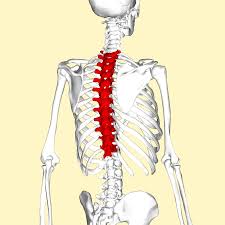

Which of the following is not a function of bones?
Protection
Blood cell formation
Storage
Absorption


Which of the following bones is INCORRECTLY matched with its type?
ribs--irregular
carpals--short
ulna--long
cranium--flat


What type of bone is the cranium

What is the bone highlighted called?
Ribs
Vertebrae
Sternum
Cranium
What are the 2 articulating bones at the shoulder?
Ulna
Radius
Humerus
Scapula
Tarsals
What are the 2 articulating bones at the hip?
Pelvis
Cranium
Radius
Femur
RIbs

What does a tendon do?
Hold muscles together.
Hold joints in place.
Connect bone to bone.
Connect bone to muscle.
A long term effect of exercise on the skeletal system is
Increased chance of fracture
increased density of bones
increase in speed
reduced chance of a muscular strain
A long term effect of exercise on the skeletal system is
Increased chance of injury
decreased recovery rate
stronger tendons and ligaments
reduced chance of a muscular strain
Hypertrophy is a long term effect on the muscular system, which muscle fibres experience hypertrophy after prolonged aerobic exercise
fast twitch
both fast and slow twitch
slow twitch
all muscle types
A long term effect of exercise on the muscular system is
reduced blood pressure
increased number of alveoli
increased tolerance to lactic acid
decreased tolerance to lactic acid
stronger ligaments are a long term effect of exercise on the skeletal system, how would this impact the performer
less chance of compounds fractures
less chance of a dislocation
more oxygen can be delivered to working muscles
allows more force to be produced by the player.
an increase in myoglobin is a long term effect of exercise on the muscular system, but what does it enable
it allows more oxygen to breathed in
more oxygen can be delivered to the working muscles
increase in the production of slow twitch muscle fibres
increased strength
Define osteoporosis
a condition causing the bones to become brittle and fragile from loss of tissue, resulting from hormone changes, or a deficiency in calcium of vitamin d
a condition causing the bones to become fractured regularly, resulting from hormone changes, or a deficiency in calcium of vitamin d
a condition causing the tendons to become inflamed to become brittle and fragile from loss of tissue, resulting from hormone changes, or a deficiency in calcium of vitamin d
a condition causing the ligaments to become inflamed to become brittle and fragile from loss of tissue, resulting from hormone changes, or a deficiency in calcium of vitamin d
Muscles can only (a)
In an antagonistic pair, one muscle will contract, whilst the other (a)

When the agonist muscle pulls/contracts, it becomes what?
Longer and thinner
Shorter and fatter
Thinner and shorter
Stretched and thinner

When the antagonist relaxes, it becomes what?
Shorter and fatter
Shorter and thinner
Longer and thinner
Relaxed and fatter

Which muscle is contracting to allow Mo Farah's knee to straighten/extend?
Quadricep
Hamstring
Deltoid
Bicep

Which muscle is contracting to allow Andy Murray's elbow to bend/flex?
Latissimus Dorsi
Tricep
Bicep
Abdominals

Before kicking the football, the hamstring will contract/pull to bend the knee. What is the antagonist muscle that relaxes called?
Abdominals
Tricep
Hamstring
Quadricep
Which one of the following is the correct statement about muscle action and antagonistic muscle pairs?
When a muscle contracts it pushes a bone, for example, the biceps and triceps
Movement is brought about through antagonistic pairs, for example, the pectorals and abdominals
Muscles are arranged in pairs, for example, the hamstrings and quadriceps
When one muscle contracts the other relaxes to bring about movement, for example, the trapezius and latissimus dorsi
Which one of these is incorrect?
The skeleton provides oxygen for the working muscles
The skeleton provides protection for vital organs
The skeleton provides structural shape and points for attachment
The skeleton provides support
Which of the following muscle movements occur when the arm bends at the elbow?
The biceps contract and the triceps relax
The biceps relax and the triceps relax
The triceps contract and the biceps contract
The triceps contract and the biceps relax
In the high Jump, which antagonistic pair are working at the jump take off.
The tibialis anterior is contract and the gastrocnemius relax
The gastrocnemius is contract and the tibialis relax
Example of type of hinge joint in the body
Atlas and axis
Knee/Elbow
Shoulder/hip
Fingers
Jumping highest to rebound a ball in basketball uses which muscle type
Type I
Type IIa
Type IIx
Which muscle fibre type allows players in the majority of teams games (e.g. football/basketball/rugby etc) to maintain high intensity runs
Type I
Type II
Type IIx
Which muscle fibre type allows players to jog around and has the highest resistance to fatigue
Type I
Type IIa
Type IIx

