Wayground logo

Free Printable Worksheets

Font size

S
M
L
XL
Worksheets

FINAL Review Chem. pt. 3 TAPS

Total questions: 81

Worksheet time: 2hrs 55mins
Name
Class
Date
1.
What is the atomic number?
a)
the number of protons
b)
the number of protons and neutrons
c)
the number of neutrons
d)
the number of protons and electrons
2.
What is the mass number defined as?
a)
the number of protons
b)
the number of protons and neutrons
c)
the number of neutrons
d)
the number of protons and electrons
3.
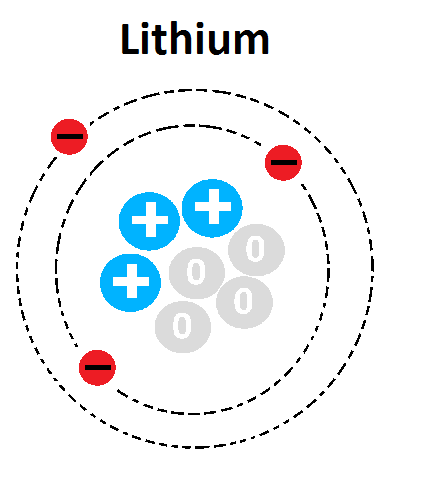
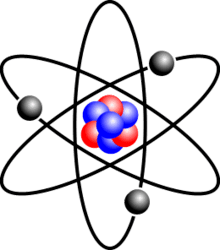
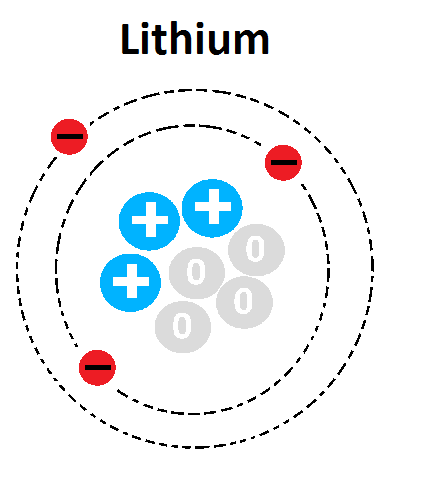
What is the atomic number of this atom?
a)
1
b)
3
c)
4
d)
7
4.

What is the mass number of this atom?

a)

1

b)

3

c)

4

d)

7

5.

The fluorine atom has an atomic number of

a)

19

b)

9

6.

What is the mass number and atomic number ?

a)

Mass number = 7, atomic number = 14

b)

Mass number = 14, atomic number = 7

7.
Which particle has a positive charge?
a)
electron
b)
orbital
c)
proton
d)
neutron
8.
Choose the particle that has no charge.
a)
nucleus
b)
neutron
c)
proton
d)
electron
9.
The mass of one proton is greater than the mass of one...
a)
neutron
b)
electron
10.

Which subatomic particle has a negative charge in the atom?

a)

proton

b)

neutron

c)

electron

d)

quark

11.

Match the following

a)

Group 18

1.

Noble Gases

b)

Group 1

2.

Alkali Metals

c)

Group 2

3.

Alkaline Earth Metals

d)

Groups 3-12

4.

Transition metals

e)

Group 17

5.

Halogens

12.

Match the following

a)

Located in the nucleus; have a positive charge; and a mass of 1 amu

1.

Protons

b)

Located outside of the nucleus; have a negative charge; and a mass of 1/2000th of an amu

2.

electrons

c)

located in the nucleus; have no charge; and no charge

3.

neutrons

13.

Which of the following is a compound

a)

water

b)

hydrogen

c)

nitrogen gas

d)

oxygen

14.

Elements with similar qualities are located in the same

(a)  

15.

Uranium has an atomic number of 92 and an atomic mass of 238. What is the number of neutrons in Uranium?

(a)  

16.

which of the following is not an example of a chemical change?

a)

Burning wood

b)

sawing wood

c)

baking a cake

d)

digesting food

17.

which of the following is not an example of a physical change?

a)

Mixing and pouring concrete

b)

Melting ice

c)

burning wood

d)

tearing paper

18.

Match the following

a)

Periods

1.

Horizontal rows on the periodic table

b)

Groups

2.

vertical columns on the periodic table

c)

Families

3.

The specific names for the group of elements within a vertical column on the periodic table

19.

Which answer choice best represent the APEMAN for the picture below?

a)

A=11

P=11

E=11

M=22

A=11

A=11

b)

A=11

P=11

E=11

M=23

A=11

A=11

c)

A=11

P=11

E=11

M=23

A=11

A=12

20.
Which best describes a radioactive isotope?
a)
There are many isotopes.
b)
There is only one other isotope.
c)
An atom is stable.
d)
An atom is unstable.
21.
Elemental carbon has 6 protons and 6 neutrons. This is often described as carbon-12. Carbon-13 has 6 protons and 7 neutrons, while carbon-14 has 6 protons and 8 neutrons. Based on the trend with carbon and the fact that plutonium has 94 protons, how many neutrons are in radioactive plutonium-244?
a)
102 neutrons
b)
108 neutrons
c)
338 neutrons
d)
150 neutrons
22.
Manganese-52 has a half-life of 6 days. How many days would a scientist have to wait for the radioactivity to be 12.5% the starting amount?
a)
6
b)
12
c)
18
d)
24
23.

The nucleus is held together by the ___________________________force.

a)

The Strong Nuclear Force

b)

The Weak Nuclear Force

c)

Electromagnetism

d)

Gravity

24.
Radioactive materials have unstable...
a)
electrons
b)
protons
c)
nuclei
d)
neutrons
25.
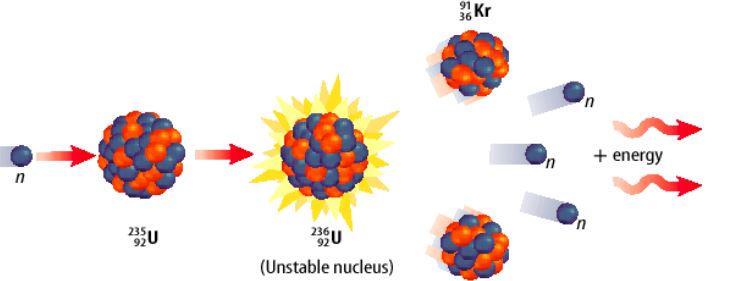
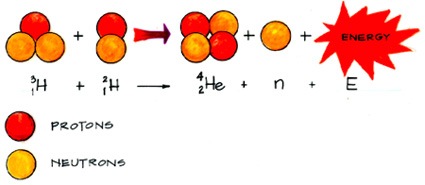
This is an example of...
a)
Fission  reaction
b)
Fusion reaction
c)
Decomposition reaction
d)
Decay
26.
Which process involves the joining of small nuclei?
a)
Beta decay
b)
Alpha decay
c)
Nuclear fission
d)
Nuclear fusion
27.

How many atoms in all are in a molecule of serotonin?

C10H12N2O

a)
22
b)
24
c)
25
d)
4
28.
Coal contains carbon and other elements. Carbon dioxide forms when coal burns in the presence of oxygen. Which of these is the best evidence that a chemical reaction occurs when coal burns?
a)
The shape of the coal changes
b)
Oxygen is present
c)
A new substance is produced
d)
Coal is made up of more than one element
29.
Which is an example of a chemical reaction?
a)
paper cut into small pieces
b)
chocolate melting in a pan
c)
flour and sugar mixed in a bowl
d)
cookies baking in an oven
30.
When materials combine to form new compounds it is a chemical change. Which example is a chemical change?
a)
baking powder fizzing
b)
water boiling
c)
ice melting
d)
sugar cube dissolving
31.

A positively or negatively charged particle.

a)

covalent bond

b)

ion

c)

oxidation number

d)

subscript

32.

A chemical bond between oppositely charged ions.

a)

Covalent bonds

b)

Ionic Bonds

c)

Ion

d)

Compound

33.

A chemical bond formed between shared atoms.

a)

covalent bond

b)

chemical bonds

c)

compound

d)

ionic bonds

34.

Substance made from two or more combined atoms.

a)

subscript

b)

chemical bonds

c)

compounds

d)

superscript

35.

Force that holds together atoms in a substance.

a)

chemical formula

b)

Oxidation number

c)

chemical bonds

d)

superscripts

36.

Just like with human relationships, the connections between chemicals are called ___

a)

friendships

b)

affairs

c)

bonds

d)

unions

37.

The law of electric charges says that ___

a)

like charges attract, opposites repel

b)

like charges repel, opposites attract

c)

nuclei attract each other

d)

electrons are clingy

38.

Which type of chemical bond involves the sharing of electron pairs between atoms?

a)

an ionic bond

b)

a covalent bond

c)

a hydrogen bond

d)

James Bond

39.

The strength with which an atom holds shared electrons is called its ___

a)

electrostatic force

b)

ionization energy

c)

bond length

d)

electronegativity

40.

Which elements tend to form covalent bonds?

a)

metals

b)

metals and non-metals

c)

nonmetals and sometimes metalloids

d)

metalloids

41.

What type of bond is formed between a positive ion and a negative ion?

a)

an ionic bond

b)

a polar covalent bond

c)

a nonpolar covalent bond

d)

a treasury bond

42.

The bonds in Na2O are best described as


(a)  
Choose from the below words
ionic, because valence electrons are transferred.
covalent, because valence electrons are shared.
covalent, because valence electrons are transferred
ionic, because valence electrons are shared.
43.

Bonds that form between two metals are called (a)   bonds.

Choose from the below words
metallic
ionic 
covalent
pervasive
44.
What is the number of valence electrons for Oxygen?
a)
8
b)
6
c)
2
d)
1
45.

Which of the following combinations will lead to an ionic bond?

a)

metal - metal

b)

nonmetal - nonmetal

c)

metal - nonmetal

d)

All of these

46.

Which of the following combinations will lead to an covalent (nonpolar or polar) bond?

a)

metal - metal

b)

nonmetal - nonmetal

c)

metal - nonmetal

d)

All of these

47.

Which of the following is an ion?

a)

Na

b)

C

c)

O

d)

Na+1

48.
An ionic compound of calcium and chlorine would be named
a)
calcium chlorine.
b)
calcium chlorite.
c)
calcium chloride.
d)
chlorine calcium.
49.
The covalent compound N2O5 would be named
a)
nitrogen oxide.
b)
dinitrogen oxide.
c)
nitrogen pentoxide.
d)
dinitrogen pentoxide.
50.

Name the compound: N2O5.

a)

dinitrogen pentaoxide

b)

binitrogen pentaoxide

c)

nitrogen oxide

d)

pentanitrogen dioxide

51.

Name the compound: Zn3P2

a)

zinc phosphide

b)

trizinc diphosphide

c)

zinc phosphate

d)

zinc phosphite

52.
If my charge becomes 2+ what does that say about me?
a)
I am stealing 2 electrons
b)
I am losing 2 electrons
c)
I am in period 2
d)
I have an atomic # of 2
53.
AgF
a)
silver fluoride
b)
silver fluorine
c)
monosilver monofluoride
d)
silver monofluorine
54.
What is the formula for magnesium chloride?
a)
MgCl
b)
Mg2Cl
c)
MgCl2
d)
Mg(ClO3)2
55.

Name the compound: (NH4)2S

a)

ammonium sulfide

b)

nitrogen tetrahydrogen sulfide

c)

diammounium sulfate

d)

ammonium sulfate

56.

Name the compound: CF4

a)

carbon tetrafluoride

b)

monocarbon tetrafluoride

c)

carbon fluoride

d)

chlorine tetrafluoride

57.

Write the formula: silver chlorate

a)

AgClO3

b)

AgCl

c)

AgCLO3

d)

AgCl3

58.

Write the formula: beryllium oxide

a)

BO

b)

BeO

c)

BeO2

d)

BO2

59.
Which of the following formulas represents the harmful gas, carbon monoxide?
a)
CO
b)
CO2
c)
NO
d)
SO2
60.
How many Hydrogen are in 4H2O?
a)
6
b)
8
c)
2
d)
4
61.
How many elements are in C6H12O6?
a)
1
b)
2
c)
3
d)
4
62.
Which is the correct formula for:
 three hydrogen (H)
one sulfur (S)
four oxygen (O)
a)
H3SO4
b)
HSO4
c)
H4S3O
d)
H2O
63.
An ionic compound of calcium and chlorine would be named
a)
calcium chlorine.
b)
calcium chlorite.
c)
calcium chloride.
d)
chlorine calcium.
64.
A covalent compound made of one sulfur and two oxygen atoms would be named
a)
sulfur dioxide.
b)
sulfur oxide.
c)
disulfur oxide.
d)
sulfide oxygen.
65.
An ionic compound made of copper (Cu2+) and oxygen would be named
a)
copper oxygen.
b)
copper oxide.
c)
dicopper oxide.
d)
copper(II) oxide.
66.
The covalent compound N2O5 would be named
a)
nitrogen oxide.
b)
dinitrogen oxide.
c)
nitrogen pentoxide.
d)
dinitrogen pentoxide.
67.
Because the overall charge in a compound must be ____________, the charge of iron in Fe2O3 can be calculated as 3+.
a)
2+
b)
1+
c)
0
d)
1-
68.
In the compound TiO2, titanium has a charge of
a)
4+
b)
2+
c)
2-
d)
4-
69.
The chemical formula for an ionic compound of aluminum and chlorine is
a)
AlCl.
b)
ClAl.
c)
AlCl3.
d)
Al3Cl.
70.
The chemical formula for an ionic compound of potassium and oxygen is
a)
KO.
b)
K2O.
c)
K2O2.
d)
KO2.
71.
The ____________ formula of a compound is written in the simplest whole number ratio of atoms.
a)
chemical
b)
empirical
c)
ionic
d)
molecular
72.
The formula C6H12O6 would be the ______________ formula for glucose.
a)
chemical and empirical
b)
chemical and molecular
c)
empirical and structural
d)
molecular and empirical
73.
The covalent compound N2O5 would be named
a)
nitrogen oxide.
b)
dinitrogen oxide.
c)
nitrogen pentoxide.
d)
dinitrogen pentoxide.
74.
An element has three different isotopes. One has a mass of 35.00 amu; another has a mass of 36.00  amu; and another has a mass of 38.00  amu. What is the average atomic mass of this element?
a)
36.33 amu
b)
37.00 amu
c)
12.11 amu
d)
impossible to tell
75.
24.1% of all the isotopes of a an element have a mass of 75.23 amu, 48.7% have a mass of 74.61 amu, and 27.2% have a mass of 75.20 amu.
How many protons does this element have?
a)
32
b)
33
c)
34
d)
no way to know
76.
What is the name of the atom pictured here?
a)
Nitrogen
b)
Nitrogen-15
c)
Nitrogen-7
d)
Nitrogen-8
77.
What does the 1.00794 stand for?
a)
Hydrogen
b)
atomic number
c)
atomic mass
d)
atomic explosion
78.

The atomic mass of an element is the ___.

a)

average of the mass number and the atomic number for the element

b)

weighted average of the masses of the isotopes of the element

c)

total mass of the isotopes of the element

d)

total number of subatomic particles in the nucleus

79.
An isotope has three forms.  30% have a mass of 4 amu, 20% have a mass of 5 amu and 50% have a mass of 3 amu.  Average atomic mass will be closest to
a)
2 amu
b)
3 amu
c)
4 amu
d)
5 amu
80.
How many neutrons does the isotope of lithium have?
a)
8
b)
3
c)
4
d)
5
81.
How many neutrons in C-14?
a)
6
b)
7
c)
14
d)
8